
From Ali Buzra
Part Thirty
– LIFE UNDER PRESSURE AND SUFFERING –
(ASSESSMENTS, COMMENTS, NARRATIVES)
Memorie.al / At the request and wish of the author, Ali Buzra, as his first editor and reader, I will briefly share with you what I experienced in this encounter with this book, which is his second (after the book “Gizaveshi through the years”) and which naturally continues his writing style. The sincerity and frankness of the narrative, the simple and unmodified language, the accuracy and precision of the episodes, or the absence of a refining, intentionally subsequent imagination, or the failure to exploit it, I think have served the author positively. He comes to the reader in his original form, inviting us to at least get to know unknown human fates and pains, whether by chance or not, leaving us to reflect as a starting point for raising awareness towards a catharsis so necessary for the Albanian conscience.
Bedri Kaza
In 1954, he recounts, they began to release us piece by piece. Fortunately, his family had no deaths. They all returned home, to Vilan. There they put a roof over the walls of their house, burned for the second time, which they had rebuilt after the first fire. Upon returning, brothers and sisters, they started working in agriculture. They also started some livestock farming, and meanwhile, they got married one by one. Being classified as *kulaks* (wealthy peasants), they married within other *kulak* families, from villages and other areas.
Thus, Daut married into the Qytyk family in Gurshpatë, where the bride’s father had been with the Balli Kombëtar (National Front). Ali married in Labinot, into Mustafa Meta’s family, who was also a *kulak*. Osman married into the Cani family in Labinot, a kulak family. Shaban married the daughter of Nebi Dosku from Dorëzi, classified as a kulak. Gani married the daughter of Selim Gurra, from a *kulak* family in Dragostunjë, while Shemja married the daughter of Shaban Dashi, from Bërzeshta. The latter had been expropriated, having over 500 heads of livestock taken from him, and was sentenced to 15 years in prison. Their father, Sherif, passed away in 1959, when the family’s economic situation was extremely dire.
Until 1967, they remained as individuals, not having joined the cooperative, but the taxes on land and livestock were unbearable for all *kulak* families. Although they were not included in the cooperative, they had their good land taken away and were given unproductive land on the hillsides. Because of this, Ruzhdi says they got nothing from those lands, “but we men went to work in the sector of the Sawmill Establishment in Stravaj with mules, where we were paid better. This way, with work and toil, we supported our families, while also being forced to pay the heavy taxes to the state, such as grain (which we bought), dairy, meat, wool, etc.”
In 1967, when the process of collectivizing agriculture was completed nationwide, the *kulak* families were also “accepted.” The kulak families didn’t necessarily desire to join the cooperative, but firstly, the taxes on land were unbearable; secondly, they had already had their good land taken away; and meanwhile, they also felt isolated from the rest of the population. The members of the Muzhaqi families were very hardworking people. They took on every task in the cooperative to keep their families alive.
They were masters at managing livestock, skilled farmers, construction specialists, etc. Many children were born and raised in their families, but they were not given the right to pursue higher education, even though they performed well in their studies. Differentiation was felt everywhere. It is a fact that many residents of neighboring villages honored and respected them, silently, although they couldn’t openly visit their homes. We say this for the neighboring villages because the majority of families in Vilan were *kulaks*.
Sheme Muzhaqi initially worked directly in agriculture, then started as a carpenter in the sector’s woodworking shop. He was a master woodworker. Instances of contempt and disdain towards them from some party or government officials were numerous. Let us mention one case concerning Sheme Muzhaqi:
Azis Noni, a householder from Qafë Dardha in Gurshpatë, had ordered doors and windows for his new house from the cooperative. After paying the fee at the cooperative’s cashier, Shemja was sent by the construction sector to install the doors and windows he had finished making in the carpentry workshop. Azis was having a wedding, marrying off his son. Although Shemja tried to finish the installation as quickly as possible, time was limited, and he finished them on the day the wedding was starting. The host told him to stay, since he was already there.
Shemja thanked him for the respect but insisted on leaving; it was impossible. Azis insisted that he stay, seating him in the guest room (konak) with the other guests. Shortly after, a person from a neighboring village arrived in the guest room, a wedding guest who was also the party secretary in his village. This man took out a notepad and started writing a letter on a sheet, which he passed around to the men in the guest room to read. The letter said: “Here we have a kulak, which must either leave, or we must leave. If the host doesn’t remove him, we should leave the wedding,” he demanded of the other guests.
Regarding this, Shemja recounts that he understood the man’s intent, as well as the whispering going on in the guest room, but he didn’t know what to do. “Better I hadn’t stayed,” he thought to himself. What could he do?! If he stayed… it might create problems for the host; if he left… that was also hard for him, especially in such a gathering. “I felt very uncomfortable,” he says. In these difficult moments for him, Xhep Cekani, who was the uncle of the groom (the son getting married), signaled to him with his hand to stay, pulling his traditional cap (qeleshe) down over his eyes, which meant: “don’t worry at all.”
“I felt a little relieved,” Shemja recounts. Meanwhile, the letter-writer and two other people went outside and called the host into the yard. They told him, “If you keep the *kulak*, we will leave.” The host, Azis Noni, cut them short: “I invited Sheme Muzhaqi to my wedding today, and no one forces me to kick him out. As for you, if you want to leave, farewell and good luck”! And so he parted with them in the yard, without shaking their hands. Thus, those three left the wedding.
Another guest, a relative of the family, without the host’s knowledge, followed them from behind and stopped them outside the yard, saying to them with a laugh: “Are you men, or what are you? Guests at a wedding and you didn’t give your money gift. Is that right? I have the money from all the other guests in my pocket, you give yours too”! Willingly or unwillingly, all three gave the money and left, feeling worthless.
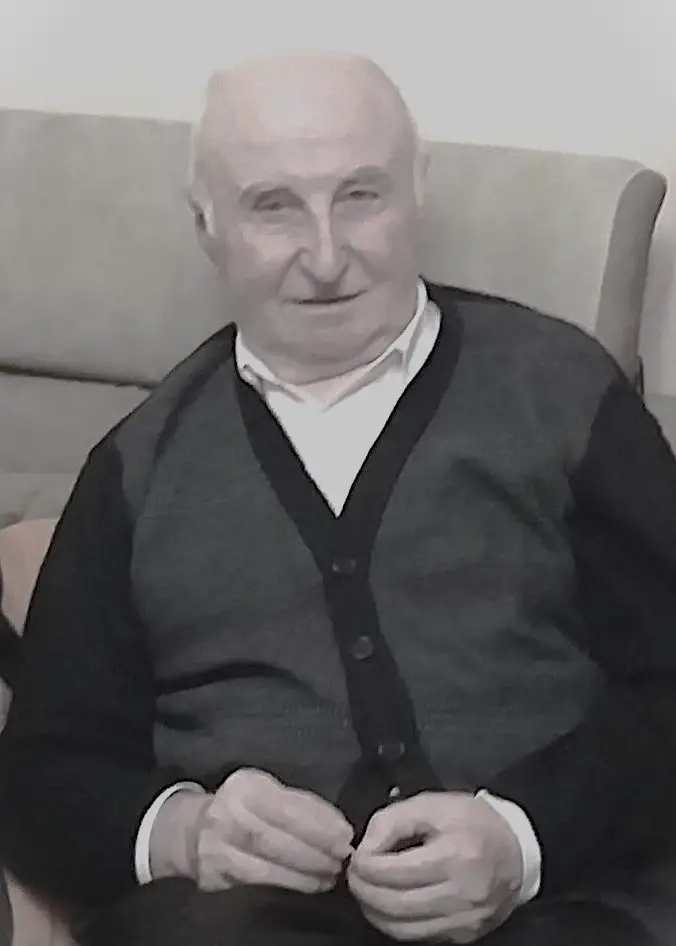
With the label “kulaks”, shy and silent, the Muzhaqi families worked and lived until 1990. After the fall of the communist system, a few families stayed there; the majority left, within the country and abroad, building a new, free life under the new socio-economic conditions. I met and spoke with Sheme Muzhaqi, the sole survivor among Sherif Muzhaqi’s seven sons, on October 15, 2016, in Durrës, where he lives with his wife, his two sons, and his grandchildren.
THE VILLAGE OF POLIS-GURSHPATË POSITIONS ITSELF WITH THE BALLI KOMBËTAR
The village of Gurshpatë, like Vilan, positioned itself with the Balli Kombëtar during the war. One of the most influential clans (fis) in this village was that of Cekani. This clan in Gurshpatë originated from Polis Qendra. The first to come to Gurshpatë was Met Cekani. He settled there after the Declaration of Independence, together with his three sons, Ali, Xhafa, and Ibrahim.
Ali had six sons: Jakup, Hysni, Gani, Metë, Shefqet, and Sami. The other brother, Xhafa, had Rexhep, who was called Xhep Cekani for short, while Ibrahim had Ferit. Their family generally had a good economic position for the time. They were mainly engaged in agriculture and livestock.
8.1 Ali Cekani, one of the most influential figures in Polis, and his role in avoiding conflicts between various warring groups
The main figure that stood out during Zog’s time, and later during the War period, and who became known throughout the Polis area, was Ali Cekani. Ali was called upon at gatherings organized in the region and participated in dispute resolutions. He was valued for his word, as a just and impartial man. During the war, a Balli Kombëtar band (çeta) was formed in Gurshpatë, and Ali Cekani was chosen as its commander. In 1943, when Nezir Muzhaqi led the Balli Kombëtar for the Prefecture of Elbasan, Ali Cekani led this organization for the Polis area.
Ali, like many other regional leaders, was friends with the Elbasan Beu, Shefqet Vërlaci. When his band was formed, initially for self-defense purposes, he received arms supplies from his friend Vërlaci. After the breakdown of the Mukje Agreement, when the situation between the National Liberation Front and the Balli Kombëtar became tense, Ali showed himself to be very measured and restrained. In these conflict situations, on many occasions he avoided armed clashes with partisan forces. During the conflict between Nezir Muzhaqi and the First Brigade, he stood by his side, and together they decided not to attack the partisans who had caused damage and looting in Vilan.
It is said that Ali Cekani had great authority in Polis, also because he was of mature age, compared to Nezir Muzhaqi, who was educated but young. During the German occupation, he connected with the government of the Regency under Rexhep Mitrovica, which, as mentioned above, was an Albanian government in the presence of German forces in Albania. Being the Balli representative for the Polis area, he had an office in Elbasan, just like Nezir. There is not a single fact proving he served the Germans against the National Liberation Front, or that he participated in any crime; on the contrary, there is ample evidence confirming his contribution to saving partisans’ lives.
The case of Dhimitër Shuteriqi speaks to this. Dhimitër’s mother came to Ali’s office, asking him to save her son from the possibility of arrest. As Nezir Muzhaqi also testified at his trial, Ali went to his office and asked to find a way to save him. He himself accompanied the 18-19-year-old youth to get him out of the city as far as Mirakë. Considering the circumstances of wartime, they took on a risky responsibility to save a partisan’s life. Ali Cekani was a dignified man; he was an example of unparalleled nobility, loyalty, and humanism. After the Battle of Polis, where several partisans were killed, Ali Cekani arrived and found 25 captured partisans being held in Ballolli’s house. By his order, they were all released, while Nezir Muzhaqi himself arranged for them to be treated at the Elbasan hospital.
Ali Cekani had many friends. He was also friends with Sami Baholli, but in their initial meeting, like many other patriotic nationalists, Ali refused to join forces with the communists. Another friend of his was Miftar Hoxha from Miraka. Contemporaries have testified that when Enver Hoxha was sheltered at the latter’s place, Ali received information about the movement of two German squads towards Miraka. In these circumstances, he sent a trusted person from the Shkurti family (it might have been Qazim Shkurti), instructing him to tell Miftar: “Remove the friend you have there, because other friends are coming.” This event, like dozens of others, speaks to how the two men of Polis, Ali Cekani and Nezir Muzhaqi, radiated prudence, courage, foresight, and dignity in the highly conflictual relations of wartime.
8.2 Ali Cekani did not receive a grave, while Jakup Cekani’s family endured suffering and communist persecution
After the war, Ali Cekani did not attempt to flee but stayed in the village. He, like Nezir Muzhaqi, was conscious of his positioning and the fact that he had not engaged in fratricidal war; on the contrary, he contributed in his own way to the liberation struggle. But, like many other nationalists, he was mistaken. In 1945, they arrested him on the pretext of “collaboration with the occupiers.” During interrogation, he did not accept the accusations but provided facts about the help he had given. His son, Jakup Cekani, went to Dhimitër Shuteriqi’s house and asked him to issue a statement on his behalf. Shuteriqi told him: “I know I owe my life to Ali, but I dare not issue a statement.”
In the difficult post-war situation, it was indeed hard to testify in favor of those targeted by the communist state. Meanwhile, many simple peasants from the Polis area went to Elbasan and demanded his release, stating that Ali Cekani had committed no crimes. In these circumstances, with a show trial and without evidence, they sentenced him to 2.5 years in prison. He served his sentence and returned to his family in Gurshpatë. But the communist government was about to start its reforms. Ali Cekani, a person of great prestige and authority in Polis, could be an obstacle in this path. In the communist mentality, he had to be eliminated. They arrested him for a second time, on a different pretext.
He was accused of having helped with bread and food Rexhep Kasa, a fugitive, and Hamit Matjani and Alush Leshanaku, who had parachuted into the Polis area as saboteurs. After several months of torture during interrogation, they brought him to trial. With false witnesses manipulated by the State Security (Sigurimi), he was again sentenced to prison. He was sent to serve his sentence in the main prison in Tirana. Despite the difficulties the family endured, they stood by him, sending food within the permitted allowance. The last time, when his son Jakup went to visit him and bring food, he communicated with the guard at the gate. The guard didn’t answer but brought out another prisoner, who told him: “Be strong, your father has died.”
They asked the prison command several times to receive the body, but the answer was negative. Like many others, the patriotic nationalist, the distinguished and respected man of Gurshpatë, Ali Cekani, has no grave today. The family that was despised and persecuted throughout the years of communism in Gurshpatë was that of Jakup Cekani. Jakup was engaged to Leke Muzhaqi, the daughter of Sherif Muzhaqi, who, as described above, was with her parents, sisters, and brothers in the concentration camp in Tepelenë. Jakup went there with a relative to get her. After much running around, they managed to convince the prison administration that they would marry, and finally they took her. After marrying her, Jakup was classified as a kulak. They bore and raised 9 children: 5 girls and 4 boys. They carried the *kulak* label until the final year of the communist system. Several times Leke was asked to renounce her parents, sisters, and brothers, to have the *kulak* title removed. “The children were small, and even as they grew up, I felt for them,” she would recount, “but I never cut ties with the family where I was born and raised.” Thus, the mother, a brave woman, Leke Cekani (Muzhaqi), endured the persecution, contempt, and social differentiation against herself and her children, with her head held high and proud, in the face of the servants of the communist regime. “We felt the differentiation and contempt more than others,” express the children of Jakup Cekani, “because unlike in Vilan where almost everyone was a kulak, in Gurshpatë it was only our family.”
Jakup Cekani’s son, young Ali Cekani, recalls a detail from elementary school life. A teacher from Korça, who liked him very much, gave him two acts to perform in the school’s artistic group, which was going to perform for the village. There was a recitation and a monologue. When his turn came, little Ali, 9 or 10 years old happily performed the poem recitation. Meanwhile, as he waited his turn to perform the monologue he had prepared very well, he overheard an argument that one of the Party leaders was having with his teacher. “You’ve brought in the kulak to recite for us,” he was saying angrily. “I didn’t know, I came this year,” she tried to excuse herself.
“So they didn’t allow me to do the second act, which I really wanted to do,” he says. The child goes home and asks his mother: “Mother, why are we kulaks?”!… The poor mother tried to ease her little boy’s distress, but in vain. From that day on, he began to feel more and more “different” from others. This heavy spiritual state was also experienced by his younger brother, Kujtim, who wrote down his bitter impressions from the first day of school, which we are publishing in the original:
“We lived in the village. Our house was on a hilltop from where the whole village could be seen. No one came or went to our place; when I say no one, I mean not even cousins, nor uncles, nor other relatives. The only ones who visited were our maternal uncles, aunts (mother’s people), and married sisters, no one else. I remember when I went to school for the first time on the first day, I was full of joy, and together with my brother, holding hands; we climbed the hill and went to the school. My brother was three years older than me and knew the school rules, whereas I knew nothing. After we lined up, a girl stepped forward in front of the students and raised her fist in the air and waited. My brother approached me and pulled me by the arm and took me out of the line. The teachers were lined up on the school steps, and everyone was looking at me. My brother pulled me firmly, and we moved about 5-6 meters away from the others.
Then that student in front of the school began: ‘Students, pioneers’ children, in the fight for the Party’s cause, be ready!’ At the end, the whole school thundered, ‘Always ready!’ so much that I got scared and my body trembled. I became immensely sad, and my eyes filled with tears. Right there I understood that I was different! I and my brother… only the two of us were different. I entered the classroom with my body trembling; they told me to sit at the last desk… which I never left until I finished the 8th grade. I have no beautiful memories from school. We were always despised and ignored… I studied a lot, but especially I read a lot. I read everything that fell into my hands. Fortunately for me, I was at the last desk and behind me were the two cupboards of the school library full of books… every day I would take a book. I would read them and put them back there.” / Memorie.al