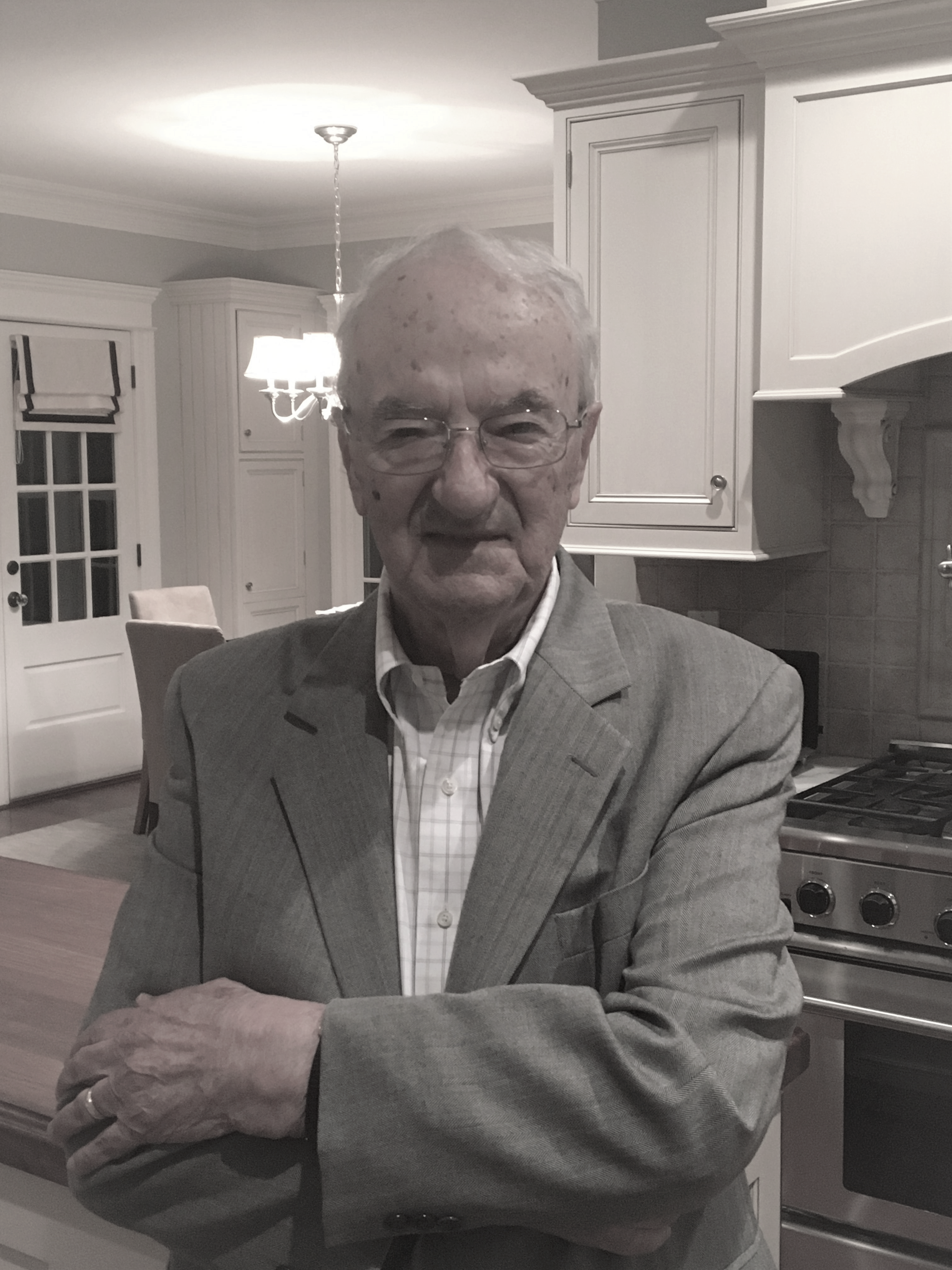

From SAMI REPISHTI
Part Six
Sami Repishti: – “In Albania, the communist crime of the past has not been documented and punished; there has been no ‘spiritual cleansing’, no conscious confession and denunciation of ordinary communist criminals! –
‘In the Shadow of Rozafa’
Memorie.al / During the 1930s and 1940s of the last century, as the relentless fascist and communist deluge descended upon Europe, sooner or later upon the entire world, “fate” also seized the Albanian nation by the throat. Like all young people, I too found myself at a crossroads where a stance had to be taken, even at the risk of my life. Then I said “no” to the dictatorship, I took the road that had no end, a sailor on the wide, shoreless sea. The rebellious act that almost killed me liberated me at the same time. I am an eyewitness to life in the fascist and communist hell in Albania, not as a “politician,” a “personality” of Albanian macro-politics, but as a student, as a young man who became aware of my role, at that time and in that place, out of love for the homeland and the desire for freedom; simply, as a young man with a keen sensibility, faithful to myself, to a life lived with dignity.
Continued from the previous issue
VII
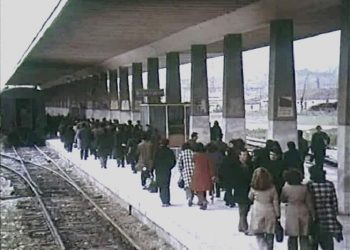
The first signs of dawn appeared in the East, while from the West, lights still shone in the darkness of the land, promising not to be far away. We approached. It was the port of Brindisi. Disembarkation was quick, as was the document check. The size of the city, the noise of life, and especially the railway station with a large number of trains lined up on different tracks, made a great impression on me. We bought “student” tickets and found seats in the last carriages.
The train passed through vast fields cultivated with skill. The village houses we saw from the windows were quite good. Everywhere people could be seen engaged in various tasks, especially farmers in the fields. The weather was nice, and I felt a particular pleasure from this bucolic view of the attractive nature. It was impossible not to compare them with the villages of our country, their work tools, their dwellings, and their way of life, which was very difficult. “How far undeveloped Albania is from the Western world,” I thought to myself, “and yet, how closes to it”!
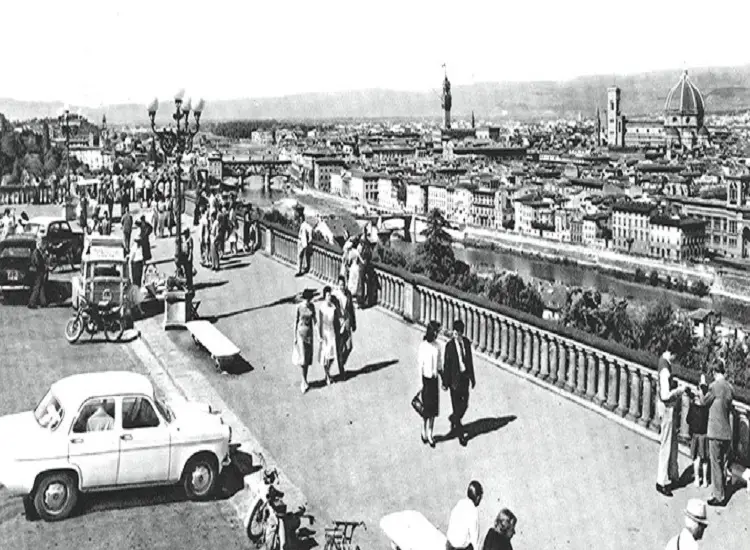
The journey was long, and after a night sleepless on the ship, I fell asleep leaning against the train window glass. They didn’t disturb me until the conductor’s voice began to repeat: “Roma, Roma, Stazione Termini, and Roma.” I woke up, took my suitcase, and crossed to the track for the train to Florence. Three and a half hours later, we entered the new station of the old, artistic city that would host me for one academic year. The warm welcome from the Albanian students at their club was a good omen for me. They showed me the inexpensive restaurants for students, later found me a “pensione,” while for the initial days; one of them offered me a bed in his room. The warm atmosphere that surrounded me helped greatly in my adaptation without difficulty, and enabled me to start the assigned classes immediately.
The large university halls were imposing, and their silence seemed to give them a solemn appearance. Generation after generation, Italian youth had been educated in these halls, increasing the creative and scientific potential of the Italian people. Here must lie the secret of progress. In the nearby building was the university library, which I began to attend persistently for long hours, due to lack of money to buy books. Nevertheless, my will did not waver. Studying, to a certain point, was also replacing the void created by my departure from political action in Albania. The first political meeting took place in November, on the occasion of Independence Day. More than two hundred Albanian students gathered in Piazza Michelangelo, on a hill overlooking the city. What caught my attention was the gathering of such a large number of students, without catching the eye of the fascist police.
The celebration quickly turned into a political demonstration. Passionate speeches followed one another. The pure red-and-black flag was unfurled, and the national anthem was sung. Despite the general enthusiasm, it was clear that this spontaneous gathering was not monolithic. Even here we were divided! I easily understood the spirit presented by the two main political currents of the country, and the speakers’ efforts to convince the listeners. The experience left a bitter taste in my mouth. When we dispersed, to avoid the arrival of the police, I left together with Qemal, a colleague I had known at the Shkodra high school (lyceum).
He was older and undoubtedly one of the most prepared and capable students. Along the side road descending to the city, I shared my concern with him. He smiled at first, and then later said to me in a tone of unrestrained anger: “I know ‘them’ very well; I have collaborated with ‘them’. My disappointment knows no bounds. Don’t make yourself a victim. You came for studies? Yes. Then pursue your studies seriously. The country needs cadres educated in the West. As for fascism, for me it’s a dead horse. Even here in Italy, it hasn’t taken root. It’s a form of government imposed by force, and it will be overthrown by force. But that is a political task, for the Italian people themselves…”!
I told Qemal parts of my experience in Albania and my state of mind. The account was painful for me. However, it relieved me spiritually; I felt as if I had unloaded a heavy burden. He listened to me attentively, and after a short silence, said: “You are not alone. Many of us have gone through that phase. Now, dedicate yourself to your studies! Don’t forget that our country will never be free, as long as it does not have a formed and conscious intellectual class. This class is the conscience of the nation. It leads or misleads a people. But without it, a people have no perspective”!
In daily contacts with Albanian colleagues, we exchanged thoughts on the situation in Albania. The majority were convinced that the war would end soon, and Italy would leave Albania. But few were those who had a clear idea of what would happen after the occupier’s departure. It was an enigma that created fear.
With Italian colleagues, I didn’t have many discussions. The vast majority of them lived under fascism, without knowing it and without any influence from it. When the Duce’s name was mentioned, it was accompanied by vulgar words or mockery. They didn’t want discussions, not even about the future. Their main concern was the end of the war, the removal of food and clothing ration cards, and the beginning of a new life. But the question of how the war would end wasn’t raised, although they were convinced that Italy had lost. This whole process was shown with a certain disinterest that left me astonished.
One day, an Italian student from my class approached me, greeted me warmly, and asked: “Albanese”? – Yes! – I replied. The conversation that followed revolved around the day’s lesson. At the end of the hour, he offered to leave together, and during the walk, without any preamble, he said: “How do you view the Italian occupation in Albania?” At first, I didn’t know what to say. I was afraid of police provocations. But slowly, the Italian boy inspired in me a trust that was almost irresistible. Taking advantage of the question, I said: “Any occupation is unacceptable”! He smiled.
We sat down at a café. I expected something more from him, because curiosity wouldn’t let him rest. In order to gain my trust, he told me that his father was interned on Ventotene as an anti-fascist, and that he and his mother lived in Fiesole, a small town near Florence. I believed it all! After that day, we grew closer, and every day he would give me news broadcast by the BBC in London. Together we spent hours discussing politics. From him, I learned that in the three capitals of the Allied powers, declarations had been issued confirming Albania’s independence after the war’s end. My joy knew no bounds, and the political horizon widened with the birth of justified hope for a better future, in a free and independent homeland.
Fortunately, I had found a friend with whom I could speak openly. He told me that Italian colleagues kept their distance, for fear of “compromise.” We began studying together. We visited cultural and artistic centers in and outside the city, which he knew well. From him, I learned that in a small theater, one could see performances by the best actors, at student prices. When, at his request, I visited his mother, a true lady with greying hair, dressed in black, whom she had worn since the day of her husband’s arrest, I was received with an unusual greeting: “Thank you, sir, for associating with my son”! “Signora!”, I said. “Your son is wonderful”!
Military developments in Africa and Europe clearly showed that the Anglo-American allied coalition had taken the initiative and that the end of the war would be a complete victory against fascism. The Axis powers would be defeated. My colleague and I were flying with joy. Nevertheless, we did not interrupt our studies and preparations for the June exams. At this time, the Allied invasion of Italy was expected. Crossing the Adriatic had become dangerous, but it was the only way back to the homeland. Our concern grew daily. It was the general opinion that fascist Italy would begin withdrawing troops from Albania in the event of an Allied invasion of Sicily. Everyone desired to return, hoping for the liberation of the country. June proved to be a month of continuous tensions: constant studying, written reports, oral exams, projects, and above all, the problem of returning, with all the unexpected events we would face.
In this tense atmosphere, my Italian colleague invited me to lunch at his home. After a lively discussion inspired by political and military developments, the lady of the house asked me about my plans after Italy’s capitulation. I replied that I would return to my homeland immediately after the June exams. She fell silent. We all fell silent. The lady got up, approached, placed both hands on my shoulders, and said in a tone full of authority: “Don’t worry! In any critical situation, here with us, you have your home. After the situation calms down, you can return to Albania. Now, returning is dangerous.”
Such an offer, at such a critical moment for me, completely unexpected, had an effect I didn’t anticipate. The idea that I wouldn’t have to face a critical situation in a foreign country lifted my spirits. However, staying in Italy at a time when others were returning home seemed unacceptable to me. I thanked the generous lady and my colleague, but I was determined to return. The imminent liberation of the homeland was irresistible! A few days later, with the completion of the annual exams, I returned to my homeland on the last ship that sailed from Italy to Albania, which was liberated during its return to Italy. More than five hundred passengers, mostly Albanians, lost their lives…!
VIII
Returning to Albania warmed the family hearth and calmed my parents, who were worried about my fate. For several days in a row, I was filled with sincere love and satisfied their curiosity with stories from the distant land of my studies. The situation in Albania had changed radically. First of all, I got the impression that the very “society” of the city had undergone unbelievable changes. The complete politicization of the war against the occupier had gone so far that it was difficult to meet a citizen who had not taken a political stance. Before I left, this stance was almost a privilege of students. Engagement in the resistance was succinct and emotional. Such an embrace of the cause had divided the city’s population into two camps, now opposed. Anti-fascist elements, but outside the National Liberation Movement, the “nationalists,” were viewed with suspicion by the “communists.” For their part, the “nationalists” saw the “communists” as servants of “Pan-Slavism” and “cubs of Russia,” two powerful negative epithets in Shkodra. Other unbelievable epithets were thrown around countless and unthinkingly.
The possibility of dialogue did not exist. Everyone hoped that with the capitulation of Italy, expected any day, they would take control of the new Albanian state. One side made connections, unions, alliances with groups and “reputable” individuals, including compromised “government officials,” with the aim of increasing representation in a “coalition,” to fight “communism,” to preserve “ethnic borders,” to establish “democracy,” which in those days was synonymous with establishing “party power,” or a strong hand. The other side continued the intensive and organized propaganda of the monopoly on resistance, denounced all those who did not support it, carried out violent acts to intimidate the population, avoided debate about the future by focusing on the “war against the occupier,” and especially promised a new social order: “bread and peace, and freedom!” – Fundamental reforms, and the elimination of the “injustices” of the past.
Propaganda on two tracks, national and social, had found suitable ground, especially among the urban “proletariat,” small but proactive and organized. The organization of this working class, called to fight and overthrow the past social system, the “oppressive bourgeoisie,” was their strongest weapon. Individual actions were discouraged for fear of getting out of “party” control. Complete conviction, discipline, authorized action: a true army, armed militancy, with a revolutionary ideology! Before the war, in Albania, the “state” was a “community” of several families, with all the attributes of the patriarchal family, more than a voluntary association of free citizens. In Albania, the authority of the “head of the household” had generally remained high. The role of women was confined within the walls of the house, and spending one’s youth under the constant supervision of a parent was entirely natural.
The parent’s logic required judging every revolt, its essence and form. In this static environment, unsuitable for revolution, life seemed to proceed “calmly.” But its foundations proved unable to withstand a blow coming from outside, from a world beyond family influence. This blow came from the war and its consequences. One of them was “communist” propaganda and action in our country. The continuation of the patriarchal tradition became impossible.
The tumultuous events of the day did not allow for a peaceful evolution of the conflicts born in society. The violence used and the speed of successive blows created the atmosphere of a complete dissolution of the traditional social order of the Albanian family. From a community of families, which was the “state,” a new class of individuals began to emerge, organized in a “party,” forcefully claiming the right of the “state” and the power it brings.
In this confusion of thoughts, violent, harsh, warlike, revolutionary action found a suitable field for development. The calls for “war against the foreigner” resonated powerfully like the never-forgotten melodies of a people who never ceased fighting for survival. When the mudslide created in chaos began to roll, it moved with dizzying speed, astonishing the masses, until that day imbued with the spirit of a stagnant society. A new and decisive element had intervened in the country’s political life. It was the presence of the Great Powers in the tragedy that gripped Albania.
Ever since the “Allied” declarations of November 28th of the previous year, recognizing Albania’s independence, this “Allied” presence, instead of frightening Albanian society as in the past, expanded its history, elevated feelings, with the idea of the nation’s participation in the life-or-death duel with the Axis aggressors. The duel of the giants had taken on almost cosmic proportions: an entire world was with us, or against us. Albanians were active agents of history unfolding before their eyes.
And the Albanians stood firm! The resistance took on the character of a duel that transcended the boundaries of our local or national position. It took on the character of a duel for the preservation of the universal values of Western civilization! From the first meetings, I understood that the “nationalists,” the elements of the non-communist resistance, were well-intentioned, dedicated to the “national cause.” But they lacked the organization, the revolutionary leadership required by the times, or the ideological preparation. On the eve of war, when everyone looked with hope towards a different world from that of pre-war, but better, more peaceful, and more just, these elements had no vision of social justice. They worshipped the “political freedoms” of the old European world, which had failed to defend the continent from the fascist and Nazi plagues in Europe. Their horizon was limited, and in constant discussions, they clung to the idea of “ethnic Albania,” which stirred popular emotions but did not mobilize them for action. Their platform was a desire, more than a work program or action plan.
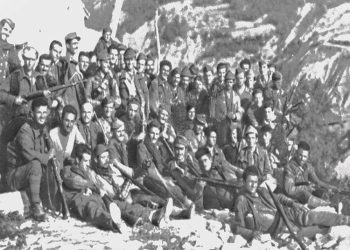
On the “communist” side, there were also many asocial, young elements, who, under normal conditions, would not have found a worthy place in society. However, for the sake of participation in the “National Liberation War” and the very nature of this “war,” the principles on which it was based and which it defended, these elements, known by others as “negative,” were clothed in new garments, presented a new spirit, and their willingness to fight for dignity and freedom secured them a privileged position in society, covered their past in oblivion, transfigured them into symbols of a future full of promises…! Participation in the war against the occupier inevitably had something irreplaceable, which nothing else in the reality of those days had the magical power to counterbalance.
There is no doubt that something noble had taken root in the hearts of the resistance participants, something that appealed to their better part, mobilized their positive sides, and covered, at least during this inspiring era, the monstrosity of the instincts of some of them, previously uncontrollable. There was no doubt that, in the resistance, they were concretely living a dream, perhaps hazy, but certainly desired with all their soul. For better or worse? During those days, that question was not asked by them. The resistance, the possibility to act without limits, was there, alive, strong, enchanting: at that moment, resistance was the answer to every “question,” it was in itself the great and ultimate truth.
I saw this state of mind especially in a group of young people, boys from well-known Shkodra families, but economically ruined, who felt left behind. The fall from a privileged social position was at the root of their revolt. The void created by economic decline reminded them that they had been stripped of any capital, and as such, they felt freed from any obstacle that might hold them back in their mad rush.
To this feeling was added the desire for revenge against a society that was developing without them, and which denied them the nurtured hope of regaining a privileged status in the existing social order. This order appeared less convincing every day, as it was stripped of the sense of morality imposed by the war against the foreign occupier. It was an order kept standing by economic opportunism and police violence. The race for quick enrichment, which came as a result of uncontrolled spending for the needs of the war, had intoxicated the privileged class with material goods and capital, gained without sweat. /Memorie.al