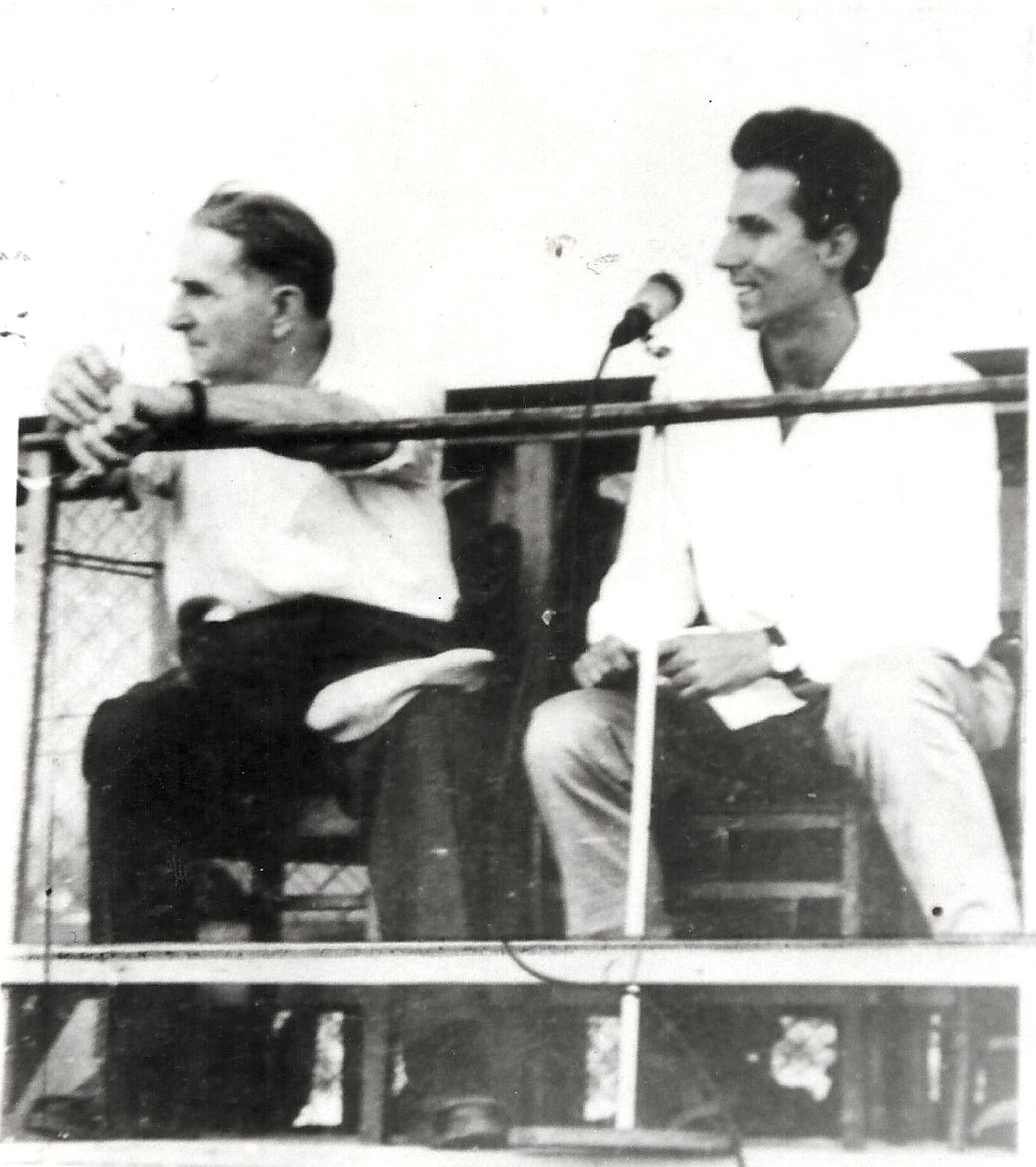
Memorie.al /I got to know Anton Mazreku up close nearly half a century ago. It must have been shortly after the match “17 Nëntori” – “Cherno More” of Varna (Bulgaria) 0-0 for the Balkan Cup, at the end of the summer of 1964. It was a somewhat significant meeting, as one might consider for the time, held in the hall of what was then called the “Ali Kelmendi” Palace of Culture (today “Ufo” University). A meeting of Anton Mazreku with sports enthusiasts, readers of “Sporti Popullor” (Popular Sport) and listeners of his radio broadcasts. I remember a surprising question was asked: who, in his opinion, had been the greatest footballer, Riza Lushta or Loro Boriçi. The question was, of course, somewhat naive in that packed hall, when you considered that the name of Lushta, who had played for “Bari”, “Juventus”, and “Napoli”, could absolutely not be mentioned! But Mazreku, after a pause of silence, answered diplomatically, without elevating one above the other, but defining them both as equals, as footballers of European stature…!
Four or five years later, around 1968 or 1969, I found myself near him quite by accident in the editorial offices of “Sporti Popullor”. Neither Anton Mazreku nor I could possibly have imagined back in that September forty years ago, that a time would come when a journalism prize would be established in his name, created by this young, completely unknown boy who was timidly entering the offices of “Sporti”. That day in ’68 or ’69, when we saw each other so accidentally in the newspaper’s editorial office, he was already somewhat towards the end of his great role, while I was simply a young man like all the others, though dedicated to journalism, as I was struggling through my first steps.
The brief episode for me lasted only a few moments, just as chance creates such spontaneous encounters. He with his rare courtesy, me with the shyness of a youth before a colossus. For a moment he took me for a footballer, perhaps because of my height, as I don’t believe I gave the impression of a footballer. He was sitting somewhere on a chair near a desk in that single office shared by the 3-4 journalists that “Sporti Popullor” had – that same newspaper which, some fifteen years later, fate would place on my editorial desk as editor-in-chief, for a good 17 years.
He looked up and with a disarming courtesy gazed at me, asking: “Center-back or, center-forward”? I felt a bit awkward, perhaps a little embarrassed, and replied in a half-voice: “Neither one nor the other, but I like to write.” “Very good,” he said. I left immediately. He was the great Mazreku, as we youngsters and all football fans called him. I was the one who, as fate would have it 28 years later, together with my friend Tonin Paloka, thanks to the nobility of Ambassador Silvano Pedrollo, would establish the “Anton Mazreku” Prize in journalism, without Anton Mazreku ever knowing it! Such are the strange and inexplicable coincidences of life…!
From that day on, I was never able to have contact with the great founding journalist again. He died prematurely, only 61 years old, in 1969, bid farewell with a ten-line obituary in the newspaper he himself had created, and for years he remained without any special honor, except in popular memory, I would say, in the conversations of that generation which he had thrilled for years with his writings, his voice, and his eloquence.
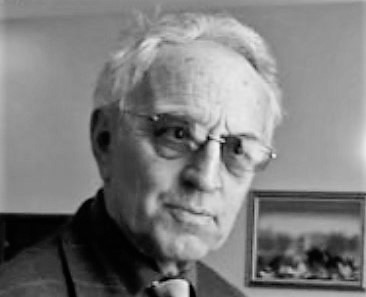
Who was Anton Mazreku…?
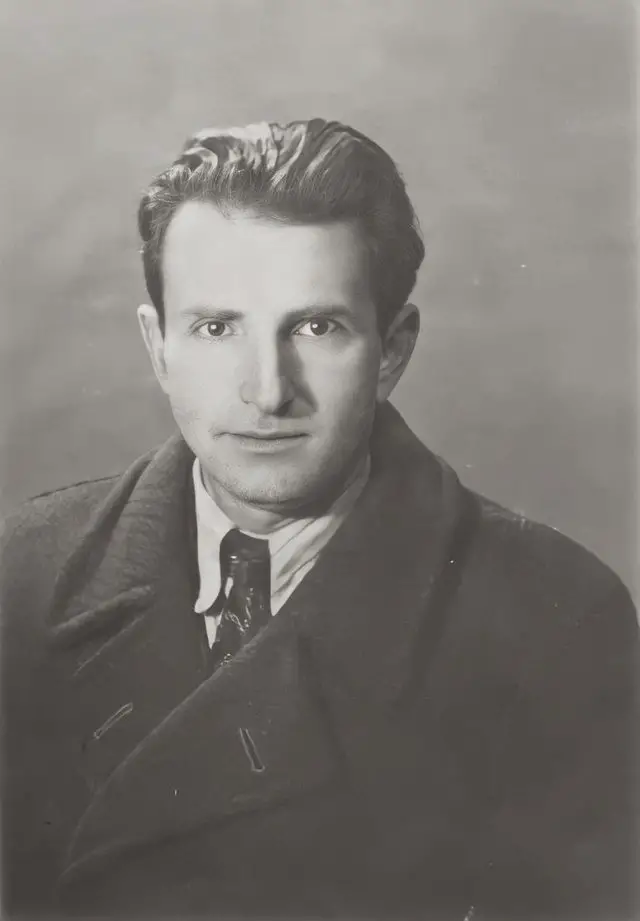
He was born in Shkodër in 1908. A footballer with the first sports clubs of that city. A footballer for Korça’s “Skënderbeu” – champions of Albania in 1933, when he was studying at the Korça Lyceum. As early as 17 years old (1925) he had published his first writings in Palok Nika and Musa Kopliku’s “Gazeta e Sportit” (Sports Gazette) in Shkodër. In 1935, the Kingdom appointed him to establish the newspaper “Sporti Shqiptar” (Albanian Sport), of which he would be director and which he published continuously until 1939.
He reorganizes and resumes its publication in 1945, the sports newspaper now under the name “Sporti” (Sport), while also being elected chairman of the Albanian Sports Federation. Later he would be vice-chairman of the Albanian National Olympic Committee, vice-chairman of the Albanian Football Federation, and its inspector until his retirement. He had also been a teacher for a short time – a teacher whom those who had him never forgot.
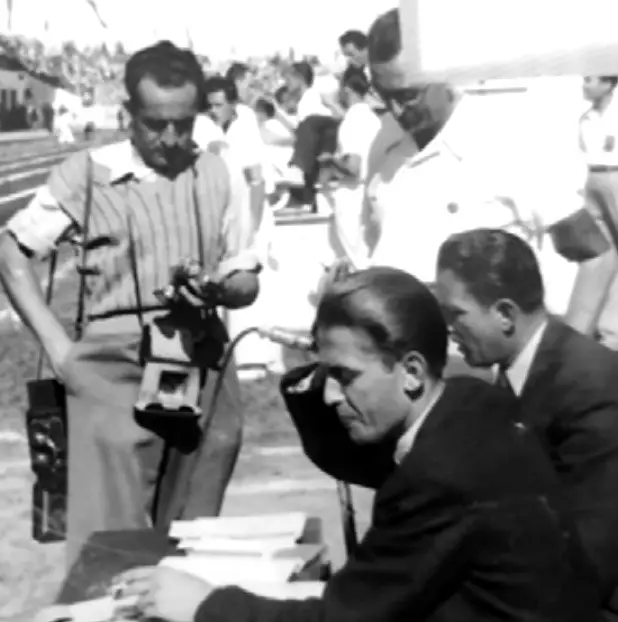
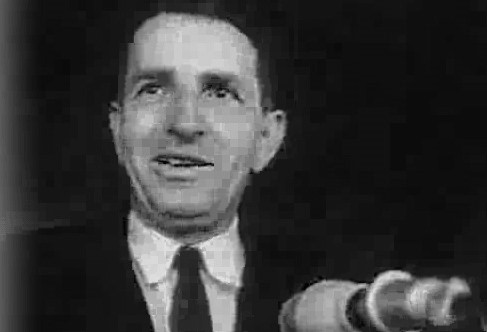
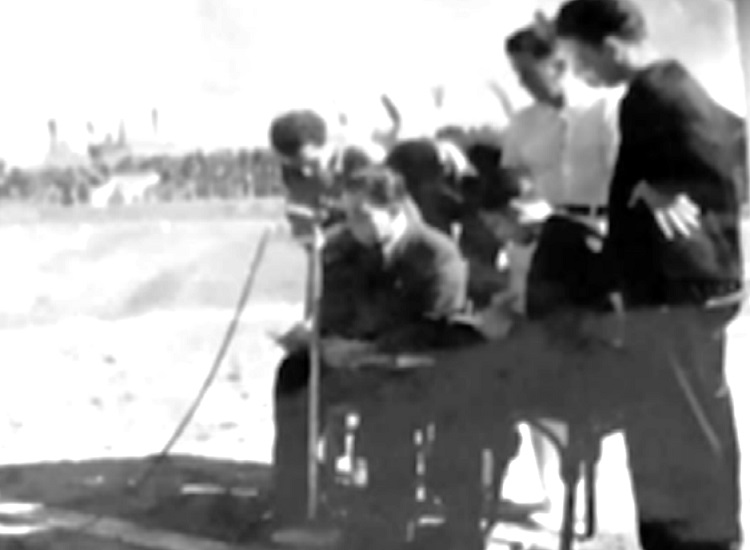
A great organizer of sports, representative of Albanian delegations up to the Berlin Olympics in 1936, one of the main leaders of the Balkan Games in Tirana in 1946, the multifaceted Anton Mazreku can undoubtedly be considered one of the founders of written sports journalism, and absolutely the sole founder of spoken journalism in Albania. He is the author of the first radio commentary on September 1, 1938 (Sport-Klub “Tirana” – “Iraklis” Kavala (Greece) 7-0) on Radio Tirana; which means he was the first and greatest Albanian radio commentator, for many years the only one in Albania.
A universal journalist, an outstanding figure of national culture, a rare organizer, indeed a historical character, among the most popular in Albanian life, a true literary artist, as seen in the critical study essay published by Prof. Dr. Jup Kastrati. Strangely, for Mazreku, all these things had not been said anywhere, neither during his lifetime nor for decades after his death!
This founder, who in the last years of his life was nothing more than one of the least rewarded pensioners, would come, like nobody else, to the editorial office of “Sporti Popullor” which he had founded, to bring the commentary on the Albanian second division championship!? That’s what his “colleagues,” to whom he had taught the profession, had assigned him! This is how it always happens in this small Balkan country of ours, in the struggle between ability and inability – a struggle that, strangely and commonly even to this day, is won by the incapable, the arrivistes, the humbly adaptable, and the egotists with an unscrupulous thirst for gain.
He didn’t put on airs, even though he was the living history of Albanian sport and Albanian sports journalism. Anton Mazreku was the journalist who, besides his mind, also had his notebooks filled to the brim. He was among those who felt on their shoulders the grueling side of this arduous profession, as beautiful and noble as it is. And he faced it alone, not with servants. He was from that race of journalists who would write an entire newspaper by himself and often deliberately forgot to put his name under it.
Just think for a moment: his last piece of writing dates from July 15, 1969, titled “‘Dinamo’ and ‘Naftëtari’ win the pioneers’ cups”! It was published at the bottom of the third page, as if it were an ordinary chronicle from a volunteer correspondent of some agricultural cooperative of the time. A few days later, in August, he suddenly passed away, and regardless, an obituary of about thirty lines appeared on the *fourth* page of “Sporti Popullor”. When it should have been on the first!
The Discovery of Dr. Samimi’s writing about Mazreku…!
Unexpectedly, while researching in the archive of one of the earliest organizers of Albanian sport and even of Albanian sports journalism, Dr. Vasfi Samimi, for the purpose of publishing an upcoming book about him; we discovered a short piece that Dr. Samimi had written on the occasion of Mazreku’s death in 1969. I don’t know the “mysterious” fate of this piece, although I believe I know very well that it was not published.
Surely Dr. Samimi’s piece was not accepted, because our Doctor, as another great founder of Albanian sport and Albanian sports journalism, was not exactly favored by the regime. And fate would have it that this writing of Dr. Samimi is published for the first time today, 39 years after Mazreku’s passing. Here it is, word for word:
“THE LITERARY FOOTBALLER”!
(On the occasion of the death of Anton Mazreku)
For forty consecutive years (1929-1969), I knew the literary footballer, the dear friend, Prof. Anton Mazreku. Now I recall with sorrow the first match in Vlorë, which was simultaneously also the first championship. He was opposite us, attacking; wanting to score a goal, but the match did not end in Korça’s favor. The day of the rematch came, an atmosphere of enthusiasm and nervousness in Korça.
The second match also ended in a draw; this issue cost Korça’s team dearly in the standings, as they were the surest contender for the championship title. And here a fine player distinguished himself, with elegant technique and style. I was told he was a journalist! A journalist, a student!
Later we continuously encountered him in the national press, on the fields, and in our stadiums. Several times he also traveled abroad and constantly contributed to a true football culture. Wins and losses were for him always a sports match and something natural.
And in the bitterest moments, he had a typical smile that characterized his confidence, his joy, and especially his great love for football, which now had become so widespread, a popular physical manifestation, not only among us but throughout the world. Anton Mazreku, for 40 consecutive years, maintained this characteristic trait of his, with which he won not only the admiration of footballers but also the consistent marathon of a football publicist in the press and on radio.
He played football in Shkodër and Korça with sympathy and joy, with correctness and gentlemanship. He experienced the fire of sports competition, the taste of victories, and along with it, and the pain of defeats. He ran and sweated for years after the ball, but his physique did not allow him to don the national team jersey, to defend with dignity the youthful strength of the sons of the eagle.
His main talent, his inexhaustible ability, was destined and concentrated in another field, that of a publicist, where he would contribute for almost half a century to the spread of modern football in our country.
He worked continuously in the press, in the federation, in translations, and after liberation he found a wide field for broader activity in the realm of football. He was synchronized with the progress of the international football scene. But despite this, he never despised domestic football. As a valuable educator, he knew well the basic pedagogical law: “A sapling is not corrected by bending and breaking it, but by guiding and nurturing it.”
He mastered three languages: Italian, French, and German, with which he formed and expanded his solid culture. He joyfully set himself the task of becoming a useful bridge in transmitting modern world football culture to our country. He would often translate terminology and enrich it both in the press and in the transmission of our football literature.
Any researcher who browses the old press and that of the post-liberation era can observe a significant positive change, thanks to which we are now able to describe, analyze, and criticize a serious match.
In this field, his contribution was great. Moreover, we see his sweat in many translations, regulations, technical instructions, and studied articles. Thus he worked for years without tiring or stopping. After the war, he fully developed and unleashed his talent, so much so that over 25 years, from a simple educator, he became one of the main figures in our football world. His interest and joy were not centered only on matches of the first categories but extended to the second and third categories and all the way to the Pioneers’ Cup.
He spoke and wrote with passion and pathos even about the small matches. Thus he spoke about the footballers of: “Korabi”, “Kastrioti”, “Sopoti”, “Valbona”, “Tërbuni”, “Patosi”, “Erzeni”, “Naftëtari”, and for the agricultural cooperative team of Krutja in Lushnjë. He was for the massification of football. He knew that young talents, the fresh and unknown saplings, were hidden in the masses, and there lay the future of national football.
It is an interesting fact that he simultaneously enjoyed these matches, insistently and joyfully seeking to discover talents who in the future would become stars of the national team, who would shake the backbone of some strong teams, even known in the world championship, right in the “Qemal Stafa” stadium. For example, here are two lines from his later writings dedicated to the development of the Republic Cup:
“The game in Peshkopi was quite attractive and characterized by frequent attacks and counterattacks. This time, the footballers of Korabi proved to be the best ‘snippers'”…! We find hundreds and thousands of such encouraging lines in his writings, because he felt, desired, and dreamed that, if possible, all of Albania would play football – that in every village, every cooperative, every factory and plant, a field and a team would be established, a calendar would be enlivened, and matches and victories would be recorded.
Every corner of our Albania would, if possible, become a garden of football flowers. A true, modern, and dynamic football, in world style and standard – and above all these, a beautiful dream and a legitimate desire:
“A national team. High technical, tactical, and moral level. Waving of flags, led by the red and black one. An atmosphere filled with the national anthem, then a triumphant march. A completely satisfied public, cheering and joy for our sport.” Behold the dream, the beautiful and legitimate desire that nourished our dear friend, the late Prof. Anton Mazreku, throughout his life.
Thus he shone from childhood until his 60s. Thus, with soul and heart, without any pause, he worked and melted his life away in the stadiums and in the press like a meteor, constantly illuminating our sports and football world. We will preserve his memory with respect and veneration.
We will follow his pure path, which shone in his characteristic smile full of confidence and love for the football of his country. A green lawn covering his grave is, without a doubt, a piece of the stadium, from the green carpet of our national stadium, and we believe that this is the best gift for the late Prof. Anton Mazreku.”/Memorie.al