By Ahmet Xhavit Delvina
Part Two
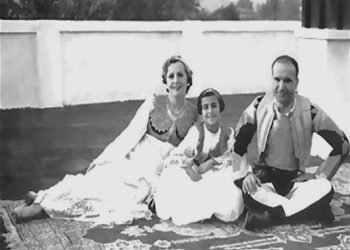
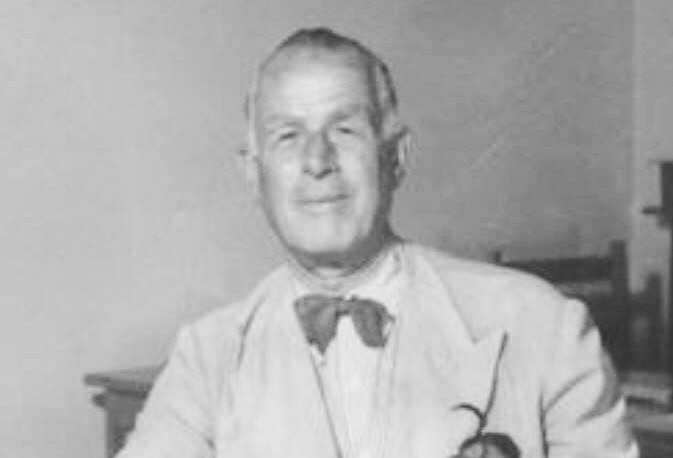
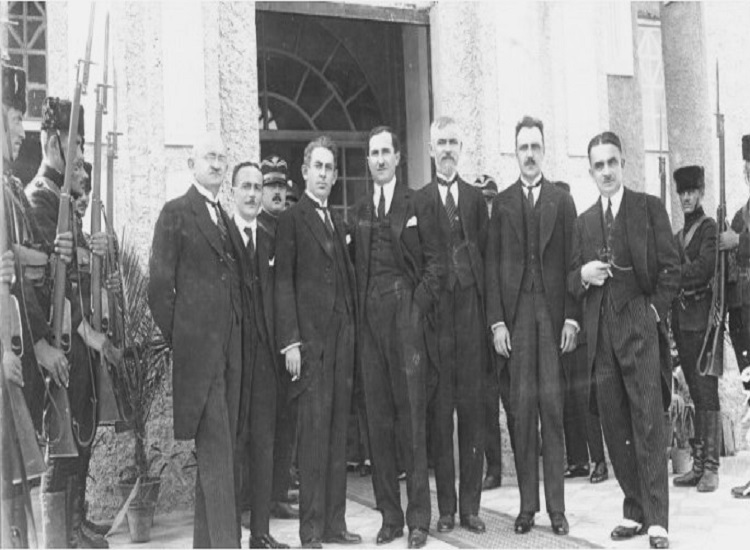
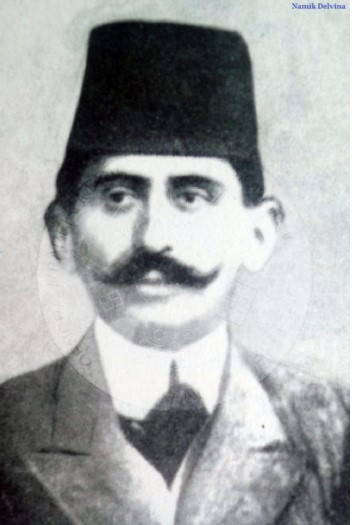
Memorie.al / I do not intend to dwell on our family biography, but I want to describe only some aspects of the life of my father, Neki Delvina, who was sacrificed like many of his peers for the so-called “Motherland,” which unjustly consumed his life. He was born and raised in Istanbul, in the “Galatasaray” neighborhood; consequently, the family had held Turkish citizenship since early times. He earned a Doctorate in Law from the Faculty of Law in Istanbul. In 1913–1914, after completing post – graduate studies according to all administrative rules of the Turkish government, he was appointed a judge in the Turkish city of Kars. However, he never began work there, as he responded to the call of his maternal uncle, Fejzi Bey Alizoti, who had raised him since his father, Sherif Bey, had passed away when Neki was very young. The call was to return to Albania because the needs for his profession were great; the new Albanian state had just been established, and Fejzi Bey held the post of Secretary General of the State.
Continued from the previous issue
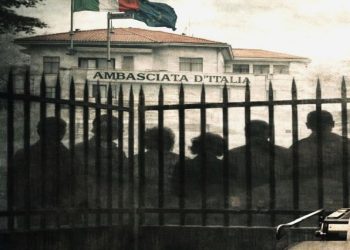
But it is precisely after this that the tragedy began for the two families under the communist power of that time – both for those two unfortunate men and for us. The events that followed did not flow according to fair human logic but according to the communist policy of terror. They were no longer allowed to return to Italy, quite unlawfully, under the pretext that the political situation had changed.
Our mother helped them by going to her cousin, Dr. Ymer Dishnica, who was then Minister of Health, to ask him to employ Dragush as a doctor. He immediately appointed him as a military doctor in the Gjirokastra Division; thus, they became unfortunate citizens of the “New Albania” like the rest of us. The way Dragush and my father had preceded was very “wrong” for the new situation we were living in; the customary way of honorably closing mutual financial obligations no longer applied.
Even today, we do not understand why these well-educated people – possessing a high level of honesty and faith in high values, ready to sacrifice for each other at any time because they were bound by blood – felt the need to draft such “ordinary” and bureaucratic documents, which were practices for common people and common business. Why? Why? Why did my father take a receipt from Dragush stating the factual transaction: that he had handed over to him the entire amount of gold that Hiqmet Bey had given our father at the time of their escape? The receipt even described the characteristics of this sum, which consisted of French gold Napoleons, known by the people as “Roosters” (Gjel). Why this documented proceeding? Why?!
It seems to me they did it specifically to bring trouble upon their own heads. Where did my father intend to justify himself with it?! Not to mention, who would have even asked for it? This fatal act for that evil time we lived in put both of them in an extremely dangerous and difficult situation: both the one who carried this amount of gold everywhere he went, and my father, who fanatically guarded that “cursed” document of delivery!
The ordinary origins of Enver Hoxha’s family, lacking traditions in culture, behavior, or wealth, had transmitted to him as a genetic heritage – alongside his known “perverse” moral vices – a delusional desire (fandaksur, as they say in Gjirokastra) to get rich as quickly as possible. This was accompanied by a thirst for revenge against the social classes that stood above him and his family, the Hoxhas.
Families such as the Selfos, Omars, Kokalaris, and others, who enjoyed privileges above the Hoxhas, were the first to be subjected to Enver Hoxha’s genocide. His constant desire to extort their wealth and then their lives when he felt the supremacy of these families or specific individuals accompanied this “Monster” throughout his life! He showed “special concern” particularly for his childhood friends who unfortunately came from noble, merchant, or intellectual backgrounds. He realized this unprecedented genocide not only by “consuming” their heads but by plundering every kind of wealth they had built through hard work over the years. From this criminal campaign, he did not exclude our father, whom he pretended to love and respect, let alone countless others.
As I mentioned above, he knew we had this money, and since he could not take it through voluntary delivery, he ordered another method of “extortion.” It had been over a year since we had handed the money over to Dragush, and each party continued their life normally: Dragush in Gjirokastra and we in Tirana. The problem of the gold coins already belonged to past history and was almost completely forgotten by both parties; even when we happened to see each other, it was no longer part of our occasional conversations because that issue had already been resolved.
In 1947, our family continued to live in the four “white apartments” built by the Italians. It was an ordinary September day of that cursed year; my mother and father were getting ready for a routine courtesy visit. At that moment, like all women, our mother was grooming herself in front of a mirror in the drawing-room – one of the first rooms after the main door of the apartment. She was putting on some jewelry she had just taken out of their special box. Because of the considerable value of the ornaments inside, when she finished using them, she would usually return the box to my father, who would place it in his special briefcase, a safe-like case that only he administered; this was permanent practice.
However, they were running late, and a friend who had come to pick them up was insisting by ringing the doorbell. Under these hurried circumstances, they left the jewelry box in the drawing-room in front of the mirror and left immediately, locking all the doors. Leaving the house like this posed no risk to the security of the jewels because it was a new and secure house. When they returned from the visit and had just closed the front door, the doorbell rang. Father ordered Mother to open it; she saw a close family friend, Gani Çano, owner of the “Hotel International.” She welcomed him and directed him to the drawing-room.
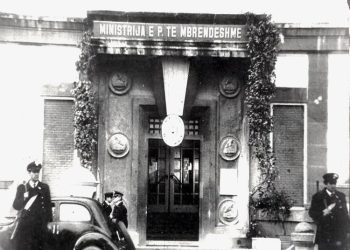
There, he encountered the open box full of jewelry. Mother apologized to Gani for the five minutes it would take for her and Father to settle in. Meanwhile, he was gazing at the jewels in the box; this posed no problem because he was a true friend. Before Mother could even go to inform Father that Gani had arrived and was waiting, the doorbell rang again. Mother opened it immediately and saw a police officer. She thought there was some misunderstanding, but he introduced himself as Captain Andrea Mema – chief of the Internal Affairs Section in Tirana. He entered directly without asking anyone and, in a loud and commanding tone, demanded to see my father.
Father heard him and came out immediately, politely accompanying him to his study, directly across from the drawing-room where Gani was. Fortunately, Gani heard Andrea’s tone with Mother and then with Father. He suspected something was wrong – such was that time, full of suspicion – and immediately looked out the window into the courtyard. There were two cars with armed policemen surrounding the apartment, pointing their gazes and weapons toward our home. He did not like this situation. In an instant, he took the jewelry box, covered it with his raincoat over his arm, signaled to Mother, and immediately left the house. He was a practical man; he went up to the third floor, crossed to the other staircase via the terrace, went down, and left immediately without being noticed by anyone – at the very moment the police were positioning themselves from the door to the stairs he had just passed, as Gani later told us.
Gani’s action and courage was the most wonderful thing he did for us. The jewels he saved quite by chance were not only spared from seizure and theft, but they kept us alive for several years as we sold them systematically. After about an hour of noise between Father and Andrea Mema, they went into the bedroom, straight to Father’s personal closet, and took the very secure, almost armored, safe-like briefcase. It was carried by a fat, dark-faced policeman. The three of them went out, got into one of the two cars waiting outside, and drove off. That night, we did not understand what this disaster unfolding in our house was; the next day, we learned that Father had been arrested along with the briefcase.
The robbery of that briefcase was a true catastrophe for our family – not only economically but on all other levels. In that cursed briefcase was the entire documented history of our ancient family spanning years, including very old authentic documentation and all the original property deeds from the Ottoman era, including those for our estate in Sarandë-Delvinë, called “Sarone.” It also held many very old and historically valuable correspondences belonging to our family, various school documents from all eras of my father’s upbringing, and finally, his personal archive of very important documents.
Additionally, unfortunately, that cursed briefcase contained a quantity of gold coins remaining from the rent brought by Ilia Muzina, a former dairy industrialist who had leased “Sarone” for grazing. Father would spend these gold coins by converting them into lek for family needs and to manage his diabetes, which required high expenses. He also kept several very old antiquities in the briefcase, inherited from ancestors and later added to by him – necklaces, rings, various decorations, and gold, silver, and bronze coins he had purchased for considerable sums; he valued them as they verified several debatable historical periods.
In these catastrophic moments, Mother immediately notified her brother of what had happened, hoping he would help us in some way, as she believed he had the power to do so. But unfortunately, he did not intervene, saying: “Your husband had that head, and we put that hat on it” (meaning he got what he deserved), adding, “let’s hope it ends here!” The situation in our house was very grave from every perspective, but the worst part was that my maternal uncle closed his door to us.
Two or three days after Father’s arrest, surprisingly, our new neighbor Sokrat Bufi (the father of Ylli Bufi) showed up at our apartment. He introduced himself as a representative of the local government and stated he was attached to the commission that would inventory movable property. “That is to say, to be clear,” he said, “I will register the furniture and belongings – the commission is charged with this task.”
He said these actions were being taken to strip us of any rights over any registered item. After this registration, we were to consider that we were living temporarily among state property “until a decision is made regarding Neki, who is accused of an economic crime. Thus, if the charge is proven, you will be sentenced to the seizure of all assets you possess, movable and immovable, and Neki Delvina, along with you, will be stripped of all ownership. Clear and period,” added Sokrat Bufi. He continued, “I am very sorry and surprised how it is possible that the true sister of a high leader of the war and our new state could be the wife of a ‘bourgeois’ and a bloodsucker like ‘this one of yours’ (referring to Neki). Strange!” Shortly after, he addressed Mother again, but this time in a commanding tone: “You will accompany the commission throughout the entire registration for any clarification they may need. You are obliged to perform this duty, period. And I warn and advise you to be careful and behave well and wisely, because there is no more ‘funny business’ (gili vili) – did you hear me? Say ‘I heard you’.” Mother, very dazed, nodded.
First, they entered the drawing-room. As soon as they entered, they scanned the walls and began to laugh loudly when they saw four oil paintings of various subjects hanging there. One of them turned to Comrade Sokrat and said: “Chief, shall we start the registration with these pathetic photographs?” He nodded. Later, we learned that this person who asked Sokrat was officially the legitimate chairman of the Commission.
I want to emphasize that it struck me how all members of the group, including Sokrat, pronounced words as “pure” Gjirokastrians (e.g., using “ki,” “ta kriesh” etc.) without actually being from Gjirokastra; it seemed they were imitating Enver out of the “great love” they had for him. This servility continued until he died – or “croaked,” rather.
A little later, this petty chairman of the commission turned to Mother and asked for a knife to sharpen his indelible pencil. Mother, with all politeness and fear, brought him a pencil sharpener incorporated into a crystal fish. Apparently, until then, they had never seen such a tool for sharpening pencils. When he saw that Mother had not brought the knife he requested – because that “tool” Mother brought looked like a child’s toy to him – he turned to her with curses and insults: “Who are you mocking, you bourgeois bitch, you scoundrel!” and threw it in her face, making her bleed slightly as it was made of nickel-plated aluminum, but Mother, out of desperation, remained silent.
Shortly after, Mother thought Sokrat might be more reasonable than the commission members and turned to him with a plea: if possible, not to register two of the four wall paintings. It wasn’t because she was worried about losing considerable monetary or artistic value, but those two paintings represented a great memory for our family – they were gifts for her wedding day to Neki. One was a painting of a dense forest by the original hand of the Great Russian painter “Kuindzhi,” considered one of the greatest naturalist painters of that time in Russia and even the world; furthermore, it was a gift from our father’s cousin, Faik Konica.
The second painting was also from the wedding day, a gift from Father’s cousin, Nuredin Bey Vlora. Its subject was a group of people, one of whom held a paper – I remember he was bald – and was reading it in the middle of the group surrounding him; they were all bursting with laughter. This “lecturer,” as Father called him, was Sirko of the Zaporozhians from beyond the Danube. This painting was actually a copy by another prominent Russian painter, and critics at the time said it was more successful than the original, but I do not remember the names of these two painters.
This was our mother’s prayerful request to Comrade Sokrat, who reacted immediately, but this time with a threatening tone: “Look, we are keeping you around for our clarifying needs, so I’m telling you for the last time: don’t make another sound, or we’ll throw you in with your husband. Do you hear? Say ‘I heard you’ and shut it; put a padlock on that stinking mouth if you don’t want us to ‘shut it’ for you once and for all.” From that moment on, Mother was silent, saying to herself: “Allah protects us, there is nothing these people say that they won’t do; they’ll throw you in jail and leave the children in the streets.”
Their ignorance and evil spirit were seen at every step of their work. Their barbarity reached its peak during the true scandal when they found Father’s tailcoat jacket in his wardrobe along with his ceremonial tuxedo. They were scandalized when they saw the tailcoat jacket cut in an arch at the back, where only two “tails” remained with unstitched or hanging linings. These “revolutionary ignoramuses” called this “mutilated” jacket a “raincoat” and convinced themselves the cut had been made for the purpose of sabotage, so it could not be used after seizure.
They started shouting at Mother: “We caught you red-handed; this is a true crime against the people’s property,” showing her the tailcoat. Putting aside the “arch-cut” tails of the jacket – since those “revolutionary ignoramuses” wouldn’t know the shape of a tailcoat – I want to explain why the linings of the tails were unstitched and hanging. This was the “act of sabotage” or “crime” they had “captured.”
After Father’s arrest, frightened and shocked, Mother anticipated another “visit” from the Sigurimi (Secret Police) to our house. Therefore, she felt it necessary to find a way to hide some “compromising” materials, as she didn’t want to give them reason to increase our troubles further. This involved many photographs taken during various high-level official ceremonies, such as those with King Zog or Victor Emmanuel III, etc.
For our family, these photographs represented very important memories of irreplaceable value that completed our family’s historical tradition. No less compromising for us at that time was the Genealogical Tree of our Delvina family, which was documented back to 1537 with irreplaceable graphic beauty. So, racking her brain on what to do with them to avoid another scandal, Mother remembered a conversation she had with two of her friends – the wives of Mihal Zallari and Zef Kadare – who had solved this problem in a quite original way: by hiding things inside the tails of a tailcoat!
Therefore, she performed this “trick” to perfection. I even remember that the day after we had arranged these things, we unstitched one side again and inserted all the correspondence my father had with a school friend, Fuad Köprülü (a descendant of the famous Köprülü dynasty, Grand Viziers of the Ottoman Empire), who later became the Foreign Minister of Turkey. Father always sent him Albanian postage stamps because he was a well-known philatelist.
But we were still worried: what if they found them? Then we unstitched the linings again, took out the “compromising” materials, and burned them with great regret. Unfortunately, we left the linings unsewn. This mistake became the cause for this entire absurd story; they suspected we had cut and torn the tailcoat – or “raincoat” according to them – for reasons of sabotage. Immediately after this scandal, Comrade Sokrat Bufi (likely to please the proletarians of the commission – I say this because we could never believe that he too was as ignorant as they were and had never seen a tailcoat jacket in his life), with unprecedented nervousness or animalistic behavior, turned to Mother:
“How can you not be ashamed to have reduced this new item to this state? Here, here – this is a compromising and flagrant fact against you, and for this, you will answer heavily, very heavily indeed.” My poor mother was completely disillusioned, both by Sokrat’s words, which were as heavy as they could be because we did not deserve them, “but I was completely stunned,” she said, “when I saw a commission member take 12 small Greek jam spoons with twisted silver handles from a shelf of the crystal cabinet and put them in one of his pockets. They were never inventoried. Only when that ‘legal thief’ realized I saw him did he approach me and whisper: ‘Keep that sh*t mouth shut if you know what’s good for you!'”/Memorie.al