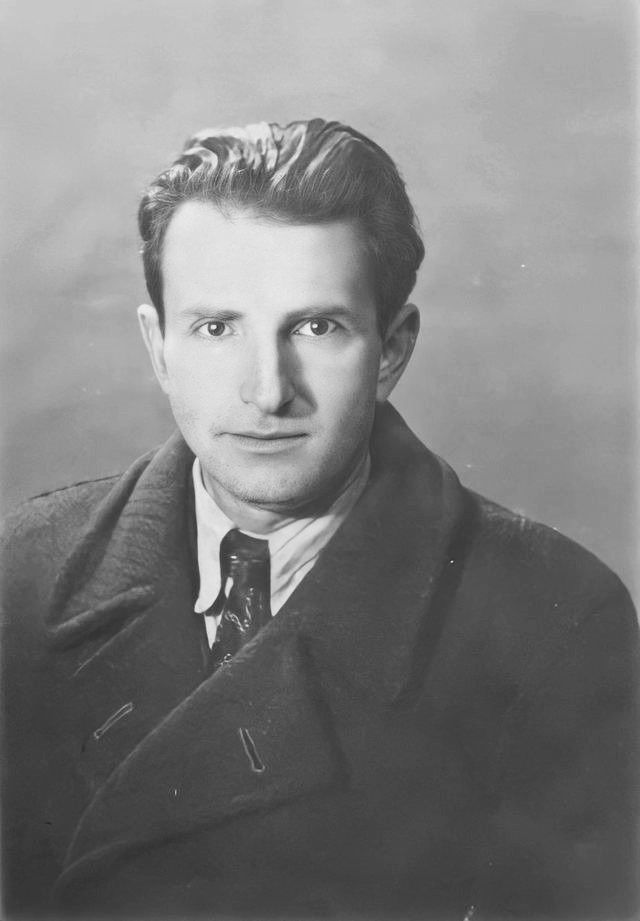


Memorie.al / The creative, publishing, literary, and cultural activity of Anton Mazreku spans a period of nearly thirty years, from 1925 to 1955. It can be found scattered throughout the Albanian periodical press, among the newspapers and magazines of his time. Today’s commemoration of the well-known journal “Sporti shqiptar” (Albanian Sport) – which he directed with passion and professional competence as a journalist and publicist for five consecutive years, from November 28, 1935, to April 22, 1939 – gives me the opportunity to say a few words of remembrance and respect for this outstanding intellectual from the Shkodra circle. Anton Mazreku’s cultural interests were broad and multifaceted. His contributions stand out in original poetic creation, literary notes, linguistic observations, and artistic translations of poetic, dramatic, and narrative works.
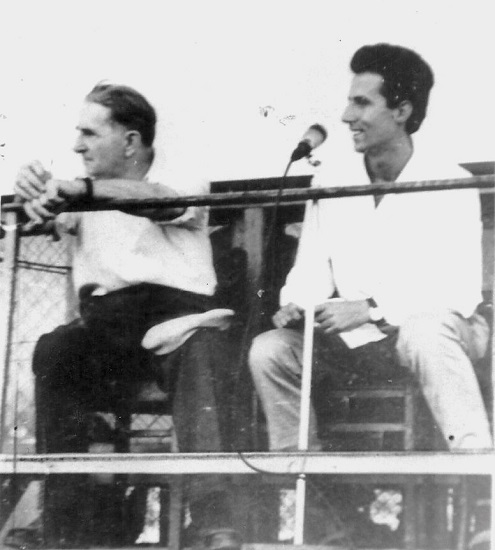
Since his name became famous primarily as a commentator on Albanian football through Radio Tirana – to the point that he created his own “school” of sports broadcasting in Albania – it might seem surprising that Anton Mazreku was engaged in other fields of knowledge. This is what I will attempt to elaborate on below, in this modest presentation of mine, without claiming to exhaust the subject in question. My only desire is to awaken the scientific curiosity of specialist researchers so that, in the near future, when a monograph on this renowned Albanian personality is published, some of his other merits are not overlooked – merits that, in my opinion, are just as important as his sporting aspect as a journalist, publicist, editor, director, and commentator in this valuable field.
Anton Mazreku possessed a deep literary culture. He was a lyric poet. His poetry is characterized by sensitivity, spontaneity, and fluidity. His masterpiece in this field is the poem titled “Two Tears and Two Flowers” (Dy lot e dy lule), published in the literary-artistic periodical “Shkëndija” (The Spark), Tirana, November-December 1941, Year II, No. 5-6, pp. 214-219. The poet laments the premature loss of a young maiden who died in the flower of her youth, at the age of eighteen, while she was preparing her wedding dowry. The poet writes:
“In the garden the flowers have withered, which you watered / with great care,” (lines 13-14), “Neither the carnation nor the rose lifts its head anymore” (line 17), “Dressed in gloom are the house, the streets, and the squares / Deserted they seem in every corner of the city” (lines 24-25).
The author provides both the moral profile and the physical portrait of the girl:
“Good and full of wisdom, the most beautiful among peers” (line 35), “Behaving toward everyone as a noble lady / and everywhere speaking so sweetly” (lines 45-46), “And with those black eyebrows and those eyes / which the pen struggles in vain to describe” (lines 50-51).
After creating her epic and prosopopeia, but without identifying her – to preserve the lyrical character of the work – and after expressing through anaphoric repetition “a thousand memories,” “a thousand thoughts,” “a thousand desires,” “a thousand dreams,” and “a thousand white hopes,” (lines 71-73), the Poet presents his maiden as an “example of wisdom and a mirror of virtues” (line 180). With prudence, he does not forget to logically and artistically include a moralizing side and an educational purpose. From the paradise where she resides, the goddess will teach Albanians:
“To love the Fatherland, to lend a hand to the weak, / To hate plunder, lies, and slander, / To love one’s companion as much as oneself, / To keep one’s word and to guard one’s honor,” (lines 192-196).
The poem “Two Tears and Two Flowers” is a sublime elegy, realized with art, finesse, and delicacy in 220 single-column hendecasyllabic (eleven-syllable) verses, with a rhythmic cadence and trochaic stress. The work, despite its motivated sentimentalism, is distinguished by realism, a wealth of ideas, and a rich vocabulary. It features a variety of colors and shadows of light. The patriotic theme is harmoniously included.
Among his original poems, Anton Mazreku also successfully cultivated the sonnet with rhyming hendecasyllabic verses: ABAB / CÇCÇ / DDHD / DHEE. Let us mention here his original creation titled: “I pity you…” (Po më dhimbesh…), published in the magazine “Shkëndija,” Year III, No. 11 (35), p. 23, Tirana, September 1943. I believe it is not necessary to provide further examples. The poem and the sonnet mentioned above testify perfectly to his poetic vein.
Within the sphere of Anton Mazreku’s literary interests, literary criticism also holds a modest place. When Migjeni died on August 26, 1938, at Ospedale Valdese in Torre Pellice near Turin, among the first to mourn the loss of this young but great Poet in the Albanian periodicals were Lazër Radi, Qemal Draçini, Teufik Gjyli, Skënder Arrëza, Veli Stafa, Dhimitër S. Shuteriqi, and others. Anton Mazreku also wrote an article titled “National Education lost four precious sons within these two months,” published in the pedagogical magazine “Shkolla kombëtare” (The National School), an organ of the Ministry of Education, Tirana, December 1938, Year II, No. 21, p. 24.
After providing a short biography of the Poet, the author writes: “The merciless scythe of death cut him down in the spring of his life, at the age of 27 – a young flower in the garden of our education and our poetry. For Millosh Nikolla was not only a good teacher, but he was also a good poet. He died young, and the strings of his lyre were broken at the best of times, precisely when the sounds they produced had begun to move us.”
Then, as he comments on a portion of the “Unpleasant Songs” (Kangët e pakëndshme) and gives a characterization of his poetry, the writer adds: “Migjeni suffered and wept, felt and wrote. He saw the light of his youthful life being extinguished slowly, just as an oil lamp is extinguished on a forgotten hearth, and from his heart came sounds of a melancholy and a pain that tear the soul apart. Some ray of hope must have occasionally soothed the wounds of his illness, but it was a hope that vanished quickly, just as fresh dew vanishes before the scorching sun, and Migjeni wept again and sang again.”
The author partially comments on Migjeni’s poem “Suffering” (Vuajtja). The work concludes with these words: “He died far from the Fatherland in a foreign land. In the final moments of his short life, he would have wanted and perhaps would have been able to write his masterpiece, but ‘death froze those hands like gold,’ and ‘Migjeni’s final song was closed in the grave along with him.’”
Anton Mazreku also provided contributions to linguistic issues. In his article “Schools and Our Language,” written under the pseudonym “Krahi i rrmaktë,” published in the newspaper “Zani i popullit,” Shkodra, on July 18, 1925, Year 1, No. 13, pp. 1-2, the author emphasizes, among other things, the necessity of purifying the Albanian language from unnecessary foreign words circulating in the periodical press of his time. This important theme was also discussed in another article of his, “Poor Albanian” (E mjera shqipe), written under the pseudonym “Aku” and published in “Gazet’ e Korçës,” Korça, on August 25, 1929, Year XI, No. 10(661), pp. 2-3. In it, the writer speaks out against the use of unnecessary foreign words.
A linguistic work of special interest, particularly for the history of Albanology, is titled “A Giant Worker of Our Language: Prof. Angelo Leotti,” published in Tirana on December 27 and 28, 1930, across two consecutive issues of the capital’s daily newspaper, Year I, No. 187, p. 2; Year I, No. 188, p. 2. The author makes several biographical notes about the prominent Italian grammarian and lexicographer, as well as the well-known Albanologist Angelo Leotti. The writer also listed several quotes of positive assessment given to Angelo Leotti’s voluminous Albanian-Italian Dictionary by well-known scholars and Albanologists such as Norbert Jokl, Holger Pedersen, Lajos Tamas, Antonio Baldacci, Giulio Bertoni, and Paolo Emilio Pavolini.
Regarding the written language, I wish to underline an important fact that should not be overlooked by researchers of Mazreku: he wrote both of our main dialects, Gheg and Tosk, very well. His years as a teacher in Korça helped him know and use the southern dialect with such beauty and exceptional taste.
Anton Mazreku was a qualified translator of foreign lyrical artistic poetry. Among others, he translated into the original meter Heinrich Heine’s famous poem, “Lorelei,” which he published in the magazine “Shkëndija,” Tirana, January-February 1942, Year II, No. 7-8, p. 295. It opens with this note: “To be sung according to the melody of the same name composed by Friedrich Silcher.” It is translated with such great mastery that it sounds as if it were written in our mother tongue. I have in my library three translations of this poem: one in Italian by Tomaso Gnoli, in the book H. Heine, Antologia lirica, Milan, A. Mondadori, 1935; another translation of this poem was done by Arshi Pipa in the magazine “Fryma,” Year I, No. 7-8, p. 345, Shkodra, July-August 1944. Another translation of “Lorelei” is found in Albanian in the book Heinrich Heine, Poetry, translated from German by the great and prominent poet Lasgush Poradeci, Tirana, 1957. In my opinion, Anton Mazreku’s translation of this famous poem from German classical literature is the most beautiful and accessible.
To better concretize this idea, I am quoting this poetic jewel as translated by Anton Mazreku:
“I do not know what it means / that I am so sorrowful, / An old tale of the world / Is always in my mind. / When evening falls the air cools, / The Rhine flows peacefully. / And the mountain peak glows / when the sun casts its rays upon it. / the most beautiful maiden / Sits proudly up there; / Her robe is like a queen’s, / She combs her hair like gold. / She combs it with a golden comb / And for beauty’s sake a song / She sings with a high / and powerful melody. / With longing, the poor sailor’s / Quiet soul was seized, / He no longer sees the reefs of the sea / for he only looks upward. / I believe the waves swallowed / both boat and boatman in the end, / For Lorelei opened the grave / with the song that she sang.”
Anton Mazreku possessed a sense and intuition in choosing foreign poems for translation. It is known by researchers, literary historians, critics, and aesthetes that the poem “Lorelei” is one of the masterpieces of the famous poet Heine. It is distinguished for conciseness, laconism, synthesis, and density of thought. It is a highly condensed, tight, and “thuktë” (pithy) poem – as the Kosovars say. From this stems the difficulty of translating it from the German original into another foreign language, including Albanian. One must be a true poet and know well the specifics of Heine’s poetic art, as well as the source language, to capture the proper nuances.
The legend of Lorelei, the beautiful and enchanting singer, has its source in the existence of a steep rock of the same name on the right bank of the Rhine. The place is famous for the echo created by the waves and the roar of the rushing water, and for the victims among the sailors it swallowed. The legend says that up there, in the sunset or on moonlit nights, a beautiful woman appeared – a true nymph – who, by singing, attracted sailors who were so mesmerized by the melodious tones and her wonderful body that they did not see the banks and crashed and drowned in the steep rocks. The legend was literary developed in a ballad by Clemens Brentano in 1802, but Heinrich Heine likely took it from Alois Schreiber’s 1818 “Guide for those traveling to the Rhine.” The motif of Lorelei is very ancient. It is also found with Ulysses in Homer’s “Odyssey.”
To closely observe the ability of the talented translator of foreign classical German poetry, I also wish to recall here the poem by Wilhelm Müller, “The Linden Tree” (Bliri), translated by Anton Mazreku and published in the periodical “Shkëndija,” Year II, No. 9-10, p. 330, Tirana, March-April 1942. The poem is realized in our language in the well-known alexandrine or 14-syllable verse with a metric caesura in the middle. It is sung according to the melody of the same name composed by Franz Schubert. Here is just the first stanza, to savor the intoxicating aroma of this lyric:
“By the well before the gate there stands a linden tree, / beneath its shade I saw so many graceful dreams, / So many words its trunk bestowed upon me for love, / To it my soul rushed, both in joy and in grief.”
Anton Mazreku also made translations from the literary genre of drama. Let us recall here the one-act comedy “Lie Number Sixteen” (Gënjeshtra numri gjashtëmbëdhjetë) by Italian author Mario Buzzichini, as well as the dramatic piece titled “It is Important to Meet” (Me randësi asht m’u takue) by Italian author M. Brancacci. He published these two works in the cultural magazine “Vatra shqiptare” (The Albanian Hearth) in Tirana.
Undoubtedly, the book that worthily represented Anton Mazreku as a translator is the novel by Georges Sim, “Nikoleta e Dina,” published in Korça in 1930. Also of interest is the work of Armando Farcaroli, “Women of America” (Grat’ e Amerikës), and scenes from American social life, translated by Anton Mazreku and published in 1933.
In the series of his translations, one should also include the book by two Italian authors, G. Meazza and V. Baggioli, “The Game of Football,” translated from Italian by Anton Mazreku and published in Tirana in 1927. It is understood that this work has nothing to do with Anton’s literary creativity. I mentioned it only to draw the attention of the future researcher of his figure. This book is of special interest for the terminology applied by the translator in the field of sport, especially football, in a rich language and polished prose.
Taking a comprehensive look at all that has been presented above; we can say that Anton Mazreku provided a valuable contribution to the cultivation of lyric poetry, artistic translations, and Albanian critical and linguistic thought. I have a suggestion: that an exhaustive bibliography of all his articles published in the periodical press be compiled, all his work be typed, organized, and summarized in a single volume, which would worthily represent his figure. / Memorie.al