
By DASHNOR KALOÇI
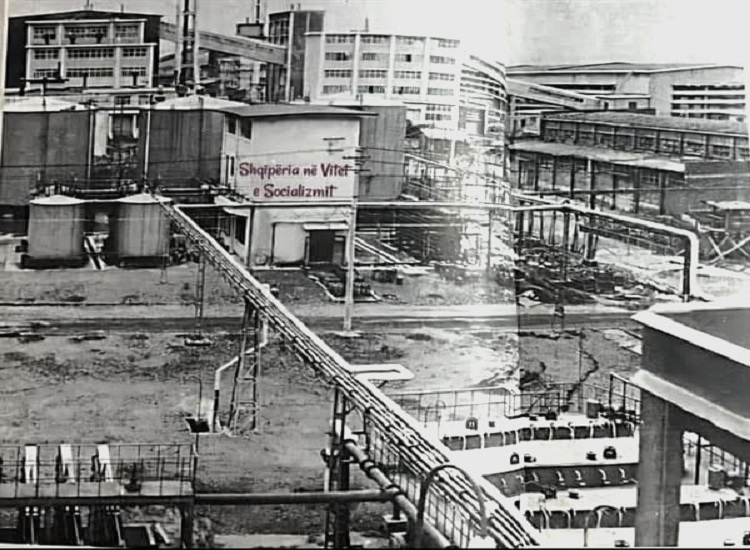
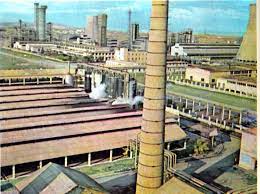
Memorie.al / The hazardous waste originating from the blast furnaces of the Metallurgical Complex in Elbasan – for which the Durrës District Prosecution requested 33 security measures yesterday evening (February 3, 2026), considering it the most serious environmental crime in Albania in recent decades – is not “unfamiliar music” to Albanians. This “curse” is primarily known to the residents of cities where the communist regime built and operated heavy chemical-metallurgical industry. The “Steel of the Party” Complex in Elbasan, the Chemical-Metallurgical plant in Laç, the Ferro-Chrome Plant in Burrel, and the Copper plants in Rubik and Kukës, since the 1960s–70s, have “produced” dozens of victims in addition to metals.
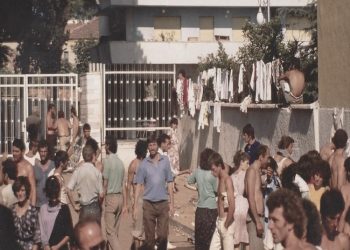
Looking at the developments of the last two years, this industrial legacy seems destined to remain an open wound for us Albanians for a long time. In almost all these plants, built with “brotherly Chinese aid,” alongside permanent pollution, technological failures have cost human lives. One of the most tragic events is that of June 9, 1979, at the Elbasan Metallurgical Complex, which was headed at the time by Hajredin Çeliku (later a member of the Politburo and a minister). In that “technological accident,” 6 people lost their lives within a few minutes, and many others were poisoned.
But how did this event occur in this work that Enver Hoxha called the “second liberation of Albania”? Who were the victims of this false industrial pride of communist Albania? Regarding this grave event, we are informed by secret documents retrieved from the Archives of the Ministry of Internal Affairs, which are being published for the first time (along with the respective facsimiles) by Memorie.al.
SECRET OPERATIVE COMMUNIQUÉ OF THE MINISTRY OF INTERNAL AFFAIRS DATED JUNE 11, 1979, REGARDING THE GRAVE EVENT AT THE METALLURGICAL COMPLEX IN ELBASAN, WHERE 6 WORKERS AND ENGINEERS DIED FROM POISONING AND MANY OTHERS WERE TOXICATED
PEOPLE’S SOCIALIST REPUBLIC OF ALBANIA S E C R E T
MINISTRY OF INTERNAL AFFAIRS Copy No. 1
GENERAL DEPARTMENT Tirana, June 11, 1979
OPERATIVE COMMUNIQUÉ NO. 136
ELBASAN
On June 9, 1979, around 09:30 – 11:00, at Plant No. 12 of the “Steel of the Party” Metallurgical Complex, brigadier Shkëlqim Ali Gripshi, age 34, born and residing in Elbasan, told the workers of his shift brigade that he would go to work at the reservoir to clean it, and therefore they should wait for him there.
In fact, he had gone ahead to check the condition of Circulation Reservoir No. 1 in the gas department, as the brigade was to work there cleaning sulfur residue. The brigade arrived at the site, and since the brigadier did not appear as he had stated, they left.
On June 10, 1979, around 09:00, when the next shift went to the reservoir to begin work, they saw Shkëlqim at the bottom of the reservoir and attempted to pull him out, but as soon as they descended into it, they were poisoned. In the attempt to rescue one another, 10 other workers were poisoned.
Finally, they were pulled out, and besides Shkëlqim, the following also died: Edmond Xhevdet Hodo (22), Ferdinand Kurt Manaj (24), Hiqmet Gani Kanaçi (20), Bukurosh Mehmet Muça (24), and Musa Riza Paja (45).
Additionally, the following remain in the hospital: Vladimir Hajdar Skilja (24, technologist), Petrit Liman Qosja (29, driver), Mark Rrushit Simoni (30, chemist), Vilson Shefqet Agolli (25, metallurgist), and Roland Ali Spaho (23, worker).
The Operative Group established that the reservoir has been out of operation for about a month, as it had been blocked and required repair.
Technical safety regulations were violated by that brigade, as they were negligent and did not perform the necessary measurements of gas saturation in the reservoir, assuming that there was nothing in it since the reservoir had not been in use for a month. The poisoning was caused by hydrogen sulfide gas ($H_2S$).
Bujar Shefqet Gripshi (30, born and residing in Peqin, head of the gas department of Plant No. 12) and Xhevahir Vahip Komani (26, born in Berat and residing in Tirana, with higher education, head of technical safety of this plant) were detained. Being in their respective duties, they failed to take measures for the safety and protection of the workers at work, and consequently caused the death of the aforementioned 6 workers./Memorie.al
CHAIRMAN
PILO SHANTO