By Dashnor Kaloçi
Part Six
Memorie.al / The history of parliamentary elections in our country, or more accurately the attempts at elections, have its origins as far back as the Ottoman rule, when Albania was part of the Turkish Empire. One of the first Albanian deputies elected to the first Parliament of Turkey, which opened its proceedings in December 1877, was Abdyl Frashëri. However, that parliament did not last long, as it was dissolved by the Sultan himself due to the outbreak of the Russo-Turkish War. After the dissolution of Turkey’s first parliament, there were several other attempts at elections, but they all failed for various reasons. The first regular elections in Albania were held only in 1908, when the Young Turks came to power in Turkey. Those elections were not direct, but through representation, or as they were otherwise known: with secondary electors.
The first Parliament of Turkey opened on December 10, 1908, and there, out of 266 deputies, 27 were Albanians elected in the four vilayets of Albania. At that time, members of the “Union and Progress” Committee in Turkey, which included many Albanians, split and grouped into three political factions. The first grouping was “Union and Progress” (the Turkish-Macedonian party) with 164 deputies, where 130 were Turks, 5 Arabs, 1 Greek, and 15 Albanians, who were led by Hasan Prishtina, deputy of Kosovo.
In the second group called “Liberal Union” (the Greek-Albanian party), which consisted of 45 deputies, there were 12 Albanians led by Ismail Qemali. Among other Albanian deputies in the Turkish Parliament at that time were Esad Pasha Toptani, Nexhip Draga, Rexhep Pasha Mati, etc. After 1908, there were several other elections where Albanians continued to vote for their representatives in the Parliament of Turkey, a situation that lasted until November 1912, when Independence was proclaimed and Ismail Qemali was elected head of the Government.
The first parliamentary elections in Albania, however, took place in the spring of 1921, as they had not been held until then due to World War I, in which Albania was involved. The first Albanian Parliament opened on April 21 of that year; the first building of the Albanian Parliament was located where the Academy of Sciences stands today. Participated in that parliament were 76 deputies, who were elected following a relatively regular process from the nine prefectures of the country: Berat, Durrës, Elbasan, Gjirokastra, Korça, Kosovo, Shkodra, Vlora, and that of the Albanian colony in the USA.
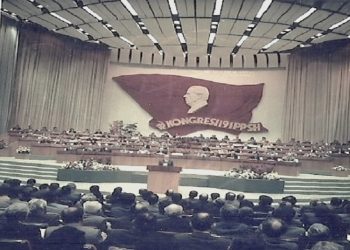
As in the past, those elections were conducted through a system of representation, or as otherwise known, with secondary electors, where based on territorial division, the representatives of each region had the right to elect their deputy. The above, as well as a brief history of parliamentary elections in Albania from that period until 1991, has been published by Memorie.al in previous issues; here we are publishing in full the Fundamental Statute of the Albanian Republic (Constitution) of 1925, where a special place is held by the parliamentary election legislation of that time, as well as the Regulation of Parliament, containing the rights and duties of deputies, published by the “NIKAJ” Printing House in 1925.
PENAL CODE 1928
Book One
ARTICLE 48. – When the mental state described in the preceding article was such as to significantly diminish culpability (pandehëshmëria) without totally eliminating it, the punishment designated for the committed crime shall be reduced in the following manner:
- The death penalty is commuted to heavy imprisonment for a term of no less than fifteen years.
- Life imprisonment is commuted to heavy imprisonment of no less than ten years.
- Perpetual disqualification from public office is commuted to temporary disqualification.
- In place of temporary punishments exceeding twelve years, a punishment of three to ten years is applied; when the temporary punishment exceeds six but not twelve years, a punishment of one to five years is applied, and in other cases, the punishment is reduced to less than half of what would have been assigned.
- Fines are reduced by half.
If the punishment is against personal liberty, the court may order that the punishment be served in an establishment under special guard; however, the judicial Authority has the right to provoke this measure, and in this case, the remaining part of the punishment is served in the ordinary manner.
ARTICLE 49. – The provisions contained in the first part of Articles 47 and 48 are also applied to anyone who, at the time of committing the crime, was in the state provided for in those articles caused by accidental intoxication (të dejmes akcidentale).
Whenever that state resulted from voluntary (volontaire) intoxication:
- In the case indicated in Article 47, instead of the death penalty, heavy imprisonment of no less than fifteen years is assigned, and instead of life imprisonment, heavy imprisonment of no less than ten years; if the culprit was habitually intoxicated (të dehunit e ka pasë zakon), the death penalty is commuted to heavy imprisonment for twenty years, and life imprisonment is commuted to heavy imprisonment of no less than fifteen years. Disqualification from public office is commuted from perpetual to temporary, and other punishments are reduced by up to one-third; when the culprit is habitually intoxicated, they are reduced by half.
- In the case provided for in Article 48, the death penalty is commuted to life imprisonment, and life imprisonment is commuted to heavy imprisonment of no less than eighteen years; when the culprit is habitually intoxicated, to no less than twenty years. As for other punishments, these are reduced by half, and if intoxicated by habit, by two-thirds.
When the culprit is habitually intoxicated, the punishment against personal liberty may be served in a special establishment.
The reduction of punishments specified in these articles is not applied in cases where the culprit becomes intoxicated on purpose (postafat) to facilitate the commission of the crime or to prepare a cause for excuse (excuse).
ARTICLE 50. – The following are not punishable:
- One who acted on the basis of a legal provision or an order received from a competent Authority, which they were obliged to execute.
- One who reacted under the necessity of repelling an immediate and unjust violence directed against their person or honor (chasteté) of themselves or another, and for repelling that violence had neither time nor other lighter means.
- One who did not act under the necessity of saving themselves or others from a great and imminent (imminent) danger to their life or that of another, which danger they did not intentionally cause, nor were they able to repel it by any other means.
- One who acted under the constraint of an irresistible (irresistible) material force or threats accompanied by a danger to the life, body, or honor (chasteté) of themselves, their parents, descendants, siblings, or spouse, when that danger is imminent (imminent) and could not be prevented otherwise.
In the case provided for in number 1, if the act committed in execution of the order of an official constitutes an offense, the punishment designated for that offense shall be imposed on the official who issued that order.
ARTICLE 51. – Anyone who, while performing an act under the circumstances provided for in the preceding article, has exceeded the limits set by law, authority, necessity, or constraint, shall be punished with imprisonment for a term of no less than ten years when the punishment designated by law is death; when the punishment for the committed offense is life imprisonment, they shall be punished with imprisonment of no less than six years, and in other cases, the punishment designated by law for the offense committed is reduced to no less than one-sixth and no more than half, converting heavy imprisonment into simple imprisonment, and temporary disqualification.
However, if in the case of number 2 of the preceding article, the counter-actor exceeded the limits of lawful defense because the attack (ataque) was sudden or they felt a great terror or a mental agitation, they are not punishable.
ARTICLE 52. – Anyone who has committed an offense while being seized by rage or great grief caused by an unjust provocation shall be punished with heavy imprisonment of no less than fifteen years when the punishment designated by law is death, and when the punishment is life imprisonment, they shall be punished with heavy imprisonment of no less than twelve years; in other cases, the punishment designated for the committed offense is reduced by half.
If the provocation was very grave and severe, instead of the death penalty, the culprit is punished with imprisonment from eight to twelve years, and instead of life imprisonment, they are punished with imprisonment from seven to ten years, and other punishments are reduced by one-third, converting heavy imprisonment into simple imprisonment and perpetual disqualification from public office into temporary disqualification.
ARTICLE 53. – When any person, by reason of error or accident, commits an offense to the detriment of a person other than the one against whom they had directed their act, not only shall the aggravating circumstances arising from the status of the offended or damaged party not be charged, but the circumstances that would decrease the punishment shall also be considered as if the culprit had committed this offense to the detriment of the person against whom the act was originally directed.
ARTICLE 54. – No prosecution shall be brought against anyone who, at the time of committing the offense, has not reached the age of ten.
However, if the committed offense carries the death penalty, life imprisonment, heavy imprisonment, or imprisonment of no less than one year, the Court, upon the request of the Prosecutor, may order the minor offender to be confined in an institute for education and reform, where such exist; this confinement lasts until they reach the age of twenty, and the court always has the right to revoke this decision of confinement or order that the minor be handed over to the parents or the person legally charged with their education.
In the event that the court orders the minor to be handed over to the parents or guardian, it shall instruct them to care for their safety and education and to observe their behavior; if they fail to observe them and thus the minor commits any sort of delict, they shall pay a light fine of one hundred to five hundred gold francs (fr. ari), as determined in that decision.
ARTICLE 55. – Anyone who, at the time of committing the offense, has reached the age of ten but not fifteen, and it is not proven that they possessed the power of discernment (discernement), is not punishable.
However, if the offense is punished by law with death, life imprisonment, heavy imprisonment, or imprisonment of more than one year, the provisions of points II and III of the preceding article apply.
If the culprit possessed the aforementioned power of discernment, the punishment for their act is conducted according to the following rules:
- Instead of death or life imprisonment, imprisonment from six to fifteen years is assigned.
- Other punishments are reduced, as a rule, according to numbers 4 and 5 shown in Article 48.
- Punishments of disqualification from public office and supervision by the Public Safety Authority are not applied.
These punishments are served in institutes designated for minors and cannot be used as a basis for recidivism (recidive).
ARTICLE 56. – Anyone who, at the time of committing the offense, has reached the age of fifteen but not eighteen, is punished according to the following rules:
Instead of death or life imprisonment, a punishment of twelve to twenty years of heavy imprisonment is given.
When the offense carries a temporary punishment exceeding twelve years, a punishment of six to twelve years is given; if it exceeds six but not twelve years, a punishment of three to six years is given, and in other cases, the punishment is reduced by half.
Fines are reduced by one-third.
If at the time of sentencing the culprit has not reached the age of eighteen, the court may order that the punishment against personal liberty be served in a reform institute, and disqualifications from public office and the placement under special supervision of the Public Safety Authority shall not be applied.
ARTICLE 57. – No prosecution shall be brought against a deaf-mute who, at the time of committing the offense, had not reached the age of fifteen years.
For such offenders, points II and III of Article 54 may be applied until they reach the age of twenty-four.
ARTICLE 58. – A deaf-mute who, at the time of committing the offense, even though they had reached the age of fifteen, is not proven to have acted with the power of discernment, is not punishable.
Nevertheless, if their offense carries the death penalty, life imprisonment, heavy imprisonment, or imprisonment of no less than one year, the court may apply the provisions of points II and III of Article 54, provided the deaf-mute has not reached the age of twenty-four.
If the actor has reached the age of twenty-four, the court may order their delivery to the Prefecture to undergo legal actions that shall be determined by a special law.
If it is proven that the deaf-mute committed the offense with the power of discernment and, at the time of the act, had not reached the age of eighteen, the provisions of Article 55 are applied (with the exception of paragraphs I and II); if they had reached the age of eighteen, the provisions of Article 56 are applied.
ARTICLE 59. – In addition to the extenuating causes expressly designated by law, if there are circumstances appraised by the court in favor of the culprit, instead of the death penalty, life imprisonment or thirty years of heavy imprisonment is given; and instead of life imprisonment, heavy imprisonment from twenty-four to thirty years is given; and other punishments are reduced by one-sixth to one-third.
ARTICLE 60. – In misdemeanors (kontravencione) committed by a person who is under the authority, direction, or supervision of another, the punishment is applied not only to the subordinate person but also to those who held authority or were charged with direction or supervision of the one who commits the offense, if those misdemeanors pertained to orders they were obliged to enforce, to be respected, and could have prevented with their care.
If the misdemeanor was committed by the order of the person holding authority over the culprit, or who is charged with their direction or supervision, and by violating legal provisions that they were themselves obliged by law to have respected, the punishment is applied also to the actor in the case that the Official Authority had specifically warned or instructed this person.
TITLE V
Initiative (Tentative)
ARTICLE 61. – Anyone who, with the intent to commit a felony (delikt), begins its execution with appropriate (idonei) means but, due to hindering circumstances independent of their will, does not complete all that is necessary to finish that felony, unless the law designates otherwise, shall be punished as follows: If the designated penalty for the felony is death or life imprisonment, they shall be punished with heavy imprisonment of no less than ten years; and in other cases, the punishment is reduced by half to two-thirds.
If the initiator, by their own will, abandons the actions of committing the felony, they are punished only with the penalty designated for the act already committed, provided it constitutes an offense in itself.
ARTICLE 62. – Anyone who, with the intent to commit a felony, fulfills all that is necessary for its completion but the felony is not completed due to circumstances independent of their will, unless the law orders otherwise, shall be punished as follows: If the penalty for the felony is death or life imprisonment, with heavy imprisonment of no less than fifteen years; and in other cases, the designated penalty is reduced by one-sixth to one-third.
ARTICLE 63. – In misdemeanors, the initiative is not punishable.
TITLE VI
Cooperation of several persons in the same offense
ARTICLE 64. – When two or more persons join in the commission of an offense, each of the executors and direct (immédiats) accomplices shall be punished with the penalty designated for the committed offense.
The same penalty shall be imposed on the one who determined the other to commit the offense; however, if the perpetrator committed it also for their own motives (motifs), the determinant, instead of the death penalty and life imprisonment, shall receive heavy imprisonment from twenty-five to thirty years, and other punishments are reduced by one-sixth.
ARTICLE 65. – Anyone who joins in the commission of an offense by:
- Exciting the other or strengthening their decision to commit the offense, or by promising support or help after the offense is committed.
- Giving instructions or procuring means.
- Facilitating the commission with support or help given beforehand or while the act is being performed, shall be punished as follows:
When the penalty for the committed offense is death or life imprisonment, they shall be punished with heavy imprisonment for a term of no less than twelve years; and in other cases, the designated punishment is reduced by half.
No reduction of punishment is made for the offender of any of the acts shown in this article if the offense could not have been committed without their cooperation./Memorie.al