


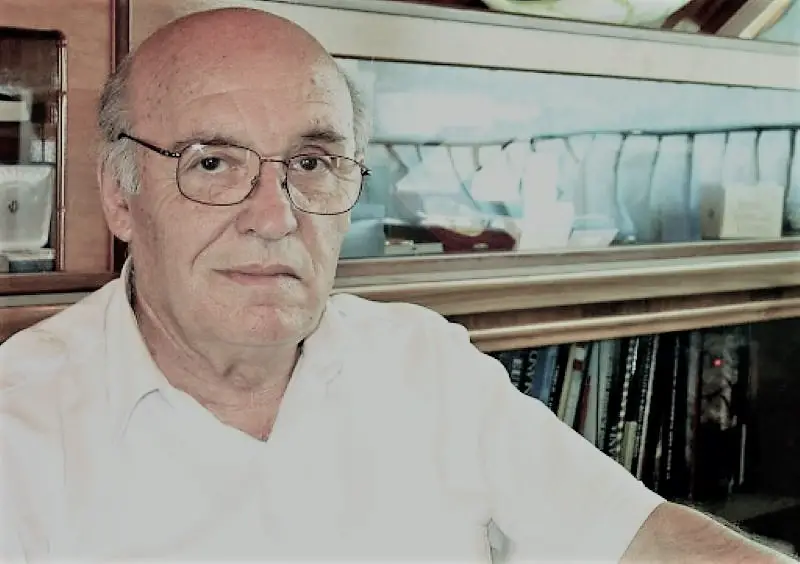
By Agron Tufa
Memorie.al/ We still do not fully know prison literature, or more broadly, the literature written by writers imprisoned for “political” reasons. I put the word political in quotation marks because even if the dictatorship found no declared conscience of opposition, it would easily – and as crudely as possible – fabricate a pretext for arrest and sentencing. I maintain that we do not yet fully know this prison literature, which the writer Visar Zhiti (himself a famous former prisoner) has christened with perhaps the most accurate notion: burgologji (prisonology). This notion has already become an operational term whenever the literary and memoiristic narrative regarding prison subject matter is critically examined. In the last two years alone, the Institute for the Study of Communist Crimes and Consequences has brought to light two capital works:
“Orlando Furioso,” Ludovico Ariosto’s chivalric epic poem translated over 18 years in prisons and internment camps by Prof. Guljelm Deda – two volumes of nearly 1,700 pages; a translation used as a tool for survival to escape madness, executed under the rhythm of pickaxe blows during heavy agricultural labor and marsh drainage. The manuscript consists of about 500 notebooks in fine handwriting. The other manuscript is the publication of the first part of the “Expanded Encyclopedic Dictionary of Albanian” by Father Benedik Dema, found in the State Security (Sigurimi) archives – another capital work of about 3,000 handwritten pages, authored by a “reactionary” priest.
I have seen and await the publication of Dostoevsky’s novels, which were translated and circulated in installments throughout Albania’s prisons – original translations by the prisoner Nazmi Seiti. Only two or three weeks ago, the staggering novel “Peach Blossoms” by former prisoner Hasan Bajo was promoted – a novel that once again brings us the Dantean reality of the cells and the animalistic brutality of communist interrogation violence intended to unmake a human being into a shapeless mass without identity, suffocated by fear.
Two or three years ago, a rare book of poetry by Kujtim Aliaj (1940-1995) was published – 200 pages of unknown poems titled “Different from Any Life” (Omsca-1, 2013), with an extensive preface by Visar Zhiti, his fellow sufferer. The poet was imprisoned at age 17 and only gained his freedom after the dictatorship fell. He is a poet who became one in prison, dreaming of freedom his entire life. “It is truly a unique and rare phenomenon in the world to learn and read poetry as an adolescent inside a prison,” Zhiti says in the book’s preface.
But I believe that in the prisons of Albanian communism, this was a common occurrence. Kujtim Aliaj’s poems are written with the raw material of prison – visions, hopes, and desires in classic meter and verse. Here is one:
Like a thief entering a house
Leaving nothing unexamined,
With eyes fixed back upon the door,
The wind entered the cave and the castle.
From there it reached the clouds,
Turning every color into gray,
Which themselves do not know why
This bitterness was born in their Lord.
And he spoke to them with a vengeful voice:
“Tonight I want the snow, my granddaughter,
To cast it upon the earth bit by bit
Let the white cover all that is black.”
Therefore, since the narrative of prison material continues to be published in the form of novels, translations, dictionaries, poetry volumes, diaries, and letters, it means that neither do we fully know it (nor have we cared much to), nor has it entirely become a “literary fact” – largely due to complete indifference and the uninviting, ungrateful atmosphere that has long existed among us.
Prison literature (burgologjia) and its authors have existed and continue to exist, regardless of our disregard and unwillingness to grant it the honor it deserves, based simply on the artistic criteria it has amply demonstrated. There have always been voices saying, “Well, we waited and waited to see what this prison literature would be… but see for you, judge it, nothing much came of it.”
This cynicism sounds hypocritical – those who, abstracting from the freedom and comfort they enjoyed thanks to their mercenarism, demand heroics and the impossible from prison literature. Yet, they are blind and cannot see precisely this heroism and modest grandeur.
In my view, prison literature is diverse and distinguishable by the generations that wrote it. First, we have the prisoners and those executed in the prologue of the dictatorship. The dictatorship consciously imprisoned and shot these writers and poets, knowing well they were poets – indeed, precisely because they were.
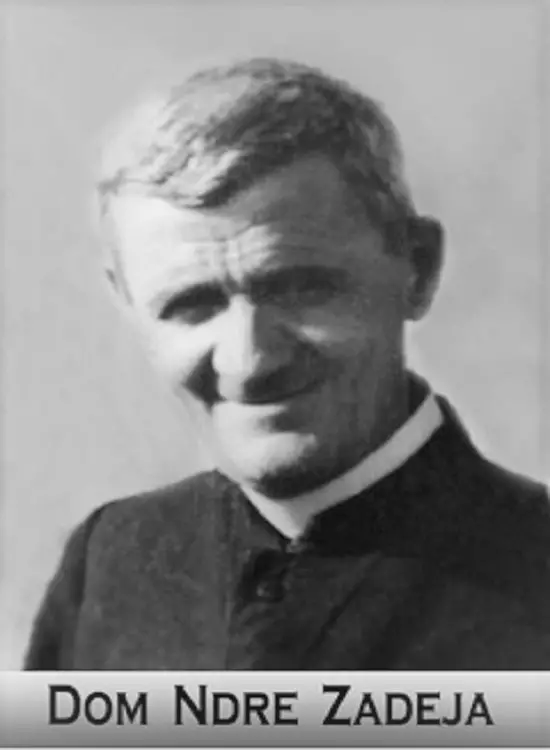
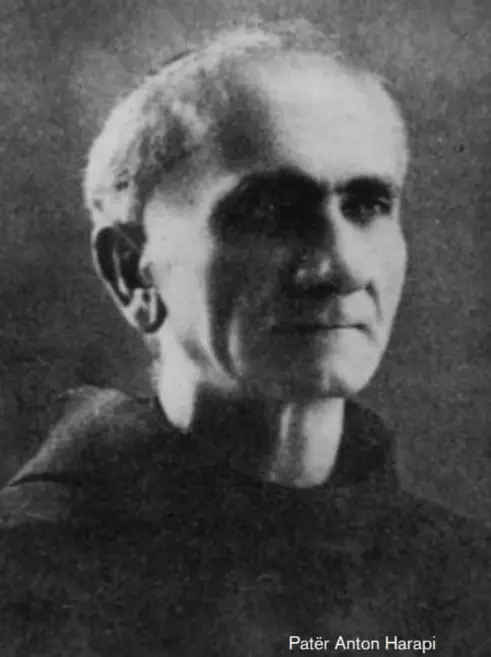
Some of the most significant names executed in the early years of communism are: Lazër Shantoja (a brilliant poet, translator, and publicist), Dom Ndre Zadeja, Father Anton Harapi, Bernardin Palaj, Beqir Çela, Qemal Draçini, Vinçens Prenushi, Ndoc Nikaj, Manush Peshkëpia, Trifon Xhagjika, Et’hem Haxhiademi, Lef Nosi, Genc Leka, Vilson Blloshmi, and Havzi Nela. Unfortunately, their work is known today only by specialists. School anthologies and chrestomathies remain wide open for former party poets, but not to represent these martyr-poets – strictly based on artistic and aesthetic criteria – with even a fragment of prose or a lyrical poem.
Among the surviving writers who managed to bear witness and write, the most important, in my opinion, is Father Zef Pllumi with his trilogy “Live to tell,” a work worthy of its epoch as a document, a testimony, and literature all at once – with incalculable cognitive, educational, aesthetic, and meditative value.
In this vein of memoiristic prose, the wonderful autobiographical accounts of Petro Marko (“Clouds and Stones”), Sami Repishti (“In the Shadow of Rozafa”), Father Konrad Gjolaj (“The Plane Trees”), Luan Myftiu (“Under Communist Terror”), Amik Kasoruho (“A Half-Century Nightmare”), Agim Musta (“The Black General, Nevzat Haznedari” and “The Killing Grounds”), Fatbardha Saraçi (“The Calvary of Women in the Communist Golgotha”), Fatos Lubonja (“The Re-sentencing”), Uran Kalakulla (“21 Years of Communist Prison”), Maks Velo (“The Anti-Sign Time”), Sokrat Shyti (“Survival in the Cow Shed”), Visar Zhiti (“The Roads of Hell,” “Broken Hell”), Ejëll Çoba (“A Lost Life”), and Beqir Ajazi (“From the Crowned Eagle to the Scythe and Hammer”) were written with art and nerve, as were the memoiristic and reflective books of Ahmet Bushati, Tomorr Aliko, Pjetër Arbnori, Bedri Çoku, and Dom Simon Jubani.
All these names of writers and works have made it possible over the years for one of the most realistic and shocking narratives in the repertoire of autobiographical prose and novels to grow within Albanian literature. To my knowledge, what has emerged is perhaps the highest-quality memoiristic literature written in the entire former communist camp of Central and Eastern Europe.
If we speak of literature in the elevated sense of artistic work, I would immediately highlight the capital contribution of Arshi Pipa’s poetry (“Prison Book,” Rome 1959) and especially his sonnet sequence “The Canal,” a Dantean inspection of the Maliq-Vloçisht extermination camp. I believe this poem, consisting of 26 sonnets, serves as an equivalent to Dante’s “Inferno” in Albanian literature. It suffices to mention the opening sonnet to understand the substance of this poem:
From Korça it thunders. Streams of rain
Flow from the tarpaulin over heads and bedding.
People huddle, shrinking under covers:
A mass where rags and human flesh rot.
Evening. Someone nearby coughs blood.
A gypsy child sings softly beyond.
One argues over the bit of water a comrade drank;
Another curses that his bread was stolen. A guard enters.
Clubs and kicks. Screams. The whistle blows.
Rest. Exhaustion lingers, everyone stills,
And those who can sleep for that night, sleep.
Like an infirmary, the barrack groans and sighs.
Tomorrow the canal, the swamp, awaits them all,
Save for those whom a lonely grave awaits.
Arshi Pipa wrote this poem secretly, hunched over, in a hospital bed in Korça, directly onto cigarette paper booklets; the unique manuscript was saved and is kept by his sister. He is a polyhedral figure who honors any great Euro-American culture, where indeed his work succeeded in many languages, as did his career as a professor in American universities. To our shame, not even one-tenth of his work has been published here; consequently, it remains unknown.
Among prose writers, I consider the extensive and now well-known work of Kasëm Trebeshina, present in school and university curricula, to be of particular importance. Equally significant are the seven novels of Astrit Delvina (“Red-Eyed,” “Sons of Tantalus,” “Even the Graveyard Has No Peace,” “Colored Dreams,” “The Globe in the Net,” “Pluto,” “Crossing the Rubicon”), which, unfortunately, have been ignored as faint publishing facts, never entering any system of reading or literary interpretation, even though doctoral theses are defended on them.
Likewise, a special place should be held by the forbidden literature of authors who emigrated and were sentenced in absentia, deprived of their homeland – heavyweight authors in Albanian literature such as Martin Camaj (now widely known) and Isuf Luzaj (with a rich and diverse corpus of literary and philosophical works, almost unknown).
A very distinctive and unjustly forgotten – or rather, unnoticed – writer is Makensen Bungo with the novel “The Marsh of Death.” It is a harrowing novel, written with extraordinary psychological force and controlled with an honest austerity in scale and style. An anxious autobiographical novel, an original Albanian Imre Kertész. Regrettably, one can hardly find anyone who has read this novel, published once in 1995. Shame!
Undoubtedly, the list of former prisoner novelists, writers, and poets is long. It continues with typical names relatively well-known for their creative profiles and numerous high-quality titles, such as Bashkim Shehu, Henrik S.G., Mehmet Myftiu, Zyhdi Morava, Jamarbër Marko, Gjon Marka Ndoj, Petrit Velaj, Pirro Kuqi, Drita Çomo, Dalan Luzaj, Agim Hamiti (“The Odyssey of a Detective”), and others.
The literature of the communist prisons and the authors who experienced prison and internment firsthand is a living, present, concrete fact. It constitutes one of the most important repertoires of Albanian literature, a unique and rich library, despite not being viewed with the seriousness its artistic value represents.
Unfortunately, many works have been published according to the authors’ limited means, often in faint and poor editions from publishers that are not always prestigious; hence, its titles are scattered and marginalized, without the fortune of becoming influential literary facts. One approach I propose should have been their systematization into a publication series, with professional notes and editorial work – a task belonging to state publishing policies, academic bodies, and university research centers.
For it is precisely this literature that defended national honor and dignity during 45 years of dictatorship, when all of Albanian literature found it impossible to defend it in an amoral era of surveillance – an era that gravely compromised its DNA with the conformism and servility known as socialist realism.
Prison literature lends moral authority and dignity to the entirety of Albanian literature, precisely where it feels most in crisis./Memorie.al