
-The Unknown Story of 1987, when 13 Referees Were Punished for a Train Ticket! –
Memorie.al / Following the cycle “Where Referees Have Erred and Not Erred,” we will revisit a financial process that began quite by chance, focusing on the football referees from the capital city. The catalyst was a letter from a Tirana referee, written to Sokol Morina, who was the head of Sports in the Executive Committee, informing him of a major “abuse” being committed by the football referees of Tirana, mainly involving train tickets, bus fares, and hotel bills. Concerned, Morina addressed the Football Federation, particularly the Finance Sector, to verify what Rahmi Kahrasani had written.
Thus begins a swift “trial,” engaging finance specialists, similar to what was done with volleyball referees in 1980. The two-story federation building next to the National Stadium “Qemal Stafa” became for a long time an investigation office, with referees coming and going to explain the accusations against them.
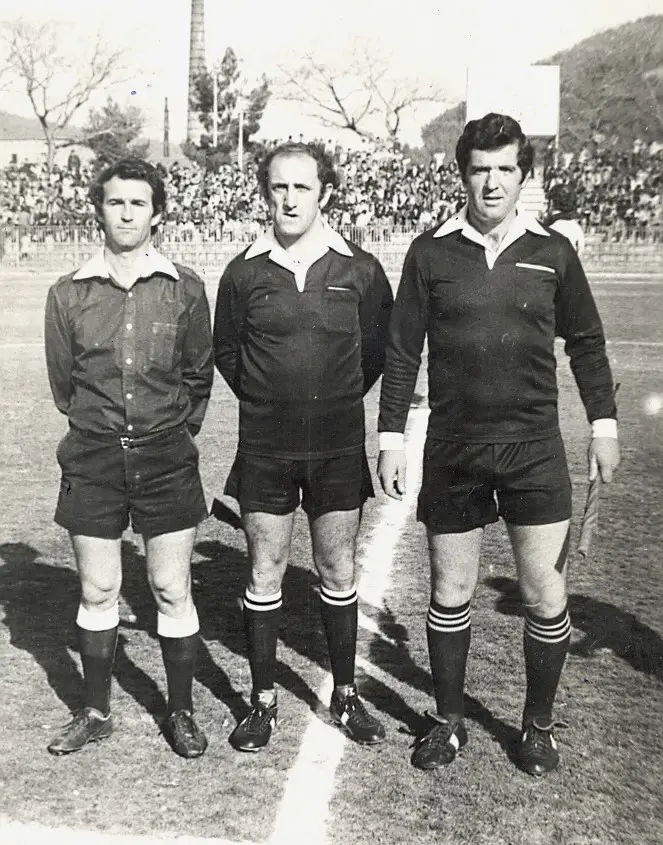
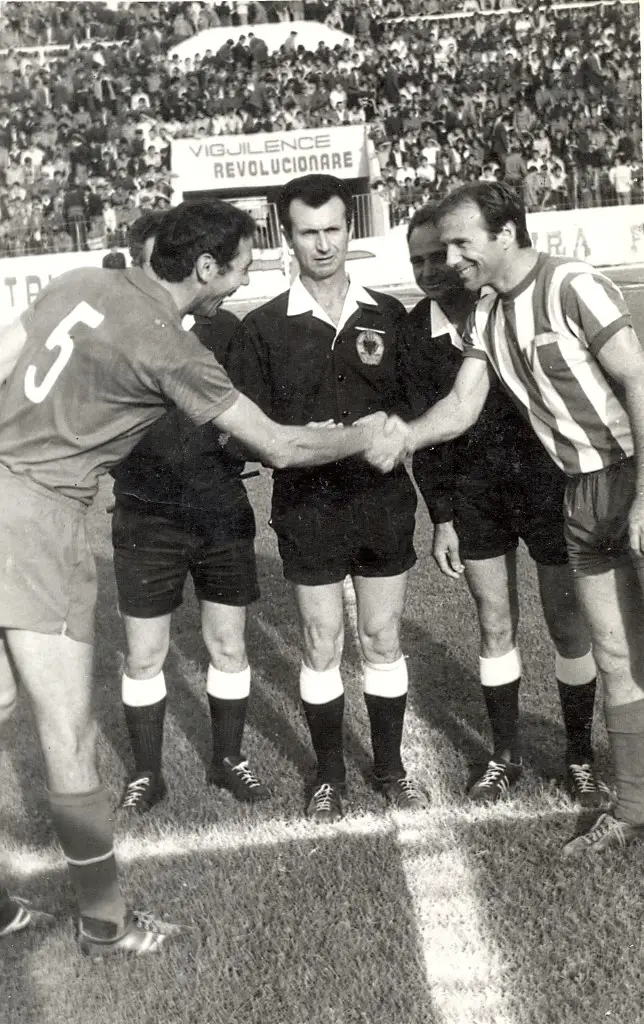
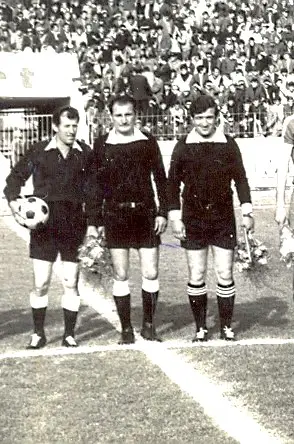
A story that continued for several months and ended with punishments, accompanied by a long list leading to exclusions from the collegium, the official activities of 13 “black jackets.” Many were compelled to abandon refereeing, while others clung to the hope of being pardoned and returned after a year.
“At first, a bus ticket from Himara to Vlora was found, then some irregular hotel papers in Kavaja,” recalls Agim Duka, the former Finance Chief of the Albanian Football Federation at that time. But how was the work organized, the sector’s mobilization, and the formation of groups across several cities for verification? Gëzim Gaçe, one of the referees, recounts those tense months with questions and answers today. All of this was just for a train or bus ticket…!
In search of retrieving a ticket.
It was a financial criterion that when you completed a service, to receive your allowance, you had to complete the service order with train or bus tickets and hotel receipts. This was a longstanding ritual for referees of football, basketball, volleyball, etc. Service began on Saturday, as by regulation, they had to be in the city where the match was held a day before. When possible, they would travel and return on the same day, using the first trains or available vehicles.
Travel was primarily by train or bus, with a few having motorcycles. To secure tickets, every Monday morning, you would find many referees at the station waiting for the first trains arriving in Tirana. Sometimes passengers were fans, and when asked for their tickets, they would respond with “I won’t give it to you, because we lost because of you yesterday…”! There was solidarity with students returning home from the weekend, and since they met every Monday at the station, they were familiar with each other.
Former Financial Chief, Agim Duka: “The investigation lasted several months, here’s how we found out, but we didn’t want them to be punished”!
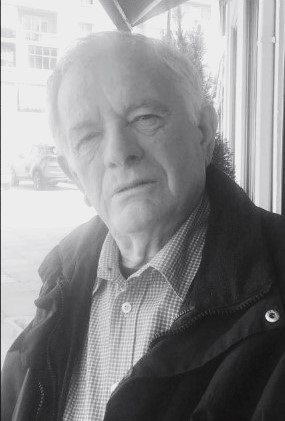
Agim Duka, now 70 years old, with many years of work in the past at the State Sports Committee, including the Football Federation and even as the head of the Finance Office, recalls the process as he was tasked with dealing with it.
“It was a letter from a referee in the Tirana Collegium, as I recall from the Second Category, addressed to Sokol Morina. Among other things, he informed Morina about how the football referees were operating regarding obtaining allowances and rewards, presenting train and hotel tickets that were not regular.
And rightly so, Morina demanded answers on this. He came to my office, expressed the problem, the concern, but with the wish and idea not to make it a big deal, if possible to close it, of course after verifying what the referee in question alleged.
A working group was formed to analyze the problem with federation employees and also from other cities. Cases where there were suspicions would be verified, and referees would be called to be questioned and to clarify, gathering detailed information. During those months, our office turned into an investigation,” begins Agim Duka.
What was the basis of the letter?
The accusing referee, as we were later informed, did it out of spite, resentment for not being activated and referred to several cases. It was about bus, train, and lodging tickets.
Did you have any prior information?
Such a stir occurred a few years earlier with some well-known volleyball referees, who faced punitive measures. With those from football, when we noticed small irregularities, within possibilities, we passed it without making it a problem, because we knew their sacrifices, difficulties, and low payments.
It was the system itself, legal provisions for sports, and they wanted to benefit somewhat, mostly from tickets and hotels. In cases when they traveled and returned on the same Sunday, they would leave on Saturday and present Monday’s tickets upon return.
How did the federation leaders react?
During that period, the chairman was Ali Vukatana, a person who was open, not closed off, even though he was from a military background. He was objective, loved sports, calm, and listened to specialists, making judgments based on the opinions he received from them. With a positive sense, he would often ask me, concerned: “Agim, can we avoid harming them?”
He knew that referees had issues, was aware of their conditions, and that they were stretched thin like Moroccans in the desert. Likewise, Kristaq Miço, the General Secretary of the Albanian Football Federation, was very correct and amicable.
How did you organize the work?
I went to all the sports clubs, where we set up work offices. Trustworthy people were involved, men and women who worked as financial employees in football clubs or were in the roles of auditors, to verify even at bus ticket counters where passenger tickets were sold.
What did you find?
As I said, since matches were played at noon, or with youth matches in the morning, cities that were nearby often saw some of the referee trios travel to and back on the same day. To secure tickets for the day before or later, they would go to the train station or the Bus Agency near the Clock Tower, waiting for the line buses to arrive.
What were the long and difficult routes?
Mainly to Kukës, Peshkopi, Bajram Curri, where 1 km cost 1 lek at the time. Or to Sarandë, where the ticket cost 295 lek. The train-bus route Tirana-Ballsh-Sarandë cost more in tickets than the daily allowance. Then there were the Second Category matches where the compensation was lower, not to mention the issues in refereeing. Delvina and Himara were among the most difficult for referees.
Was the origin from Himara?
It involved three referees from Tirana who had been in Himara months earlier. They presented a bus ticket, either going or returning, I don’t remember exactly, for the Vlora-Himara line, which cost 6.5 lek, but with an altered date by the conductor.
And what about the hotels?
There were small hotels, and it often happened that referees stayed in second category ones, which were cold, like in Maliq or Himara, where the night cost only 4 lek and they took hotel sheets as if they had stayed at Hotel Turizmi in Korçë or Vlora, which cost 8 lek, the maximum payment for a night’s accommodation.
In some cases, those who hadn’t actually stayed showed up as registered, or vice versa, with hotel sheets unrecorded in the hotel registry.
And moving on to the Kavaja situation?
I don’t recall the exact name “Hotel Kavaja,” but it was a small hotel in Kavaja, closed for renovation for a year. Yet, some referees had brought hotel sheets showing they stayed there while it was non-operational.
“You didn’t stay there, where did you get these hotel sheets from?” we would ask them. All referees from the Tirana Collegium, which was quite large in number, were called, but not the observers. We didn’t deal with them.
Did you call in the referee who wrote the letter?
Several meetings were held to find the “culprits” because this phenomenon was not in line with legal provisions, the morality of a referee, etc., as was claimed.
During the process, we called the letter-writing referee several times. He was frightened, as evident from his demeanor, a nervous person. He hadn’t imagined that his letter would have such implications.
How much was a match paid?
Two types of compensation were applied: the technical one, meaning for officiating, during the 90 minutes, the main referee received up to 120 lek and 80 for the assistants in the First Category, which was lower in other categories. As well as allowances, including tickets along with the hotel.
Payments were given with delay, in cash, and referees had to wait in line for days to receive them, both those from Tirana and from other districts. I recall Besa, the financial officer, Andrea, the unforgettable accountant, the people who comprised the Finance sector of the Football Federation.
How did the lengthy process conclude?
We became a storage for tickets and hotel sheets, and this process lasted several months. Excess payments were withheld; otherwise, the Finance office would have had to pay. In the end, several main and assistant referees were suspended. As I mentioned, only those from Tirana, not from the districts or handball games, even though the method we unveiled was “practiced” by everyone.
Why were fixed compensations not employed?
I remember that the method, form, and compensation for referees were drafted and included in a circular from the Ministry of Education and Finance. We had requested that their compensations and allowances change to fixed payments, but it was not approved by the Ministry of Finance.
What followed afterward?
Accountability was tightened, and there was fear, even though many formalities changed and the technical compensation increased to 250 lek (old currency) for the main referees and 150 for the assistants. This continued until a financial system with fixed allowances began to be applied.
Today, there are no more train or bus tickets…?
Absolutely not. Today, with the technical compensation, as far as I know, it varies up to 400,000 lek (old currency) for a match for main referees, and less for assistants. High figures covering everything. With today’s means, everyone travels within the same day.
So, there is no longer a need for a train, bus ticket, or hotel sheet. A very practical, efficient mechanism, quite different from how it functioned, how referees traveled, and the problems they faced in the past. Memorie.al