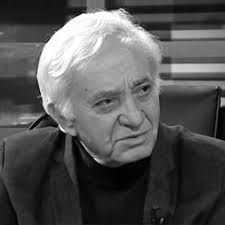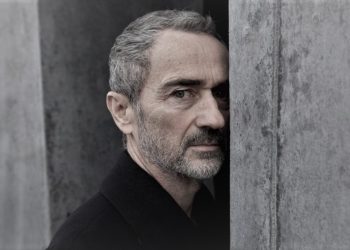
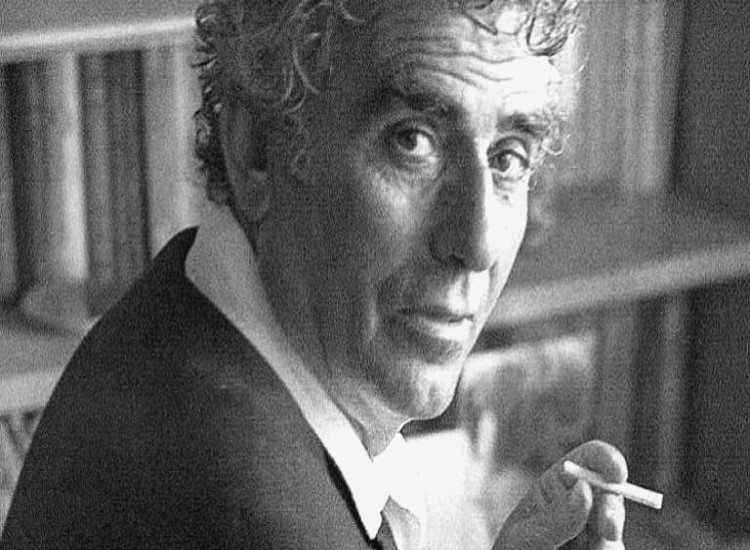
Memorie.al/He was born on Valentine’s Day, exactly on February 14, 1942. Lefter Çipa was born a son of Pilur, one of the seven villages of the “nest with seven birds,” as sung in a Himariote song, while the people of Pilur call their village “the roof of the world.” Their roots reached far back to the year 1750, with Gjikë Çipa among the first ancestors. They originated from the old village of “Katundi,” northeast of present-day Pilur. Lefter often recalled his father’s final wish, which “not even the earth can decay”: “My son, when my ancestors and I came into this life, we found a surname without a name. Over time, we gave a name to our surname; now it is your turn, and it will be easier for you to work for your name, for your surname already carries a reputation.”
After finishing primary school, Lefter Çipa’s family settled in Vlora. He was 14 when he began attending the “Halim Xhelo” high school, regarded as one of the best schools in the city. However, high school seemed insufficient for his broad interests, so he attended ballet school for two years while regularly following courses in music, song, and dance at the city’s House of Culture. In May 1950, in Vlora, the characteristic Vlora song group was formed with Kostandin Thano, Reshat Osmani, and Basharete Ismaili. Three years later, the renowned Meliha Doda joined the group.
Amidst the efforts for Vlora’s urban songs, the “Vlora Trio” began to take shape, becoming one of the most interesting and original groups in our country. It was a somewhat peculiar “trio,” precisely because Melihaja came from Prizren, Kostandin from Shkodra, while Reshat was born and raised in Vlora. Themistokli Mone and Reshat Osmani would travel to villages to study folk bards and the unique values of polyphonic song, which they considered treasures of the people’s soul. Themistokli had met Lefter Çipa at the city’s Palace of Culture and, on the eve of a festival, asked him for a song lyric.
Opportunity knocked on Lefter’s door, and he lost no time, writing the song “The Partridges Dancing” (Thëllëzat që hedhin valle) in one breath. It was 1958. “The partridges dancing, oh partridges / Dancing slowly, the partridges… / When the partridges talk, oh partridges / How they tease one another, oh partridges… / When the partridges walk the alley, oh partridges / How they stir the boys’ yearning, oh partridges…!”
Çipa wrote this poem when he was only 16 years old. Consider how young our poet was, yet he convinces us with his talent. It was a coincidence, but sometimes coincidence decides the fate of a life. Yet very few people know that the lyrics of the song performed with such mastery by the great Albanian singer Vaçe Zela were written by Lefter Çipa at the age of 17: “Your cheeks like an orange / Oh boy, how you’ve wounded me… / You are like a gazelle to me / You’ve completely stolen my heart… / Oh, poor me…”!
In the Golden Fund of the “Vlora Trio’s” songs, more than half bear Lefter Çipa’s signature. In 1961, the “Vlora Trio” presented the song “Our Vlora, Beautiful City” (Vlora jonë qytet i bukur) to the public. The lyrics were written by Lefter Çipa in honor of Themistokli Mone, Petro Marko, Vangjel Karbunara, Elham Hamzarai, and many other young men who studied abroad and returned to Vlora. The song was also very relevant for students still studying abroad or in Tirana.
While the author was watching the performance from among the spectators, the lyrics on stage sang: “Our Vlora, beautiful city / Adorned all around, / Boys and girls like butterflies, / Raised by Mother Party, / Lead us, oh dear Party, / Lead us…”! Lefter Çipa jumped to his feet; he thought his ears were playing tricks on him… but the verses were sung a second time: “Boys and girls like butterflies, / Raised by Mother Party…”?! Where did the “party” come from in that song? This was not his text… he had not written those lines. It was impossible! He pulled a piece of paper from his pocket containing the original lyrics.
Lefter was bewildered; he rubbed his eyes, his ears were ringing. Those were not his verses! He looked at the original text once more: “Our Vlora, beautiful city / Surrounded by olive trees, / Boys and girls like butterflies, / Will always return to you. / Wait for us, oh dear Vlora, / Wait for us, A dream by night, / A song by day, You are for us!” This treatment of the young poet was unbelievable and insulting, but the Party decided! To Lefter, this felt like a betrayal of Petro Marko. He returned to Pilur and no longer wanted to stay in Vlora.
In an attempt to appease him, they even arranged a meeting with Enver Hoxha, but the song remained stuck in the ears of those who had rehearsed it. Çipa felt redundant in Vlora. He returned permanently to his birthplace, Pilur, around 1962. He was only 19 when he made this irreversible decision, at a time when his peers coveted the city. Lefter Çipa was returning to the Pilur of his ancestors. In Pilur, he found his muse when he said, “Stars descend upon the maidens’ shoulders, / Playing and laughing over the fires of their bosoms…”!
Çipa dedicated his life to poetry as a message for polyphony. He learned this way of writing from Naim [Frashëri], whom he called a “God.” He called other poets angels who come after “God.” He was mostly interested in finding the antiquity of the Coastal songs, questioning elders, traveling from one village to another, and learning that the first recordings were made in Chicago, America, around 1905. There, where the Himariotes went for a better life, they sang “vënçe” (in the local style), all together – men and women – not just a few, but 20 or more.
During those years of research, Lefter became closely acquainted with another singer who gave a pathos – both lyrical and patriotic – to Himariote polyphony. This was Nase Beni from Vuno, who indeed carried the nation’s rifle on his shoulder, but beneath his woolen cloak beat a great Albanian heart. Çipa was marveled by his lyrics: “Who is the flower of the Vilayet / For whom the world has such affection? / Himara by the seaside, / Nested in Akrokeraun… / Men of the pen and the rifle, / Oh, brave captains!”
But if there is one singer who will remain for centuries in Albanian culture, it is Neço Muko (Himarjoti). Muko is the peak of Himariote song – exceptional in folk song, literature, and visual arts. Çipa studied Neço Muko’s legacy at length. He created the group “Thunder Mountains” (Malet e Vetëtimës) under his influence to bring light to the Coastal polyphony. Çipa browsed every newspaper or book about Neço Muko, who had moved from Himara to Greece, then to France, before returning to Saranda.
In Saranda, Neço had created the group “Friends of Joy” (Miqtë e dëfrimit). The entire choral group – including Koço Çakalli, Andrea Bala, Pano Kokaveshi, etc. – went to Paris, France, in 1929 to record songs, most of which were his creations. He collaborated with student singers like Dhimitër Rumbo, Llambi Turtulli, Kleo Georga, Tefta Tashko, Tula Paleologu, and others, making recordings of Himariote polyphonic songs with the famous “Pathé” label.
“Polyphony was not known in France, and Neço Muko was forced to set the songs to music, so he used instruments like the piano, two violins, and the mandolin,” Lefter used to say with regret. As Lefter Çipa put it: “Neço did not like many polyphonic songs being accompanied by clarinet and tambourine, because polyphony dies a virgin – it does not accept a husband.” For Lefter, Neço Muko was the reformer; he saw in him the idealist, the singer and poet, the hero, and the patriotic Himariote.
“He brought us the ‘Hymn to the Flag.’ Even if he had written and sung nothing else, Neço Muko’s place would be at the head of our national flag!” In 1932, Neço Muko fell ill. He began to have hoarseness in his voice; the disease progressed, and in 1934, he passed away in his birthplace, Himara. Çipa wrote touching verses as if he were present on the day of the Himariote legend Neço Muko’s funeral: “Girl of the waves, wait, / Wait for me weeping. / Remove the black scarf, / For I am an angelic boy!”
That 16-year-old boy in Vlora who wrote about “Partridges dancing,” later, around the age of 30, implored the “White Ewe” (Bejkës së bardhë), “The boys come through the heat,” “From this mud of this earth,” “Naim Albania,” “Albania why do your eyes weep,” “The outlaw girl in the mountains,” “Exile songs,” “Vito the Dove,” “Moon of the wide sky,” “Oh ring with the green stone,” “In the narrow alley,” “Oh friend, let me die from song,” “I sail in the boat of song,” “The violet’s song,” “Lady of beauty,” and later raised a hymn to the homeland with “The Songs of My Homeland.”
Since 1964, Lefter has collaborated with the Institute of Folklore. He participated in ethno-folkloric expeditions in the Labëria region and especially in the Coastal villages. He was a great help to the ethnographers who came to those parts, as he knew well the indigenous carriers of songs, dances, and ancient folk costumes.
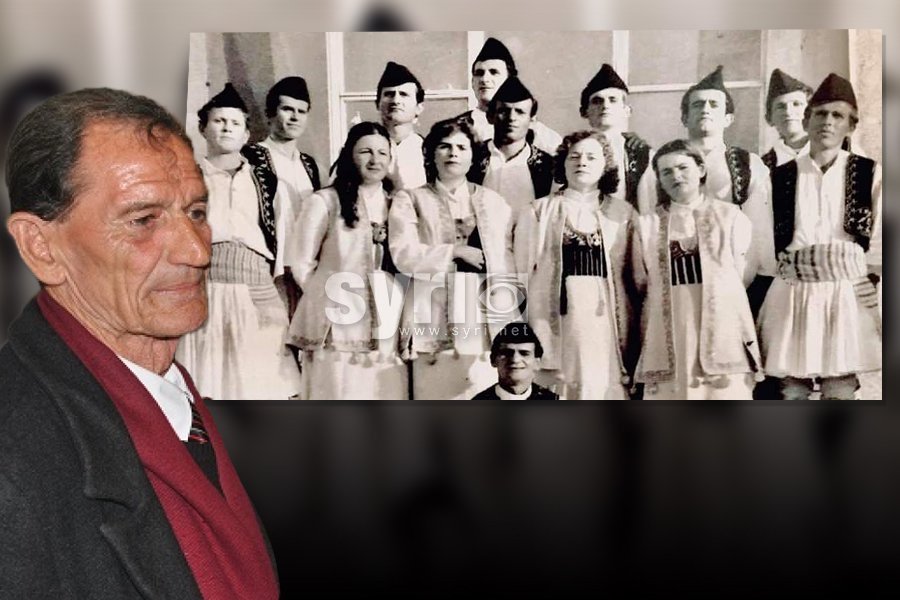
Some call Lefter Çipa the “People’s Bard,” others the “Prince of Love,” and in fact, he was an artist with strong roots in our musical folklore, who elevated coastal polyphony to magnificent heights, giving it a comprehensive reach across Albanian lands. Undoubtedly, he contributed to making Albanian iso-polyphony a part of world heritage through UNESCO.
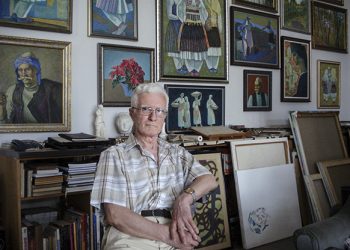
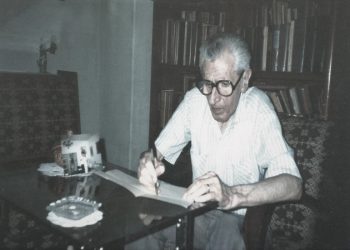
Lefter was an avid lover of books, owning 8,000 volumes of diverse literature – fiction, historical publications, cultural heritage, manuscripts, or memories collected from Coastal villagers and at national festivals. There are five unpublished volumes, manuscripts of the “Songs of My Homeland” series, of which only the first has been published. Lefter Çipa is the author of 20 books of poetry or studies on Coastal polyphony.
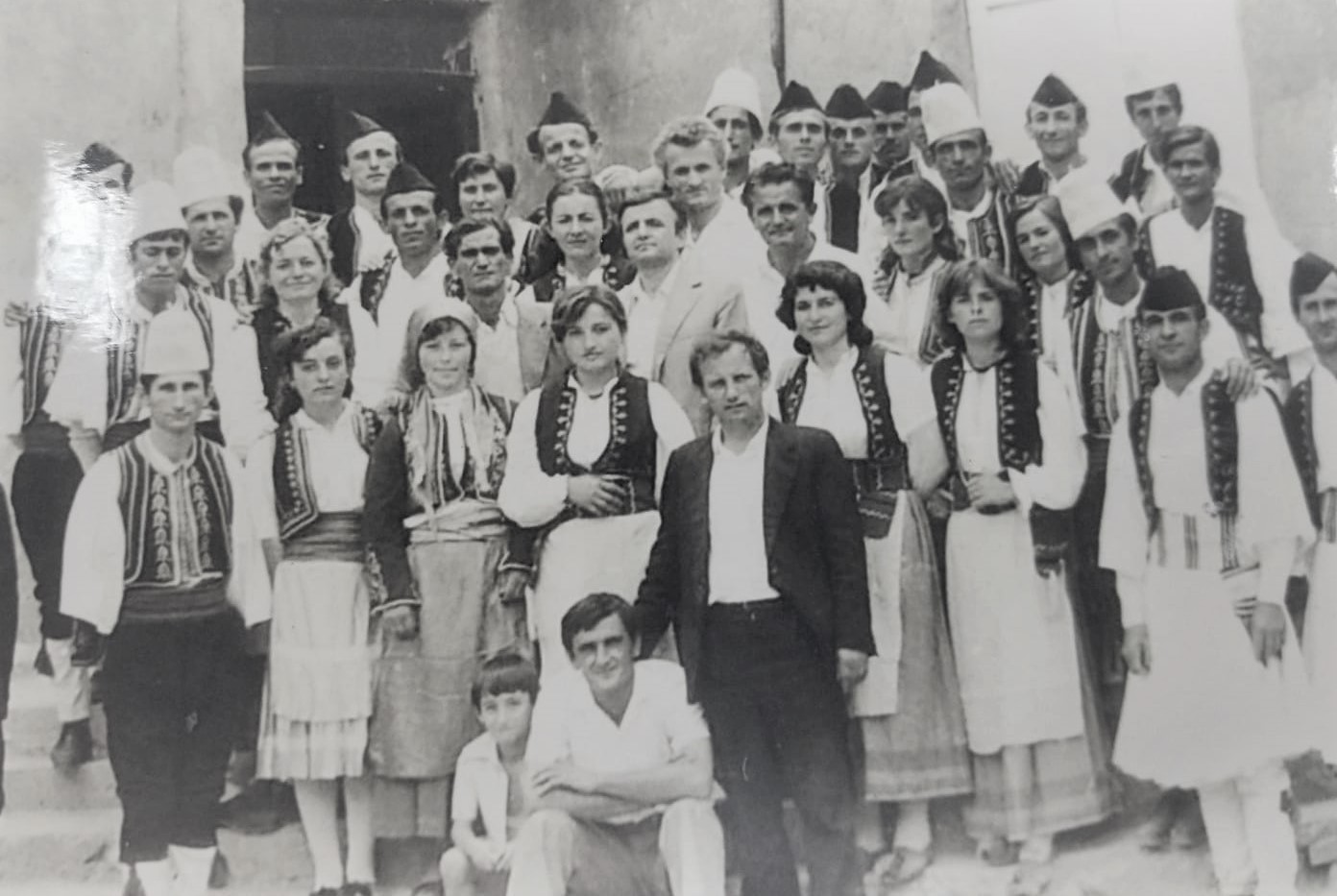
Furthermore, there are 1,250 song lyrics born from the hand and soul of Lefter Çipa. The “Pilur Group” was established as early as 1965. Çipa understood that the work had to be built on professional foundations, away from amateurism, and this could be done by the group’s artistic leader. One of his friends who loved Lefter dearly was the writer Dritëro Agolli, who said of him: “Lefter Çipa reminds me of Russia’s bohemian lyrics. He doesn’t just breathe; he breathes poetry.” And Lefter would say:
“Dritëro comes from the light of the Renaissance figures, but remains a light for future generations. His verses are spiritual beauty. Those of us who lived with Dritëro will be called the ‘happy generation’!” Other friends for Lefter were well-known figures from the world of culture and art, such as: Çesk Zadeja, Panajot Kanaçi, Eqerem Çabej, Bardhosh Gaçe, Odise Grillo, Tasim Aliaj, Petrit Ruka, Vaçe Zela, Mentor Xhemali, Haxhi Dalipi, Roland Çene, and many singers or artistic leaders of the country.
We cannot fail to mention the polyphony singers, such as: Dhimitër Varfi, Katina Beleri, Irini Qirjako, Arjan Shehu, Paro Ziflaj, Jakup Goliku, Rexhep Abazi, Syrja Hodaj, Hysni Ymeri…! “Without these nightingales, the coastal song would have plummeted into the wilderness,” Çipa would say. This is how Zija Çela expressed himself when he was the editor-in-chief of the newspaper Drita: “We read the poems coming to the editorial office one after another and would say: straw… this too is straw… straw again… aha, here comes gold! They were Lefter Çipa’s poems!”
Lefter Çipa’s lyrics are radiant… they are sovereign and stand as poetry. Lefter Çipa is the author of 20 books of poetry or studies on Coastal polyphony. Prof. Dr. Agron Xhangolli writes, among other things, about Lefter Çipa: “The name of Lefter Çipa represents a powerful individuality as a connoisseur, evaluator, carrier, creator, developer, and further enricher of folkloric creativity. From the examination of all his work, including folklore, his figure can serve as a living, concrete, and typical example for any scholar seeking to highlight the creative and circulating acts of Albanian folklore…”
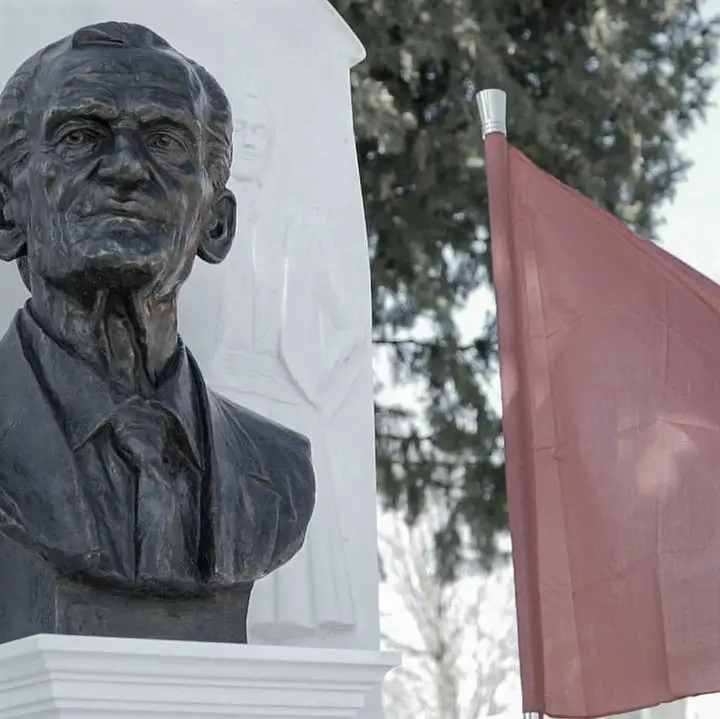
In 1991, after the fall of the system, many currents and factions appeared in Himara, questioning aspects of history, origin, freedom, or human rights. Precisely at that time, Lefter Çipa raised the national flag at his home. It was a challenge, a spiritual persistence, and a testimony of patriotism. Pilur and Albania had been his cradle. But Albania remained a mother forever and ever. He would always tell others: “See, I live here in Himara, near my flag…! The flag is sanctification…! We have been here since before the sea arrived…”!
Aleksandër Çipa, Lefter’s son – a poet and journalist – expressed himself thus about his parents: “My father Lefter and this Goddess Qerana never compromised their serious loves, such as that for the Family and children, especially Goddess Mother! While Father never postponed or sidelined his love for the Nation, Homeland, Polyphony, and Poetry. In all his loves, Lefter remained serious. In some of the most beautiful ones, even cruelly poetic. You are this, my Father. You are this, my Goddess Mother.” Lefter Çipa passed away on February 18, 2021. He was honored with the titles: “Knight of the Order of Skanderbeg” and “Grand Master.”/Memorie.al