By Shkëlqim Abazi
Part Fifty-Nine
S P A Ç I
The Graveyard of the Living
Tirana, 2018
(My memories and those of others)
Memorie.al / Now in old age, I feel obliged to confess my truth, just as I lived it. To speak of the modest men who never boasted of their deeds, and of others whose mouths the regime shut and buried in unmarked graves. In no case do I presume to usurp the monopoly on truth or to claim laurels for an event where I was only accidentally present, even though I desperately tried to help my friends, who tactfully and kindly avoided me: “Brother, open your eyes… don’t get involved… you only have two months and a little left!” A worry that clung to me like an amulet from the morning of May 21, 22, and 23, 1974, and even followed me in the following months until I was released. Nevertheless, everything I saw and heard those three days, I would not want to take to the grave.
Mica, the Cat of Shtjefën Lacuku
The most valuable legacy left by the distinguished philhellenist Vas Gavoçi, after his release from prison, apart from the works of the classics and the abundance of Homer’s heroes, was, without a doubt, “Pisi-pisi” (Pussy-cat), a calico cat, black and white, with eyes like golden sumachs. “Pisi-pisi” was the product of a bizarre mating: the mother originated from Reps, while the father was a feral tomcat. When we were transferred, Vasi put the cat in a sack, disguised it inside his rolled-up mattress, and tossed it past the guards.
Thus, “Bardhoshja” (The White One) arrived in Spaç, where she adapted beautifully, with the abundant prey (the mine galleries’ mice multiplied faster and were fatter). As soon as she got familiar with the environment, “Bardhoshja” left the enclosure to explore the surroundings, where she encountered a black tomcat that she brought back with her. As soon as they mated, the tomcat bolted, while “Bardhoshja,” after a few months, gave birth to three calico kittens, which increased the joy of the entire barrack.
But one morning, Vasi found two kittens dead and the third injured. It seems “Bardhoshja” neglected the care of her little ones, used to the weaklings of Reps. The mice of Spaç, as I mentioned, were healthy and extremely aggressive, and had likely killed them. After a while, “Bardhoshja” also disappeared – she got lost, or the mice ripped her apart, who knows! Thus, “Pisi-pisi” ended up orphaned.
By now, she threw all her affection onto Vasi, who cared for and fed her with parental concern. The calico kitten wandered from bed to bed and rubbed herself against everyone, but she only fell asleep on his chest. As soon as “Pisi-pisi” approached, Vasi set aside the classics and played with her, which was unusual for the philhellenist devoted to the authors of antiquity. This continued until the day of his release, when, along with the classics, she was left as an inheritance to Tefa.
The loss of contact with her owner made “Pisi-pisi” melancholic. She climbed onto the cardboard shelf and meowed atop the roof, as if calling for her master. Tefa called her: “Pisi-pisi,” but she continued her lamentations until she was convinced that her owner would not return, then she reluctantly climbed down, rubbed against his knees, and stretched out, half-squinting, with prolonged purrs.
“Now that Vasi left you the feathers, may the spy cat live, Tefa!” Xhelal Bey teased him after the daily ritual. “By God, Xhelal Bey, I’d rather deal with the cat than with your Achilles!” Tefa immediately replied (implying Akil Kurbini), and the laughter and jokes shook the barrack.
“Tarti”
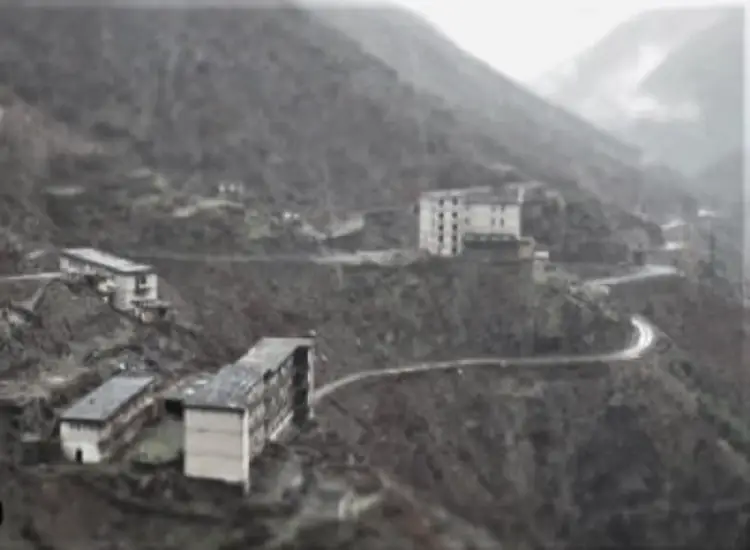
More than a year before the Revolt, a tiny and frail puppy, so pitiful that it aroused compassion, appeared in the barrack above the abyss. Fiqiri Muho fashioned a small hut for him under the window, lined it with straw and rags, and fed him with a bottle until he began to eat on his own. The puppy grew and became more beautiful, but he was not cut out for prison, as he would leave the enclosure and return to his lair whenever he felt like it. Thus, he became a kind of emissary, taking out our worries and bringing a crumb of freedom.
We called the little adventurer “Bubi” (Puppy), and he answered us with joyful “woof-woofs.” But this name apparently didn’t stick with Fiqo, because one day while reading Dodë, he felt like baptizing him “Tartari” (Tartar) in honor of the famous Tarascon resident. Since then, we unanimously called him “Tarti.”
“Tarti” grew up with us, became part of our lives, and our best friend. We would take food from our own mouths for him, but he also rewarded us with cuddles and antics. We became so attached that we would search for him in the camp’s hideouts or call him until he returned when we didn’t find him in his lair. He also abandoned his own race and did not leave us, from morning till night, at roll call, in the shower, in the mess hall, and even up to the entrance of the galleries.
As he grew, he acquired some special reflexes; he accompanied one shift and waited for the other when they finished work, with such accuracy that you could compare him to a perfect clock. When we happened to be held longer, “Tarti” occupied the entrance and howled until he saw the prisoners. His presence irritated the police, who violently chased him away, but he would return and start howling again.
They hit him with stones and maimed him; we treated him, and the next day the routine was repeated, until a mutual antipathy was born, which gradually turned into fierce animosity. As soon as he spotted a police uniform, his fur bristled, he gnashed his teeth, and attacked them wherever he could. The revolt found him in these positions. “Tarti” represented the strangest and most intelligent animal I have ever encountered or heard of.
The wonder is related to his genetically cultivated instincts; although he did not belong to any select breed, he acquired the most valuable traits of his species: he was loyal and did not stray from his lair even when his stomach might be gnawing him, almost like us prisoners who often slept on empty stomachs and ate ourselves; he waited stiffly in the Spaçian winter cold, just like us in the icy cells, but he wouldn’t budge further, he huddled in rags and straw and maintained vigilance; sometimes he whined sick, like us, from the Spanish flu, but again he would be punctual for the shift welcome-and-send-off schedules.
“Tarti” had a perfect intellect. Without the help of an instructor or personal trainer, he achieved perfection, while his counterparts were housed in schools and academies with specialized personnel, where servants, cooks, doctors, and even trainers, instructors, professors, and even academics were not missing.
Today, special schools operate for training with contemporary methods, where they prepare dogs for hunting animals, birds, and fish; anti-mine, anti-drug, anti-explosive dogs; dogs that track survivors from avalanches, that discover those buried under rubble, etc., etc., which require many years of work, personnel, and naturally, leader dogs that pass the tradition from generation to generation.
Our “Tarti” had none of these; he lacked food, eating bran and prison soup with us, and was often hungry; he lacked comfort, lying on bark and parasite-ridden rags; he lacked service, specialists, trainers, instructors, not to mention educators and academics in the relevant field. Despite all these shortcomings and others I haven’t mentioned, he was surrounded by human love and dedication.
But he, too, returned the love many times over, especially to Fiqo, whom he recognized as master and parent! Naturally, he couldn’t communicate, but his eyes and gestures spoke volumes! When someone took to his bed and groaned in distress, “Tarti” would lie down beneath the bunk, keeping vigil, and would whimper mournfully for help when the person was severely ill, or would bark happily when he saw improvement.
Coexistence with the convicts since he opened his eyes had stimulated in him the instinct for self-defense and counter-action. He could distinguish the aggressive policeman from the peaceful one from afar, just as he could spot the strutting tyrants who punished on a whim from those who enforced the law. When Xhevdet Balla or Preng Rrapi entered the camp, he would hide under the beds or elsewhere, wherever he could, and follow them with suspicious eyes. Then, he would either huddle deeper, depending on the circumstances, or he would nip at their feet and bite them wherever he could.
When the two Marks – “Mustache-Red” or “The Giant” – entered the camp or the mining area, he would approach them and rub against their boots. Besides the military personnel, “Tarti” also distinguished between the convicts. I didn’t say he was extremely intelligent for nothing. He got along with everyone, except for a few spies. Although he wouldn’t attack them, he wouldn’t approach them even when they called him to play, nor when they threw him food. On the contrary, he wouldn’t look at them at all and walked away indifferently.
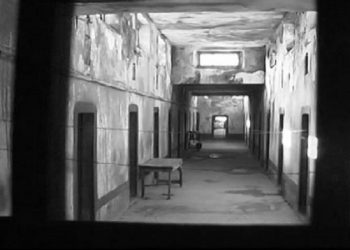
When it happened that someone was tied to a pole, “Tarti” would secretly approach; unable to untie the wire, he would lick their fingers as if to express solidarity in his own way. And when they ended up in the isolation cell (birucë), he would crawl under the enclosure wires, approach the door, and scratch the sheet metal with his paws, as if to say, “I won’t leave you alone! I’m here to do my best to lighten your punishment!”
And he served as a courier, as soon as the veil of night stretched out until dawn broke. “Tarti” went back and forth, from the barrack to the isolation rooms, crawling to the stream of Ulsi Pashollari, when he burst open the cell doors and brought the detainees a small sack of food to quell their hunger, a blanket or clothes to survive the Spaçian frost.
Thus, “Tarti” gained the status of a “politician” and an “enemy of the party”! At least, that’s how the military men saw him, who couldn’t tolerate him without knowing what was being played out behind the scenes. If they had caught wind of his “hostile” activity, they would have executed him even before the revolt!
A Morning without Whistles and Heralds
I don’t know what time it could have been when I woke up, for the first time in five years, not roused by the whistles of the police and Malo’s shouting. Under the shower stairs, I encountered Zef Ashta and Kola from Malësia e Madhe.
“How are you feeling, men?” I greeted them in dialect.
“Well, God willed it, like in freedom!” the old man with twisted mustaches replied to me. “I haven’t felt this way for thirty years!” Zefi offered me a fatherly smile. “Whoever has lost it knows the value of Freedom! There is nothing more beautiful than enjoying it, even if only for two days! We have been slaves for three decades, locked behind barbed wire, under the whip of the ignorant police of the cruel regime.”
As we were parting, my eyes instinctively went to the third floor – the Flag was missing!
“O God, they must have stolen it?!” I don’t know what color I must have turned from the shock.
“No one stole it, son, we took it down ourselves!” Zefi replied calmly.
“How should I understand ‘We took it down ourselves,’ when we raised it ourselves?” I shot back, irritated.
“Son, raising the Flag is a patriotic duty; preserving it is a sacrifice! We performed the first with honor; we will leave the second to time.”
“How can we guard the Flag, empty-handed?” the other man interrupted, shaking his hands in the air.
“Kola is right!” Zefi affirmed and added: “We are facing the military machine of the treacherous regime, which are willing to extinguish us down to the last man. And yet, we have lost the cause, only with our hands and hearts. Nevertheless, we did our duty; we showed the murderers that Freedom lives even within the wires, that patriotism is on our side, and betrayal is on theirs. We are surrendering ourselves, but not the symbol.
The army whose Flag is snatched away has lost the battle! I believe you have heard that when the standard-bearer falls, ten rush to replace him? Well, hundreds of martyrs fall in battle to keep it untouched! But we are not in equal conditions, so it must be protected, by any means! Thus, we concluded that we either had to drop it or save it!”
“So, they removed it by mutual consent?” I interrupted impatiently.
“Not just by mutual consent, but by a decision, my son!”
“Who took it down?”
“Since the bunting was found on Rexhep Lazri’s bed, he took it down!” He took a few steps and turned back: “Open your eyes, don’t get involved, you only have a little time left in prison”—and he followed the other man.
As soon as I broke away from them, I met Zake, his eyes red from sleeplessness. “You must have spent the night weeping with tears of blood, Riza Bey Kamenica!” I teased him as always.
“Stop joking, boy, we’ve fallen into serious trouble! How are you?” “Completely troubled!”
“Open your eyes, my dear Zake’s boy, don’t get involved… you only have two months left!”
“Why are you all addressing me with this language?”
“We are doing well, boy; you are a young man and must be released, while the ordeal has taken us!”
“How will this situation turn out, Zake?”
“Where will we go, worse than we are? But you don’t get involved… you only have two months left!” he repeated.
“You didn’t tell me what happened while I was sleeping?”
“Man, you don’t take hints! I told you; don’t get involved, you only have two months left, man!” “Please, satisfy my curiosity!”
“Fine, fine! The Inter-Regional Council gathered in the mess hall and made some weighty decisions…” “For example?”
“O-hu-a, go away, these things are not for you, boy!” and he started walking uphill. “You didn’t answer the question, my friend?” He stopped on the middle step and fixed his eyes on me.
“Well, for example, they decided to remove the Flag to save it from the executioners, they worked out the platform, and drafted a memorandum with some demands they will submit to the government.”
“When is this happening?”
“O-hu-a, why, do I have control over it?!” He took a few steps and added: “Go away, boy, these things are not for you!” – and headed towards Barrack “L.” The guard post beneath the showers was full of soldiers, some with automatic rifles, some carrying light machine guns, while others patrolled beneath the path that overlooked the enclosure, heading towards the opposite slope. That presence of soldiers armed to the teeth terrified us; perhaps the designers of this scenario positioned them this way for this very purpose.
But out of habit, I returned to the reddish basin (lekan), where rust dripped like blood from the pipe. “Who knows how many victims they might have thrown into the reservoir?”
“What did you say?”
“Nothing!”
I looked left and right to see who I had been talking to; I was alone. It seems my brain had suffered a schism! “Collect your thoughts, son, it’s a grain of wheat, it flies away and…”! I left the basin and headed for the private kitchen, where four or five people were cooking something on the stoves. I greeted them without focusing and headed for the last stove, where Tomor Balliu was cooking.
“What are you making for us, Tomçe?” I asked him out of custom.
“Some corn kaçamak (polenta), because, from the looks of the beans, we won’t get a bite of bread!” The kitchen aroma stimulated my hunger.
“Will it take long?” My stomach was grumbling.
“It needs about two more hours to boil,” – the pleasant-smelling steam puffed from the hole he poked with the wooden spoon, tingling my nose.
“Well, wait two more hours, you poor thing!” I lamented to myself.
“Take this to break your hunger!” Sherif Allamani offered me two strands of fritters (petulla) from the stove opposite.
“Thank you!” I split them in half and swallowed them in four bites, but they were hot and burned me.
“Slowly, you pig, and be careful, you only have a little time left,” – after the advice, he left with the bowl in one hand and the frying pan in the other.
Sherif Allamani from Mati had been my bunkmate for almost two years in the barrack above the abyss. Although we saw each other rarely recently because we slept in different rooms, we maintained our friendship and respect.
“Attention! Attention!” squeaked the megaphone on the pole, like a beaten dog.
“I’m going to see what’s happening!” Before I took a step, Tomor advised me:
“Brother, listen to friends who wish you well, and open your eyes, you only have a little time left!”
“Attention! Attention!” the screeching now tore at our ears.
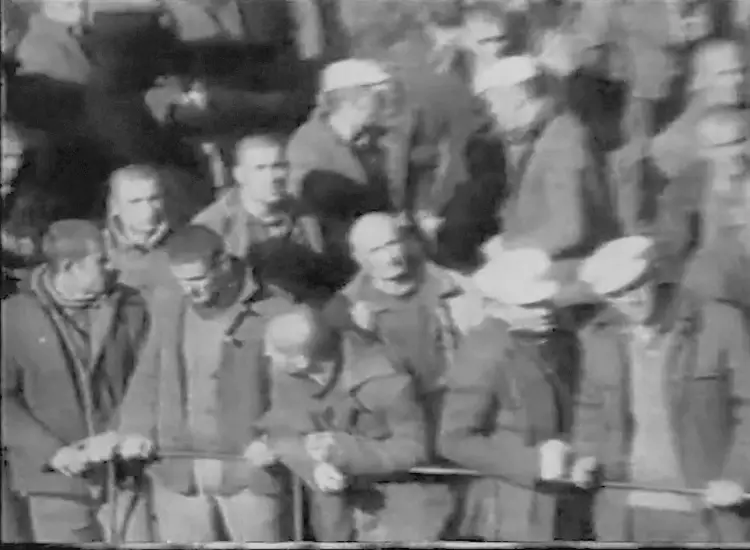
I rushed to the central square and entered the crowd.
“Attention! Attention!” the megaphone roared again, and everyone looked up.
Facing the collective kitchen, I joined Muharrem Dyli, Pavllo Lako, Rustem Gojka, Tomor Allajbeu, Krenar Kajo, and Ali Hoxhallari.
“What is happening?” I asked the patriots in one breath.
“A meeting is expected between our representatives and the authorities,” Muharrem replied.
“Aren’t we sending them like goats to the slaughterhouse?” This dilemma had been gnawing at me for two days.
“No one forced them, son? They all volunteered; it fell to them!” Apparently, Uncle Rustem was well informed.
“The communists are treacherous; I fear they might deceive and execute them!”
“Who would prevent them from massacring us right here where we are? But they fear internal reaction, especially external opinion, so they aim to divide us thread by thread, to subdue us more easily.”
“Now, it seemed, Doctor Astrit’s prophecy was being updated: ‘As far as I know them, the communists will wreak havoc!'”
“However, this event absolutely had to happen, to show the world that freedom does not die, even though it has been languishing for thirty years under the most savage violence known to humankind! National history will be enriched with a unique fact that will have ripple effects, it will shake the foundations of the regime, and hasten its end!”
The doctor had hit the mark! The revolt turned into an uprising, and now its echo bypassed the thorny fences of the political prisons and reached the government; perhaps it will scratch the ears of the powerful at the edges of the continents, so they may hear the cries and actions of the long-suffering people. Thus, those bound with handcuffs and chains were realizing the aspiration of over two million free people!
The event precipitated quickly and caught the government unprepared. They brought several thousand soldiers overnight and surrounded the hills of Gurth-Spaçi up to the highest point, while sending the Deputy Minister of Internal Affairs to calm the situation or bring it under control. This was the first time in thirty years that the regime lowered its nose and accepted negotiations with political prisoners, regardless of how productive they would be. The moment of confrontation between freedom and crime was knocking!
Suddenly, the crowd of convicts split in two, forming a path through which Paulin Vata, Hajri Pashai, and Nuri Stepa paraded. The delegation passed the sheet metal gate, while beyond the barbed wire, a group of military men waited, led by the Deputy Minister of Internal Affairs, Feçorr Shehu, as I heard them say.
Their pomposity and arrogance made one’s flesh crawl, while the presence of thousands of soldiers, with barrels aimed at seven hundred peaceful, unarmed men, was terrifying. An unprecedented anguish shook my heart, and I prayed with all my soul: “Protect our friends, O God!” Before the delegation reached the top of the stairs, the Deputy Minister bellowed:
“What was that rag on top of the building?”
“The Flag of Ismail Qemali!” Nuri Stepa shot back in one breath.
“And that crow in the middle?” the official sneered.
“Skanderbeg’s double-headed Eagle!” Paulin Vata retorted.
“We will wipe that scribble off the face of the earth!” the Deputy Minister roared.
“No, sir, it is in its rightful place and among the right people!” Hajro Pashai cut him off.
“Where is this place, and who are you?”
“The place is called the Spaçian catacombs, and we are the prisoners of conscience!” The irony seemed to land, because afterward, a deathly silence reigned, so profound that even the asthmatics’ wheezing could be heard. We waited to see what would happen next, as the military men lost their composure. Memorie.al