• Rreth Nesh
  • Kontakt
  • Albanian
  • English
Tuesday, January 13, 2026
Memorie.al
No Result
View All Result
  • Home
  • Dossier
  • Interview
  • Personage
  • Documentary
  • Photo Gallery
  • Art & Culture
  • Sport
  • Historical calendar
  • Others
  • Home
  • Dossier
  • Interview
  • Personage
  • Documentary
  • Photo Gallery
  • Art & Culture
  • Sport
  • Historical calendar
  • Others
No Result
View All Result
Memorie.al
No Result
View All Result
Home Dossier

“We have no relations with you and the ship is not allowed to enter the Port of Durrës, leave our waters urgently…”/ The secret document from May ’74 is revealed, concerning the Soviet ship with 29 people, which “enraged” Enver [Hoxha] against Balluku

“Nga avioni që fluturonte sipër nesh, më thanë në radio; të urdhërojmë të fikësh motorrin dhe të na presësh për kontroll, sipas konventës së OKB-së, për luftën në Bosnje…”! / Kujtimet e ish-kapitenit të anijes “Vlora”
“Në Himarë, flamuri grek, valëvitet para një restoranti, ku një bandë me bouzouki, klarinetë dhe dajre, që luan muzikë greke, të ftuarit kërcejnë, hanë ‘suvlaque’, pinë uzo…”/ Udhëtimi i turistit gjerman, para dhe pas ’90-ës
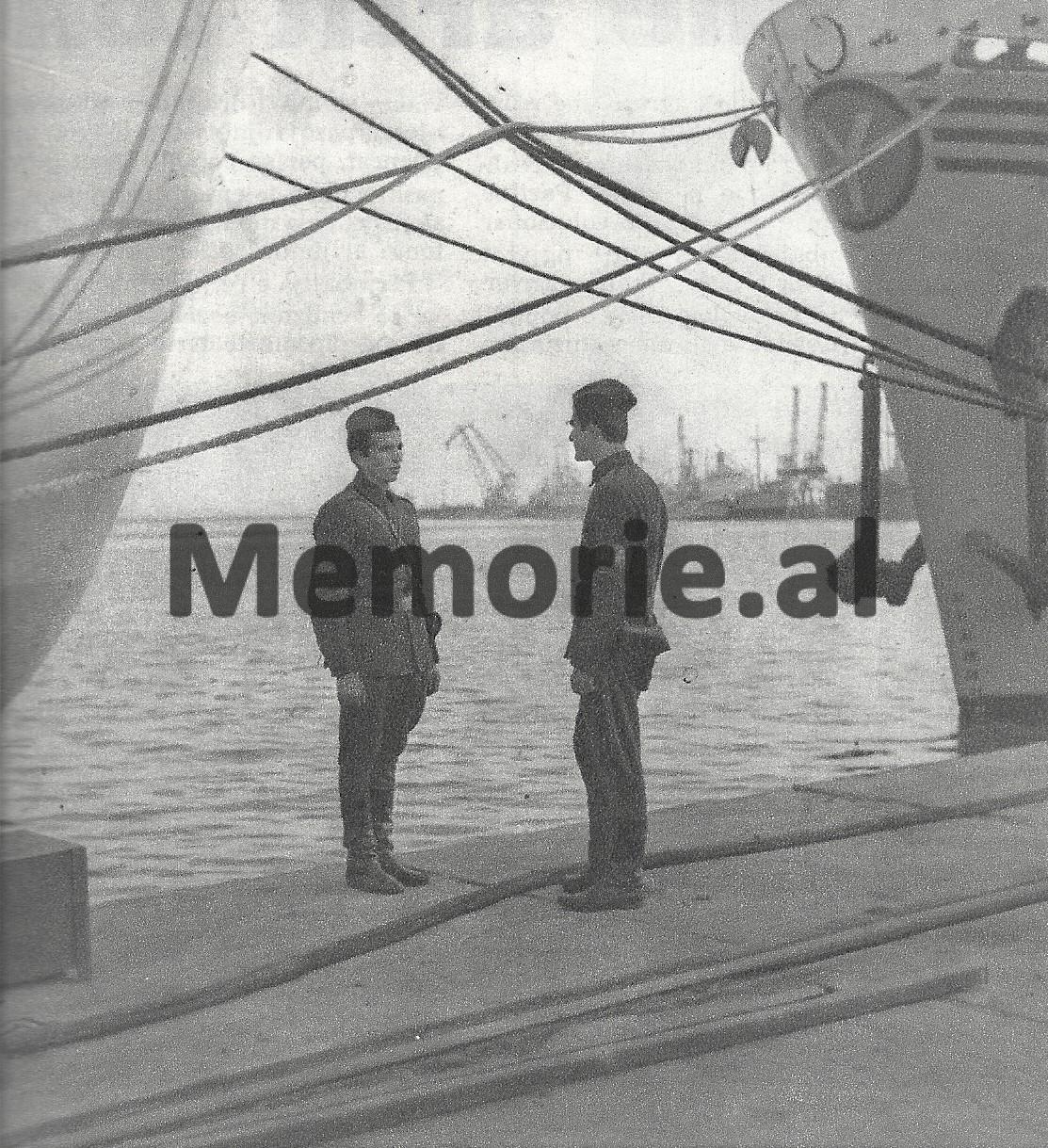
“Kufitarë e popull, gjithnjë pranë njëri tjetrit” (foto nga periudha e komunizmit)
“Ne s’kemi marrëdhënie me ju dhe anija s’lejohet të futet në Portin e Durrësit, largohuni urgjentisht nga ujrat tona…”/ Zbulohet dokumenti sekret i majit ‘74, me anijen sovjetike me 29 persona, që “tërboi” Enverin ndaj Ballukut
“Enver, ja si po e masakroni këtë popull….” Letra anonime gjeneralit që tentoj arratisjen dhe vdiq në Burgun e Burrelit në ’75-ën / Dëshmia e kolonelit…
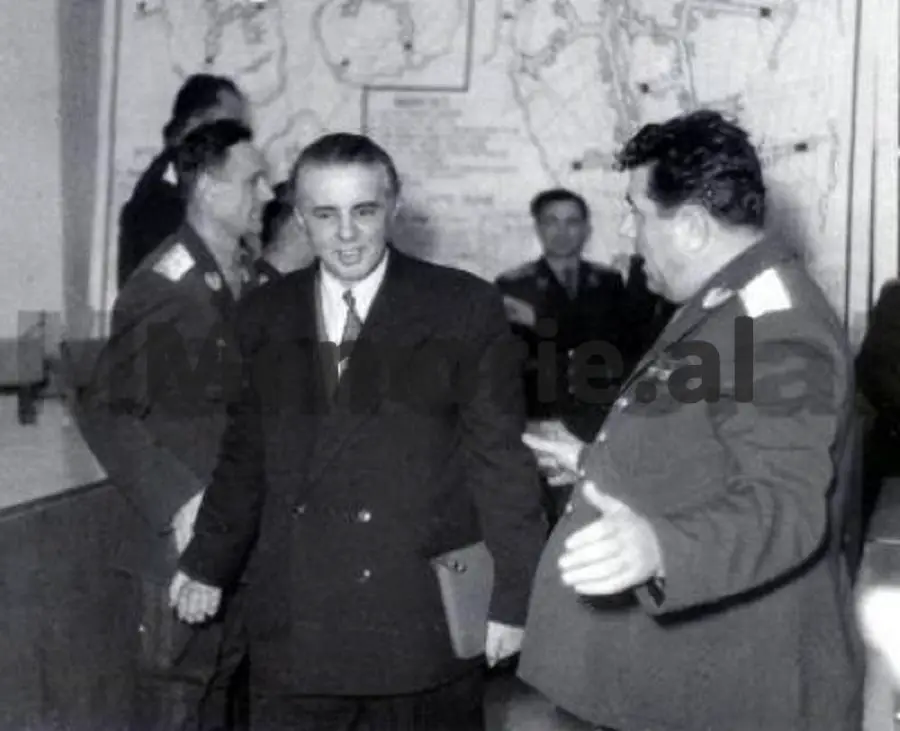
Me Beqir Ballukun

By DASHNOR KALOÇI

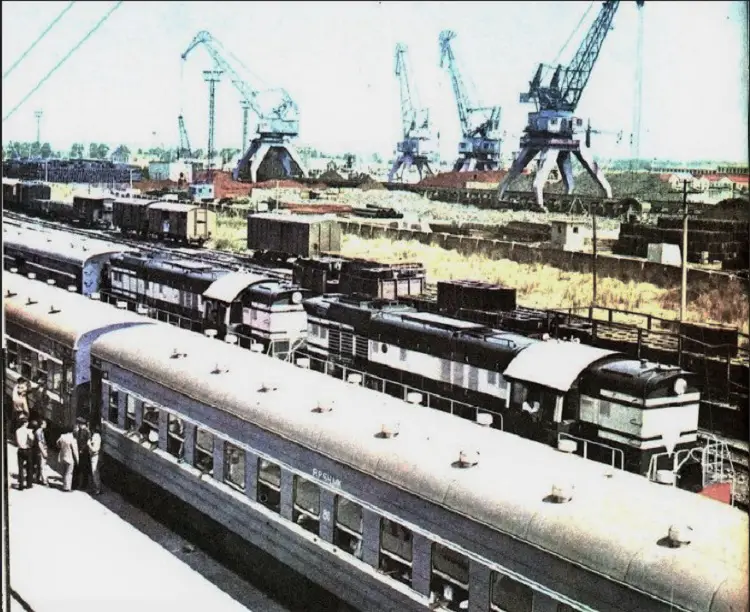
Memorie.al/ The document “Operational Communiqué No. 125” dated May 30, 1974, issued by the Ministry of Internal Affairs of the People’s Republic of Albania (PRA), is an archival testimony of particular importance. It describes an unprecedented incident at the Port of Durrës, which reflects the depth of the crisis and isolation in relations between Albania and the Soviet Union during the Cold War, and it’s shocking implications within the Albanian communist leadership itself.

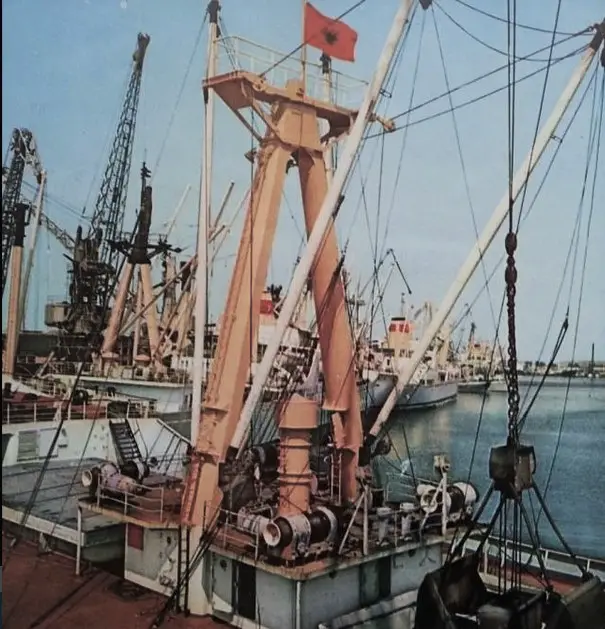
The event culminated on the morning of May 27, 1974, when the practice group of the Border Control Checkpoint of the Port of Durrës, while conducting a routine inspection, was faced with a major surprise: instead of the Polish ship for which they had received orders, they boarded the Soviet ship “Saldus” with a Soviet flag and crew. The ship had arrived at the anchorage, no further than 200-300 meters from the entrance of the port’s basin (aquarium), an unacceptable approach since the breakdown of official relations between Tirana and Moscow in the years 1960-1961.

Alarmed, the inspection group received an urgent order from the Port Authority to disembark immediately, and the Soviet ship was forced to leave Albanian territorial waters immediately. As the Operational Communiqué itself testifies, the Albanian authorities sharply emphasized: “We have severed all relations with you. For this reason, your ship is not allowed to enter the Port of Durrës.” This incident, due to its nature, was immediately kept “top-secret.”

Gjithashtu mund të lexoni

“Amet Bey grabbed the officer by the throat and pulled out a dagger, placing it against the Italian’s neck…” / The memoirs of a former signatory of Independence about Ahmet Zogu, who protected the government emerged from the Congress of Lushnje.

“If the culprit was habitually intoxicated, the death penalty is commuted to heavy imprisonment for twenty years, and life imprisonment is commuted to imprisonment from ten to twenty years…” / What did the Penal Code of 1928 provide for?

The “Saldus” ship incident constituted a blatant violation of the official propaganda of Enver Hoxha’s regime, according to which “our borders are inviolable.” The fact that a ship from the Soviet Union – a country declared “revisionist and a fierce enemy” – could so calmly arrive at the country’s main port raised maximum alarm within the high leadership.

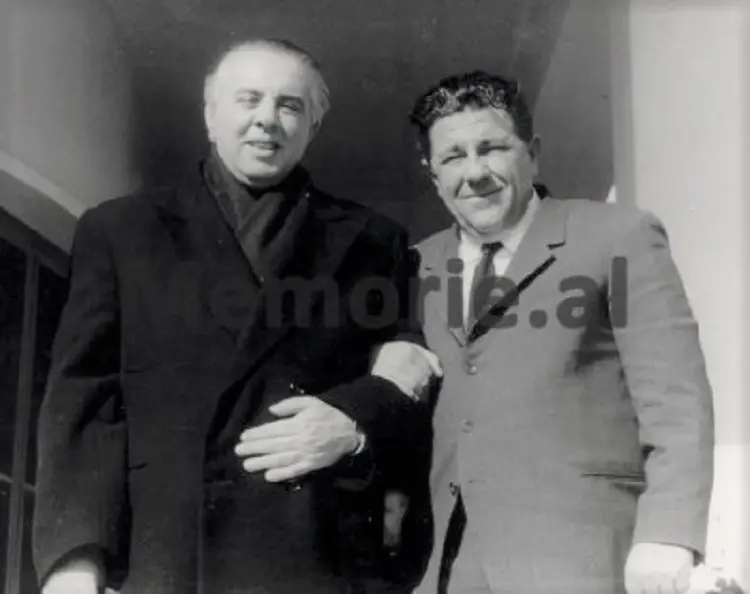
For this reason, many scholars and researchers believe that this incident may have been a decisive catalyst for the events that followed within the state apparatus. Just one month later, in July 1974, Enver Hoxha launched a severe crackdown against the highest leaders of the Ministry of People’s Defence, headed by Minister Beqir Balluku, the Chief of General Staff, Petrit Duma, and the Director of the Political Directorate, Hito Çako. Accused as the “main leaders of the putschist group in the army,” these high figures, as well as dozens of other military personnel, ended up executed or in imprisonments and internments.

It remains to be further investigated whether this 1974 incident became the cause that enraged Hoxha, considering that a similar event that occurred later, that of the Soviet submarine in the Bay of Vlora in October 1981, is believed to have served as the spark for the crackdown against the group of Mehmet Shehu.

Despite its importance, this story has been ignored, kept in darkness, and does not appear in other archival documents or public testimonies (except those collected in this research).

The publication of this Operational Communiqué from the Archive of the Ministry of Internal Affairs not only sheds light on an almost unknown episode of Cold War history, but also forces a re-understanding of the purported weakness of the “inviolable borders” of the PRA and raises new questions about the real motives that led to the largest political and military purges of the regime at that time. This document is essential for understanding the paranoia and insecurity that characterized the Albanian leadership.

THE SECRET ARCHIVAL DOCUMENT, WITH THE OPERATIONAL COMMUNIQUÉ OF THE MINISTRY OF INTERNAL AFFAIRS, REGARDING THE INCIDENT WITH THE SOVIET SHIP IN THE PORT OF DURRËS ON APRIL 30, 1974

PEOPLE’S SOCIALIST REPUBLIC OF ALBANIA                           SECRET

MINISTRY OF INTERNAL AFFAIRS                                            Copy No. 1

GENERAL DIRECTORATE                                                     Tirana, dated 30.5.1974

OPERATIONAL COMMUNIQUÉ NO. 125

DURRËS

On 27.5.1974, the Soviet ship “Saldus” arrived at the anchorage of the Port of Durrës, on behalf of Poland, to load chrome. On 28.5.1974, at 09:20, the practice group, continuing its work, went to the anchorage near this ship and, after boarding it, found that the ship had a Soviet flag and crew.

The Port Authority Officer communicated with the Port Authority of Durrës, from which he received an order for the practice group to disembark immediately from the ship and for it to urgently leave the territorial waters of the People’s Republic of Albania.

The captain of the ship was told: “We have severed all relations with you. For this reason, your ship is not allowed to enter the Port of Durrës, therefore you must urgently leave the territorial waters of the People’s Republic of Albania.”

On 28.5.1974, at 10:00, the Soviet ship departed and at a distance of 25 miles, it sent a radiogram, by which it requested the reason for the refusal of loading, but no answer was given by our side. It continues to stay 24 miles away from our coastline. The ship belongs to the port of registration of Leningrad. The crew is 29 people, (3 females)! / Memorie.al

D I R E C T O R

PILO SHANTO
ShareTweetPinSendShareSend
Previous Post

Why should the Albanian state celebrate September 1st - the day of the proclamation of the Kingdom?!

Next Post

“Namik and Ilia, both from villages in the Vlorë region, were initially sentenced to death, accused of an assassination attempt against Khrushchev when he visited Pashaliman...”/ The rare testimony of the former political prisoner

Artikuj të ngjashëm

“My father, a former mayor of Lushnja, organized the Congress, and in Durres on April 7, ’39, where he distributed weapons, was interned by the Italians and imprisoned by the Communists”.   
Dossier

“Amet Bey grabbed the officer by the throat and pulled out a dagger, placing it against the Italian’s neck…” / The memoirs of a former signatory of Independence about Ahmet Zogu, who protected the government emerged from the Congress of Lushnje.

January 12, 2026
“If the culprit was habitually intoxicated, the death penalty is commuted to heavy imprisonment for twenty years, and life imprisonment is commuted to imprisonment from ten to twenty years…” / What did the Penal Code of 1928 provide for?
Dossier

“If the culprit was habitually intoxicated, the death penalty is commuted to heavy imprisonment for twenty years, and life imprisonment is commuted to imprisonment from ten to twenty years…” / What did the Penal Code of 1928 provide for?

January 13, 2026
“Temperature, -25 degrees, snow 2 to 3 m., dozens dead from avalanches, thousands of hectares of land and houses flooded…” / The secret document is revealed regarding the severe weather that “brought Albania to its knees,” January 7-15, 1985
Dossier

“Temperature, -25 degrees, snow 2 to 3 m., dozens dead from avalanches, thousands of hectares of land and houses flooded…” / The secret document is revealed regarding the severe weather that “brought Albania to its knees,” January 7-15, 1985

January 13, 2026
Dossier

“When Mehmet Shehu came to Burrel Prison and challenged Father Pjetër Mëshkalla by asking: ‘Who is more evil, us or the devil?’, he responded…” / The tragic story of Urim Elezi from Korça, who endured 26 years of imprisonment.

January 12, 2026
“They sent a card even from Paris, when at the end of 1919 in Vlora, someone had arrived who said he was an envoy of the American President Wilson himself, and at the house of…” / The memoirs of the former signatory of Independence.
Dossier

“They sent a card even from Paris, when at the end of 1919 in Vlora, someone had arrived who said he was an envoy of the American President Wilson himself, and at the house of…” / The memoirs of the former signatory of Independence.

January 13, 2026
“Light imprisonment may be served in a workhouse or by performing labor for public benefit; and if the convict does not display [bad behavior/resistance]…” / What did the Penal Code of 1928 provide?
Dossier

“Light imprisonment may be served in a workhouse or by performing labor for public benefit; and if the convict does not display [bad behavior/resistance]…” / What did the Penal Code of 1928 provide?

January 13, 2026
Next Post
“Namik and Ilia, both from villages in the Vlorë region, were initially sentenced to death, accused of an assassination attempt against Khrushchev when he visited Pashaliman…”/ The rare testimony of the former political prisoner

“Namik and Ilia, both from villages in the Vlorë region, were initially sentenced to death, accused of an assassination attempt against Khrushchev when he visited Pashaliman...”/ The rare testimony of the former political prisoner

“Historia është versioni i ngjarjeve të kaluara për të cilat njerëzit kanë vendosur të bien dakord”
Napoleon Bonaparti

Publikimi ose shpërndarja e përmbajtjes së artikujve nga burime të tjera është e ndaluar reptësisht pa pëlqimin paraprak me shkrim nga Portali MEMORIE. Për të marrë dhe publikuar materialet e Portalit MEMORIE, dërgoni kërkesën tuaj tek [email protected]
NIPT: L92013011M

Na ndiqni

  • Rreth Nesh
  • Privacy

© Memorie.al 2024 • Ndalohet riprodhimi i paautorizuar i përmbajtjes së kësaj faqeje.

No Result
View All Result
  • Albanian
  • English
  • Home
  • Dossier
  • Interview
  • Personage
  • Documentary
  • Photo Gallery
  • Art & Culture
  • Sport
  • Historical calendar
  • Others