Memorie.al / Human society has always swayed between truth and falsehood; but in communist-era Albania, this sway leaned so heavily toward falsehood that Denis Diderot’s saying took on its full meaning: “Man loves the truth most when everything is false.” In that period, so dense with events engineered on a foundation of slander and deceit, we – though pretending to believe what we were told – still loved the truth, regardless of having nowhere to seek or find it. Especially those of us who witnessed and lived through the absurdities and atrocities that occurred within the army; we have a duty to the generations to come – at least now in democracy, under conditions of freedom of thought and expression and in the light of countless facts – to contribute to uncovering the truth.
This is a historical, moral, and human duty. Because many high-ranking military cadres understood it as such, a series of valuable books have been written and published. However, it must be stated that, unfortunately, there are still those who hesitate to accept the fact that the primary perpetrator of that unprecedented tragedy – which cost our homeland, people, and army so much – was, paradoxically, the Commander-in-Chief himself, Enver Hoxha.
They express regret for all those countless victims and a host of other follies that carried such a heavy cost, but they do not dare to point the finger at their cause: the man who, with voluntarism and the whims of a pharaoh, killed, imprisoned, exiled, and humiliated the “Heroes of the People” (those who dedicated all their spiritual and physical strength to the motherland) and their honest families.
I never understood who benefits from this hesitation to denounce the crimes of Hoxha – who did not even leave the clerics in peace – and whom this kind of senseless loyalty serves. How can one accept that both the killer and the killed were “good men” and worthy of their country? Thirty-two years have passed since the shameful dragging of the dictator’s monument, and to still remain in the same trench as him is not normal at all! In fact, I would add that it is harmful, as it confuses those who did not live through that time.
It is true that each of us feels a gnawing of conscience, as, willy-nilly; we became part of a devilish scenario. With our conformism – which often turned into unbridled enthusiasm – with the malicious desire to see those who had climbed high fall into the abyss, or with the aim of showing limitless loyalty to the Party to further our careers; through the fear and servility we manifested after those ill-fated plenums that weakened rather than strengthened the army, we became accomplices.
We said things that were untrue, weighing down those who were unjustly labeled “putschists” (regardless of the fact that their fate was predetermined), and we applauded when they were shackled or shot in the back of the head. We turned on each other with criticisms that should make us blush with shame today; we went as far as slandering ourselves, accepting non-existent faults under the guise of being “great men of principle,” and we complied like cowards with what was served to us by the diseased imagination of a paranoiac who had proven his heartlessness and thirst for power since the War. Under these conditions, ‘mea culpa’ would be the least we could do before history, rather than babbling and speculating with the cunning of oracles.
There is no reason to remain blind in loyalty. “A fanatic,” Churchill said, “is one who can’t change his mind…”! We all aspire to move toward Western civilization, but one arrives there with truths, not with Byzantine mentalities. This is why the memoirs of Bedri Spahiu, Liri Belishova, Rrahman Parllaku, Ernest Jakova, Josif Zegali, and many other personalities have been so warmly received. People know well the meaning of Belinsky’s saying: “The bitterest truth is better than the sweetest deceit.”
Therefore, they salute those who have the courage to accept the truth, even if it comes at a cost, especially against the malice of those who still hold high regard for the “genius of Marxism,” who in fact was the genius of evil for Albanians – the one who applied Brutuss’s observation upside down: “There is no glory without victims,” by creating victims even among his comrades and friends. It is this wise and, above all, sincere narrative that led me to write something about General Halim Ramohito’s book, “In the Service of My Homeland.” Being a member of the Armed Forces myself – more as an officer than a writer – I felt it my duty to write about this book, which is worthy of a Historical Institute or academic pens.
I met Halim Ramohito very late. I don’t know why, but once, with those gold ranks and red stripes – serious, not one to laugh easily – when I saw him by chance on the street, he seemed a bit morose and stern. One day, sometime in early 1975, while heading to the university for an exam, I saw him leaving the Central Committee with a face clearly marked by grief. Knowing what was happening in the high leadership of the Army, I felt an internal exhilaration and said to myself: “He’s done for, too.” He was likely in a state of heavy spiritual distress, while I took pleasure in the fact that he was being punished…!
We humans are very mysterious and inexplicable. And we are especially so when we are ruled by idolatry and the fetishization of the “Number One.” Today, I am ashamed to recount this moment of weakness, which does not honor me, but as long as I speak of the need for truth – of which Descartes said, “Only the truth is beautiful” – I feel I should not hide it. On the other hand, it somewhat clears my conscience of this small sin – a clearance made even more convincing by writing extensively on the values of that man who has the courage to objectively analyze the causes of the tragedy that communism caused in Albania and especially in its army.
In every page of General Ramohito’s book, not only his innocence and that of his comrades is revealed, but also a great and pure soul, as human as it is patriotic. They were not born leaders and generals. They followed a long combat path, full of difficulties, sacrifices, and privations. After passing through the fire of the National Liberation War, they were educated and cultured, both at home and abroad. They had ideals and dignity; therefore, they believed they did not represent only themselves.
They believed they had to honor Albania wherever they were. Thus, with will, persistence, and dedication, they grew as leaders and commanders of an army that was, ultimately, their own creation. They spent their lives for that army, seeing it as the defender of victories and the guarantor of the future. They had emerged from the heart of the common people, and so they remained unshakeably loyal to them.
In August 1949, during the provocations of the Greek monarcho-fascists, they proved with deeds how much they loved the motherland. They held the same stance previously against Yugoslav intentions, just as they proved themselves in the events of the sixties during the break with the former Soviet Union. The events at the Pashaliman Naval Base constitute an epic. In terms of manhood, bravery, and patriotism, they transcend any ideology or politics and will remain the perfect example of resistance in defense of the country’s interests. It is not for nothing that the author of this book begins his narrative right here.
He initially describes the region where the events take place – a place he calls a miracle of nature, where according to legend: “if you live here, you never grow old, for the scent of flowers and the beauty of nature heal you.” But it is not just the romantic side that gives it value. Here is how the author expresses it: “The strategic importance of this place is also explained by the fact that, not only through the Bay of Pashaliman, but especially through the island of Sazan – which can be considered the ‘key to the door’ for entry and exit into the Otranto Channel and the Mediterranean Sea – ship movements can be easily controlled as far as the Middle and Upper Adriatic.”
This is why Soviet marshals, and even Nikita Khrushchev, had their eyes on this naval base. Khrushchev said openly: “What a secure bay this is, at the foot of these mountains, here in Pashaliman (Vlora)!… From here, with a powerful fleet, we can dominate the entire Mediterranean, from the Bosphorus to Gibraltar. Thus, from here, we can subdue anyone…!” The author starts his narrative here intentionally, as the Albanian-Soviet drama was played out on this stage with real proportions, with the entire international community as spectators.
The fate of the motherland and the honor of Albania were at stake; therefore everyone – generals and soldiers – became one and knew how to defend the dignity and pride of being Albanian. They were not intimidated by the size of the immense Russian army, and this history caught the attention of the USA, where the State Department spokesperson declared: “This is a heavy blow to the Soviet Empire.” As such, it and the denunciation of the Warsaw Pact cannot be forgotten. Above all, it highlighted once again the love and loyalty of the high military leadership, which even Enver appreciated greatly at the time.
Halim Ramohito was tasked with very difficult roles, as in September 1957, he was appointed Albania’s military representative to the Joint Command of the Warsaw Pact Forces and simultaneously military attaché in Moscow. Hundreds of Albanian boys were studying in the military schools of that country. Thus, it was not easy to meet them, clarify the situation, and convince them to maintain the right stance in the interest of their country.
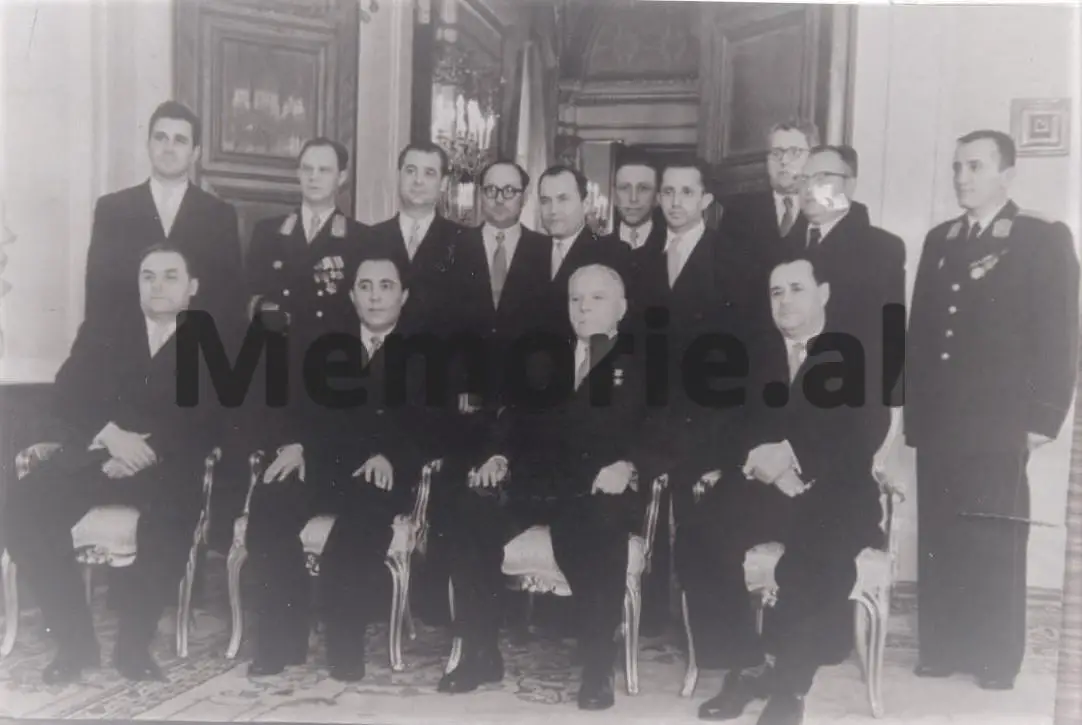
General Ramohito performed this important duty excellently. Those who knew him in those days, in various cities of the Soviet Union where they were surveilled and provoked from all sides, remember well the seriousness and competence with which he carried out his mission. The book contains many examples that speak best of the brave stance – in accordance with the country’s interests – of Albanian generals such as Beqir Balluku, Petrit Dume, Hito Çako, Rrahman Parllaku, Vaskë Gjino, Arif Hasko, Halim Ramohito, and others. So much so that not even the most vivid imagination could have guessed that these men would be declared “enemies of the people and the homeland” with a single stroke of a pen.
The description of the expected meeting with Malinovsky, the Soviet Minister of Defense, is interesting. Malinovsky tried to despise the Albanian delegation, led by the Chief of Staff, Lieutenant General Petrit Dume. Petrit, highly revolted – to the surprise of everyone – stood up to leave and declared: “We represent the army of a people that does not deserve to be mocked, Marshal Malinovsky.”
In the same tone, General Dume replied to the other marshal, Grechko: “We do not allow anyone to throw mud on our people. We are a small but noble and freedom-loving people who, even without your aid, will survive, just as we have defended our country for centuries. If necessary, with axes and hatchets, we will defend our country, as we have done before…!” The same situation repeated when Malinovsky called Halim into his office and, with arrogance and an insulting tone, said: “What do you Albanians want…?! You have become unbearable, like ‘red pepper'” – and received the answer he deserved. Enver Hoxha knew well these stances; after all, they directly concerned his seat of power. And yet, as the greatest ingrate our history has known, he would crucify those heroes with the filthiest fabrications. Halim himself, declared “persona non grata” by the Soviet government, was declared the same in his own country. And as if the killings, imprisonments, and exiles were not enough, Enver Hoxha, by turning them against each other, also wanted to humiliate them.
For someone who observed the events in the army from a distance during those farcical plenums – which differed in no way from the Inquisition trials – many questions might arise regarding the stance of the main military leaders or the broad corps of military cadres. They might say: they themselves accused one another and did not have the courage to defend the truth or themselves, let alone eliminate Enver Hoxha, who had transformed into an unprecedented bloody tyrant. But it is not so.
Enver had the authority of a god, but the mind of a devil and the soul of a sadist. He amused himself by beheading his comrades. He did not care that by taking their lives, shackling them, and isolating them from society, he was dealing a great blow to the motherland. For him, the motherland was himself. And he sought to root this conviction in all Albanians, even though violent means. When he spoke with hypocrisy about how he couldn’t sleep out of concern for the people and the motherland, he was lying to the gullible, as his only concern was himself.
Terror gripped us when those endless meetings were held. We all waited in fear for what would happen. We knew well that we had done nothing wrong, yet we were still at risk. Invent criticisms and perform self-criticisms, even before soldiers and troubled peasants, starting to doubt even ourselves. All this in the name of “principles.” Oh, what a disaster that lasted for years. Then they brought ignoramuses from the heart of the working class who looked at us with hatred and “vigilance.”
We, the best sons of the motherland, were treated as if we were the Catilines of socialism. Loyalty was our most sacred thing; it was our greatest virtue. But they trampled even on this; they made us bow our heads before the people for no fault of our own. Moreover, we had to thank the Party for being “generous” with us. Marcus Aurelius once said, “The consequences of anger are far more serious than its causes.” Indeed.
But what can you do when Enver Hoxha had no – I emphasize, no – cause to be angry and create all that turmoil with us? How can what he did to us be forgotten? And how can there still be people (in whatever position they may have been in the army at that time, even if not a single thorn entered their foot) who saw with their own eyes the tragedy that occurred and still maintain nostalgia for that monster?! On this point, General Halim is unequivocal: the generalate of our army was persecuted, and the entire Albanian army suffered that treacherous blow, but all of this had one person responsible.
And the one who will answer before history is named Enver Hoxha. To not accept this bitter truth means either being without a brain or without a heart! It means deepening that wrong stance held then and participating in the confusion of generations, in a falsification of history itself. If these facts are not given to us today, while the actors are still alive, no matter how much historians rack their brains tomorrow, they will still find it difficult to fully and accurately uncover that chaos.
They will find it difficult, if not impossible, because the written traces provided by the scribes of the Central Committee and the speeches Enver gave were compiled with such care that you cannot find a crack in them. There you will only encounter “conspirators,” “hostile groups,” and “putschists,” whom the Commander discovered from the beginning and the Party – not to say the entire people – punished.
Speaking about the idea of writing this book, the author (Halim Ramohito) says: “Enver Hoxha, for his wicked purposes, to maintain his power in those years, at times accused us generals of being NATO agents, and at other times agents of the ‘Warsaw Pact,’ of the Soviets, the Yugoslavs, and even China.” Enver operated with these insane accusations his whole life, and let the shame fall upon us who followed this Nero.
But at least now, let us gather our wits and give him what he deserves: the curse to feel on his own back, there in the “Hell” where they have sent him, all the spiritual and physical suffering he caused others, without them committing any fault. Virgil wrote that: “There are moments when nothing can be said; there are moments when some things can be said; but the moment never comes when everything can be said.” It may be so, but I want to believe that today is the moment to say everything. We have no one to guard against but our own conscience.
We have no reason to be afraid of anyone to say things as we saw them and as we realize them now, as so many shocking facts have come to light. Can that letter from the Minister of Interior of that time, displayed in the National Historical Museum, be overlooked? It cynically predetermines the fate of all those men: “Some will die in prison, some will become mentally ill. So far, the generals Gjin Marku, Vaskë Gjino, and Abaz Fejzo have died in prison, and as for the ill, we can mention Halim Ramohito, who suffers from the mania of family persecution, a trauma he received during interrogation…!”
From what we know, even the trials held by the Nazis after von Stauffenberg’s assassination attempt against Hitler on July 24, 1944, were somewhat more independent and fairer than those legal shames staged here – interrogations and courts where, with hypothetical accusations simply because the diseased mind of the leader had fantasized so in the Sixth Plenum of the Central Committee on December 17, 1974, the legendary commanders of the army were tortured and extremely sentenced – the brave and fearless fighters of the early hours, those who in any circumstance had not wavered from their love for the Motherland and loyalty to the people and Enver himself!
Only someone who, without doing anything wrong, has suffered long years in the hell-prisons of miserable communist Albania, knows what prison is. Only he can explain the pains of the soul and body, the longing for children, wife, or poor mother. And Halim Ramohito has described these very naturally. Here is how he expresses it: “I thought death could happen to me at any moment, but that we would end up in prison after all that partisan war for the liberation of the country and the hard work for the defense of Albania’s borders, never crossed my mind… in the entire environment, both inside and outside the cell, there was no ray of sunshine, but only shadows and the color gray surrounded us from all sides – a somber, heavy, and murderous gray that suited our condition so well!”
And everywhere, the cruel guards – those who pushed and knocked to the ground a man of great dignity, one who considered dignity sacred: General Abaz Fejzo, the distinguished tank commander, as righteous as a deity but also an incurable rebel. Halim has captured many details of prison life, but one action by the imprisoned clerics left a deep impression on him: “…who even in prison found ways to challenge the power of the dictatorship, not only with their complete silence but also by planting flowers in the prison territory. And it was a beautiful and noble thing to respond to the inhuman measures and injustices of the dictatorial power by planting flowers, the most beautiful and innocent plants of nature!”
But whether you plant flowers or fix your gaze on the cold walls of the cell, prison is “the worst thing that can happen to a person. It is heavy and erodes you every day, like rust that erodes even the strongest iron. No matter how much of a man you are, no matter how much you endure and show yourself strong and unyielding, every passing day makes it feel as though you are losing something sacred from your manhood and personality, from everything you previously held dear and precious.”
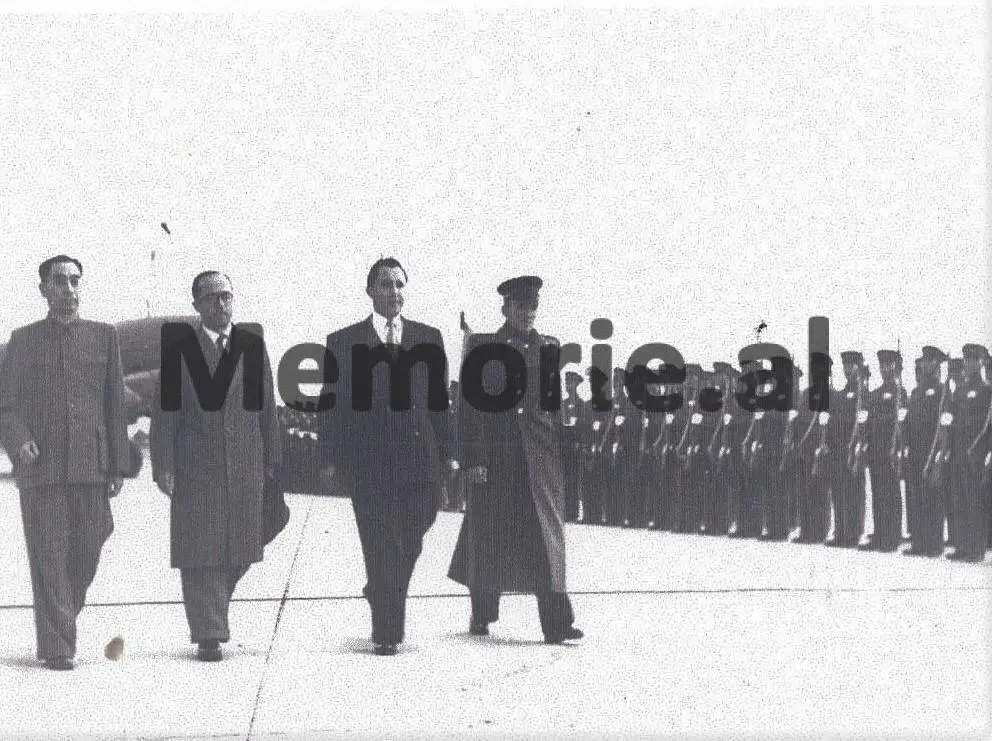
General Ramohito’s book is vast and encompasses an endless gallery of characters and themes. It stretches to Russia and far-off China, from the National Liberation War and the years of the “caricature of socialism,” to the arrival of democracy. It speaks of many well-known events and figures such as Qemal Stafa, Ramize Gjebrea, Nako Spiru, Zaho Koka, etc.; it describes meetings with statesmen like N. Khrushchev, J. Tito, Mao Zedong, Zhou Enlai, G. Zhukov, etc., and it writes a hymn for the mother and her sorrows. But I preferred to focus only on the blow dealt to the army by Enver Hoxha’s madness – a madness and crime that is still defended with fanaticism today by some people who, without a shred of shame or responsibility, address Halim with the thoughtless words: “It was good that we (you, the putschist generals) were punished…!”
Had they themselves been caught by the merciless “scythe” of the sorcerer-dictator, they would obviously speak quite differently. But, accustomed to leading Party Committees or Internal Affairs Branches, riding in those fearsome “Gaz” vehicles left over from Beria’s time where they brought doom to others and benefited from unmerited privileges, they continue with the same tune, playing the zurna to compositions by the charlatans of nations – Marx, Engels, Lenin, Stalin, and their “equal,” “Our Enver” – forgetting that people’s ears, and for some, their souls, ache from these stale melodies.
For all that I have said, the cause was this book – written with culture, sincerity, and sound logic by an experienced analyst, an honored general – where the editor Apostol Duka has also done commendable work. It is a book that must be read to learn lessons from history, especially when those events were written by a man who has the right to repeat Virgil’s words in the Aeneid: “Quorum pars magna fui,” which means: “In which I played a large part”!
In this way, I also cleared my conscience of that subconscious and nonetheless unfair joy I felt when I saw a general – who is no longer alive – leaving the door of the Central Committee with a face darkened by grief. I had wrongly perceived him as morose and stern, but he turned out to have such a great and sensitive patriotic soul and had done so much for Albania. But his greatest service was being rendered now, by writing such a book, where Tagore’s beautiful saying comes to life: “Mud may stain diamonds, but it cannot turn them into mud.” Memorie.al