

Memorie.al / The idea and paranoia of Enver Hoxha and the high leadership of the PPSH, proclaimed somewhere in the mid‑1960s, about “the creation of the new man, with the norms of socialist morality”, was not just a “project‑idea” to be implemented only on us Albanian citizens of the People’s Republic of Albania, but also to be “implemented” on all foreign citizens (mainly tourists) who would enter Albanian territory. Among other things, this is also made known by an order from May 1973 of the then Minister of Internal Affairs, Kadri Hazbiu (who was also a member of the Political Bureau of the Central Committee of the PPSH), addressed to all Border Crossing Control Points, where, among other things, he wrote: “All foreign persons who, by their external appearance, are in contradiction with the norms of our socialist morality, such as, for example, men with hair like women, with exaggerated sideburns, with unkempt beards, as well as with inappropriate clothing, specifically women with miniskirts, shall not be allowed to enter the RPSH”!
According to him, this was done in order; “to prevent the influence of bourgeois‑revisionist ideology through the extravagant clothing and appearance of foreigners who come to the RPSH for various reasons”! This decision of the Albanian government of that time, which came after the proposal of the Political Bureau of the Central Committee of the PPSH, was implemented meticulously for years at all Border Crossing Control Points of the People’s Republic of Albania and at the only international airport of Rinas.
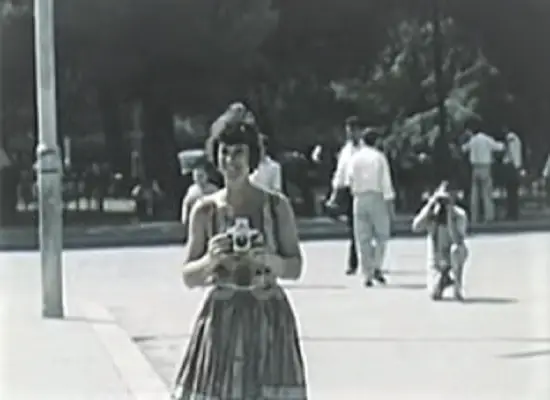
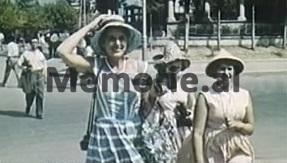
Among other things, this is also made known by many archival documents, such as that of 15 August 1969, where in the Operational Communiqué of the Ministry of Internal Affairs, a Swedish tourist named Laura Arcuri, who had come to Albania with the Yugoslav tourist company “Atllas”, was also reported. The relevant Albanian authorities forced her at the Hot Border Crossing Point to remove her miniskirt and wear another one, but when she went to the “Dajti” Hotel in Tirana, she put it on again and went out into the city. This led to her being expelled from Albanian territory that very day. But besides cases of this nature, which were almost common at that time, there were also other tragic cases where, due to the behaviour and brutal treatment they received from the relevant Albanian authorities regarding their clothing and external appearance, foreign tourists resorted even to suicide.
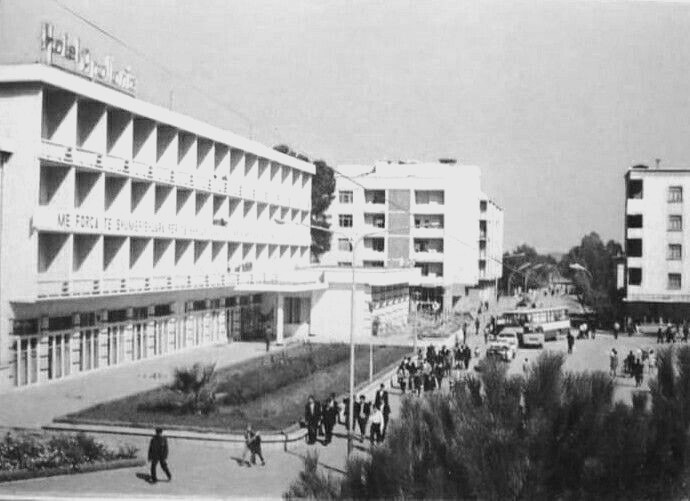
Such was the case of the 22‑year‑old Irish tourist, William Patrik Ottonell, who committed suicide by jumping from the fourth floor of the “Apollonia” Hotel on Durrës beach, simply because they had cut his hair and changed his clothes as soon as he had entered Albanian territory. As above, all these things are made known by archival documents with the “Secret” sigla, taken from the Archive of the Ministry of Internal Affairs (now de‑classified), which are published for the first time with the relevant facsimile by Memorie.al.
Along with these documents, we are also publishing some other archival documents taken from the Central State Archive in Tirana (the archive of the former Central Committee of the PPSH), belonging to the year 1973, where the Minister of Internal Affairs, Kadri Hazbiu, issued an order addressed to the Border Crossing Control Points and the Directorate of Customs, with certain criteria to be applied to all foreign citizens entering the People’s Republic of Albania, regarding their clothing and external appearance, such as long hair, sideburns, etc., and the prohibition of religious literature they might possess, etc.
As well as the document with the report‑information from the Directorate of Customs at the Ministry of Trade, addressed to the Foreign Directorate at the Central Committee of the PPSH, regarding the event of 20 July 1973, where a group of tourists from the West German firm “Retel Tours das rrollende hotel”, consisting of 36 Germans, 5 Austrians, and 1 Luxembourger, were stopped from entering at the Customs of Han i Hotit, because they possessed religious literature, etc.
SECRET DOCUMENT WITH THE OPERATIONAL COMMUNIQUÉ OF THE MINISTRY OF INTERNAL AFFAIRS, REGARDING THE INCIDENT WITH THE SWEDISH TOURIST LAURA ARCURI, WHO WAS EXPELLED FROM ALBANIA BECAUSE SHE WAS WEARING A MINISKIRT
PEOPLE’S REPUBLIC OF ALBANIA “Top Secret”
MINISTRY OF INTERNAL AFFAIRS Copy No. 1
GENERAL DEPARTMENT Tirana, 15.8.1969
III DEPARTMENT
On 15.8.1969, with the Yugoslav tourist firm “Atllas”, among others came the Swedish tourist named ARCURI LAURA, who was warned at the Border Crossing Point in Hot to remove her miniskirt and wear another of normal length. She obeyed and put on another skirt, but when she arrived at the “Dajti” Hotel, she put on the first one again and went out to stroll through the city. For this she was warned two more times and since she did not obey, she was expelled from the territory of the People’s Republic of Albania.
DEPUTY HEAD OF THE GENERAL DEPARTMENT
KOLI SHUKE
SECRET DOCUMENT WITH THE OPERATIONAL COMMUNIQUÉ OF THE MINISTRY OF INTERNAL AFFAIRS, REGARDING THE INCIDENT WITH THE IRISH TOURIST WILLIAM OTTONELL, AT THE “APOLLONIA” HOTEL ON DURRËS BEACH
PEOPLE’S REPUBLIC OF ALBANIA SECRET
MINISTRY OF INTERNAL AFFAIRS Copy No. 1
DIRECTORATE OF ADMINISTRATION AND STUDIES Tirana, 28.7.1975
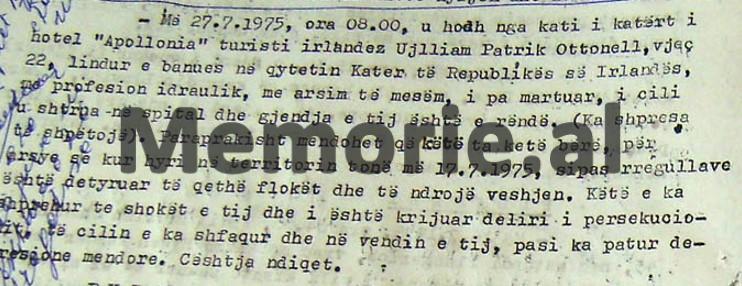
On 27.7.1975, at 08:00, the Irish tourist, William Patrik Ottonell, age 22, born and residing in Waterford (? “Kater” likely means Waterford or similar, but I keep as “Kater”) of the Republic of Ireland, hydraulic engineer by profile, secondary education, unmarried, jumped from the fourth floor of the “Apollonia” Hotel. He was admitted to hospital and his condition is serious. (There is hope he will survive).
Preliminarily, it is thought that he did it because when he entered our territory, on 17.7.1975, according to the rules, he was obliged to cut his hair and change his clothes. He expressed this to his companions and developed delusions of persecution, which he had also shown in his country, as he had suffered from mental depression. The matter is being followed.
DIRECTOR
PILO SHANTO
ARCHIVAL DOCUMENT OF THE YEAR 1973, WITH THE ORDER OF THE MINISTER OF INTERNAL AFFAIRS, KADRI HAZBIU, SENT TO THE BORDER CROSSING CONTROL POINTS, ON THE CRITERIA TO BE FULFILLED BY ALL FOREIGN CITIZENS COMING TO ALBANIA
MINISTRY OF INTERNAL AFFAIRS
No. 479 Copy No. 1
Tirana, 4.5.1973
CRITERIA
ON THE PROHIBITION OF ENTRY INTO THE RPSH OF FOREIGN CITIZENS WHO, BY THEIR CLOTHING AND EXTERNAL APPEARANCE, CONTRADICT THE NORMS OF OUR SOCIALIST MORALITY
To preserve the rules of appearance in our socialist country, as well as to prevent the influence of bourgeois‑revisionist ideology through the extravagant clothing and appearance of foreigners who come to the RPSH for various reasons, as well as through the literature they bring with them, the following criteria shall be applied:
1 – All foreign persons who, by their external appearance, are in contradiction with the norms of our socialist morality, such as, for example, men with hair like women, with exaggerated sideburns, with unkempt beards, as well as with inappropriate clothing, specifically women with miniskirts and maxiskirts, shall not be allowed to enter the RPSH.
2 – No literature of a counterrevolutionary, religious, or pornographic content shall be allowed to pass. This type of literature shall be kept at customs and, if the possessor requests it, shall be given back to them upon return.
3 – Technical, cultural, and artistic literature shall be allowed for all foreigners coming to our country, in the quantity of one or two books or magazines claimed to be for personal use. Any other quantity of this literature shall be prohibited and sent immediately to the Directorate of Customs, which, after carrying out verifications according to the rules, shall send it without delay to the institution or ministry that is receiving the foreigner.
4 – Persons with inappropriate appearance and those who bring prohibited literature shall be treated correctly and in a cultured manner by the border and customs organs, making clear to them the reasons why these measures are taken. All those foreigners who correct their appearance and clothing on the spot shall be allowed to enter the territory of the RPSH.
5 – The border and customs organs shall not apply the measures foreseen in points 1, 2, and 3:
A – For diplomats accredited to the RPSH and employees of diplomatic and trade missions, as well as for members of their families.
B – For officials of the Ministries of Foreign Affairs, diplomatic couriers of foreign countries that have diplomatic missions in Tirana.
6 – The border and customs organs shall not apply the measures foreseen in point 1:
A – For members of official delegations received by the ministries or various institutions of our country.
B – For members of sports teams coming at the invitation of our country or within the framework of international sports meetings.
The persons mentioned in points 5 and 6 shall be allowed to freely cross the border of our country, regardless of their appearance. In such cases, the border crossing points and customs organs shall politely point out to them that the rules of our country do not allow such an appearance, but nevertheless you are free to cross.
In addition, for each case, they shall send as soon as possible to their superior body detailed information on these findings.
The information shall be forwarded to the host institution, which shall take its own measures to regulate their appearance.
MINISTER OF INTERNAL AFFAIRS
KADRI HAZBIU
THE REPORT OF THE GENERAL DIRECTORATE OF CUSTOMS, ADDRESSED TO THE FOREIGN DIRECTORATE AT THE CENTRAL COMMITTEE OF THE PPSH, REGARDING THE BLOCKING AT THE CUSTOMS OF HAN I HOTIT OF A GROUP OF TOURISTS COMING FROM WEST GERMANY
PEOPLE’S REPUBLIC OF ALBANIA
TO THE FOREIGN DIRECTORATE TIRANA
We inform you that on 20.7.1973, at 16:00, at the customs of Hoti, a group of tourists from the West German firm “Retel Tours das rrollende hotel”, consisting of 36 Germans, 5 Austrians, and 1 Luxembourger, arrived.
According to the established procedure, they were asked whether they had propaganda materials. All of them handed over various newspapers and magazines, except for Jean Etien, born in Nechen, Luxembourg, who declared nothing.
From the data obtained on the spot by the customs employees, a thorough search of the aforementioned person was decided and there was found: 70 prayer booklets in French, 50 prayer booklets in German, 120 pamphlets with photographs of Christ in two forms, as well as 50 photographs of a bleeding Christ, printed in Belgium.
Likewise, in an envelope addressed to Comrade Enver, there were found inside 5 threads (? “5 fije brenda” – possibly a typo or unclear; I will keep as “5 threads”), 10 photographs of Christ, 8 religious appeals, and 5 copy sheets. After the search, he declared that he would distribute these materials to foreign tourists in our country, and would give the letter to Enver Hoxha.
Under these conditions, the employees of the Hoti Customs brought him before the whole group of foreign tourists, to whom they spoke about the violation of the rules of our country, and all unanimously demanded that this person be sent back.
Regardless of the group’s request, according to our rules this person was to be sent back, and his return was decided. While all the others were decided to be sent to Tirana, being given the permitted materials, while the other materials were confiscated to be given back upon return. Jean Etien, after his return was communicated to him, left for Yugoslavia without saying anything.
Attached we send you the envelope addressed to Comrade Enver, together with the material inside it, as well as one copy each of the other materials he left at Customs./ Memorie.al
DIRECTOR OF CUSTOMS
EDIP ÇUÇI