Memorie.al / After the destruction of Ali Pasha Tepelena’s state, and the shattered dreams of an Albanian monarchic state, the despair and pessimism that followed were accompanied by fear and insecurity. This was particularly true when Greek Prime Minister Kolettis proclaimed the Megali Idea, according to which Greece, as the heir to Byzantium, should also encompass Southern Albania. Proponents of the Megali Idea attempted to exploit religious divisions, the lack of Albanian schools, and the delayed birth of an organized Albanian patriotic movement. During this period, the fabrication and spread of various anti-Albanian theories began. Particularly devious was the theory of “affirming a shared identity between Greeks and Albanians, based solely on religion and culture.”
This referred to the Albanian Orthodox who lived in their ancestral lands and practiced their Orthodox faith, which was preached in churches dependent on the Patriarchate. There, Greek clerics served, also playing the role of teachers in Greek schools. Meanwhile, Muslim Albanian children attended Turkish schools with hoxhas as teachers, and the children of Catholic Albanians attended Italian schools with Catholic priests as teachers. By placing an equal sign between religion and nationality, Albanians were denied their national identity.
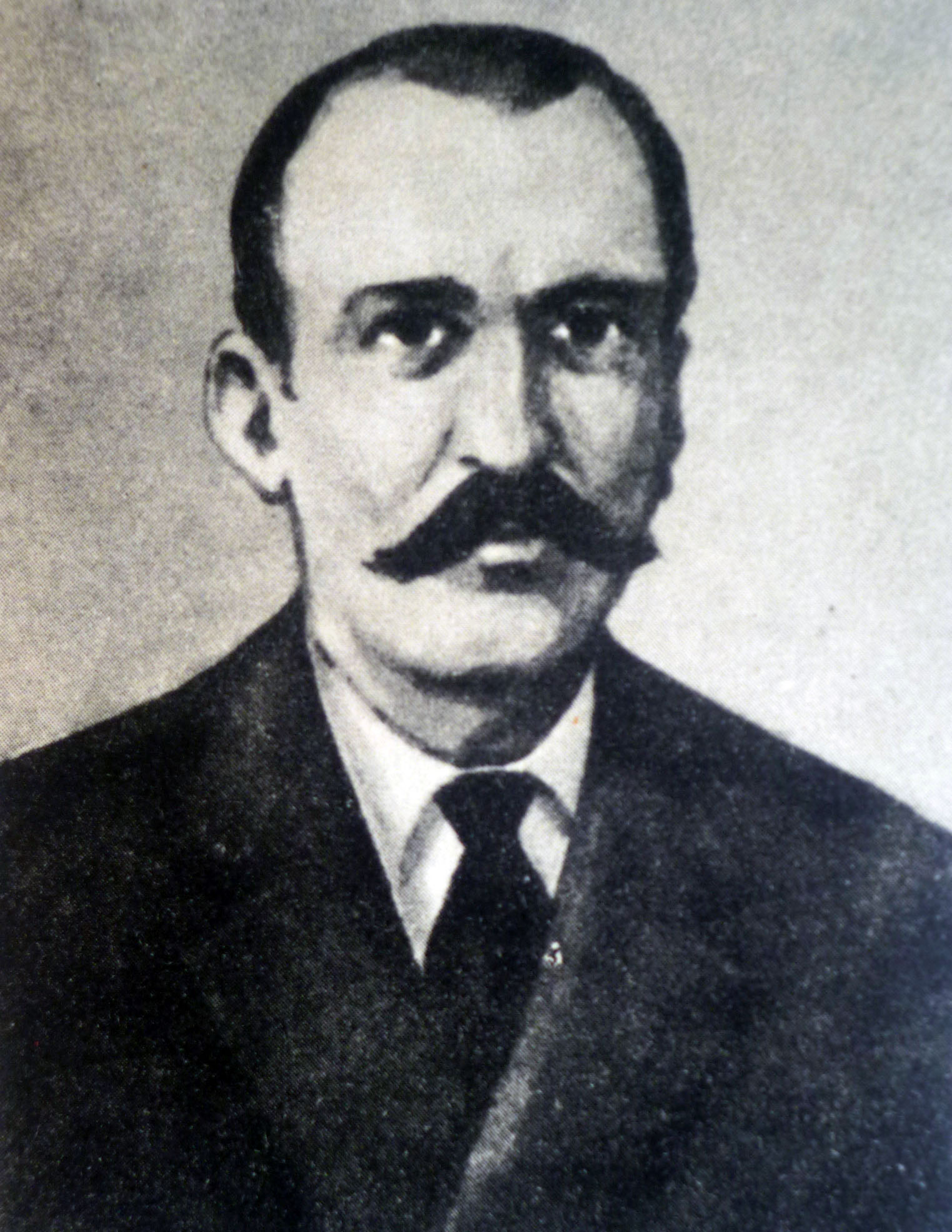
They were not officially recognized as a separate people; thus divided and fragmented, they did not fight for the liberation of their own homeland, but for the freedom of other countries, often even against one another. This was the historical framework in which Naum Veqilharxhi found himself – a man who realized very early on that Albanians, divided not only by religion but also by territorial-dialectal lines into Ghegs and Tosks, risked disappearing as a nation.
THE STRUGGLE BETWEEN ALBANIAN AND GREEK
The writing of Albanian in the South is known to have begun in the 14th century, naturally with the Greek alphabet. However, starting from the 18th century, there were those who believed that the Albanian language should be written with a unique alphabet that was neither Arabic, Greek, Latin, nor Cyrillic. Among them, one can mention J. Vellarai, as well as Th. Haxhifilipi, who was murdered by the Phanariot Church, which subsequently burned his writings.
Efforts to introduce Albanian into churches and schools led to friction between the Greek Church and the Albanians. The Greek stance was clear: burn unique alphabets and death to their authors, while Albanian would only be permitted for the purpose of learning Greek. The Greeks retreated slightly; eventually, the writing of Albanian was no longer denied if it was done in favor of Greek, provided it was not written with special characters.
But Naum Veqilharxhi believed that under this plan, although Albanian was being written and cultivated, the idea of creating an Albanian culture would not be realized. Furthermore, Albanians would continue to be divided by religion, or rather, by alphabets. Through his work, Naum Veqilharxhi would surpass the stance of Vangjel Meksi and Grigor Gjirokastriti, who had translated the New Testament using primarily Greek letters.
“SHARED IDENTITY” FOR THE HELLENIZATION OF SOUTHERN ALBANIA AND THE ROLE OF THE ALBANIAN LANGUAGE
The events of the late 18th century, which were leading toward the construction of nations in Southeastern Europe, could not fail to affect Albanians, who were in direct contact with societies seeking to form “new collective identities.” In this open struggle in the fields of religion and language – where alongside swords, knives, and rifles, poisons were also used – it was clear that Albanians would emerge as losers as long as their only weapons were books, pens, and notebooks.
The dynamics of melting and assimilation through the affirmation of a fabricated shared identity – between the Orthodox faith and Greek language and culture – highlighted an important distinction between Greeks and Albanians. Beyond a different spiritual constitution, or in other words, national identity (Albanianism), the other difference lay in the language Albanians spoke. He devised his own platform and worked to cultivate the Albanian language and establish Albanian schools, as this was the only way to resist Hellenization.
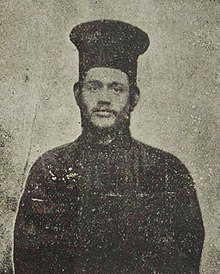
NAUM VEQILHARXHI: PATRIOTIC AND POLITICAL FORMATION
Naum belonged to a family with traditions in the field of culture in general and Albanianism in particular. His grandfather, Llazar Bredhi, was one of the activists for the introduction of Albanian into churches and schools. Naum’s father, Panajoti, had settled on the island of Ithaca around 1796. As a skilled supplier for military garrisons, he had smelled gunpowder even as Napoleon’s armies approached those parts.
The French departed after losses on other fronts, and Ithaca was occupied by the British, whom Panajoti served, always as a supplier. This likely explains why his sons – Naum, Theohari, and Kostandini – held British citizenship. It is probable that Naum, born in Ithaca, completed his primary and part of his secondary education in the Ionian Islands, where he must have come into contact with efforts to write Albanian and use it in churches and schools.
At the beginning of the 19th century, in the Pashalik of Janina – very close to Ithaca where the Bredhi-Veqilharxhi family lived – preparations were accelerating for Ali Pasha Tepelena’s project, which aimed at creating an autonomous Albanian state. This state would have its own official language, which would certainly be Albanian. For this reason, Ali Pasha encouraged the cultivation of the Albanian language by foreigners who frequented his court, as well as by Albanian intellectuals whom he carefully selected and sent to study at the best universities in Europe.
It seems that around 1811, after his father’s transfer to Romania, Naum interrupted his gymnasium studies and, along with the rest of his family, settled in Vithkuq. After the end of the war, Panajoti went to the city of Galați, where he began engaging in trade. Once he had established himself, he gathered his family, who are proven to have left Albania before the second destruction of Vithkuq (1819). It became clear to Naum that the interests of his people did not coincide with those of the Greeks, and that Albanians themselves would have to protect them – but this time, united and educated. In the preface to his 1845 primer, Veqilharxhi testifies that he “sacrificed such a vast amount of time, some 20 years, for Albanian letters and books.” This testimony suggests he began compiling the alphabet in 1824.
OUR MOTHER TONGUE AS A BINDING AGENT FOR ALBANIAN NATIONALISM
Naum Veqilharxhi was clear that Albanians resisted the conquests and assimilatory influences of the most powerful empires of the time by preserving their identity as a nation, primarily thanks to the resilience of their language. He concluded that for Albanians to emerge into the light of freedom, they must liberate their language, cultivate it, and gather around it, just as they would around a national flag. But at that time, the Albanian language was neither written, nor read, nor taught in schools. “It resisted through the centuries,” Leake wrote, “only thanks to the mountains and the spirit of their inhabitants.”
The Albanian language, spoken in several generally mutually intelligible dialects, was quite poor in scholarly vocabulary and filled with loanwords. Among Albanians, bilingualism or multilingualism was a common phenomenon, but Albanian remained the language of the heart and was used in daily life. Turkish was the language of administration, while Italian and Greek were the languages of trade.
In the work ‘History of the Albanian People’, it is written: “With the new alphabet he devised as early as the ’20s, he had drafted several texts which, apparently due to technical difficulties and a lack of means, remained unpublished for two decades.” In truth, after completing the manuscript of didactic materials for primary schools, Naum Veqilharxhi had to overcome two obstacles:
- First, he had to secure financial resources for the casting of his original letters and the printing of the books.
- Second, and most difficult, his project could not be realized without a Sultan’s firman (decree), which would enable the introduction of books in the Albanian language and the opening of Albanian schools.
VANGJEL ZHAPA (1800 – 1865): THE VALUABLE COLLABORATOR
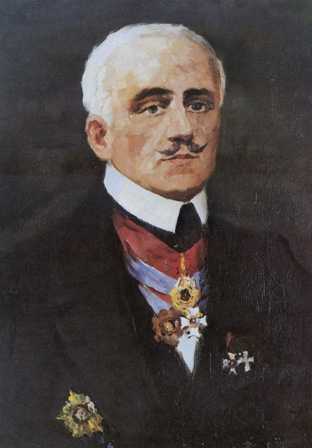
The exact date of Naum Veqilharxhi’s acquaintance with Vangjel Zhapa is unknown, though it was certainly in the early 1840s. Many documents testify to the cooperation between the two Albanians, who had long been settled in Romania. Zhapa himself wrote in the newspaper ‘Pellazgu’ that: “we discussed the issue of the Albanian alphabet with Naum Veqilharxhi for weeks.”
They must have known each other and discussed the alphabet before the primers were published. During this period, Vangjel Zhapa was among the wealthiest men in Romania, while Naum Veqilharxhi had long finished compiling his didactic materials without the means to publish them. Meeting the Albanian tycoon was, for him, meeting the right person. Naum and Vangjel Zhapa – proud of their Albanian roots, participants in anti-Turkish uprisings, and disillusioned by the Filiki Eteria – did not meet by chance. They sought and found one another, and their cooperation would be a synthesis of identical goals and ideals.
THE FIRST ALBANIAN SCHOOLS, ALSO TO PREVENT THE HELLENIZATION OF THE COUNTRY
Naum Veqilharxhi understood the great danger that foreign schools posed to the unity of the Albanian people and national liberation. After the creation of the Greek state, a dense campaign for establishing Greek schools began in Southern Albania. Stavro Skendi wrote that; “in the vilayet of Janina, the Orthodox community consisting of 532,000 people had 23,000 students in 665 Greek schools.”
Naum Veqilharxhi was clear that; “Greek schools are established to enlighten Greek youth and not for the enlightenment of the Albanian people.” In the 1846 Circular he sent to his compatriots, Naum Veqilharxhi wrote that; “…only nations that have a written language can enter the rank of civilized nations, while others will be condemned to be their slaves.”
DEVISING THE UNIFICATION OF THE ALBANIAN NATION: VEQILHARXHI’S MASTERPIECE
With the institutionalization of the millet system, Albanian society did not entirely escape the renewal of religious identities. In fact, despite declared equality, the Muslim/Christian distinction was still noticeable, especially in the creation of a parallel educational network that formed increasingly broader social strata being educated in different cultures. In this way, on a religious level, rules were becoming stricter and the religious division of the population was becoming more emphasized.
It seems that the efforts of Ottoman rulers to religiously fanaticize and nationally Turkify Muslim Albanians – while giving a free hand to the Greek-Phanariot church and the Greek state to carry out the same activity toward the Hellenization of Orthodox Albanians – were eroding the long-standing interfaith tolerance of the Albanians. Naum Veqilharxhi was clear that emphasizing the Albanian national identity would minimize both religious identities and the phenomenon of religious identities closing in on them. For Veqilharxhi, the Albanian nation must unite Muslims, Orthodox, and Catholics, who “are parts of the nation,” into a single body.
THE END OF NAUM…!
Naum Veqilharxhi’s patriotic activity found an enthusiastic reception among Albanians, but also fierce opponents in the Greek Church. However, Naum did not back down before threats and slanders; indeed, he challenged them and went to Istanbul to closely oversee the publication of grammars. But this was his final journey. Naum closed his eyes in Istanbul. According to rumors circulating among Albanian activists, he was poisoned by order of the Patriarchate or Greek circles. Who ordered Veqilharxhi’s poisoning?
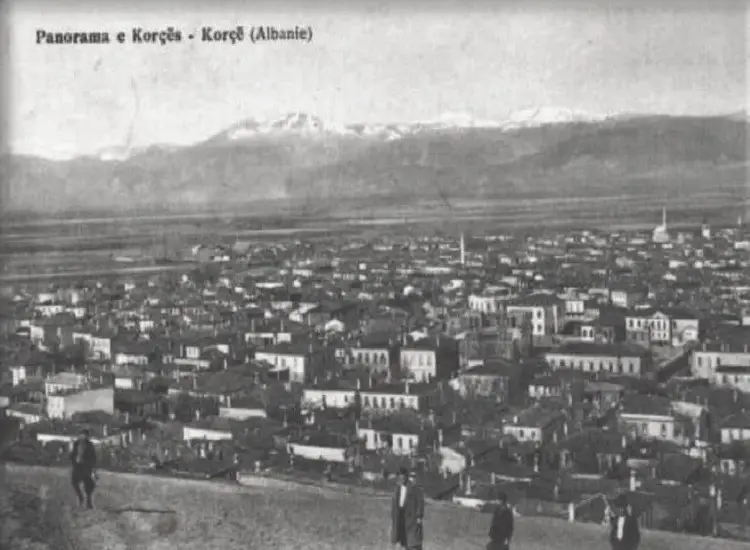
The Romanian scholar T. Capidan believes that; “the crime might have been committed through an agreement between the Phanar and the Yildiz.” In truth, the murder of Naum Veqilharxhi occurred at the height of a fierce campaign organized by the church. Surely, it was not the work of a single extremist, as Veqilharxhi’s elimination was accompanied by the exile to distant Crete of the patriot Athanas Paskali (grandfather of Odhise Paskali), as well as the transfer of the Metropolitan of Korça, possibly accused of a lack of vigilance.
Furthermore, one must add the state of fear and terror established in Brăila, Romania, where Naum’s family lived, which ended with the burning of their house along with the books waiting to be distributed. It is known that the same end befell Theodor Haxhifilipi and later Pandeli Sotiri, Papa Kristo Negovani and his brother, Petro Nini Luarasi, Panajot Kupitori, Anastas Kullurioti, and others.
Undoubtedly, the Turkish state also played its part, at least in covering up the crime. Moreover, Naum’s poisoning occurred at a time when the armed movement in Albania had begun to organize, showing the first and long-awaited signs of national unity.
NAUM VEQILHARXHI DESERVES ANOTHER PLACE ON THE ALTAR OF THE ALBANIAN NATION’S HISTORY
Naum Veqilharxhi defined the main direction of Albanian nationalism with its specific characteristic: reliance on the mother tongue. In this way, he laid the first stone in the renaissance of the Albanian nation that would include all Albanians. The Albanian people now have a free and unified breath, and Albanians – rejoicing in the new geography of their once-denied reach – articulate their aspirations for development, from the mother state and beyond, wherever the blood of the Arber was shed for the Albanian language, and the foundations of the symbolic alphabet took place.
We cannot place even a bouquet of flowers from Albania upon his grave – provided one even exists. Naum’s prophetic instructions and ideas, surprisingly, are not sufficiently reflected in school textbooks or in the work ‘History of Albania’. It is clear that for the authors of these writings, Naum was merely an idealist, an Enlightenment thinker, a rationalist, and, to his misfortune, an evolutionist.
His expression that: “in human nature, one does not see jumps, but gradual order,” seems to have been the final straw, and the officials of the time decided to prevent his name from entering Tirana – whether on a street plaque or above the gate of a school. Certainly, there was no talk of a bust to immortalize the great Naum in the middle of a park.
The cooperation, though fruitful and documented, between Naum and Vangjel Zhapa has been completely ignored. Vangjel Zhapa’s patriotic activity is concrete and clear, but the “Albanian millionaire” – driven by class hatred, but more so as a result of financial-diplomatic combinations – was considered an enemy after 1965. According to the logic of the time, his friends and collaborators, including Naum Veqilharxhi, suffered the corresponding treatment.
The opposition to the work of the great Renaissance figure is even more apparent in the cold attitude toward the schools where Albanian was taught with the “primer of primers” ten years after their publication, or eight years after the tragic end of their author./ Memorie.al