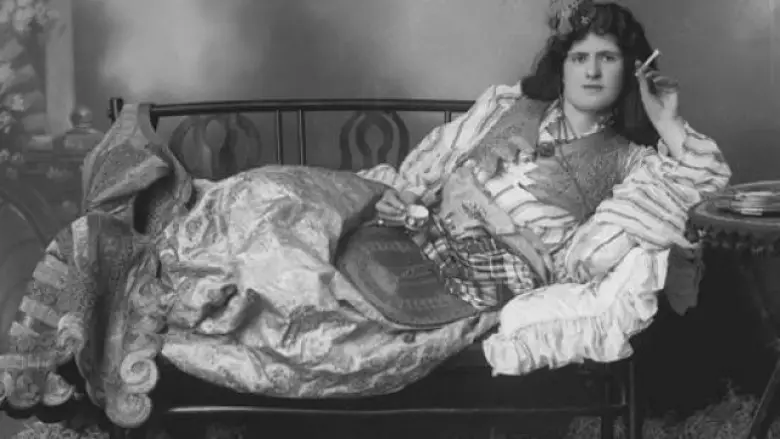
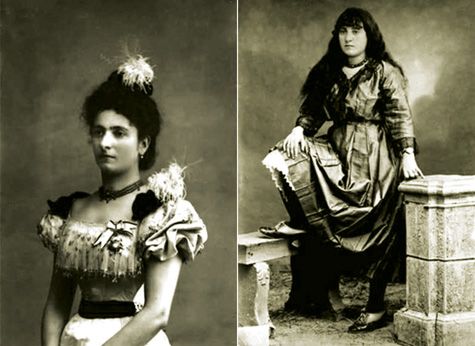
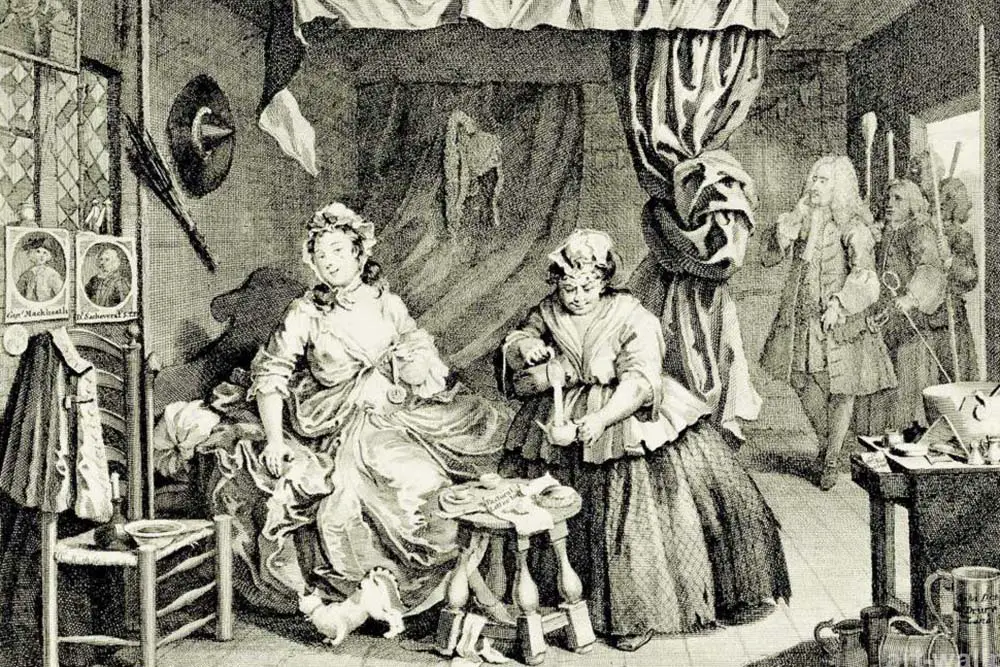
Memorie.al / They were the women who entertained the beys of Tirana: the desirable ‘courtesans’, always pleasing, the relaxation of the wealthy. They easily drew them towards sin, invited them to joyous moments, submitted to their power and subdued them with their caresses. They were the ‘kept women’ with marks of shame, gossiped about in the alleys by day and enjoying erotic pleasures by night. They, the poor and inconsolable women, broke the mastery of the young men and men who gave themselves to them for a quarter gold francs, but at the same time broke their own pride, their bodies trampled upon in beds, with men smelling of raki.
Beautiful women, sweet, sad, suffering, deeply humbled, miserably poor, trapped by fate at a crossroads of mercy, survival, violence and sometimes oblivion. Not forced to stay with the same man, but forced to be with many.
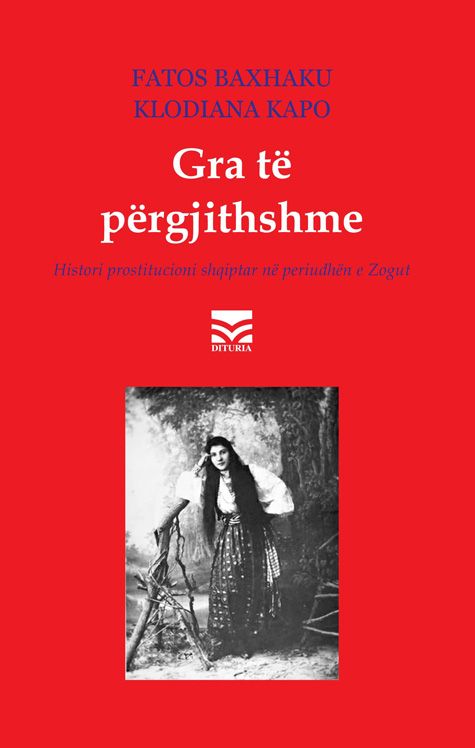
Fatos Baxhaku and Klodiana Kapo, in their book, bring stories tucked away in archives and forgotten tales of human lives, in a publication titled “Gra të përgjithshme. Histori prostitucioni shqiptar në kohën e Zogut” (“Public Women. A History of Albanian Prostitution in Zog’s Time”), (DITURIA Publishing House).
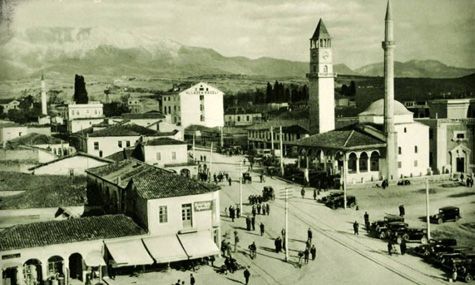
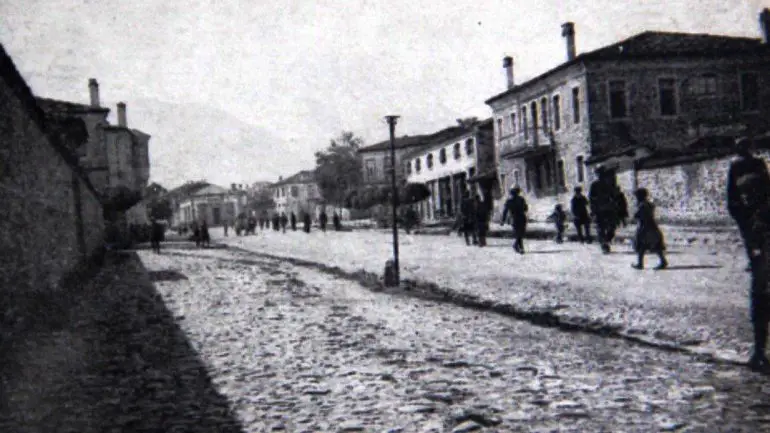
When the archival research began to surprise the two authors more and more, it became clear that prostitution in Albania had not only existed, but had even been documented in various ways (and different centuries), especially in the main cities, sometimes near large families.
The book summarizes laws and regulations, police reports, various spies’ reports, head-elders’ complaints, reports from eavesdropping and envious anonymous individuals, stories of weary courtesans, fates of foreign women who disappear as suddenly as they came, brawls of drunkards who confused the door of the brothel…!
The authors clarify from the beginning that one of the book’s challenges was the language used in the official correspondence of the time and the very diverse terminology, and they note that; “Whore, public woman, prostitute, courtesan (çengie), pleasure woman, loitering woman, brothel, madam, prostitution, bordelism, public house, brothel director, owner, master of the public house, brothel keeper, all these terms are encountered in parallel, almost in the same period.”
All the stories in this book (which, if the prudish see in your hands, might look at you askew), mostly include stories from the years 1922-1939, the ‘Zogist era’, a time when Ahmet was Interior Minister, Prime Minister, and finally King.
“The Prostitution Regulation”
In 1938, the Tirana Municipality had registered 5 brothels, 71 public women, of which 5 were Greek, 2 Yugoslav, 2 French, and 62 Albanian. In a document of the time, according to Fatos Baxhaku, it is said that: “13 persons have been caught engaging in debauchery and keeping women in houses for the purpose of prostitution…”!
This data comes many years after prostitution in the “Kingdom of Albania” had been regulated, with the approval of the “Prostitution Regulation”. This had happened in 1922, when Ahmet Zogolli had just taken the seat of Interior Minister, in the government of Xhafer Ypi.
If the Albanians of the time called those women “public women”, “loitering women”, “common women”, Ahmet Zogu simply called them “whores”. The government of the time, taking cue from the initiative of the Matjan (native of Mat), approved a regulation with 26 articles, known as the “Regulation on the regulation of prostitution”, as Baxhaku writes, a translation of a regulation that was in force in Sarajevo during the Austro-Hungarian occupation.
Baxhaku writes that it specified who issues the permits for practicing the profession, how and where Public Houses should be, the obligation to be visited twice a week by the municipal doctor, the duties and obligations of the “director of the Public House”, while emphasizing that; the “whores” had to pay the municipality a monthly tax of 2 gold francs (payment was made to the Municipal Police), but to avoid corruption, prostitutes were not allowed to pay the doctor themselves.
Sad Letters
Fatos Baxhaku and Klodiana Kapo, the authors of the book “Public Women. A History of Albanian Prostitution in Zog’s Time”, have also included in it fragments of letters from these sad women. “The three of them, Caja of Vak, Fizja of Mim i Vogël, and Fahrija of Sefë, must have gone together to the lawyer that March morning of 1922. All three were famous courtesans ‘in Tirona’, all three from the ‘Tabakë’ neighborhood, and all three with different but similar troubles.
A few days earlier, the police had knocked door to door, ruining their deep morning sleep, which they loved so much. ‘You must go to the municipality to register, then twice a week to the doctor for a check-up, and you will pay a tax, otherwise these await you,’ a mustachioed policeman had said, lightly rattling a pair of heavy handcuffs. The requests that arrived from the three courtesans to the Ministry of Interior bear a date, March 8, 1922, only two months after the approval of the “Prostitution Regulation.”
Caja, who was still holding up well thank God, only asked to register like all the others and not have trouble afterwards. Fizja asked for precisely the opposite, to be deregistered…! Fahrija had the biggest problem. She had her daughter in prison. She had been detained on charges of practicing illegal prostitution.
In her plea, poor Fahrija swears that from that day on, her daughter, known in the neighborhood as ‘Nazja of Fahrie’, would no longer make trouble, but would do whatever she could and find work somewhere as a servant. ‘Then, how would she celebrate Bayram without her Naze, her very soul’?! ” – we excerpt from the book.
When age caught up with them, and days ended without expecting gentlemen, first of all, their name had to be removed from the list of courtesans, to avoid the medical visits and taxes. We select from the book the humble letter that Dilja of Xexe from the “Xhamia e Sherifit” neighborhood in Tirana wrote to the prefecture – certainly in someone else’s hand – on August 24, 1926: “Sir! The undersigned is an old woman, previously I was in the group of courtesans, but as I grew old, up to the time when the Austro-Hungarian army was here, I gave up those tasks that necessitate a check-up. Until that time, I find myself in the house next to my uncle, I occupy myself with personal work, and I am not one of the public women.
Therefore, I beg you, Sir, to have the kindness to order that the necessary follow-ups be done for me to be deregistered from the list of public women, and that I not am subjected to check-ups.” Some happened to leave the prostitute’s life and find their missing half. “Thus happened to Angjelina K. from Sarajevo, who married the shoemaker Emin L. from Tirana.”
Wartime Prostitutes
Baxhaku and Kapo have not left out the practice of prostitution during the war. As it appears from accounts remaining to this day, in 1941, along with Italian soldiers traveling from Gjirokastra to Vlora, there were also some prostitutes. One of the soldiers was named Gian Carlo Fusco. When he later became a well-known journalist, he described the unforgettable journey of Italian prostitutes through the ravines of Kurvelesh like this: “In Delvina and Jergucat, the trucks also picked up the girls from the army brothels. Swaying on their orthopedic shoes, they were pale, frightened, without toiletries, wrapped in cat furs with the fur standing on end.
Only one of them, Sonja, the daughter of a fascist and alcoholic blacksmith from Friuli, stopped with the troops in front of Tepelena, in an uninhabited ground-floor house, to calm, as she said, ‘with her caresses’, those poor boys. The others only caught their breath when they arrived in Vlora. Passing from one convoy to another, in a general mishmash, they traveled for five consecutive days.
At stops at checkpoints, they, like the soldiers, ate canned food, pecking at pieces of meat with their nail files or tweezers. Waiting for some car, they would stay for hours curled up on their large fiber suitcases, talking in low voices about their homes and masters.
The carabinieri at the checkpoints treated them with rough respect…”! And as Baxhaku and Kapo write, in 1944, communism came and its morality, which aimed to create a different human race that of the “new socialist man”, decided that; “the new man should only be with his wife….” / Memorie.al