

By Msc. Xhorxhina Seferi
Part One
-The APL’s Policy Against Religious Beliefs: Legal Measures and the Propaganda Campaign of 1967-
Memorie.al / immediately following the liberation from fascist occupiers, a communist regime was established in Albania, based on the dictatorship of the proletariat and the class struggle. The government led by Enver Hoxha, in the early post-liberation years, presented itself as a visionary administration that had drafted projects for the educational, cultural, economic, and social development of the country. In its beginnings, the communist state did not affirm itself publicly as an atheist state, but rather as a secular one. However, this did not prevent the state from initiating a struggle for the eradication of religions as an opposing ideology. Developed within a closed society with a low cultural level, communist propaganda managed to denigrate the clergy and undermine the integrity of religious services.
In 1967, propaganda against religious beliefs was openly conducted in an intensive and programmed manner, demonstrating the regime’s need for political and social uniformity. In this study regarding the policies of the APL (Albanian Party of Labor) against religious beliefs, we focus on the establishment of the communist regime in Albania, its relationship with religious communities, the initial measures against religious beliefs, the methods used in the struggle against religion, the propaganda campaign and its primary tools, the stance of the clergy, and ultimately the prohibition of religious activity in the country.
The Initial Stage of the Communist Regime
The Anti-Fascist National Liberation War concluded an important historical stage, during which the country was liberated from Nazi-Fascist occupiers and national independence was restored. With the end of the war, a democratic development of the country was expected. However, the war possessed a characteristic that would influence post-war developments: nationalist organizations, “Balli Kombëtar” and “Legaliteti,” due to their wartime positions and the departure of their leaders abroad, would not be factors in post-war developments.
The forces that fought the war, united in the National Liberation Front – where the Communist Party held significant weight – came to power. Following the liberation, the country experienced an extremely difficult state of crisis. Albania was, in every aspect, the most backward countries in Europe. Industry had suffered great damage, infrastructure was almost entirely destroyed, the working class was small in number, and the majority of the population was illiterate.
The people needed shelter, clothing, and bread, and the risk of disease was very high. According to Albanian historiography, two main causes for this crisis can be mentioned: the backwardness inherited from the past and the significant losses in economy and human life caused by the war. Given the economic and social level of the country at that time, and according to Marxist doctrine, the establishment of a communist regime in a country with such a low level of development was not foreseen.
Marx, the founder of scientific communism, declared that his ideas would be successful if implemented in developed capitalist countries. Thus, for a country like Albania, the establishment of a communist order was not envisioned; however, the Communist Party, due to certain political developments during the War, managed to come to power alone. “Beginning his action in 1941 with a cluster of followers and a handful of Yugoslav advisors, Enver Hoxha had seized power by 1944, putting Stalin’s teachings into practice!”
On March 18, 1946, the People’s Assembly tasked the head of the Communist Party, Enver Hoxha, with forming the first post-war government. On March 24, the Assembly approved the program and the governing Cabinet with the following composition: Enver Hoxha (Prime Minister, Minister of National Defense, and Foreign Minister); Koçi Xoxe (Deputy Prime Minister and Minister of Internal Affairs); Haxhi Lleshi and Tuk Jakova (Ministers without Portfolio); Manol Konomi (Minister of Justice); Nako Spiru (Minister of Economy and Chairman of the Planning Commission); Spiro Koleka (Minister of Public Works); Ramadan Çitaku (Minister of Finance); Sejfulla Maleshova (Minister of Education); Medar Shylla (Minister of Health).
A characteristic of the regime was the fierce struggle conducted within the high ranks of the APL leadership, involving eliminations and maximum sentences for opponents, following the Stalinist models and methods of the time. This internal strife was quite severe and dominated particularly after 1947 until the fall of the communist regime. Laws existed, but they were not applied equally to all citizens. Consequently, people in power resorted to arbitrary actions. Arbitrary punishments began to extend to anyone who expressed dissatisfaction or openly opposed a party decision.
Measures for the Country’s Recovery
Immediately after the war, the Communist Party of Albania identified as a priority the construction of a political system that would suit its nature and goals. Within this framework, particular importance was given to the organization of the state, which would be used as a tool to carry out reforms for normalizing life and economic development, as well as for crushing opposing classes and their resistance.
Economic construction and the suppression of opposing classes constituted the primary goals of the CPA (Communist Party of Albania) and the essence of the functions of the state being built. In such circumstances, the democratic state that emerged from the war gradually took on the features of a Stalinist-type left-wing dictatorship.
As the country faced very difficult socio-economic conditions, the state initially prioritized the most emergent problems: reconstructing damaged infrastructure, securing essential living needs, and undertaking reforms to accelerate the normalization of life.
Agrarian Reform
Among the reforms undertaken was the Agrarian Reform. “The Presidium of the Anti-Fascist National Liberation Council, on August 29, 1945, approved and proclaimed the law on agrarian reform.” Under this law, state estates, confiscated agricultural properties, large private estates, and those belonging to religious entities were expropriated. According to the law, owners were denied all rights over the property except the right to use it.
At first glance, the expropriation did not appear to be an anti-religious act but a necessity for implementing the law, which did not expropriate all lands owned by religious communities but left them with 20 hectares of land. In reality, the communist regime exploited this reform to weaken religious communities. Mosques, monasteries, tekkes, and other religious objects secured income from the lands they owned, and these funds were used by the respective communities. With the approval of the Law on Agrarian Reform, religious communities suffered a heavy blow.
Decree-Law No. 253 of May 27, 1946, which made changes to the Law and Supplementary Laws of Agrarian Reform, further reduced the property area for religious communities: “Tekkes, monasteries, and religious communities of the Prefectures are left with up to 10 hectares of land. In cases where the areas owners benefit from under this decree-law include orchards, vineyards, and olive groves, the area of land granted is reduced in proportion to the value of the crops.”
This reform, along with a series of other fiscal measures and nationalizations, greatly limited the economic base of religion. The process of coopting agricultural production tools, especially the profit tax on buildings which began in 1955 with retroactive effects, was another blow delivered later to the economic position of religious institutions and leadership.
Educational Reform
After liberation, the state showed a particular commitment to education because it faced many problems, including illiteracy. Another reason for the state’s engagement in improving education was to educate the new generation with communist ideology. The Council of Ministers drafted the platform for educational reform, and on August 17, 1946, the People’s Assembly approved the law on Educational Reform.
The law defined the educational system with all its structures and links. It consisted of preschool education, general education, vocational education, and adult education. General education would be 11 years long. Its stages were: four-year primary education, seven-year unique (lower secondary) education, and four-year general secondary education.
The Movement for the “Emancipation” of Women
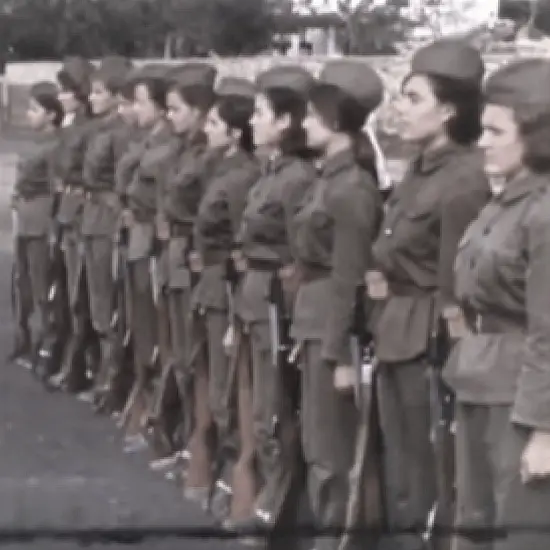
Another movement undertaken by the Communist Party was the movement for the emancipation of women. At its core lay political and ideological motives. The impetus for this movement was the old norms of the Kanun (customary law) that operated forcefully in some areas of the country, keeping women oppressed and discriminated against. Old customs made her inferior in relation to the man.
This position appeared in every field but was even more evident in the family, where she was oppressed and treated as a slave. Driven by reality, the APL organized a social movement throughout the country. This movement aimed to eliminate Kanun norms and old patriarchal practices and customs that discriminated against women and hindered their involvement in social, political, and cultural life.
This movement began to succeed, achieving a sensitization of social opinion. Almost all strata of society began to condemn the mentalities and customs that had led to the discrimination of women. The movement focused on the struggle against old mentalities and customs and on creating conditions for her emancipation in various fields of life.
Party activists across different districts supported this movement and began to state: “We will raise women to positions of responsibility, from squad commanders to cooperative chairpersons,” “We will break engagements made at a minor age and wage an uninterrupted struggle against such cases,” “We will change women’s attire within the first six months of this year and take measures to change family relationships, especially those between husbands and wives.”
A particular echo was found in the protest of the pioneers of the 8-year school in Progonat, Kukës, who publicly broke the engagements made by their parents at a young age and declared: “We will not warm ourselves if the wood is carried on the shoulders of our mothers, and we will not drink water if they bring it on their shoulders.”
Letters began arriving to the leader of the APL from women’s activist meetings and conferences of the Women’s Union of Albania from various districts. They initially expressed gratitude to him, then shared their concerns and promised to contribute to the construction of socialist society and fight until they achieved their deserved role in the family and society.
The women’s activists of the Dibra district stated in a letter: “As women, we will strive through concrete work to ensure the growth of our personality and full equality in society and family. We will raise our voices against anyone who tramples on our rights; we will seek the help of all communists and the village party organization to carry out your orders to burn with fire and cut the heads off all those who trample on these rights.”
In the assemblies and meetings held, old practices and customs allowing the mistreatment of women were condemned, and through this movement, the position of women began to change in both the family and society. “To provide women with facilitating conditions, 15 canteens were opened in neighborhoods. 500 women were promoted to positions of responsibility starting from the 5th Party Congress onwards.”
The APL also demanded from party organizations, mass organizations, and state organs: “Not to allow any concessions in this matter and for this purpose to strengthen educational and political work by creating a suffocating atmosphere everywhere against these customs that humiliate women.” It was this movement that made the “emancipation” of women possible and gave impetus to her activation in the social and cultural life of the country. According to the APL, the development of women directly influenced the strengthening of the family and the economic and political developments of the country.
Relationship of the New Communist Regime with Religious Communities
In Albania, although the majority of the population was Muslim, Christians also lived there. Initially, the communist state did not openly affirm itself as an atheist state, but as a secular one. Consequently, the methods of the struggle against religion were indirect. The state did not interfere in defining the legal position of religious communities; instead, religious policies were allowed to rely on Zogist legislation. The Fundamental Statute of 1946 and the Constitution of 1950 sanctioned freedom of belief and the separation of state and religion.
To achieve its goal, the regime acted with cunning, not undertaking open measures against religious beliefs. Albanians saw belief as closely intertwined with family and social values and customs. Under these conditions, the communist regime decided to gradually weaken religious institutions. It first decided to subject these institutions to the state, use them as long as they supported the government program, and finally destroy them. This APL plan took 23 years to be fully realized.
During the Liberation War, the future communist regime had carefully implemented and preserved its plans. At the Congress of Përmet, held in May 1944 for the formation of the Anti-Fascist National Liberation Council and for laying the foundations of socialist power, Enver Hoxha specifically honored the “clergy” present among the delegates, partisans, and patriots. Later, the constitution provided guarantees for civil rights and the free exercise of religion.
Despite what it had presented thus far, the new communist regime began to weaken religious institutions during the years 1944–1946 by excluding religious education from the law and closing the remaining private religious schools. Furthermore, religious publications were banned, and youth were encouraged not to participate in religious activities. In the first years of state-building, the communists did not establish any authentic legal document regarding the legal position of religion in society. With this action, it was implied that the state remained faithful to recognized standards in the relationship between religion and democratic states. However, when the opportune time came, they precisely implemented one of the points of their program: the struggle against religion.
The Decree-Law on Religious Communities of 1949
The communist state took the Zogist law on religious communities for granted and, with some minor changes, kept it in force until the end of 1949. After this time, under the pretext that new political, economic, and social realities had been created in Albania born from the Anti-Fascist National Liberation War, it abrogated it and drafted a new, more complete legal framework for religion.
On November 26, 1949, Decree-Law No. 743, “On Religious Communities,” was issued, approved by the Presidium of the People’s Assembly of the People’s Republic of Albania. The Decree-Law of Religious Communities of 1949, consisting of 37 articles and formulated in accordance with the Constitution, sanctioned state intervention in the internal affairs of religious communities. This decree-law, in accordance with Article 16 of the Statute of the People’s Republic of Albania, provided in Article 1 that all citizens were guaranteed freedom of conscience and belief.
Article 2 declared that “faiths and religious communities were separated from the state,” while Article 6 stated that “religious communities were free to organize and exercise religious services based on their dogmas and statutes, provided these did not conflict with the laws of the state, public order, and good customs.” According to Article 9, every religious community had to have a Presidency that would be responsible to the state, and connections between the government and religious communities would be made through the presidency of the Council of Ministers./Memorie.al
Department of Islamic Sciences, “Bedër” University