Part Two
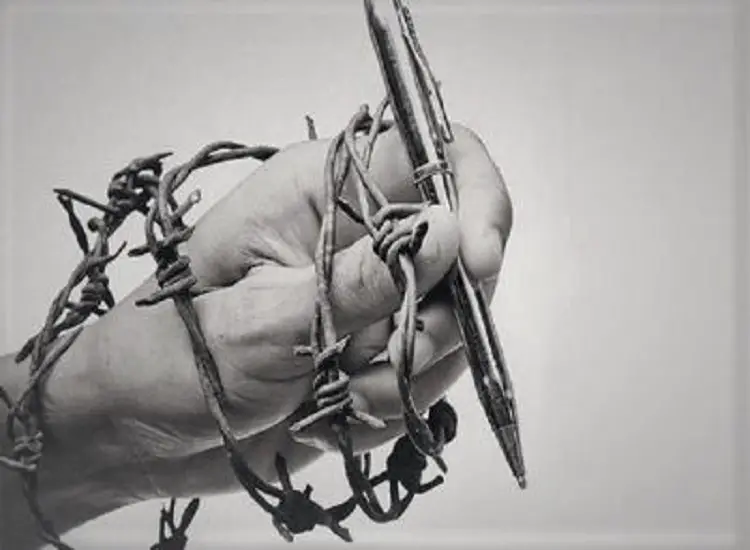
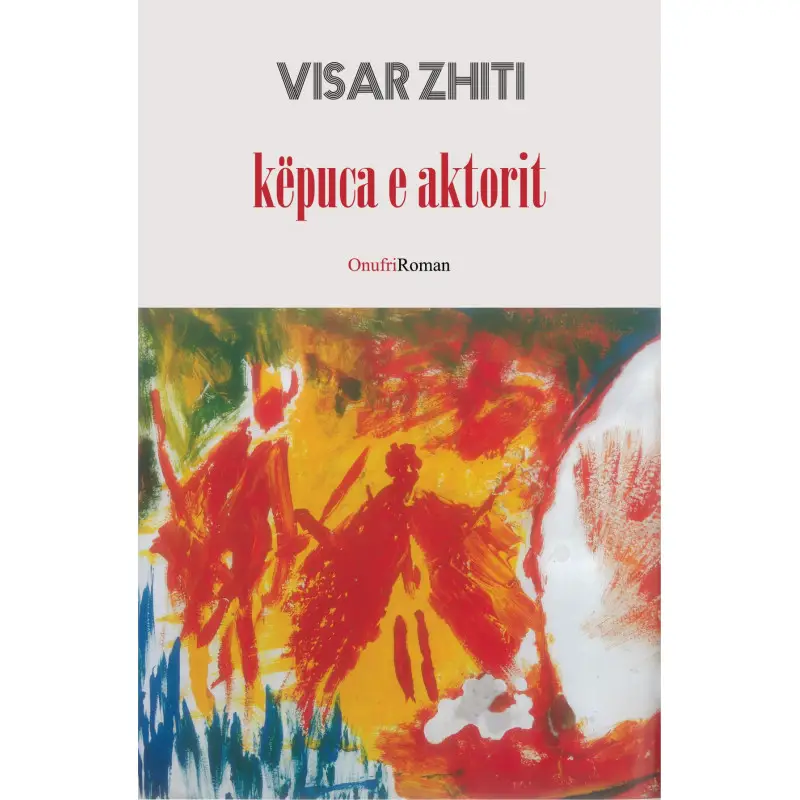
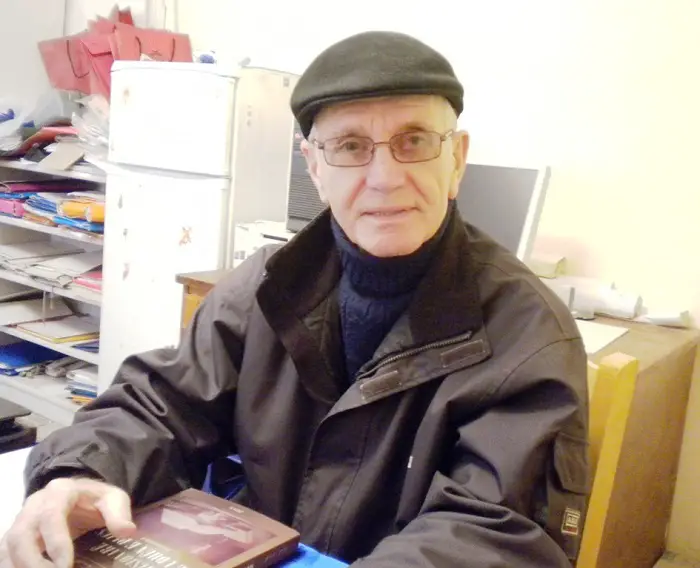
Memorie.al / Umberto Eco, the author of the magnificent novel The Name of the Rose, quoting Visar Zhiti’s book of poems The Rhapsody of the Life of Roses, states: “Poetry causes fear in dictatorial regimes, even if it speaks, as in the case of Visar Zhiti, about roses.” Praised by world critics as one of the best poets on the globe, Zhiti has earned many international awards and has been accepted as an honorary member of the “Mihal Eminescu” International Academy. Zhiti: “I was accused of having written hermetic verses, / but more hermetically they locked me up… / 10 years of deprivation of liberty! / Even what you don’t have, they take from you. / They wanted us as slaves. / With verses, we created freedom.” / Art – the antipode of tyranny. On a holiday, November 8, 1979, they arrested him. The poetic volume, unpublished but subjected to dictatorial expertise, sent him to prison.
Continued from the previous issue
May 17, 2021. What was that? An earthquake, a bombardment, or an anxiety attack?! The post-dictatorship resembled the dictatorship. The Theater fell on my head. It killed me. I was feeling the collapse of the theater in my ribs. I heard Atjon: “Get up, I am for you! Is even a dream reality? Is this a student or an angel? I let out a scream. First for the student, the boy who vanished. It is the scream, or the outcry of the heart of an inconsolable father.
The rhetorical figure of prosopopoeia is used here, which consists of representing those who are no longer living as living persons who speak, or by personifying abstract and soulless things. Examples: “Man, / how little I find him in man; / therefore I turn to the trees.” Or: “Rarely did my father’s ghost come to me. My soul and the ghost.” The Theater collapses. It accepts death with sorrowful dignity. It made one want to cry. Requiem. My country puts on a theater (acts), but does not love the theater. The Theater of Prishtina, in those days, would suspend its performances as a sign of mourning.
Betrayal during the night. A black day for art. The excavator driver felt the tremors of the machine as if they were his own. At this hour, the executions used to take place. Without people, without witnesses – he had spoken to himself. Desperate protesters, frozen-faced. The government demolished it. You don’t play with the government; it plays with us…! In February 1999, powerful protests by prominent artists and intellectuals demanded, among other things, its declaration as a cultural monument, as well as the provision of funds for the reconstruction of the theater.
Maks Velo stated: “The Theater has been left without maintenance so that it would degrade and be demolished. Regarding the internal layout, there is no theater with a better functional solution in Albania. Cultural institutions were created there. Value comes from antiquity. Heritage is the accumulation, transmission, and preservation of cultural values.” The area where the Theater was located had been declared a “cultural monument” in the year 2000. Therefore, the Theater, being part of that zone, was considered as such.
The newspaper Il Fatto Quotidiano (16.7.2018) wrote: “First, Berte’s lower garden of 1935 was destroyed. Then the best stadium, designed in 1934, was destroyed, and now the National Theater,” designed in 1938 with rationalist architecture. The architectural ensemble was destroyed. In the “Kosova” theater (later the National Theater), great masters of lyrical, folkloric, and primarily theatrical and cinematographic art made their debut.
Only there and nowhere else could and should the Museum of National Artistic Memory have been created, where the sublime art of the descendants of Moisiu (Alexander Moissi) shone. The architecture being proposed lacks an identity character. And what is ‘ArTurbina’, a hydroelectric plant? – Irony speaks.
As a cultural monument, it was built upon the cruel memory of political ceremonies, when the victors raped the temple of art with criminal trials. Why was it necessary to vanish from sight and memory a monument with double symbolism, where Art triumphed over Crime? Kadare: “The way we are leaving communism favors the amnesia of crimes and the amnesty of criminals.” Crimes that are forgotten or covered up are repeated. In the novel, a shocking description is given of the first post-war years, when: “Albania was liberated, but not the Albanians. Freedom requires culture, not just rifles.”
For the martyrs of the “special” trials of 1945-’47, Director Saimir Kumbaro, with a script by Uran Butka, has produced a documentary. Political trials were organized as massive, ugly, and tragic shows of a real theater, for the public discrediting of innocence, followed by the crime against the “brain of the nation.”
Among the accused, bound in chains, was the writer and the first woman dissident in the entire Communist East, Musine Kokalari. She should have been there as an author of literary dramas and not as a living, real character being sentenced in the real theater of killings. The homeland was closed, like an absurd theater. Killings at the border. Destruction of churches and mosques. Soviet films, Mao’s quotes, “hostile” groups. Weak socialism, strong dictatorship.
The great actor (the dictator), solemn, handsome, and omnipotent – you had to love him with lust, like a woman; the ideal of the Party more than your child – says the author. The Calvary, the tragedy of intellectual figures with powerful personalities, as well as the martyr clerics, which began immediately after liberation, continued until 1988, a year before the fall of the Berlin Wall.
Namik Dokle, in the novel Cholera in the Time of Love, recounts that the headless body of the poet Havzi Nela was found buried vertically in a telephone pole hole. Dokle compares communism to the plague, just like Mid’hat Frashëri, the great idealist and servant of the nation, who stated: “We are not against the partisans, but against the red plague that the communists want to bring. We must start from culture when Albania becomes free.”
Cultural personalities should have led politics. But it was precisely upon culture and intellectuals that the dictatorial, communist crime began. Meanwhile today, under a totalitarian and dysfunctional democracy, the polluted climate has produced detractors and apatrides (stateless souls). On December 23, 2022, the monument of Mid’hat Frashëri was destroyed at night, about whom Edi Rama has said: “Mid’hat Frashëri, a bearer of intellectual honesty, gave Albania everything he had and everything he could.”
There has been no confrontation with the dictatorship; the crimes of communism and the dictator have not been punished, therefore the conflict remains. Migjeni, in Give Us This Day Our Daily Bread, wrote: “The Bolsheviks were like savage people.” These are the words Filip directs to Zef.
The dictatorship condemned dramatic works, their authors, and even the readers, creating dramas and tragedies itself and causing an incalculable loss to the Nation. The novel also describes grave, tragic, and real episodes. One character, Skënder, recounts: “I was at an execution. The partisan court sentenced a comrade who had fallen in love with a partisan girl. We killed our best comrade. In the headquarters, the Yugoslav communist did not agree to pardon him. The girl got it in the back of the head too!” An analogous case is treated by Vasfi Baruti in Nega Totum. The scenario of the execution of Ramize Gjebreja, for an assumed love, was concocted by Nexhmije Xhuglini.
But even Dushan Mugosha had the anxiety that Ramona’s mother was from Kaçanik. Zaho Koka had to die later as well. Mexhit Prençi: “The Drama of the Unnamed Partisan” by Fatos Arapi, which was condemned in the 4th Plenum, is fiction drama, but reflects the reality of the National Liberation War. The killing of the “unnamed partisan” by his comrades is followed by dances and toasts. A chilling, tragic truth that happened often. Cruel killings by careerist communists, adventurers, gangsters. It has no name, as it is a typical case. This modern drama stigmatizes schematic, ideologized literature.”
The literature of socialist realism had to reflect only successes, achievements, and victories. It was not realistic, as it could not reflect the elementary shortages, the difficult life of the people, or life in prisons and internments, or the forced and exhausting labor of prisoners in tunnels, bunkers, stadiums, and airports. Moisiu, Hector’s father: “I devoted myself to the theater. I wanted to wage war against war.” He was killed by a partisan in a duel. In the dramatic poem titled The Opponents Embrace, one was with the partisans, the other with the Ballists (nationalists).
They fought against the occupier, but also against each other. Their mother appears on stage as a ghost and finds both her sons killed in battle, perhaps by each other. She unites them in one final embrace. The poem was also distributed as a tract, but the communists ordered the burning of the tracts, even though Enver Hoxha, via a circular dated October 1, 1943, had ordered the dismantling of the ‘Balli Kombëtar’!
The grotesque, as a rhetorical figure, expresses the explosive coexistence between the comic and the tragic, the beautiful and the ugly, the magnificent and the low, to create new meanings or to attract attention. This event presents a grotesque situation: in the city’s theater Olympiad, the Branch of Internal Affairs would also compete. The Chief of the Branch told Hektor: “You will lead our group. We want the first prize. In the play, the class enemy tries to escape, but our guards…”!
They sent him to a cell where there was a small table, a chair, papers, and a water flask. He heard a scream from the neighboring cell, where someone was being tortured. This was the theater of socialist realism. Making art in a cell. The tragedy of the comic. Later, the terrible cell (biruca) would often appear in Hektor’s torturous dreams.
The author brings a strong message about the inglorious end of the dictator and the moral superiority of a human as humane as Mother Teresa. The dictator’s grave was trembling. It was guarded by the soldiers of the Guard. Noise from the cracks in the ground. Outcries. Groans of the night, as if from the pit of hell. Perhaps a trial was being held for the dictator. The dictator’s widow talks with the successor Ramiz Alia. Both fierce atheists. The socialist camp was also shaking like the grave and collapsing!
Mira Meksi, in The Dictator on the Cross, treats this moment. Ramiz Alia tells Comrade Nexhmije, the dictatress, the duchess: “You must make peace with religion. Take the enlightened path of Faith. Connect with the Saints. Bring Mother Teresa, the saint of the whole world. She is our blood.” The approach to religion, so that she would forgive the spilled blood of the world champion of religious persecution; to the one who not only did not allow the Saint to meet her mother and sister, but also insulted her with gutter language.
In August 1989, they took the Saint to the grave of her anathematizer with a bouquet of flowers. Temporarily, the grave calmed down. But Albania would be troubled, and the grave afterward. Teresa had grown up an orphan. Her father had been poisoned. In an Italian film dedicated to Mother Teresa, the actor Bekim Fehmiu performed, who would have liked to also perform the role of Lazër Mjeda. The author recounts also about loke Drande, about Age and Lazër, as well as about his meeting with the Saint.
The closing of the novel with a “flight to Ukraine” is quite significant and current. Its cause and struggle are followed and supported by the entire democratic world. Even neutral Finland, which for the year 2022 was described as the country with the happiest people in the world, is forced by the danger of Russian aggression to seek entry into NATO. Cicero: “History is the teacher of life.”
In November 1939, Finland responded with legendary heroism to the Red Army, which for 104 years has spilled its own blood and that of other peoples. The Russian dictator even today troubles and shocks the world. In Marin’s mind, grave images from the war in Kosovo and now in Ukraine lined up. Two wars for moral reasons. In 2014, Yanukovych fled to Russia. Now Putin…!
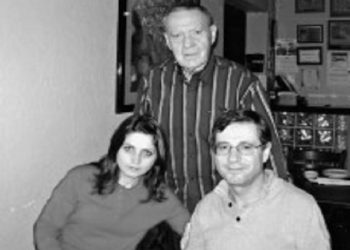
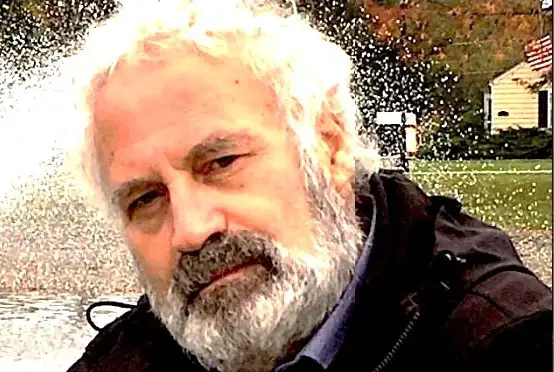
Iris and Marin were departing for Ukraine. Visar Zhiti: “I loved Marin more because he loved my daughter, the beautiful Iris, whom I had found again. They had filled my house and my soul. In Ukraine, the world’s gravest real tragedy is unfolding. A people that, under daily bombardment, fights. Among the ruins, hungry children, left alone. Women running with children in their arms toward the Polish border. Ukraine burns and is destroyed every day.”
Friend Dmytro Chystiak says to Marin: “The times seem to repeat. It is being fought for Europe too, just like your Skanderbeg against the Turkish occupation.” An exchange of realities, of acts of a great drama of peoples. Ukraine, a sovereign country with ancient culture and traditions, is being bravely defended; with free people who want to leave the Soviet communist empire. In retrospect, Stalin’s crimes in Ukraine are known, with the Holodomor of the years 1932-’33 of mass deaths from hunger, as well as with the Great Purge in the party, army, and against the intelligentsia in the years 1934-’38.
Writers like Erich Maria Remarque, with All Quiet on the Western Front, or Migjeni in the satirical essay Greetings for 1937, constantly ring the alarm bells against dictatorial danger, where he writes: “Every year we wish each other a happier new year…! First, I wish you, dear friend, not to hear either the despair of the defeated or the scream of the victors in this life. Not to hear the thunder of Spain.”
Meanwhile, Pablo Picasso has created the shocking masterpiece Guernica, reminding generations forever of the barbaric aggression of fascist and Nazi forces on the Basque village of Guernica in Spain, on April 26, 1937. It is the starting point of World War II. Outstanding in the novel is the treatment of freedom as a form of human existence and as the highest value of life, which is violated in dictatorial societies and disregarded in totalitarian democracies. / Memorie.al