By VELI HAKLAJ
Part Two
Memorie.al / The anti-communist activity in Albania in 1946 and the ways in which the State Security (Sigurimi) pursued the opponents of the communist regime will be at the center of the dossier that begins today. Through archival documents, we will have a truthful presentation of the situation after the country’s liberation. The denunciation of the national Mukje Agreement (August 1-2, 1943) by the leaders of the Albanian Communist Party, under the dictation of their Yugoslav tutors Miladin Popović and Dušan Mugoša, was accompanied by the intensification of the partisan formations’ combat actions against non-communist political groups and military formations, with a clear objective: seizing power and establishing their rule in Albania. This confrontation, which gradually took on the characteristics of a civil war, became bloody and had far-reaching consequences in the second half of 1944.
Continued from the previous issue
Regarding the lack of certain goods that were produced in our country, such as soap, oil, etc., it was said that the state sent them to Yugoslavia and left our people to suffer. According to the report, one of the economic reforms that was propagated by the regime’s opponents and that had a considerable effect on the peasant masses was the registration of the harvest (bereqeti). This reform was called an inappropriate reform not only by them but also by the simple peasants. Not because the registration was done, but rather because the quota set per person was not sufficient for a manual laborer.
One of the reforms implemented during that time was the currency exchange. The law on currency exchange affected the upper bourgeois and landowning (çifligar) strata, as well as a good portion of merchants and middle peasants. On this occasion, the regime’s political opponents presented the new currency as worthless and as an entry into the phase of socialism.
The momentum of the propaganda regarding the currency exchange was cut short by the swift trials and death sentences imposed on the prosecuted individuals. In these proceedings, 97 people were arrested across all districts, of whom the following were sentenced to death: Veli Juba, Kel Gjergj Abati, Mehmet Pujani, and Dod Gera.
One of the issues exploited for propaganda by the regime’s opponents was the state-owned shops, for which even other layers of the population felt dissatisfaction, because service delays and distribution methods were not orderly. Thus, the regime’s political opponents latched onto this sector everywhere and spread various slogans to increase dissatisfaction.
The anti-communists knew that the Communist Party stood at the head of the regime, and therefore they waged a broad war against it, spreading all kinds of slogans. Another point where anti-communist elements constantly worked to sabotage the communist regime was the mobilization of the masses for voluntary work. They continually tried, through slogans, to present it as something harmful to the people, claiming that voluntary work was detrimental to the worker and that it left them unemployed.
The opponents of the communist regime in Albania came from these strata of the population: leaders and members of the Balli Kombëtar (National Front) and Legaliteti (Legality Movement); persons struck by military courts and various reforms, such as clan chiefs, standard-bearers (bajraktars), and those with Vorio-Epirote sentiments; representatives of the clergy, especially the Catholic clergy; officials of previous administrations; various dissatisfied citizens, etc.
As it appears from archival documents, there was no well-organized structure of communist opponents in Albania, but only organization into circles and groups throughout all districts. The circles and groups of different districts did not have proper cooperation with each other to have a political line. There have been few cases where groups or circles of one district had connections with each other, and even that were very limited. This also came from the fact that the State Security organs had constantly struck them and had not allowed them to organize.
From the blows dealt to individuals of various circles and groups, it appeared that there were few groups and circles that had some kind of organization with a specific line and a concrete action plan. The groups that had some organized work appear to have been very narrow.
One of the primary factors for the organization of opponents of the communist regime in Albania was the activity of Western states, through their specialized structures. They had continuously tried to have their bases in Albania, but on the other hand, they had also tried to raise an organized grouping of opponents to launch them into an open movement, thus giving the Western allies a pretext for an armed intervention from the outside.
However, as archival documents show, the opposing circles and groups against the communist regime in Albania had not reached that stage of organization, they did not have the proper leadership to undertake such actions (a good part of them had fled outside Albania), they did not have the spirit of sacrifice sufficiently, and they had lost hope in their own forces.
All their attempts to organize seemed to appear at times when the external situation was not clear, and they believed in changing the situation in Albania only through an external intervention, which, for geopolitical reasons and to maintain the post-World War II balance, did not happen.
The report would conclude that, apparently, in the future it would be difficult for the opponents of the communist regime to organize themselves on a broad scale, but it was possible for them to organize into networks and small groups in the districts.
In the subsequent publications of this dossier, we will provide a detailed overview of the activity against the communist regime of specific groups and circles, according to the districts of Albania.
Anti-communist Activity in the District of Tirana
“The Youth Group”*
With the blow that the organs of the communist dictatorship dealt to the elements of the “Monarchist Group”, the “Resistance Group”, and the “Social-democratic Group”, the activity of political opponents in the district of Tirana had decreased considerably. From the strike against these anti-communist groups until the autumn of 1946, analyzing the data administered from the investigative-judicial proceedings and from the observations they had made, the State Security organs concluded that in the District of Tirana, there did not appear to be extensive organized work by the regime’s opponents.
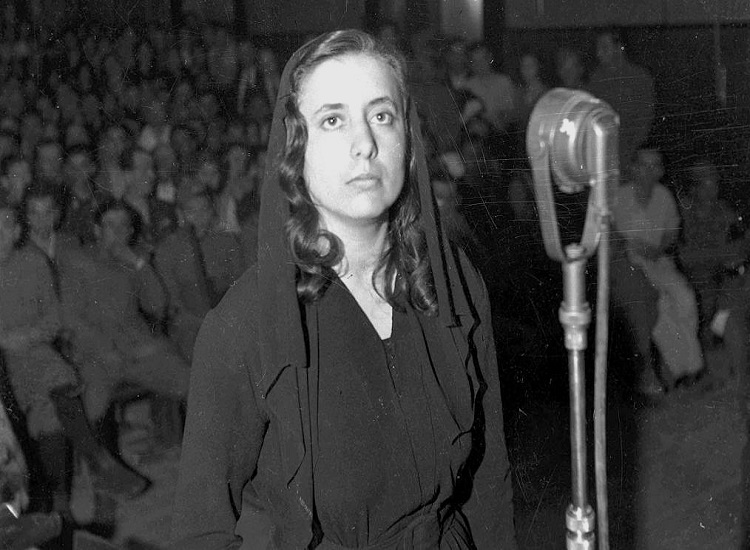
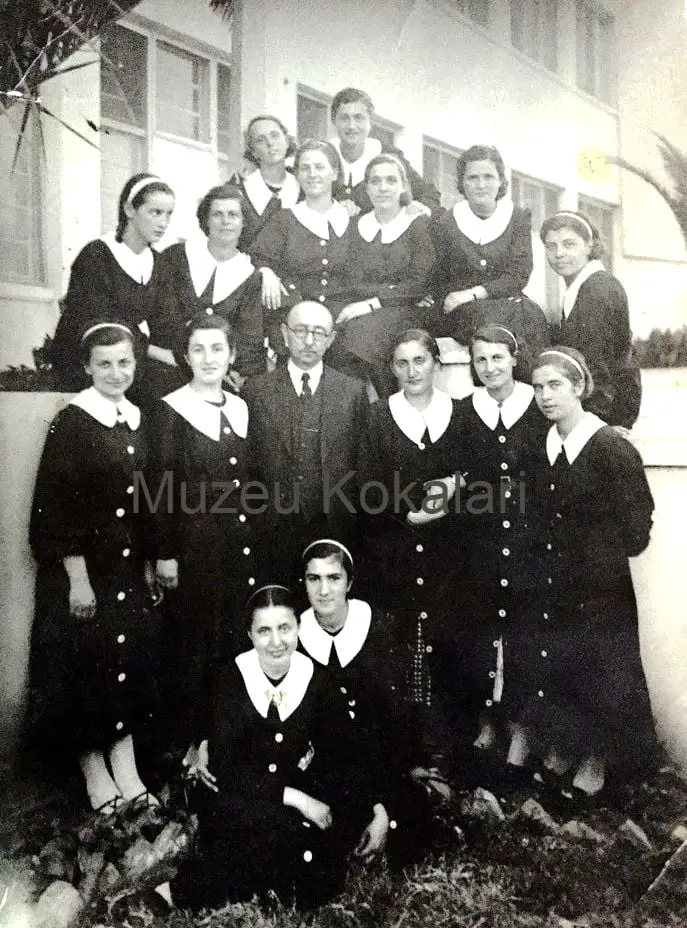
The persons who had developed the most activity belonged to the Ballist and Legaliteti Youth, who had been in contact with Musine Kokalari, through Bektash Kokona, Çerçiz Zavalani, and Avdulla Berberi. The activity of this group had begun as early as May 1945, but their work began to expand further in October of that same year. The initiators of this group were Avdulla Berberi and Bektash Kokona, who received instructions from Musine Kokalari on the method of work and action.
After the arrest of Avdulla Berberi, Bektash Kokona, Lutfi Tushi, Lutfi Meçe, and Skënder Taraku, they reduced their activity for a while but did not break off contacts. The State Security organs were aware of their work, but this became even clearer with the arrest of the soldier Dilaver Nishica, who had deserted from his unit and, with the help of Ylli Selenica and Akil Basha, stayed hidden for several days in the Youth House in the “New Neighborhood” (Lagja e Re) and in Akil Basha’s house.
Ylli Selenica and Skënder Jenisheri, seeing that their activity would be exposed with the arrest of two members of their group, attempted to flee to Italy and were arrested on the way. From the investigative proceedings carried out against Dilaver Nishica, Akil Basha, Ylli Selenica, and Skënder Jenisheri, it appears that the aim of this group was to overthrow the people’s power and to take power through a coalition government of the Western type.
During their activity, they had held several meetings in which they raised the need to increase their ranks with dissatisfied elements, those struck by reforms and the people’s trials, as well as members of anti-communist organizations. They had also managed to bring some soldiers into their ranks. On the occasion of the elections, they had tried to sabotage them by distributing tracts, which Musine Kokalari drafted for them, and by constantly propagating against the regime not to give their vote to the Democratic Front.
Also, after the arrest of Avdulla Berberi, they had tried to keep going and strengthen ties with the other elements of their group. Thus, from March 1946, they held a meeting at the Youth House, attended by: Skënder Jenisheri, Ylli Selenica, Pëllumb Nivica, Kajkush Asllani, Tonin Kiçi, Abas Mezini, Besnik Erebara, and Akil Basha. In this meeting, they raised the need for reorganization and maintaining strong conspiracy.
With the arrest of the aforementioned individuals, the State Security organs managed to uncover their work, while the rest of the group that remained at large, they managed to control by infiltrating inside the group. In connection with this group, the following military personnel were also arrested by the State Security organs: Ramadan Drishti, Xhavit Alimerko, Asllan Cena, Ibrahim Cena, Refik Çepele, Shuaip Hashto, and Skënder Kosova.
Among the members of the group who remained at large, those who tried to maintain contact with their circle and who continued to work were: Niazi Hoxha, Abaz Mezini, and Napoleon Tasi. So, to stop their organization and activity, they were arrested by the Sigurimi. Later, Mujin Ruli and Muhamet Bako were also arrested. Mujin Ruli was arrested in connection with the Kuçova group. Through Nexhmi Vrioni (of the Kuçova group), he was in contact with the reactionaries there.
He had printed tracts which he had sent to Kuçovë and Berat, signed “The Anti-Plutocratic Youth of Albania”. The content of the tracts had not been something thought out and drafted by organized people, but as emerged later from testimonies and gathered information, Mujin printed and drafted them himself. The State Security organs were up to date with everything regarding the tracts, through their trusted agent they had within the Kuçova group.
All those arrested had a circle of comrades behind them. Thus, from Skënder Jenisheri’s circle, the following remained free: Rasim Pashollari, Bajram Golemi, Agron Kallajxhiu, Ferdi Toptani, and Skënder Çesku. From Ylli Selenica’s circle: Çerçis Zavalani, Xhelal Koçi, Qerim Kuçi, Hysen Dibra, and Sali Toptani. From Niazi Hoxha’s and Napoleon Tasi’s circle: Çesk Begu, Vildan Banka, Agim Çaçi, Ibrahim Turdiu, Eqrem Frashëri, Ali Zhuri, Viktor Karalliu, Sabri Hamzarai, etc. From Abas Mezini’s circle: Mentor Hatipi, Reshit Korbi, Llambi Loli, etc.
With the trial of those arrested and after their depositions revealed all the connections they had with outside elements, it was noted that the implicated persons rarely appeared in the city and did not meet often with each other. / Memorie.al