• Rreth Nesh
  • Kontakt
  • Albanian
  • English
Monday, January 19, 2026
Memorie.al
No Result
View All Result
  • Home
  • Dossier
  • Interview
  • Personage
  • Documentary
  • Photo Gallery
  • Art & Culture
  • Sport
  • Historical calendar
  • Others
  • Home
  • Dossier
  • Interview
  • Personage
  • Documentary
  • Photo Gallery
  • Art & Culture
  • Sport
  • Historical calendar
  • Others
No Result
View All Result
Memorie.al
No Result
View All Result
Home Dossier

“The event of the murder of 10 councilors of Hekal was falsified by the communist regime, as it was not about political issues, but…”/ The well-known historian and researcher reveals the documents

“Ngjarja e vrasjes së 10 këshilltarëve të Hekalit, u fallsifikua nga regjimi komunist, pasi s’ishte për çështje politike, por…”/ Historiani dhe studiuesi i njohur zbulon dokumentet
“Në kasafortën e kreut të Sigurimit të Shtetit, u gjetën monedha e dhëmbë floriri, unaza, bizhuteri dhe…”/ Historiani dhe studiuesi i njohur, publikon dokumentin e rrallë
“Ngjarja e vrasjes së 10 këshilltarëve të Hekalit, u fallsifikua nga regjimi komunist, pasi s’ishte për çështje politike, por…”/ Historiani dhe studiuesi i njohur zbulon dokumentet

By Kastriot Dervishi

 THE TRUTH OF THE EVENT OF DECEMBER 1943, WHEN 10 HEKAL COUNSELORS WERE KILLED FOR HATE

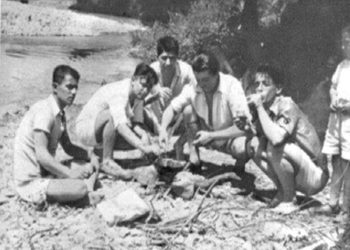
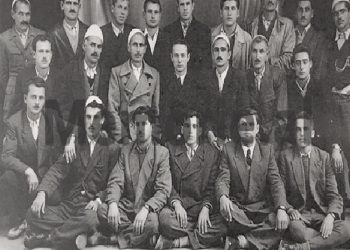
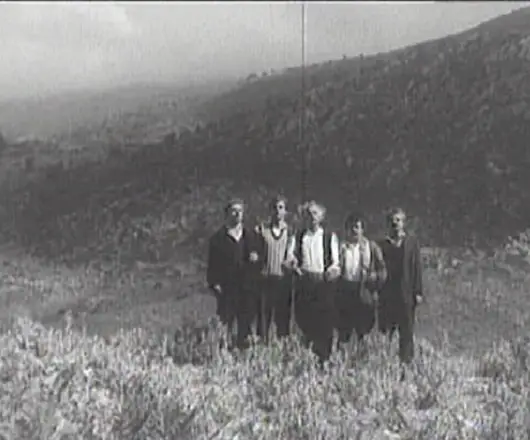
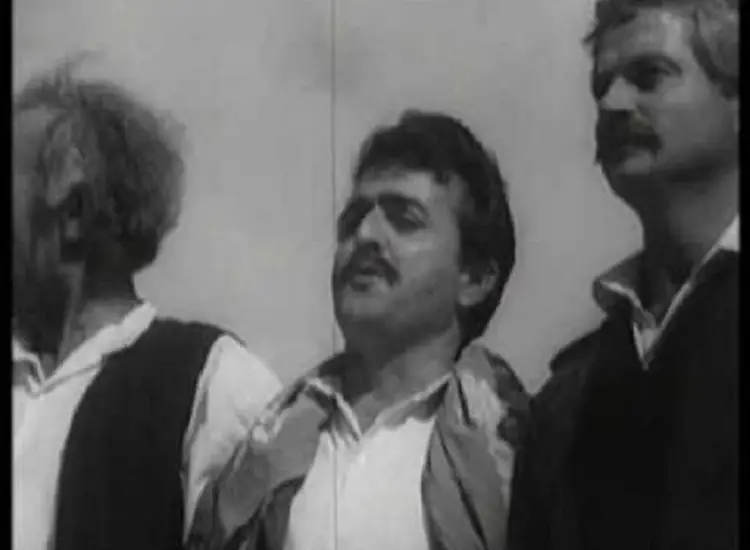
Memorie.al / The film “Councillors”, “based on true events”, is an artistic forgery made during the communist dictatorship. In this film, a battalion of Germans with the help of some ballistic missiles is shown in search of some communist advisers from the village of Hekal in Mallakastra. That is, the German army came out as a police force to help the demands of the ballisticians, to solve their issues.

At the end of the film, following the “orders” of the ballisticians, the Germans shoot 10 Councilors of Hekal. The film, through forgery, gives the message of national pride, being harmful both to the knowledge of the truth and to the patriotic education of the generations. The event is actually quite different from what the film in question, made in 1979, has been manipulating for years.

Gjithashtu mund të lexoni

“‘Sefer Efeniu’ is the most typical street in the memory of Durrës citizens – legendary, rich in history, and home to people of action, patriotism, culture, and civic virtue, as well as sports and…” / A reportage from the coastal city.

“Whoever uses violence or intimidation to prevent or disrupt the meetings and exercise of judicial bodies, to influence their decisions, shall be punished…”/ What did the 1928 Criminal Code provide?

In 1982, during an investigation undertaken by the Internal Affairs bodies, some truths emerged which verified that this was an event that was not related to the function of the advisers, that there were no Germans at all, and that those who killed the advisers were not they were as ballistic as they looked, and some were even left-handed. No one sang before the shooting, nor was there a theater like the one in the movie!

The event actually happened for a simple reason. A person named Isuf Hasani, from Rromsi i Mallakastra, after learning of the murder of his two brothers by some hekaliots, decided to take revenge. The uncertainty caused by the exact name of the killers, forced him to undertake the murder of 10 people who were councilors of Hekal village. Isufi, who killed 3 advisers, escaped from Albania. The other 7 councilors killed his companions.

It turned out that in December 1943, Isuf Hasani captured the 10 people and took them bound and escorted to Rome, and then to the Gorishova school. Isufi calls three counselors: Isa Zeqiri, Ali Ismaili and Ahmet Shena, who after taking them out to the back of the school kills them. Then, the other 7 people killed those of the firing squad.

The communist regime, although it knew them, never accused the other persons, because they had leftist relatives and connections. There were six people accompanying Isuf. For Osman Y. and Safet D., there are no biographical aspects, while for the others, the following information is given:

1-Izet D., born and resident in Varibob, farmer. They were considered to have “not taken a good political stance”, because they were associated with ‘Balli’ together with his brother Rrapon.

But Rrapoja had become a communist and in 1949, he was expelled from the party for “insincerity”. Izeti was married in a family where all were communists; he had 5 children, while one of his daughters (Izeti) was also a communist.

2-Shaban Rr., born and resident in Varibob, farmer, middle peasant. About him, the report states: “Before the liberation, his family maintained a good political position, while during the war, his parents died and he grew up with his uncle.

Shabani was included in the detachment of Rrapush Isuf Sh. and fought against the partisans, even committing crimes. After the liberation, his family has maintained a good political position, his two first cousins ​​Luto and Hekuran Rr. are members of the party, the first with a non-commissioned officer job at the Cakran free school and the second a cooperator”.

3-Hamit S., born in 1925, born and living in Varibop, middle peasant. It was said: “Before the war, they maintained a good political position, but during the war, they did not maintain a good position, according to Hamiti himself, he participated in Rrapush Isa Sherif’s ballistic squad.

After the liberation, the political attitude of the family members was characterized as good. Hamiti has a sister, Idajeten, married in Kreshpan to Bajram Y., who was an officer and was expelled from the party for insincerity. He has a daughter Fatima, married in Buzëmadh to Asqeri L., who is a member of the party”.

4-Shahin L., born in 1920, born and living in Varibop, middle peasant. The report says: “During the anti-popular regime of Zog, his parents maintained a good attitude, and during the war, they sympathized and helped the National Front. Shahini himself is included in the squad of his fellow villager Rrapush Sh.

Similarly, his brother Faslliu has been with Balli for 2 months and was expelled from the Party (Communist-note) for not being sincere. After the liberation, he maintained a good attitude. He is married to Xhevo L. with a good political attitude, with which he has 6 children. There is a nephew (brother) Qani L. who is an officer and organized in the party, as well as his sister’s son Pajtim Xh., who lives in Cakran and is a party member”. Memorie.al
ShareTweetPinSendShareSend
Previous Post

Historical Calendar 1 August

Next Post

Historical Calendar 2 August

Artikuj të ngjashëm

View of the coastal town of Durrës and its harbor
Dossier

“‘Sefer Efeniu’ is the most typical street in the memory of Durrës citizens – legendary, rich in history, and home to people of action, patriotism, culture, and civic virtue, as well as sports and…” / A reportage from the coastal city.

January 19, 2026
“Whoever uses violence or intimidation to prevent or disrupt the meetings and exercise of judicial bodies, to influence their decisions, shall be punished…”/ What did the 1928 Criminal Code provide?
Dossier

“Whoever uses violence or intimidation to prevent or disrupt the meetings and exercise of judicial bodies, to influence their decisions, shall be punished…”/ What did the 1928 Criminal Code provide?

January 18, 2026
“When Haxhi Gora communicated to us; ‘The Presidency of the Assembly did not spare your lives, today at midnight, the rifle platoon will execute the decision for your four comrades’, we…”/ Testimony of the former prisoner of Spaç
Dossier

“Dhionis Karbunara, the former advisor to the Italian consulate, was tortured to tell the Vlora people who had received money for the invasion of Albania, but Hysni Kapo told him…”/ The rare testimony of the former ballista from Vlora

January 18, 2026
“They came from a country neighboring Italy, which Anna had heard her father call the ‘Land of the Eagles,’ and they themselves were called…” / The untold story of the Italian beauty and the Albanian student.
Dossier

“They came from a country neighboring Italy, which Anna had heard her father call the ‘Land of the Eagles,’ and they themselves were called…” / The untold story of the Italian beauty and the Albanian student.

January 18, 2026
“After they killed and dismembered them, even though some bodies were not dead, the brave men of Deli Janaq, hurried to rob them, taking money, valuables, jewelry and…”/ The unknown story of the massacre of Paramithi
Dossier

“The operation against the Albanians of Chameria began on June 27, 1944—genocide of killings and slaughter, rapes, and the disembowelment of pregnant women…”! / Reflections on the book “Chameria – The Silence that Kills”, by author Hyqmet Zane.

January 17, 2026
“Any State official, tasked with purchasing, selling, or procuring any kind of items, who employs deceitful practices in their manufacturing, shall be punished…” / What did the Penal Code of 1928 provide for?
Dossier

“Any State official, tasked with purchasing, selling, or procuring any kind of items, who employs deceitful practices in their manufacturing, shall be punished…” / What did the Penal Code of 1928 provide for?

January 19, 2026
Next Post
Historical Calendar 2 August

Historical Calendar 2 August

“Historia është versioni i ngjarjeve të kaluara për të cilat njerëzit kanë vendosur të bien dakord”
Napoleon Bonaparti

Publikimi ose shpërndarja e përmbajtjes së artikujve nga burime të tjera është e ndaluar reptësisht pa pëlqimin paraprak me shkrim nga Portali MEMORIE. Për të marrë dhe publikuar materialet e Portalit MEMORIE, dërgoni kërkesën tuaj tek [email protected]
NIPT: L92013011M

Na ndiqni

  • Rreth Nesh
  • Privacy

© Memorie.al 2024 • Ndalohet riprodhimi i paautorizuar i përmbajtjes së kësaj faqeje.

No Result
View All Result
  • Albanian
  • English
  • Home
  • Dossier
  • Interview
  • Personage
  • Documentary
  • Photo Gallery
  • Art & Culture
  • Sport
  • Historical calendar
  • Others