
By Prof. Dr. Colonel, Memush Habilaj
Part One
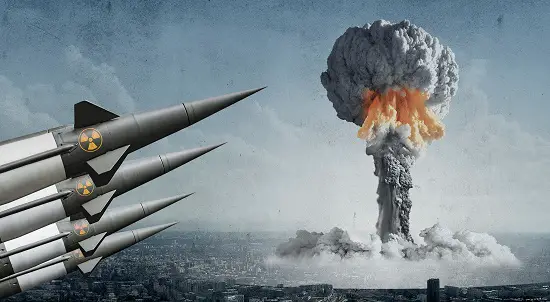
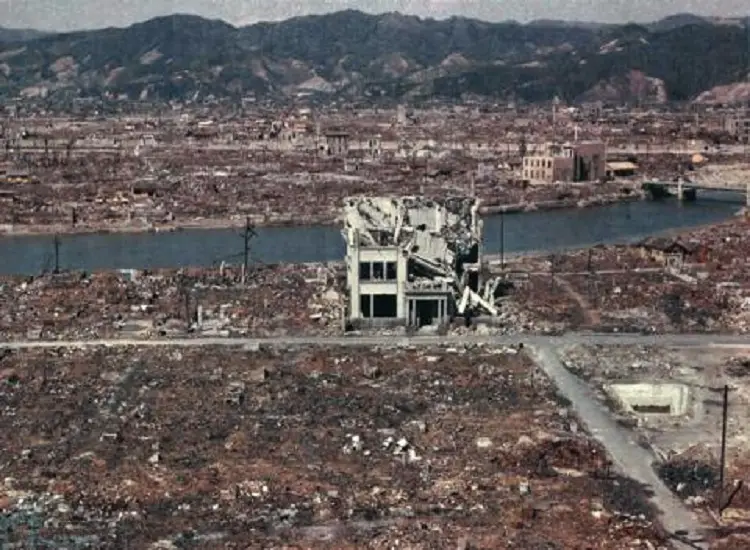
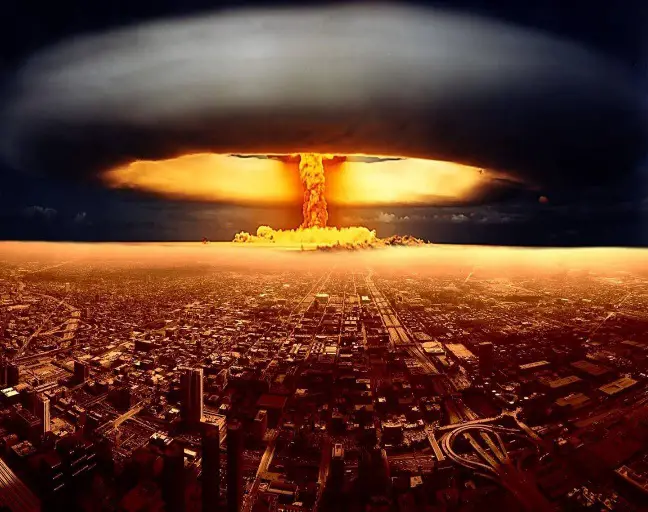
Memorie.al / The era of Nuclear Weapons for humanity began on August 6, 1945, the date on which the US dropped the first nuclear bomb, conventionally named: “Little Boy,” with uranium-235, on Hiroshima, Japan, followed by the second strike on Nagasaki, on August 9, 1945, with the bomb named: “Fat Man,” with Plutonium-239. This nuclear attack caused up to 140,000 casualties in Hiroshima alone, destroyed 50,000 buildings, and caused other incalculable damage, and was accompanied by long-term consequences for people and the environment. Since the first test nuclear explosion on July 16, 1945, until today, nuclear powers have conducted 2,000 nuclear tests on land, air, underground, and underwater, bringing consequences to the environment, human health, and climate degradation of the planet. Nuclear weapons are weapons of mass destruction; their damaging effects are unlimited in space and time.
During the Cold War period, 1945-1990, nuclear powers pursued a long-term policy of nuclear equilibrium, maintaining international stability and non-proliferation of nuclear weapons (NW), concentrating nuclear potential in few countries, with approximately determined quantities of these weapons. During this period, the US alone spent about $11.3 trillion on nuclear weapons (at 1990 exchange rates), and the former Soviet Union (Russia today) consumed almost the same figure, not counting others, values derived from the taxpayers of these countries.
For comparison, we bring the cost of the first bomb dropped on Hiroshima, valued at $23 billion USD (converted at the 1990 exchange rate). For the year 2022, nine countries that possess NW spent $82.9 billion USD, or $157,000/minute, on NW. In the years 1945-1990, the nuclear powers possessed 70,300 NW, of 30 types, of which up to 33,000 were in the inventory of the former Soviet Union (Russia today) and 32,000 in the US.
After the 1990s, the policy of limiting NW production began, along with the dismantling of old NW, mainly productions from 1945-1970, reducing the number of NW but without reducing their power. Today, in total, the world has about 15,000 NW available, of different types and powers, taking this data with reservation, as many states do not publish accurate figures, keeping secrets about the NW they possess. Today, the nuclear powers are 10 countries: Russia, USA, China, England, France, India, Pakistan, South Africa, Israel, and North Korea. Iran and Brazil are expected to be added to this list, while 6 countries have agreed to have NW in their territory: Germany, Italy, Turkey, Belarus, Belgium, and Netherlands. Some countries seek to have NW deployed on their territories in the future, such as; Ukraine, Poland, etc., bringing the number of states that actually possess NW, or that may have them at a certain moment, to over 20.
There is data that in some countries, secret studies are being conducted on the possibility of producing NW, but not yet verified. Since the 1980s, studies in this field have begun in Sweden, Argentina, Taiwan, Iraq, and Brazil. Despite disarmament policies, studies on the refinement of existing NW and the finding of new methods for constructing NW continue in all countries with nuclear potential. Such studies dismiss any political and declarative propaganda about supposed nuclear disarmament, in which nuclear powers and their allies are engaged.
Nuclear Weapons
Basic principles of the construction and functioning of nuclear weapons:
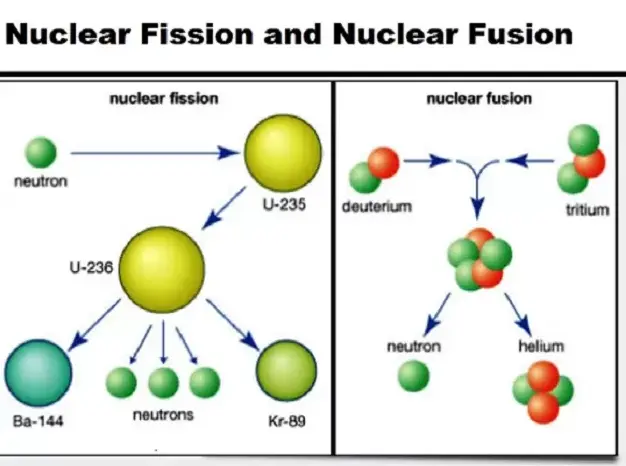
Nuclear Weapons (NW) are based on the utilization of nuclear energy released from two types of nuclear reactions:
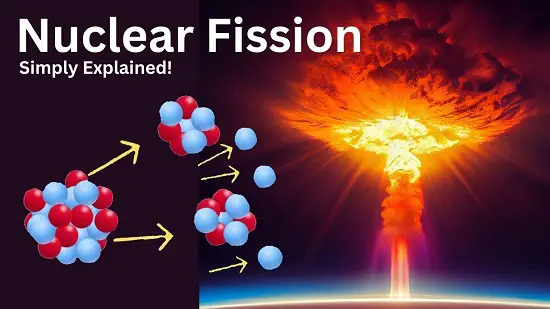
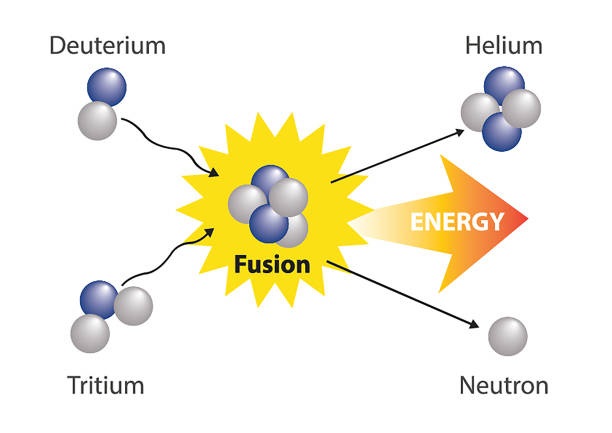
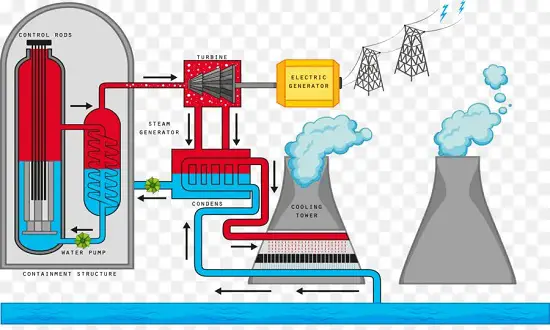
The uncontrolled chain reaction of the fission of heavy elements’ nuclei: URANIUM (Isotope $235\text {U} $), PLUTONIUM ($239\text {Pu} $), (as well as some artificial, synthetic elements, Neptunium-237, Americium, etc., without practical significance) – nuclear fission, or BOMB-A. The chain reaction of the nuclear fusion of light isotopes of hydrogen (deuterium, tritium) and lithium – thermonuclear reaction (nuclear fusion) or BOMB-H. The controlled fission reaction is exploited in nuclear reactors to gain energy.
Uranium is found in nature, but the corresponding isotope $235\text{U}$ is found in small amounts (about 0.72%) and is enriched with difficulty and high cost to reach the values needed for an NW (over 80%), while for nuclear reactors, enrichment up to 10-15% is sufficient. Plutonium is obtained in nuclear reactors at a relatively lower cost.
The nuclear fission material, in the construction of the A-bomb, is stored in separate parts, smaller than the so-called “Critical Mass,” and at the moment of the nuclear explosion, they rapidly combine, creating the “super-critical mass,” which enables an uncontrolled nuclear fission chain reaction. In the thermonuclear fusion reaction – the H-bomb – there is no critical mass, and the substances participating in the reaction can be introduced in any quantity, creating a thermonuclear explosion with unlimited power.
The fission reaction of heavy nuclei (A-Bomb), which requires very high temperatures to develop (several million degrees), serves as the initiator of a thermonuclear reaction. The thermonuclear bomb, the H-Bomb, marked the second generation of NW creation. Continuing research for the perfection of NW, the construction of a “pure thermonuclear bomb” was conceived, without the A-bomb as the initiator of the thermonuclear reaction, but initiating the reaction by means of the isotope of the element Hafnium, $178\text{m}2\text{Hf}$, or Tantalum, starting the third generation of NW.
Starting from the 1960s until today, studies have also been conducted on another type of reaction that releases energy from the depths of matter: this is the Annihilation of Matter (matter-antimatter annihilation). If about 0.4-1% of the energy available in matter is released in thermonuclear reactions, 100% of this energy will be released from matter-antimatter annihilation. Calculations show that 0.5 gram of antimatter releases energy equivalent to 21.5 Kiloton of TNT, meaning slightly more than the bomb that annihilated Hiroshima.
The cost of obtaining antimatter is beyond any imagination. Americans published in 1999 that the cost of a fraction of a gram of anti-hydrogen could be over $100 billion USD (in July 2024). The most approximate calculations for the cost of anti-proton (anti-hydrogen) provided by CERN and the Icarus Project indicate that 1 mg of anti-proton reaches $100 billion USD, and 100 nanograms up to $6 billion USD.
This terrifying cost of the antimatter weapon will delay the emergence of the fourth generation of nuclear weapons for an indefinite time. The persistence of research institutions to obtain antimatter is strong, the investments in this direction are large, and a day will surely come when science will master this mystery, perhaps even questioning the existence of humanity.
Damaging effects of Nuclear Weapons:
NW is characterized by these damaging effects:
- Luminous Radiation (Thermal Flash): During a nuclear explosion, a large amount of thermal energy is released, which appears in the form of a fiery sphere, with temperatures up to 30-40 million degrees and a brilliance many times more powerful than the sun, emitting light impulses over distances, burning any combustible material, including living things of all kinds. Luminous radiation carries, on average, one-third of the energy of any nuclear explosion and causes a firestorm that burns and incinerates everything over great distances, turning the affected area into a desert.
- Shock Wave (Blast Wave): The release of a large amount of energy in a very short time interval and a limited volume of environment creates an unimaginable pressure in the explosion area, estimated up to 20-30 billion atmospheres, a pressure exerted on the environment (land, water, air, objects) in the form of a shock wave, which propagates at a dizzying speed of several km per second and destroys every object on the surface of the earth over great distances. The shock wave carries about 50% of the energy of an NW.
- Penetrating Radiation (Initial Nuclear Radiation): During the development of the reaction of heavy nuclei fission or light nuclei fusion, a large amount of radioactive particles is released in the explosion zone; alpha, beta, gamma rays, neutrons, neutrinos, starting from the moment of the reaction up to 20-30 seconds after the fiery sphere fades. The main damaging effect of this radiation is created by gamma and neutron radiation, which propagates at the speed of light and annihilates every living thing and vegetation over great distances, immediately or with delay, through radiation sickness that can be genetically transferred to generations through multiple communications. This radiation includes an average of 5% of the energy of a nuclear explosion.
- Radioactive Fallout (Residual Nuclear Radiation): Up to 200 radioactive isotopes of 34 elements are created from the nuclear explosion, which are included inside the mass that forms the radioactive cloud, which spreads in the height and width of the atmosphere and up to the stratosphere. Propelled by air currents, the radioactive cloud spreads radioisotopes, covering the entire globe. The main part of these radioactive contaminations gradually precipitates under the action of physical and meteorological phenomena, while some move in the upper layers of the stratosphere for decades. Studies conducted on the radioactive fallout spread by nuclear tests in the years 1945-1980 show that 2.4 million people worldwide have died from radiation sickness.
Radioactive fallout causes environmental contamination (soil, water, air, vegetation, food, etc.), and the spread of radiation sickness, genetic degeneration in generations, and numerous long-term consequences for living beings. Environmental rehabilitation has a very high cost, and its return to normal conditions requires decades. Radioactive fallout accounts for 10% of the energy released by a Nuclear Weapon. To increase the level of radioactive contamination, in the years 1960-1970, nuclear bombs were constructed, in the design of which easily activated elements were introduced, such as; cobalt, zinc, radioactive waste from nuclear reactors, etc., these were called: “Dirty Bombs” (salted bombs).
- Electromagnetic Pulse (EMP): The nuclear explosion, among other things, releases a powerful electromagnetic pulse, which disables electronic systems, equipment, and devices of various types used by human society in its activities (interconnection tools, radars, computers, electro-domestic appliances, as well as any analogous equipment used in institutions and industry). The combined action of these damaging factors, which are specific only to NW, causes severe destruction to the area where they are used, with unimaginable immediate and long-term consequences on people and every other living thing and the environment as a whole, even at very great distances from the places where they are used.
From studies conducted on the consequences of the use of NW on Hiroshima and Nagasaki in August 1945, these human losses have been confirmed in summary: In Hiroshima, within the first hour, 75,000 people died, while by December 1945, from the action of long-term damaging factors, the number of deaths reached 140,000, and by December 1950, this figure rose to 200,000 victims, and many people would suffer cancerous diseases and genetic degenerations for generations; in Nagasaki, 40,000 people died in the first hour, while by December 1945, the number of deaths reached 75,000, and in December 1950, the figure of victims reached 140,000 people, so a total of 340,000 annihilated people were evident.
It should be kept in mind that the NW located in the arsenals of nuclear powers today are tens and hundreds of times more powerful than those dropped in Japan, so the damaging effects will also be unimaginable. After the use of NW, the rehabilitation of life and the environment is slow and has a heavy economic cost. Vegetation is severely damaged, and agricultural production is greatly reduced or completely stopped, causing a food catastrophe. The food chain is loaded with radioactive substances and spreads death or incurable diseases for generations. Thus, the nuclear apocalypse would happen; the atomic winter would come, which would annihilate life on earth.
The Power of Nuclear Weapons:
NW are characterized by a power many times greater than any other type of weapon built by man. To evaluate their power, the concept of TNT Equivalent was introduced, which allows for the comparison of the power of an NW with a certain amount of ordinary conventional explosive material, such as TNT. The nuclear bomb dropped by the Americans on Hiroshima on August 6, 1945, was calculated to have a power equal to 20,000 tons of TNT (20 Kiloton, KT.). This figure would later serve as a comparative value and define it as a “Nominal Bomb” and set a dividing line: “tactical bomb” with a power up to 20 KT and “strategic bomb” with a power over 20 KT.
Nuclear bombs (A-Bombs) available to nuclear powers have powers ranging from a few tons of TNT (portable bombs, suitcase bombs, weighing 20-30 kg) up to 500 KT, while thermonuclear bombs (H-Bombs) have practically unlimited power, but today, bombs with powers up to 10 million tons (10 Megaton, MT) are accepted in the arsenal. However, each nuclear power can build H-Bombs with multiplied power at the appropriate time. There have been project ideas to build H-Bombs with a power of 100-200 MT, and more, which could destroy the globe. The madness of some American scientists in the years 1950-1960 reached the point of planning two super powerful thermonuclear explosions, named “Gnomon,” with a power of 1 Gigaton (GT), and “Sundial,” with a power of 10 GT, which could annihilate the globe.
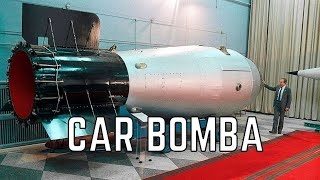
When calculations showed that the Earth could turn into a cloud of cosmic dust from these explosions, they abandoned these adventures. The most powerful thermonuclear explosion realized by man to date was carried out by the Soviets on October 30, 1961, on the island of Novaya Zemlya, with a power of 58-60 megaton of TNT and released energy of 210-240 PJ (Peta-Joule). The initial idea was to carry out an explosion with a power up to 100 megaton to blackmail other nuclear powers, but calculations showed that it would shift the Earth’s axis, causing a cosmic catastrophe.
This explosion was named “Tsar Bomb” in parallel with the objects “Tsar Bell,” “Tsar Cannon,” etc., relics found in Russia. The Tsar Bomb weighed 27 tons and was detonated at a height of 4000 meters above the ground. The fiery sphere had a diameter of 8 km and was visible up to Alaska (1000 km away). The explosion cloud rose up to 95 km, with a base diameter of 40 km. A seismic wave was created that circled the globe three times until it died out. The shock wave broke the windows of objects 1000 km away.
Types of Nuclear Weapons:
We mentioned above that NW, based on the nuclear reactions on which they are realized, are: BOMB-A and BOMB-H. During the nuclear arms race, different types and subtypes of these weapons were studied and produced. Practically, in the 1990s, the arsenals of nuclear powers contained 30 types of NW. A specific combat destination was foreseen for each type. The main types of NW are grouped:
- Classic NW, based on uranium and plutonium isotopes, of different types and powers, tactical and strategic.
- Thermonuclear weapons based on hydrogen and lithium isotopes, mainly as strategic NW of great powers.
- Dirty NW (salted bombs), with additions of cobalt, zinc, gold elements, radioactive waste, which cause great radioactive contamination of the environment over large surfaces and for an unlimited time.
- Neutron bomb, a variant of the H-bomb, which releases a powerful flux of neutrons and annihilates crews inside armored vehicles and shelters.
- Special NW (handheld NW, pocket NW), of small dimensions, based on artificial isotopes of neptunium-237, americium, curium, which can be exploited by diversionary and terrorist groups. Russians have declared that they have tested nuclear bullets for the Kalashnikov automatic rifle.
- Penetrating NW, which penetrate to great depths of the earth to annihilate objects located there.
- Pure thermonuclear weapons, which do not cause problematic radioactive contamination on the ground, do not use the nuclear fission reaction as an initiator, but a nuclear isotope or a specific laser for these processes.
- NW based on antimatter, for now remain hypothetical.
All NW, of different types and powers, for combat purposes, are included in the so-called: Nuclear Triad, with this organization:
- Tactical NW
- Strategic NW
- Missile-Nuclear NW
The means of using NW include different types of artillery, tactical and strategic bombing aviation, missiles of different types, with different ranges of action, which can be based on land, on naval combat vehicles, and in space.
List of countries that possess a nuclear arsenal:
Today, 10 states are declared as nuclear powers; their nuclear arsenal has had this dynamic of development over time:
During the Cold War period, 1945-1990, the world nuclear arsenal peaked in 1986, reaching the figure of 70,300 NW, of 30 different types, 90% of which were available to the two superpowers, the US and the Soviet Union (Russia today). Russia had an arsenal of 33,000 NW and ready raw materials to bring this figure to 46,000 NW, if needed, while the US possessed 32,000 NW, with reserves of raw materials to prepare another 5-7,000 NW in a short time.
With the theoretical end of the Cold War, after the 1990s, the policy of limiting NW production and dismantling a part of them began to be followed, especially giving great echo to their dismantling. In fact, old productions from 1945-1970 were subjected to dismantling, and with their raw materials, new, perfected, and more powerful weapons were built. A part of the uranium and plutonium isotopes removed from old weapons was designed for nuclear reactors, where numerous speculations were made with nuclear materials and technology, involving mafia and terrorist organizations, and the so-called “Nuclear Mafia” was created.
In 2014, an agreement on nuclear parity was reached between the US and Russia, which determined the quantity, types of NW, and means of use that each state would have. According to 2019 data, under this agreement, Russia would have 6,500 – 7,000 NW of 9 types, of which 2,414 strategic NW (1,735 of which are in operational readiness) and 3-4,000 tactical NW, with a reserve of raw materials to bring this figure to 16,000 NW in case of request, while the US will maintain 6,185 NW, of which 2,100 strategic NW and a material reserve to increase this arsenal to 10-12,000 NW.
In total, along with other countries, the world today has up to 15,000 NW of different types and powers, about one-third of which are strategic NW, an arsenal capable of turning the globe into a desert in the event of a total nuclear war. For the year 2024, the state of the world’s nuclear armament in 10 countries was:
The NATO Pact in 2024 has 4,223 NW in its arsenal; of which 3,708 NW belong to the US, and the rest to the UK and France. These figures may not be entirely accurate and reliable; they might be larger, as nuclear powers keep their nuclear arsenal secrets. Iran, Brazil, and perhaps Argentina are expected to be added to this list.
In addition to these NW-possessing countries, there are also six states in Europe that have agreed to keep NW from allies on their territory: Italy 35 NW, Turkey 20 NW, Germany 15 NW, Belgium 15, Netherlands 15, and Belarus 20 NW. Some countries like; Ukraine, Poland, Taiwan, etc., seek to borrow NW from nuclear partners. Thus, there are almost 20 states armed with their own NW or supplied by allies that could participate in a possible nuclear war. Besides these 28 states, including Albania, have agreed to create facilities for nuclear powers, making their territories available during a threatening period. Memorie.al
To be continued in the next issue