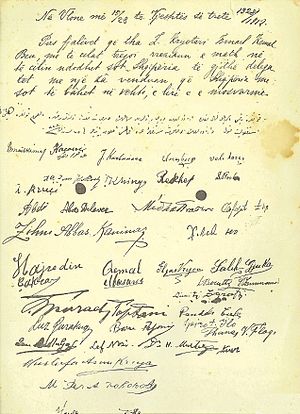

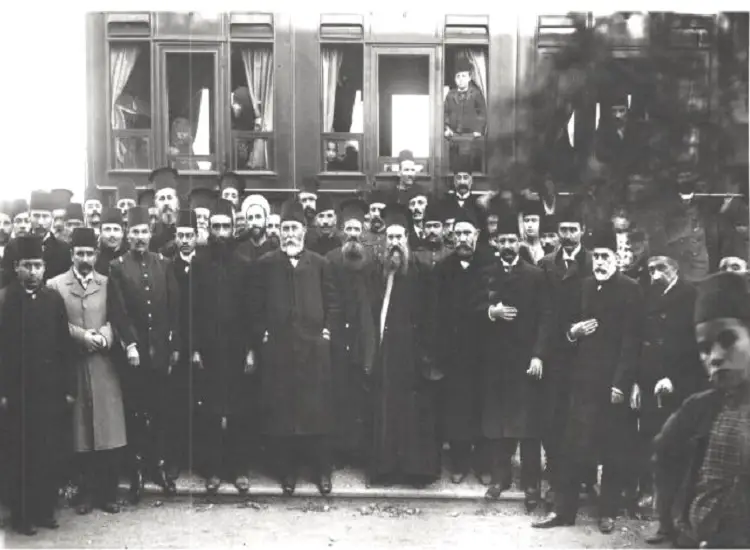
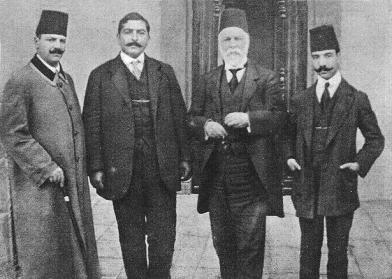
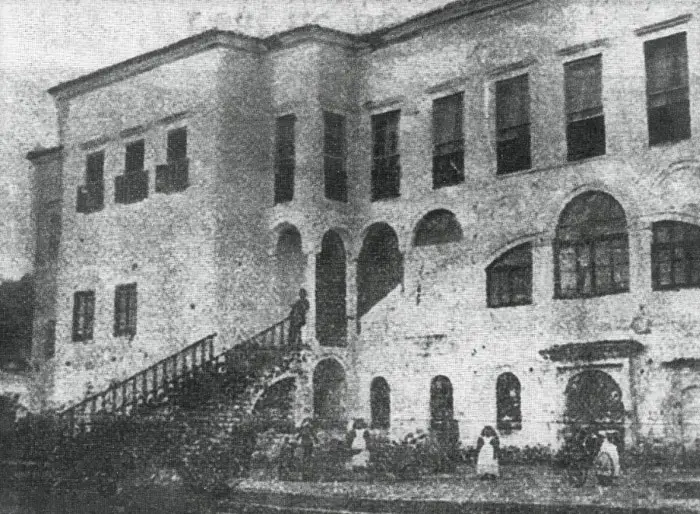
Memorie.al/ We are on the eve of November 28th. The eves of celebrations often cause some simple questions – and precisely because they are simple and essential – to emerge insistently at the center of attention and demand answers. November 28th has also been awakening such questions for some time; one of them relates precisely to the “Formula of Independence” and its writer. Who wrote this historical paragraph? To this day, this question has been taken *ad literam*, that is, with the insistence on seeking the hand that wrote it, rather than the mind that composed it! Therefore, it has been thought to clarify this conjecture once and for all by undertaking a comparative scientific expertise of the document’s calligraphy – for the preservation of which our historiography must be grateful to one of its martyrs, Lef Nosi.
Naturally, the graphic detail has its own importance, but it cannot be primary, for the same reason that someone’s photograph is not considered primary in relation to their presence. Thus, the question: “who wrote the Formula of Independence?” more precisely means: “who conceived it?” And here, graphic expertise steps aside, and linguistic analysis of the text of the “formula” comes into play, more or less following the traces of dialectos – the fourth sense according to the Aristotelian order – which connects us with others and the surrounding world more than any other sense.
Let us bring our formula here again, transcribed: “Pas fjalëvet që tha Z. Kryetari Ismail Kemal Beu, me të cilat tregoi rrezikun e math në të cilin ndodhet sot Shqipëria, të gjithë delegatët me një zâ venduan, që Shqipëria me sot të bâhet në vehte, e lirë e e mosvarme”.
Translation of the formula for context: “After the words spoken by Mr. Chairman Ismail Kemal Bey, with which he showed the great danger in which Albania finds itself today, all the delegates with one voice decided that from today Albania shall become independent, free, and sovereign.”]
At first glance, without yet entering into more detailed analysis, one notices a high linguistic competence on the part of the one who composed the above paragraph, as well as a very good knowledge of the styles of Albanian; this is because the fragment, linguistically, belongs to the high chancellery register. Thus, regarding the relative pronoun, we note the complete replacement of the semi-formal and informal “që” with the higher written form “i cili / e cila”; likewise, the syntactic form is of the classical periodizing order, without any displacement that could violate the formal style. But before continuing with other specifications, it is also worth placing this formulation in time linguistically, because today such competence might indeed seem ordinary to many.
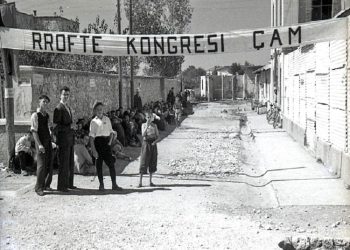
It was the year 1912, only 4 years after the Congress of Manastir, where the Albanian alphabet was established, but the censorship on writing and learning it had not ceased then, as the Young Turks had closed the ‘Normal School’ of Elbasan shortly after it opened. Albania was trying to emerge from the Ottoman darkness and form a state, and thus a common language, but the ‘Literary Commission’ (1916) that would institutionalize the beginning of this process was still four years away. Consequently, few could have had such knowledge of the styles and registers of Albanian at that time.
And this certainly could not have been Ismail Bey Vlora, who was a politician-diplomat of the Sublime Porte and had the political competence to conclude the Vlorë assembly with a telegraphic-type formula, informing the states that Albania had declared independence. True, such a procedure was covered by his political competence, but that competence did not correspond to the same linguistic ability of the distinguished elder, with which we see today that this “formula” was composed. So the author could not have been Ismail Bey Vlora. Let us continue.
By 1912, more than half a century had passed since the Tosk Koine of the written language had begun to be well cultivated, especially in the field of journalism. This allows us to raise a fundamental question, without which this analysis cannot be done: how does the relationship of linguistic choices appear in this “formula”?
Let us analyze and group its formants (which above are highlighted in bold). Thus, “fjalëvet”: the ending “t” is an old Albanian ending, common to both Gheg and Tosk, so let us look further.
- We are faced with the phrase “Z. Kryetari”, which when written out becomes “Zotni Kryetari” [Mr. Chairman], thus appearing in the Gheg koine, and this phrasing is determined by the word “Kryetari” which appears in the definite form. If it were written in the Tosk koine, we would have “Z. Kryetar = Zoti Kryetar”, i.e., in the indefinite, since the politeness formula would be marked by “zoti”.
- Next we encounter the form “e math” [the great]: this is clearly Tosk, with the characteristic final devoicing of “dh” to “th”.
- Likewise, although the word “ndodhet” [finds itself], as a lexeme, belongs to both Gheg and Tosk, in our “formula”, as a styleme, it leans more towards the central-southern type, as the North would have preferred the styleme “gjindet” in this case.
- Even “Shqipëria” [Albania], both times it appears, comes in Tosk form, rotacized, i.e., not as “Shqipnia”.
- “Shqipëria” (for the second time) as above.
- Also, the large presence of “ë”s, even where Gheg does not have them, can be taken as an element of Tosk.
- The form “zâ” [voice] is clearly a Gheg form, with the typical nasal.
- “Venduan” [decided]: this moneme is also Gheg and is phrased as the type vendoj / me vendue / venduen, although grammatically it is given in the balance “venduan”, i.e., with a Gheg model but with the Tosk cluster “ua”. If it were purely Tosk, it would be phrased: vendos / vendosën. This rather interesting moneme also expresses those micro-linguistic balances within a single word – besides the more noticeable macro ones.
- The group “me sot” [from today] is a Gheg phrase, which in Tosk would correspond to the group “nga sot”.
- The form “bâhet” [becomes] appears again as a Gheg form, with the nasal “â”.
- The form “vehte” [itself] is a Tosk form, which, as is known, comes from a metathesis of the old form “vetëhe” and then underwent phonetic contraction.
- The formant “e mosvarme” [and sovereign] is a Gheg morpheme, but this too, as in point 8, is of the mixed type.
Thus, after this grammatical scan of the formula’s text, two other linguistic observations can be made. First, that the elements from the Gheg and Tosk Koines are in complete balance with each other (6 to 6), and second, that the forms chosen as representative are also those of the Mixed Type.
Summarizing the results of this scaled linguistic analysis, it emerges that the individual who conceived (“wrote”) the Formula of Independence has a very high linguistic competence for the time; he is an excellent connoisseur of Albanian styles, of the grammar of its two koines – Tosk and Gheg – and is also a militant for national linguistic unification through the use of mixed forms.
Taking into consideration all the signatories of the Act of Independence and also knowing their distinguished contributions up to that time, it is clear that such a figure could only have been the mentor Luigj Gurakuqi, the most renowned stylist of the Albanian language, about whom Justin Rrota would write that: “he knew the Albanian language better and more clearly than any Albanian, and there was no language issue where his thought and judgment were not present, did not participate, did not insist.”
And as if to strengthen our conviction that we are indeed before this figure, Father Justin added: “The ‘Normal’ School of Elbasan, the ‘Literary Commission’ of Shkodra, are golden steps of a magnificent ascent towards the peaks of his glory.”
In concluding this discussion on the text of the Formula of Independence, perhaps the conclusion captures its initial mission. So we can say with certainty that this paragraph, historic for Albanians, was conceived by Luigj Gurakuqi himself. But we can also say that that superior intellect, together with that “formula”, has also given us a lesson in democracy, which even today we still do not see – not even in the field of language. / Memorie.al