Part Two
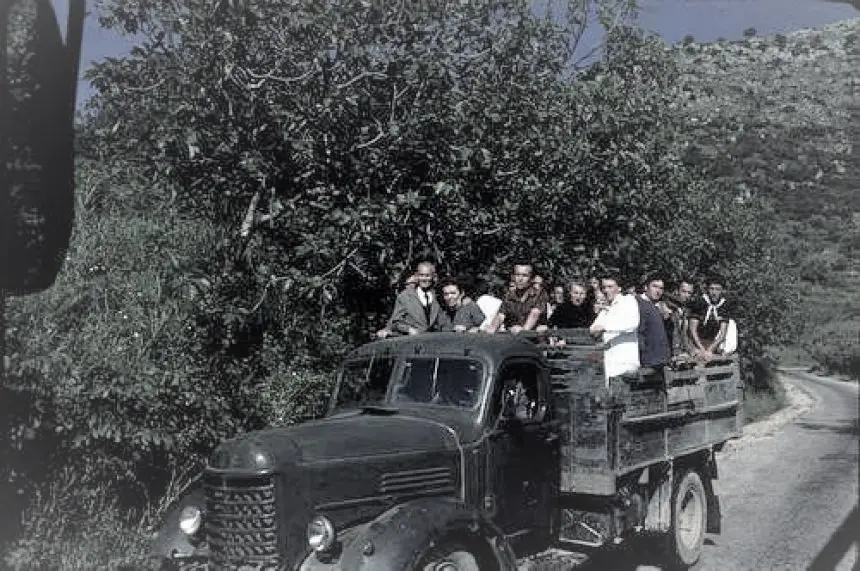
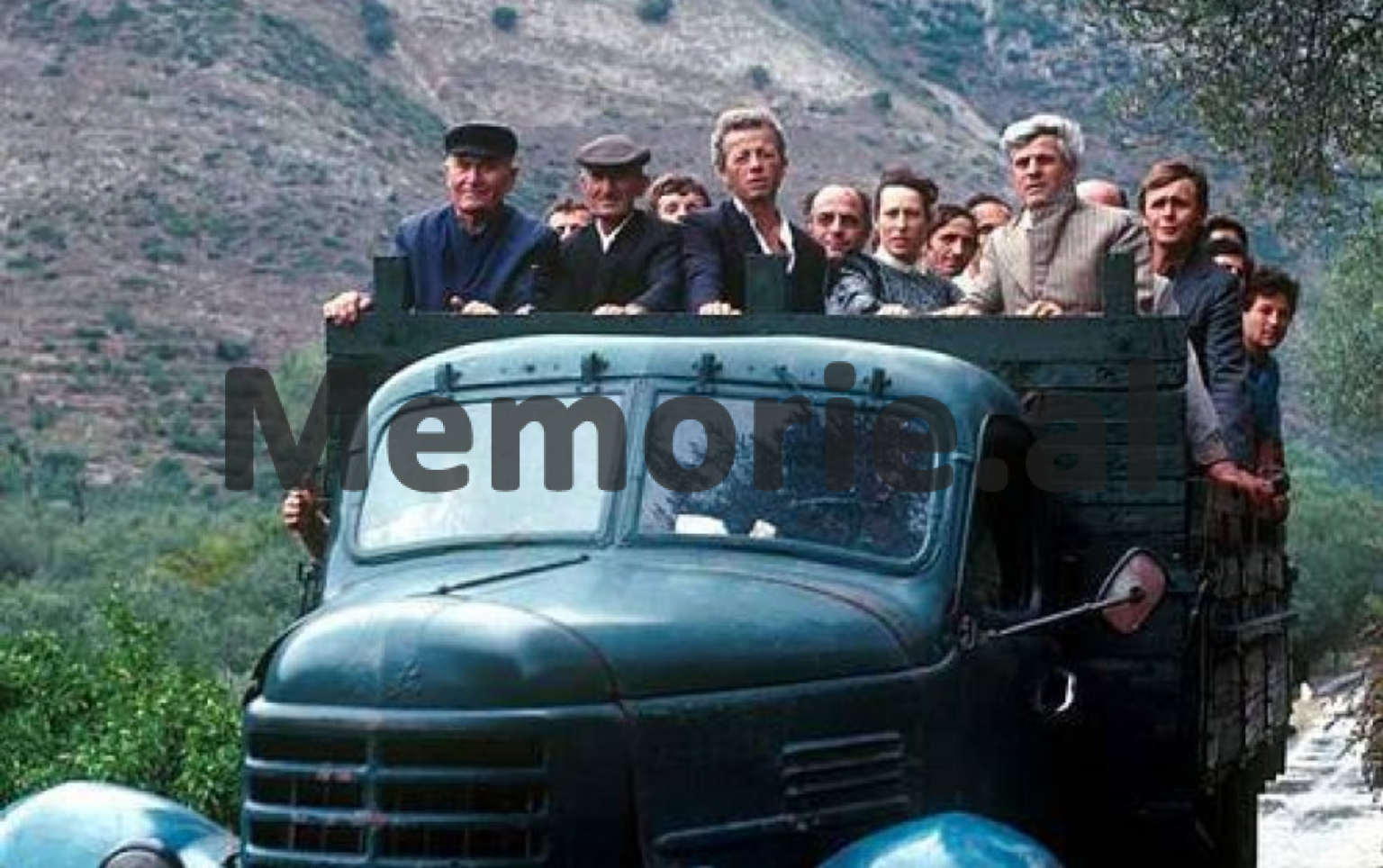
Memorie.al / A shoeshine costs 1 dollar in Tirana, but that is the last thing Albanians worry about. Many of them do not shine their shoes at all. In fact, most walk barefoot and others wear wooden clogs. The industrialization of the 20th century has only barely touched this country surrounded by mountains, which was once the Kingdom of Illyria and now proudly bears the name People’s Republic of Albania – the Land of Eagles. How little industrialization has affected the country becomes immediately clear when the driver of a “Warszawa” car (a Polish model of the Soviet “Pobeda” version), after we have spent 8 hours climbing up and down mountains, abruptly stops the car at the edge of an abyss. The up-and-down journey on mountain roads has put the hydraulic brake system out of order. “I’ll use water until I find some wine,” says the driver, putting on a philosopher’s mask.
Continued from the previous issue
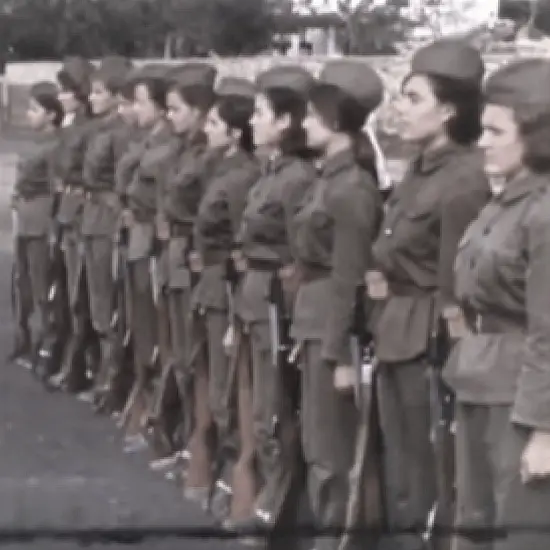
Only later did they explain to us that the soldiers were Albanians and the officers as well, but the country had for years adapted the style of Soviet uniforms. In my notebook I wrote: “Women working on the roads and soldiers everywhere. Even in the Soviet Union, I have not seen so many soldiers. The hotel, a very beautiful Italian building, was well maintained in a block of buildings facing a wide boulevard, baptized with Stalin’s name.
Two blocks further is the Central Committee of the Party, guarded by two guards armed with automatic weapons, ready to shoot? We took a short walk. Some interesting buildings, a new and good stadium, calculating machines in the grocery stores. Soldiers, soldiers. A hotel full of Russians. Waiters who speak Russian.
OTHER IMPRESSIONS
This impression, of a great military preoccupation and a Soviet influence on everything, did not fade during the entire week we stayed, which included trips to the main cities and stays in vacation spots. Nevertheless, during our stay we also formed other impressions.
Albania suffered 500 years under Turkish occupation and violence before overthrowing them and declaring independence in 1912. Apart from the 25 years of resistance in the 15th century, led by their National Hero Skanderbeg, Albania has known only poverty, oppression, and rape.
The rule of King Zog, established before the war, could be called a renaissance, but it was followed by the Italian invasion, then the German one, and finally the leadership of the guerrilla fighters. The post-war communist regime was established only after being catapulted by the USSR and stood on its feet during the quarrel between the USSR and Yugoslavia.
The quarrel between the two powers divided the Albanian communists. It brought about the massacre of pro-Yugoslav leaders and for about 10 years the country was in a state of alert, sometimes from fear of an attack from outside, sometimes from that of internal rebellion.
For this reason, one should not be too surprised that the country looks like a military camp and that it has done very little to heal its social and economic wounds. The head of the Albanian Communist Party, Secretary Enver Hoxha, and Prime Minister Mehmet Shehu, are aware that it was only Soviet aid that kept the regime alive during the rather difficult 9 years.
ADORATION FOR STALIN
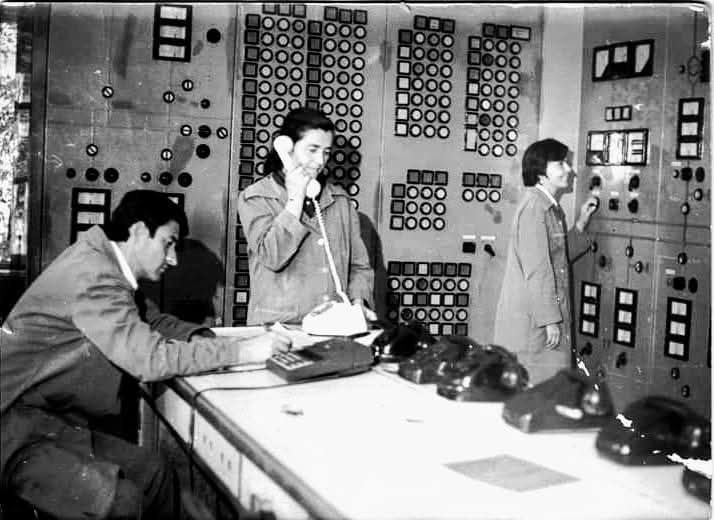
For many Albanians, the Soviet Union means only Stalin. Here Stalin is the most honored man; his words are written on the hydroelectric plant near Tirana, in red letters in the hall of the National Museum.
His name has been given to the greatest industrial work, a textile combine, while his statue dominates the main square of Tirana and the city boulevard. In the mountain villages, in the offices of farm administrators, and in cities on the Adriatic, Stalin’s portrait and bust have been given a place of honor.
No word against Stalin has been spoken in Albania. They are proud to portray themselves as “Stalinists.” If you tell them that his figure is being toppled, they answer only with angry eyes and a shrug of the shoulders. Officials conduct their affairs with the same bureaucratic system, police work with the same methods, and suspicion and xenophobia are those of the bad days of the Soviet dictator.
The date of Stalin’s death on March 5, 1953, does not seem to be marked on the Albanian calendar. Albania looks like a colony of the Roman Empire, which still has not realized that the barbarians have destroyed Rome. Long cut off from the West and kept away from the latter by the tactics of the Cold War, unfamiliar with Western concepts and Western thought, Albanians have eyes and ears only for Moscow.
Every Albanian believes that his country is surrounded by enemies, whom the West supplies with weapons and who are ready to attack it, and the only defense is that of a strong army and the support of the USSR.
With the same suspicion, possibilities for internal enemies are viewed. Only in wartime on the normal streets of a city can you see so many soldiers, and clearly the fear of an internal revolt is the reason why they multiply whenever the night lengthens.
ALBANIANS BLAME THE USA
Many of the curses for the small daily worries of an ordinary Albanian go towards the USA. The Albanian lives in a world that seems to him overpopulated by enemies, and the greatest of these are the United States. Now the high officials have directed propaganda, and the main hatred goes to Yugoslavia, which is blamed for all the guerrilla wars in the North of the country, on the border between the two states.
Also Greece and Italy, in Albanian propaganda for years, are known only as allies of Yugoslavia in the attempt to overthrow the regime in Albania. Most likely in this country, 6 out of 7 able‑bodied men are in uniform. And this has prevented the country from developing economically and healing the wounds inherited since the time of King Zog.
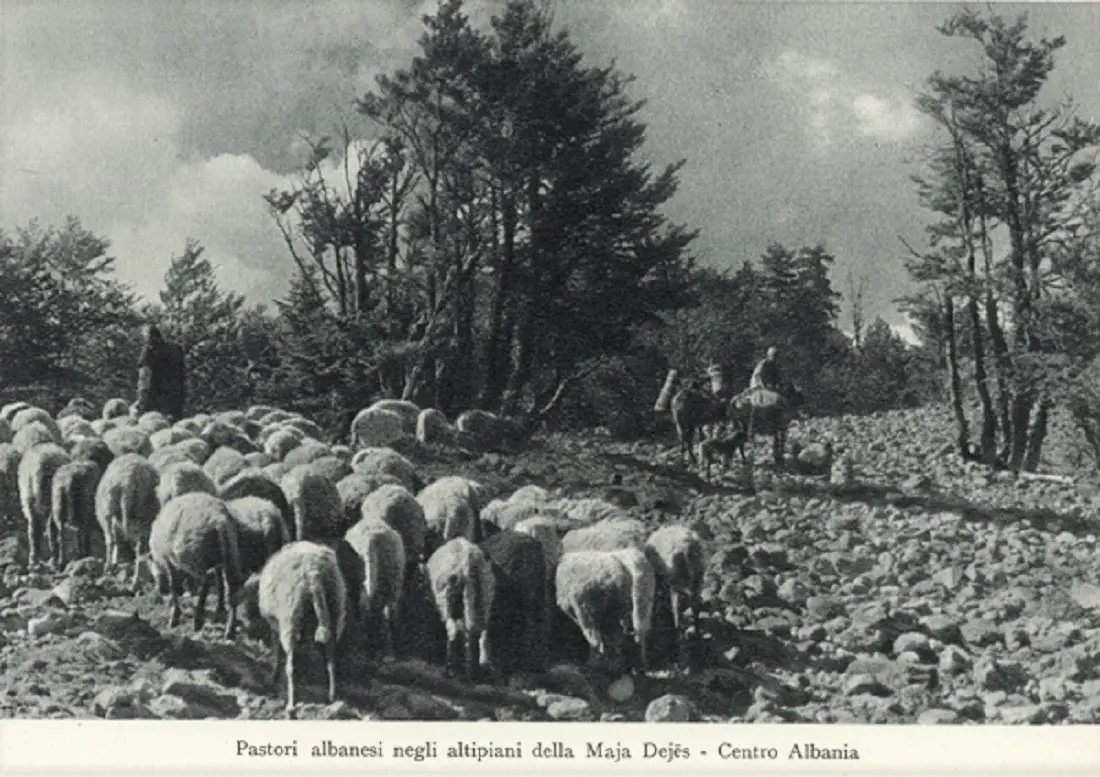
The standard of living has risen, but the regime has been forced to become completely dependent on the Soviet Union to survive. Whether the Soviet leadership has helped Albania is something to be discussed. When the communists took over the country, it was 99 percent agrarian. Birth rates were high, but so were deaths during childbirth, while death from starvation was common…!
There were only a few mines given on concession. King Zog was the largest landowner and the main exporter of goods. If the Soviets pushed the country towards industrialization and cooperativization, an independent peasant economy would have helped Albania more to develop economically and Albanians would live better.
But that extreme conditions have changed can be demonstrated by the doubling of the population, which has come mainly from the decrease in the number of deaths…! Meanwhile, great medical campaigns are being conducted to fight contagious diseases, posters are distributed, strong drugs are used, and people are educated about cleanliness…!
Albanians have reserved their greatest hatred for internal “traitors.” They accuse the “bourgeoisie” of the country that, unlike the bourgeoisie in other countries, did not help the revolution by aiding industrialization…! “The bourgeoisie in other countries,” says a former partisan fighter, now a director at the National Museum, “built industry and helped the revolution. The Albanian bourgeoisie did nothing of the sort”!
The state museum is built on the building that once served as an office for the Italian carabinieri. In this place many communists were tortured to death. Well‑preserved instruments and photographs show the violence in detail. When the director speaks of the failure of the bourgeoisie to secure industry, his eyes go to the places where the torture instruments are displayed. At that moment it is not difficult to read his thoughts. Memorie.al
To be continued in the next issue