The Unknown History of Albanian Language Teachers in Chameria
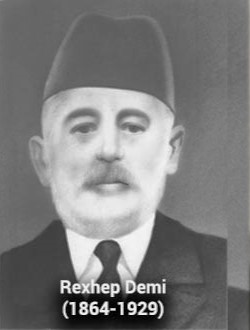
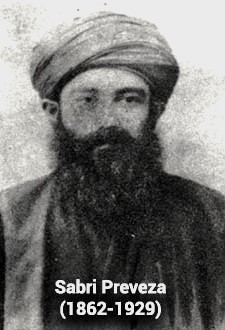
Memorie.al / Just as everywhere in our country, in the region of Chameria, too, many attempts were made for the spread of Albanian instruction and for the opening of schools in the mother tongue. Thus, in the last years of the 19th century, the patriot Rexhep Demi coordinated work with Sabri Preveza (1862-1929), with the main goal of spreading the Albanian script throughout Chameria. The work intensified for the distribution of Albanian books and newspapers, both in Chameria and in Southern Albania. In Preveza alone, Sabri had taught the Albanian reading and writing to several compatriots.
In 1899, he wrote to the “Dituria” (Knowledge) society of Bucharest, with which he maintained continuous links: “We must awaken those patriots who are asleep and not fear Fezan and Bosphorus, because as soon as we fear these… we gain nothing, therefore we must have courage and speed in the service of the motherland, so that we achieve the goal. Here in Preveza, now… they started learning Albanian, so we need large and small ABC books. Because, every time we talk to an Albanian about the need for Albanian, he asks for an ABC book. And when we don’t have one to give him, we become poisoned.”
Sabri Preveza, like many other patriots of the pen and the gun, was swept up by the wave of great anti-Ottoman uprisings of the years 1910-1912, which led to the declaration of Albania’s Independence on November 28, 1912. (In 1925, pursued by Greek chauvinists, he settled in Sarandë, where he died).
However, all this patriotic and educational activity attracted the attention of chauvinistic circles and was countered by the spreaders of Albanian. Just as in other regions of Albania, they vehemently attacked the patriots in Chameria. Finally, in 1900, they arrested Rexhep Demi in Filat and sent him to Ioannina (Janinë), the center of the vilayet.
They searched his house, especially to find Albanian books, which for the chauvinists constituted a grave offense. The Albanian books and newspapers found were all taken. For the “crime” he had committed, this patriot was kept for two years in the musty prisons of Ioannina.
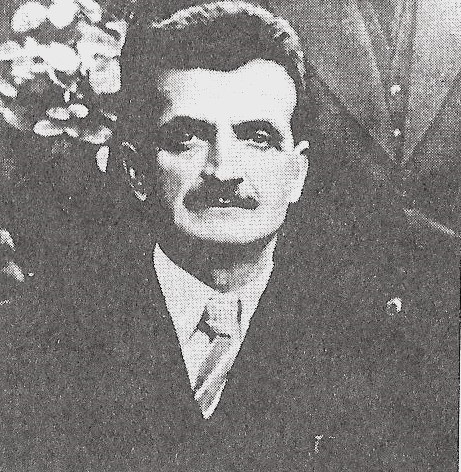
But even there, he did not withdraw from his fruitful work of teaching Albanian. In cooperation with his student, Qamil Çami, they founded a secret society, which included dozens of students. It took the symbolic name “Vëllazëria” (Brotherhood).
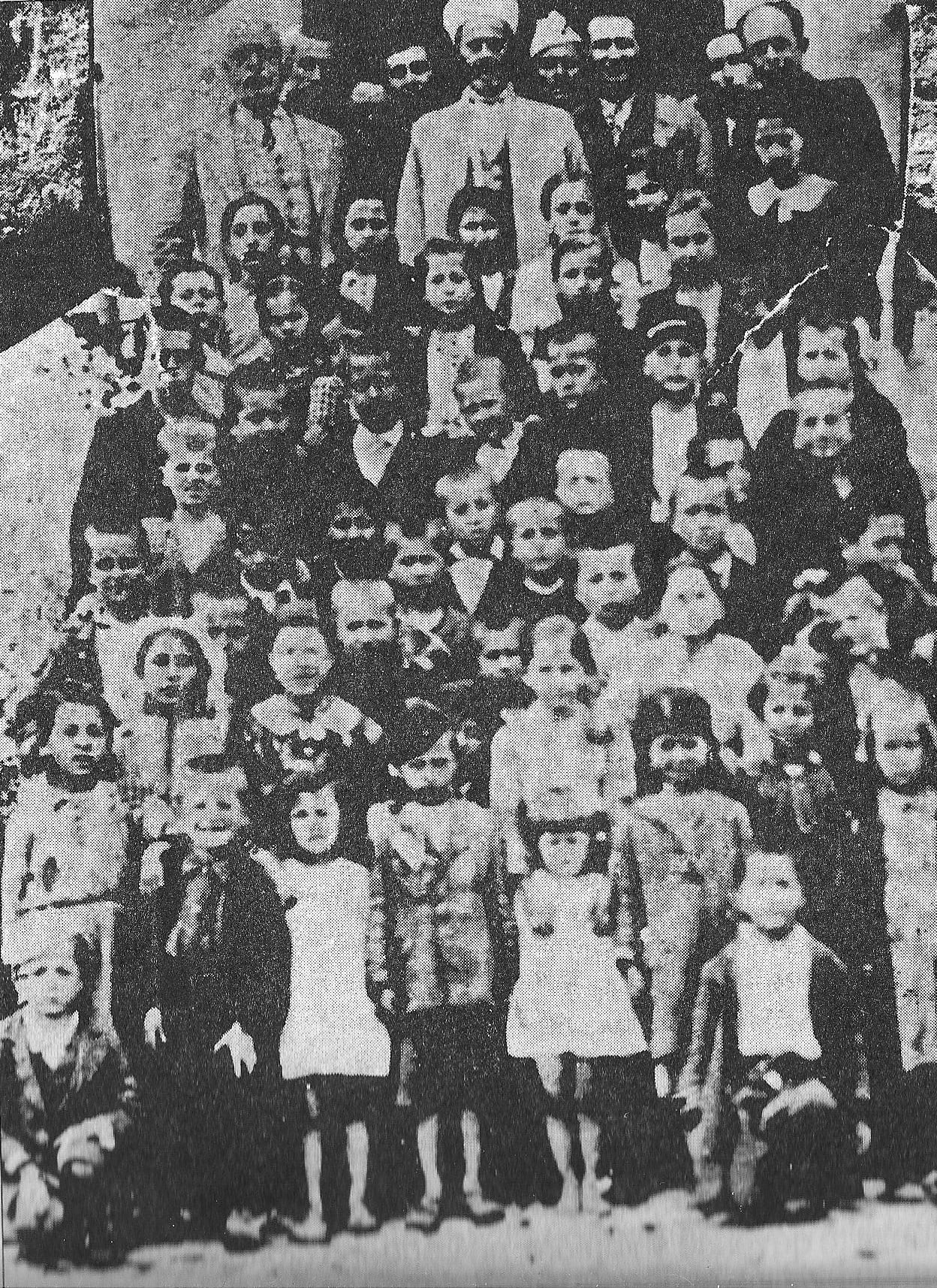
Among the main goals of the members of this Society was the teaching of the Albanian mother tongue. Thus, after the proper preparations, it was possible to open the doors of an Albanian language primary school in Filat on September 7, 1908. In a telegram sent by Musa Demi, it was stated:
“We give you great joy with the news that today here, with great praise; we are opening an Albanian school and delivered some patriotic speeches.” (Gazeta “Lirija”, Thessaloniki, 14.09.1908, p. 2). Approximately at the same time, another Albanian school was opened in Luros of Chameria. The first teachers of the Filat School were: Qamil Izet Çami, director and teacher, and Hamit Demi, teacher. They quickly took measures for evening courses, where adults learned Albanian reading and writing.
The reaction of the enemies was strong, while the determination of the teachers and parents was to continue the work started at any cost. For this, teacher Qamil even wrote some verses, in which he expressed with enthusiasm: “They opened it and rejoiced (the Albanians, the school), / the Greeks of the devil were poisoned, / the Cham, the son of the brave, / crushed the Morait (Greek).” The difficulties for books and teaching aids were numerous.
But the teacher Izet Çami himself worked on translating the necessary materials from French. (Ibrahim D. Hoxha, Gazeta “Çamëria”, 18.04.1991, p. 6).
Qamil Çami continued his activity in the service of national education further, making possible the establishment of an Albanian secondary school, also centered in Filat. Among other things, new teachers would be prepared there to open Albanian schools, mainly in Southern Albania.
During this period, he collaborated with the press of the time, especially the newspaper “Zgjimi i Shqipërisë” (The Awakening of Albania), which was published in Ioannina, and wrote verses with patriotic themes. All this activity angered the chauvinists, who considered him a “dangerous person,” dismissed him from his job, and interned him in a village near Edirne.
Nevertheless, he did not obey the order, but took up arms, went to the mountains, and joined the insurgent forces. After the declaration of Independence, he dedicated all his knowledge and skills to the service of national education.
He actively participated in the “June Revolution” of 1924, and in Fan Noli’s government, he was appointed school director in Konispol. Later, he was transferred as a teacher to villages in Berat, and in 1930 to the “Çamëria” dormitory in Sarandë. But, after three years, when Qamil had given so much for the homeland and education in the Albanian language, he died in Tirana, at the age of 48.
Continuing the work done, in the spring of 1910, several Albanian schools were functioning, besides those in Filat and Mallakastra of Chameria. Such schools were in: Konispol, Ninat, Koskë, Janjar, Konica, and Mazarek.
In the Mesare school of Leskovik, Haki Glina, a well-known intellectual among patriots, was the teacher. The duty of itinerant teacher for Cham children was carried out by several patriotic intellectuals, among whom Hamza Tatzati stood out, and others.
Also known is the contribution made by the patriot Dervish Hima in the summer of 1911. He collected “money to found an Albanian school in Filat of Chameria,” about which he wrote:
“This school will be very useful for us, and I am using all my will and all my energy to achieve its success.” Efforts were also made to open the Janjar School. Qamil Efendiu was appointed as the responsible person for the Albanian schools in Filat, but he encountered many obstacles from the governmental authorities.
In Preveza, it was strongly requested that Albanian instruction be introduced, besides the idadije (secondary school), also in Turkish primary schools. Patriotic intellectuals like Qamil Çami, Musa Demi, and others showed themselves tireless in voluntarily spreading the teaching of the mother tongue to children and adults. Albanian patriots set the task of preparing Albanian teachers in the pedagogical schools that were planned to be opened in Margëlliç and Ioannina. (Dr. Apostol Pango, Sarandë, 28.02.1999).
Thus, during the years 1908-1912, just as in other regions, the teaching of Albanian in Chameria spread even outside the doors of Albanian schools. Sali Filati (Çeka) wrote this: “Chameria today experienced a movement of progress. This ancient corner of Albania raises its fences from the gardens of knowledge and sees the nightingales, the flowers, and the good fortune of civilization.” (Gazeta “Korça”, no. 9, 20.05.1910).
In subsequent years, instruction in the Albanian mother tongue in the region of Chameria faced the difficult historical circumstances that arose as a result of the massive displacements of those inhabitants, far from their ancient Albanian lands. Nevertheless, wherever the waves of life carried them, the love for the Albanian letters and the sweet Albanian word remained always alive and unquenched in their hearts. / Memorie.al