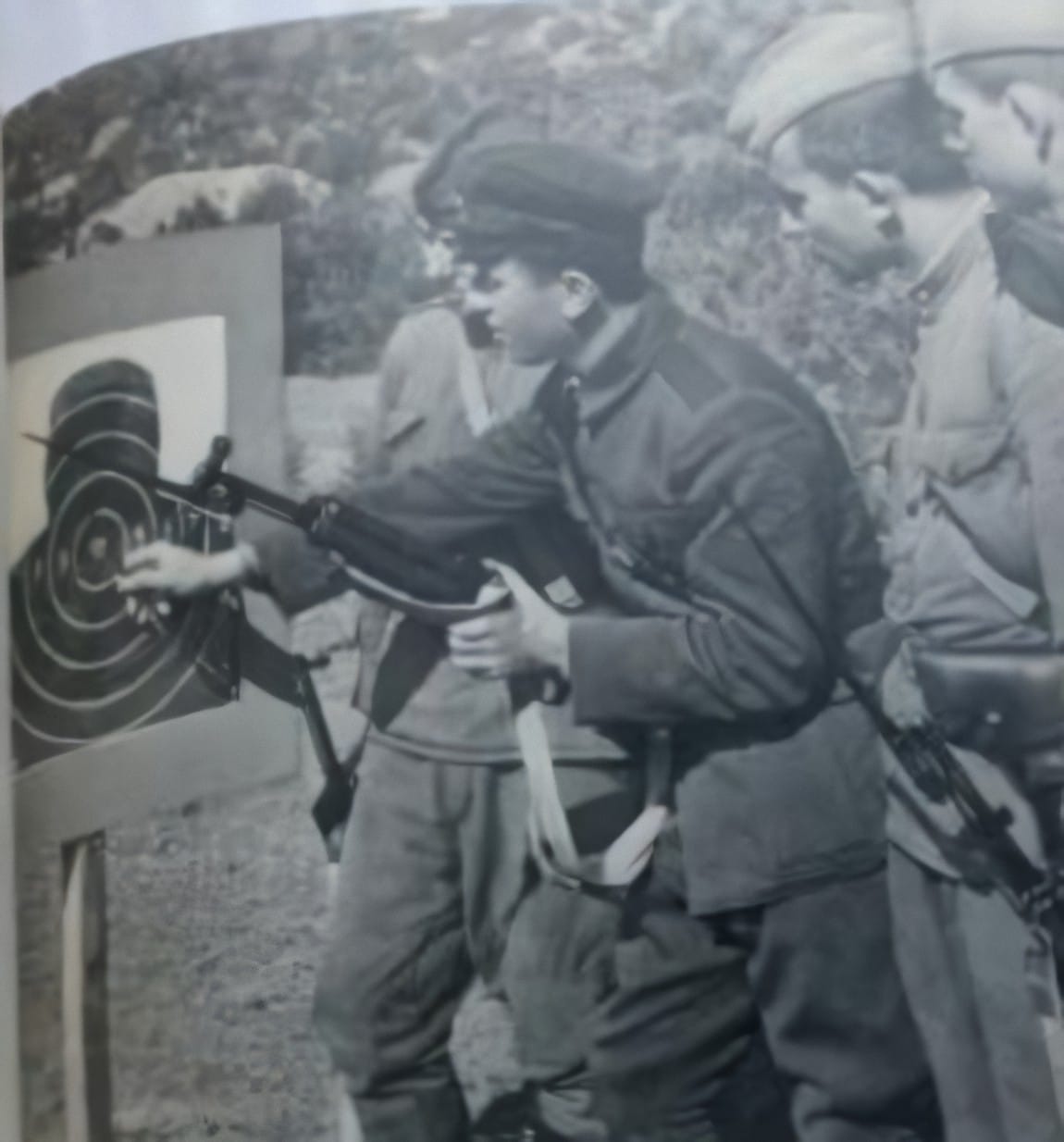
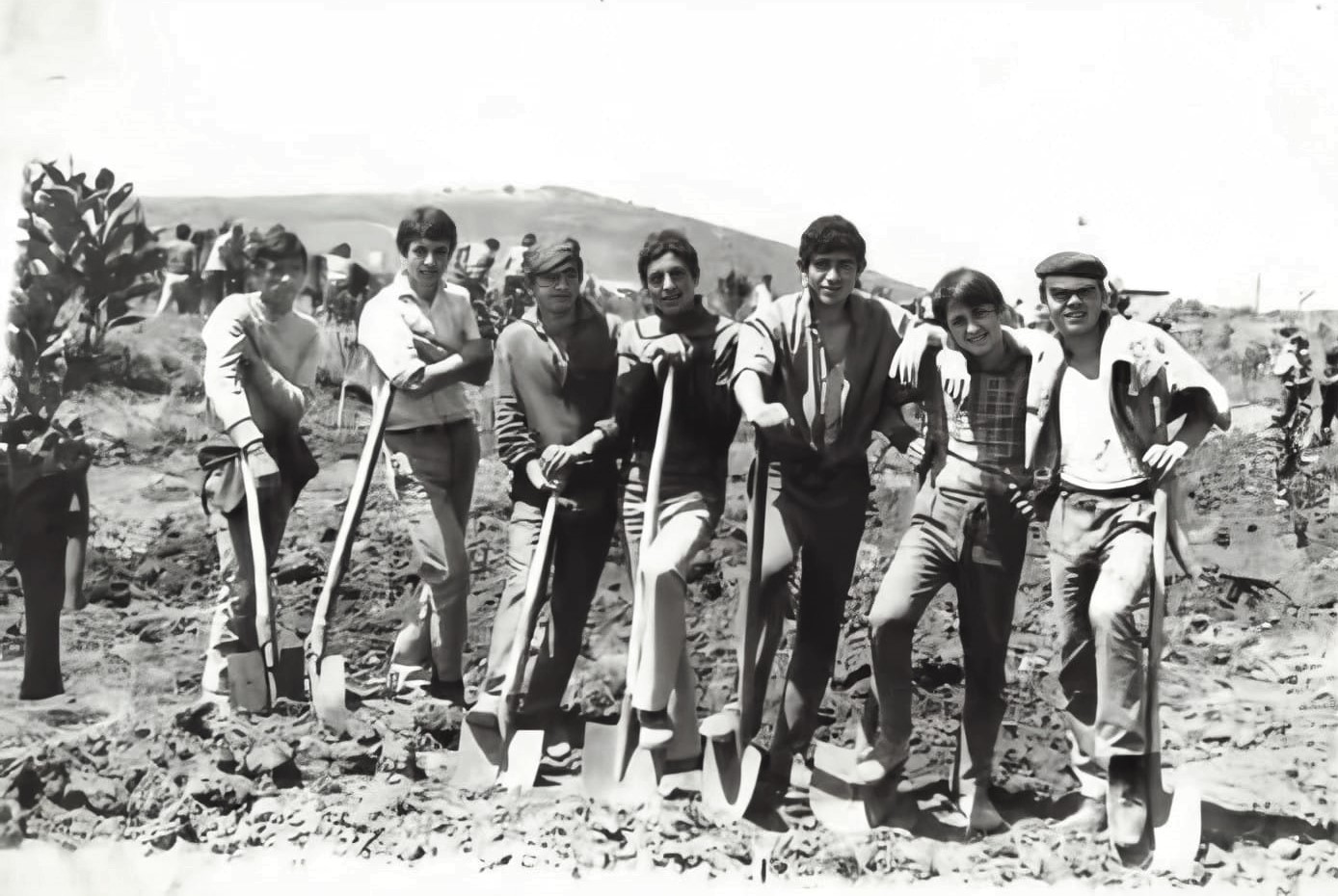
Memorie.al/In April of 1979, new soldiers arrived at our unit in Bestrova, Vlora. These were work battalions, they mainly mobilized boys from families that were called “with bad biographies,” or “enemies of the people’s power”; this is how the “politics of the ‘right’ we had won” had divided us. This hateful name was inherited generation after generation in these families. In these units, few soldiers were called “with good biographies”; they were there to command, not to work.
Nexhip Demiri became friends with a boy from Elbasan, named Kujtim, who worked in the other company. The two companies shared a common yard, and we ate in the same mess hall. Kujtim was a platoon commander in his company; he didn’t work making tiles like the others, while Nexhip, not belonging to his category, worked making tiles.
Nexhip, who knew well what “biography”, meant, tried to avoid him, but Kujtim, as soon as he got off work, would definitely meet with Nexhip. The more time passed, the stronger their friendship became. Kujtim was younger than Nexhip. One day Kujtim said to Nexhip: “What’s wrong, why are you avoiding me?” “Look Kujtim, until they separate us and we get into some trouble… I’m more worried about you… don’t hang around with me!”
“Why…? Why would they separate us? Everyone chooses their own friends!” “No, no! It’s not exactly like that, there are rules that even friendship… we can’t choose ourselves… someone else can ruin it for us, and we could even face consequences.” Kujtim was looking at him; who knows what he thought! Nexhip understood that he had broken his heart and said: “I have a bad biography, they could give you a warning, and they could… who knows… its better… I’m saying this for your sake, not mine!.” “Ehu… don’t worry your head about that! They themselves brought us together in one place.”
The second year, Kujtim said to Nexhip: “Shall we become *byrazer* (blood brothers)?” To drink each other’s blood. Nexhip told him: “The friendship we have is enough, it’s the same.” But Kujtim insisted. Finally, they agreed: “But on one condition,” Nexhip told him, “as long as we are here, let no one know.” Kujtim had another friend, Shefit Hajrullai; they told him to prick their fingers. They decided to make the blood brotherhood a done deal on Sunday. That day, Kujtim got permission for Nexhip and Shefit, they went to Llakatund, bought some sweet bread rolls and three beers, went out to the olive groves and sat on the fresh grass.
Shefit filled a glass halfway with water and took out the needle that soldiers kept stuck in the fold of their caps. When he got ready to prick their fingers, he told them: “Before I prick your fingers, listen to me a bit!” They looked at him: “Making a brother is a big responsibility; you need to think carefully before I prick your fingers! Life after the army is completely different from here; between you there is also ‘biography’, it has separated husband from wife, son from parents. If you decide today, you must not forget the brotherhood, no matter what happens to one or the other. What do you say?”
“You know what you seem like to me,” Kujtim told him, “like priests when they preach,” then he added, “My name is Kujtim, which means ‘remembrance’, so I don’t forget what I promise. I am making Nexhip my brother willingly, no matter what happens. Do you know that our mothers happen to have the same name?” said Kujtim. “Actually, only your ‘biography’ separates you,” said Shefit, “those who don’t know, would take you for real brothers.” “You know what,” said Kujtim, “since you’re pricking our fingers, let’s all three become blood brothers, because that’s usually how it’s done.” “I can’t. I made a blood brother many years ago,” said Shefit and pricked their left-hand little fingers. “Why the left hand, and not the right?” asked Kujtim. “Because your hearts are also on the left, so you love each other with all your heart,” he told them laughing. “I said you seemed like a priest,” he said again. After squeezing their fingers over the glass, the blood dripped drop by drop into the water, he swirled it well until the water turned red; half he poured into one’s mouth, half into the other’s: “May you be inseparable brothers! Now hug!” – he told them. They feasted with beers and six-lek rolls that they bought.
Ibrahim Demiri from Shalës in Elbasan had a son and a daughter: Hajrije and Beqir, the younger one. He married off Hajrije and as soon as Beqir returned from the army, at the age of 23, he engaged him to Qerim Hidri’s daughter from Cërrik, to Sabire. Qerim told the in-law: “I will have a big wedding, because she is my only girl, I will bring many wedding guests to your place too.” “I also have an only son, bring as many as you want, we’ll have a wedding, and let the tinker’s dog dance!” he said. Sabire was a bit dark-skinned, very beautiful, and respected her parents-in-law greatly. “Blessed be my in-laws, for the girl they raised,” the father-in-law would say. One day, when the son and bride were going to the bride’s parents, Beqir’s two parents accompanied them far; they liked seeing the couple walking together. Before they parted, Ibrahim said: “Old woman, I made noble in-laws, but also our children,” he said looking at the son and bride, “have turned out well; if we had ordered the in-laws by custom, they wouldn’t have turned out as handsome and perfectly matched in height as they are.” Sabire soon gave them a son; the father-in-law’s joy knew no bounds. “The bride,” he said, “will fill my house again with sons and daughters; we will become a big house again, like our ancestors were, with many brothers and sisters, and we will also have many friends.” The grandfather, although Sabire preferred the name Flori, named him Nexhip; he wanted to give him the name of his brother, who had been killed in the war, but Sabire always called him Flori: “Mommy’s golden one!”
When Nexhip was not yet six months old, one day two policemen and the deputy chairman of the Council came to Ibrahim’s house: “We will search the house!” “What has happened, men?” asked Ibrahim. “Your Beqir hasn’t stayed quiet; he has been arrested for agitation and propaganda, against the party and the people’s power!” Ibrahim’s mouth went dry; for a few moments he seemed frozen in place, just staring at them…! “My son didn’t do that thing, he doesn’t deny my brother’s contribution!” he managed to say in a half-voice. “That’s true, we’re not denying his contribution, but your Beqir must have taken after his uncles on his mother’s side… because he goes there often.” “I raised Beqir, men, not his uncles, and besides, you know that I don’t agree with them on this matter! However things stand between me and them, I can’t stop the old woman from going to her own people with the son. Surely, it must be some mistake.”
“Everything will be clarified during the investigation!” they told him. Beqir left his wife young with a small son. They wiped the smiles off the two parents’ faces. The two old folks remained with the young bride and the six-month-old son, who was left without a father. After they imprisoned Beqir, they demanded that the bride’s parents separate their daughter from her husband. Sabire did not agree to separate, but the pressure on her parents and the way her father explained it made Sabire sacrifice herself, to protect her father and brothers, but she refused to take the son with her. “Into this house,” she said, “I came without a son, and I will leave without a son!” “He is your child, he has no other parent, and you have the right to take him, where will you leave him?” her father told her.
“Better that his grandmother and grandfather raise him!” she said. When they insisted, she told them: “Father, you are forcing me to separate, and that’s what I’m doing, but the child will grow up in his own home. If you insist, I’ll stay here in my husband’s house and raise the boy myself.” “But the pain will gnaw at you all your life, my daughter!” “They didn’t take the child’s father to give me happiness, and I can’t do anything else; at least let these two old folks find comfort in their little grandson.” “May God make things turn out well for you, wherever you are, our daughter-in-law, according to the goodness of your heart,” her father-in-law told her. “You will only receive blessings from us, as long as we live,” her mother-in-law told her. When they saw that Sabire wouldn’t be persuaded, they also accepted. The separation of the bride from her parents-in-law was very touching for the two old folks, so much so that even Qerim, Sabire’s father, couldn’t keep his eyes from tearing up when he watched them hug and kiss their daughter-in-law.
After two or three months, Sabire’s father said to her: “What will we do my daughter?” Sabire looked at her father. “I know it’s hard for you, and it wasn’t easy for me either, your separation; I still feel like I see the in-laws with tears in their eyes when they hugged you like their own daughter that day, but… this life is a trial, a person can face good and bad and must face them. Eh, this was your fate and ours, now you must think of yourself, of your future; life will go on, you must start a family, bring happiness back to yourself.” “I saw how that marriage turned out, Father; I’m not getting married again. Who knows, maybe they’d arrest him too, and I’d have to separate again… I’ll grow old here, with you! If I’m a burden, I’ll go to my son…!”
“What kind of talk is that, my daughter?! We’re saying it for your own good. You’re young; children can bring you happiness…!” “Eh, Father, only the one who suffers it feels the pain, not the one who causes it,” and tears slid down her cheeks, “it’s not that my husband died, they took him away because of politics, they forced me to separate, I left a child behind, and how can happiness return to me?” “What can we do, my daughter, my soul also burns for my grandson, who won’t have a mouth to call him ‘mama’ (meaning, who won’t call me ‘grandma’? Or perhaps ‘mama’ is a slip referring to the child’s mother? The text says: “që nuk do i thërrasë goja “mama”” – it likely means the child won’t have a mother to call “mommy” or won’t call anyone “mommy” because his mother is gone. Let’s keep the ambiguity: “who won’t have a mouth to call out ‘mommy'”) , we are forced to endure. You will have other children… anyway… maybe… you’ll feel better…!” “You, Father, go and see your grandson, no one stops you; they are noble people, they will welcome and respect you just the same, but I cannot! I cannot go, not because they wouldn’t welcome me, no, no, but how can I face them, those who loved me like their own daughter!”
“I know, I know,” he said, “but it’s also very hard for me. Eh, how we planned it and how it turned out, we’ve come to such a state that we can’t even decide for our own children! Where did this damn ‘biography’ come from that separated us from each other while still alive! Didn’t this people know what they were asking for, or didn’t God understand!” “No, Father, no! God is not to blame, what you asked for, He gave you. It’s us young people who suffer!” One day, Qerim Hidri was called to the People’s Council office. The chairman told him: “Listen Qerim, why don’t you marry off Sabire, what are you waiting for? Marry her, marry the girl, a woman’s honor is in her husband’s house!” “I know, Comrade Chairman, I know, you’re also saying it for my good, but she doesn’t want to get married, what can I do…?!” “Well, what does she think, does she expect that when her husband is released, and… huh?” “No, Chairman, what kind of talk is that, that’s not happening anymore; even if we wanted to, they wouldn’t accept my daughter back now, as if she were something special!”
“Heh, you! She must have loved him that much…!” Qerim felt uncomfortable, the others in the office were listening. He shifted for a moment, as if his throat tightened: “Well, Mr. Chairman, he was her husband, like all women have, just like your own daughters. If she hadn’t loved him, she wouldn’t have waited for them to force us to separate.” “If that happened to my daughters, the moment I divorced them, I would marry them off, whether they wanted to or not; I wouldn’t let them mourn an enemy.” “The law punishes you, Comrade Chairman, for forcing a girl to marry! You should know that better, right?” “Yes, but does she have a reason?” “I told you, even if we wanted to, they wouldn’t accept her, and besides, my girl, no matter what happens, won’t go back there. You don’t play games with these things.” “Listen here, Qerim, I’m telling you to marry off the girl, because you never know how things might roll! Don’t come to us then… you understand me or not? When I say ‘us’, it means you too; we can’t let our children mourn, we separate them from an enemy.”
“Heh, trouble, if you stand in front of the mule it bites you; if you stand behind it, it kicks you, what is a poor person supposed to do?” said Qerim. “Marry off the girl and the mule won’t kick or bite you! Go on now, do as we told you!” Leaving, Qerim said to himself along the way: “But I know that no one is safe, not even you who are swaggering in front of me, you’re not so sure that the horse you’re riding won’t throw you one day and break your neck too, just like it’s happened to many, many others who were much higher up than you.” When her father explained to her what they said at the office, Sabire said: “It seems it’s fated that I must sacrifice myself; I agree.” They engaged her to Muharrem Selim’s son, Xhevit, in Labinot. His wife had passed away a year earlier. Her father wanted to have a wedding, but Sabire told him: “Don’t even think about having a second wedding!” That day, when the girl was getting married, everyone went to congratulate her, and the chairman also went. When he congratulated her, he said: “May it go well and may she have children, but why didn’t you have a bit of a wedding, so the young people could dance without us old folks…!” “Well, the ram only has one hide, Comrade Chairman, you don’t have a wedding every time we separate and remarry our children.”
“Eh, is that what you think, eh?!” In the new family, Sabire had no troubles with biography. Xhevit, her husband, was a very good man, he worked as an accountant; he also arranged a comfortable job for Sabire in the workers’ kitchen; she collected tickets. Despite all the good things she had there, Sabire didn’t feel happiness, her lips didn’t smile, and her soul was languishing. After a year, she gave birth to another son; they named him Kujtim. “Here in the new family, she had all the good things, she lacked no love from the family members, she had no reason to complain, but when she went to her father, she said: ‘I am very indebted to these people where I am now, Father, because I cannot repay the kindness they give me.’ ‘Don’t think they don’t understand your sorrow; they know your soul is wounded, you left a child there, but you also try to break away from the past, look forward, enjoy life as it comes, enjoy the son you bore, don’t harm yourself, at least try when you’re with your husband.’ When she served and caressed the boy, the pain for the other son, growing up an orphan with both parents alive, increased even more; this weakened her soul:
“Perhaps even when I die, I will die with that boy’s name on my lips! Ah, mother, the violent separation from my husband and son destroyed me! May God’s curse be upon those who separate mothers from their children! Nothing can heal the wound they caused me. Even though my soul aches, I laugh forcedly, not because I feel like laughing.” Xhevit, her husband, seeing that even the birth of a son hadn’t changed Sabire’s spiritual state, one day, when they were alone, looking straight into his wife’s eyes, told her: “Sabire, I understand the pain you have; if you’re worried about the son you left there, tell me; we’ll go and talk with them, I believe we can come to an understanding, maybe they’ll give him to us; he is your son too, he won’t be treated differently from the one you bore here, don’t worry!” “No, Xhevit, no! Their hearts have been broken enough; they had the son taken away, imprisoned; to take away the grandson too would be like tearing their hearts from their chests, why should we add to their pain. There’s no reason for your conscience to trouble you; you’re not to blame; those who separated me would have forced me to marry someone else, if not you. The boy will grow up in his own family, under the conditions the state created for him.”
“Alright, then, let’s do something else: let me pay something monthly for the child, like a sort of pension from you, it’s legal, at least until his father is released. There’s nothing wrong with that.” “They were branded with a ‘bad’ biography, but their souls are like amber (pure/good), I know them well; they would never accept alms from a mother who left her child and went away, regardless of how things happened. His father will return to his son one day. You were made my destiny, I will love and respect you just as you and all your family respect me; you are my husband, you are the father of my son. This is my family, now and forever; I will think about this, if they don’t separate us too. I’m not saying I don’t think about my son; my heart is now split in two, because fortunately, God gave me another son, but each child has its own place in a mother’s heart. It’s better for me to live with the pain they caused me, than to break the souls of those two old people. Secondly, I told them, that when the boy grows up, to tell him: ‘Your mother passed away.’ How can they tell him now: ‘No, no, your mother is alive’! That can’t be done!”
“Why did you tell them that?” “Because it will be easier for the boy that way; he won’t suffer thinking his mother abandoned him. It’s harder for me because I left a son, whereas your wife passed away, they didn’t take her by force, like they took me; I don’t mind even if you express pain for your late wife; it was your fate, but fate didn’t decree that she bear a child so you would never forget that it was your fate. I would have raised your son with pleasure, just as I am raising this one we have together.” The end of military service came; the boys were discharged. As always happens when they are discharged from the army, life has other preoccupations, but not that there was any big change: a crowd with tools on their shoulders; they were in the army, likewise they were in the cooperative, except in the evenings they didn’t go to the barracks, they gathered with their families. After two years, one Sunday, Shefit was in Elbasan, looking for Kujtim, he heard someone call him; he turned his head, it was a guy with a black mustache; it was Kujtim. After they hugged, they went and sat in a café to talk, to catch up; they hadn’t seen each other for two years. “I would never have recognized you with that mustache, you’ve also changed; if you hadn’t spoken to me,” he told him, “even though I was looking for you.”
“The mustache suits you!” Shefit told him. When he asked him where he worked, Kujtim said he had started working as a surveyor, he had taken a course after being discharged. Drinking coffee, they also remembered their army time; he asked: “Have you been to Nexhip’s? How is he? Has he come to you?” Kujtim was thinking. “What’s wrong, how are things? Do you maintain the relationship or not?” Shefit asked him, “because sometimes when they get discharged…!” “Yes, of course I do!” he said. “I maintain it, I maintain it a lot, but…” he shook his head… “What that blood brotherhood we did have caused us…!” “What, did something come up because of his biography?” he asked, looking at him. “No, no, what biography! Because of this blood brotherhood, my mother almost left me.” “Why, what happened?” “Eh! Our story is strange. Who would have thought… eh, this life of ours… our bond… has been… interesting… it’s like a fairy tale; our meeting brought us such joy, but how can I tell you, it was a painful joy, especially for my mom; she almost left me!” “Why, man? A painful joy… I’ve never heard of that kind of joy…?!” “Because it was a joy that almost made my mother leaves me for good! Even now my body trembles when I remember it, but fortunately…!”
“You’ve made me curious; explain it to me, explain it!” “When we were discharged, with great pleasure, I told my parents: ‘I made a blood brother in the army; you know what a good guy he is, Mom,’ I said; I talked and talked about him…! ‘Alright, my son, but where is this blood brother of yours from?’ Mom asked me. ‘From Lushnja,’ I said. ‘And you haven’t brought him for us to see? A blood brother is just like a brother; you mixed blood, even though you didn’t have the same mother, it’s the same,’ Mom told me. And Dad said, laughing: ‘Bring him; bring him so we can see if you knew how to choose.’ ‘Of course I’ll bring him,’ I said. And I wrote to him several times to come, but he didn’t. One Sunday, I met him by chance, just like I met you today. ‘I came today, Sunday, on purpose to meet you,’ he told me. We were both very happy; we had coffee and talked quite a while. Then I said to him: ‘Every time you’ve come, you’ve found an excuse, you haven’t come to the house; you’ve embarrassed me with my parents.’ But Nexhip, being Nexhip, had his mind on his biography. ‘I won’t come to the house; you come to mine.’ ‘I will definitely come, and together with Mom and Dad, as soon as we get permission. But, since we met today, come on, why do you cut it like this? Are we brothers or not?’
‘Yes, we are brothers, but I don’t want to cause you any trouble either. Let’s meet like today; that’s enough.’ ‘Today you will come home; it’s not right; what will I tell my parents? You were in Elbasan and your blood brother refused to come?! What kind of brothers are you?!’ they’ll say to me, ‘if he doesn’t come to us?’ I finally convinced him. When we entered the house, as soon as Mom saw us she got up hugged us both; Dad had just returned home and also hugged him. How happy they both were, Shefit! Mom looked at us and hugged us from time to time; she would embrace us and kiss us both as if…! When she kissed Nexhip again, she told him: ‘Eh, my dear son, you made us happy by coming; I feel like I’m not kissing my son’s blood brother, but like I’m kissing my own son.’ After we calmed down, she made us coffee; the four of us sat down with cups in hand; a joyful atmosphere was created like never before. When Mom and Dad showed so much love, I felt extremely happy. Mom couldn’t take her eyes off Nexhip. She picked up her cup and told him: ‘Welcome, mother’s son, you seem like gold (Flori), as if you had the same mother; you two look alike.’ Nexhip sighed: ‘Eh, Kujtim’s mother,’ he said, ‘I never knew my mother; I was very young when she passed away.’ ‘Kujtim told me, son, he told me; may she rest in peace,’ she said. ‘That’s life, my son; for some, their mother dies; for others, their mother is taken away’! Dad looked at him:
‘So your mother left a piece of gold behind!’ ‘Thank you for being a mother to call me Flori,’ said Nexhip. Mom looked at him, finished her coffee, and told him: ‘You truly are gold (Flori), let me tell you.’ ‘Until now, no one has called me Flori. My grandmother used to tell me that my mother wanted to name me Flori, but my grandfather refused for some reason…! Anyway. Nevertheless, my mother never called me Nexhip, only ‘Mommy’s Flori’. I don’t know what a mother’s love is; I’ve only known the love of my grandfather and grandmother.’ ‘And your father, what did he call you?’ Mom asked him. ‘Father, ah…’ he lowered his head, ‘he never called me at all; I was very young when they imprisoned him. After they imprisoned my father, we were interned in Lushnja. When my father was released from prison, I was eleven years old. That’s why I went to the army older; there I met your Kujtim,’ he said laughing, ‘and I even gained a brother.’ Mom was looking at him as if dazed: ‘Aren’t you from Lushnja?’ ‘No, Kujtim’s mother, we are from Shalës.’ Mom looked at him a bit and asked: ‘Whose son are you from Shalës, my boy? What is your father’s name, your grandfather’s?’ ‘My grandfather is Ibrahim Demiri, my father Beqir,’ said Nexhip.
Mom’s eyes widened; her complexion changed; the cup fell from her hand; she was about to fall from the stool; Dad immediately caught her; we both took her and sat her on the sofa; Mom just trembled. I started to cry; Dad grabbed the water pitcher, sprinkled her face, pressed the veins in her neck, shook her and moved her; finally Mom regained consciousness. Nexhip seemed frozen, had turned completely pale. We were all frightened. ‘What happened, woman?’ Dad asked her, laughing, ‘you scared us to death’?! Mom didn’t answer; she kept her eyes on Nexhip; Nexhip felt so bad, he felt as if he were to blame for what happened. ‘How did you two become blood brothers, oh, mother’s sons?!’ Mom said after a while. Nexhip looked at Mom, looked at me; who knows what he thought when Mom said that. ‘Blood drew you close, mother’s children,’ she said, and tears streamed down her face. ‘You know your mother died, huh?’ she asked him. ‘Yes! I was little, I don’t remember her,’ said Nexhip. ‘Ah, mother’s dear son! But my soul has burned for you for twenty-four years; my eyes have never dried,’ she said. ‘I didn’t abandon you; believe me, mother’s son, no mother abandons her child; no, they separated us, they separated us, but they couldn’t tear you from the heart of the mother who bore you.’
We thought Mom was delirious. ‘Mom,’ I said, ‘what are you saying, Mom, are you in your right mind?!’ ‘Ah, mother’s sons, they’ve brought us to such a state that brothers don’t recognize each other. You became blood brothers because blood drew you close,’ she told us. ‘No, mother’s son, no,’ she addressed Nexhip, ‘your mother didn’t die; I am your wretched mother and Kujtim’s; I am dead but not buried. I told them to tell you that, so you wouldn’t think I abandoned you, so you wouldn’t hate me’! She was overcome again; she squeezed him, kissed him and kissed him; she pulled me too. ‘Come, mother’s two sons, let’s all three embrace,’ she said. All three of us had tears in our eyes; you might think Dad wouldn’t take this well, what was happening, as he was looking on dazed. But after a moment, he opened his arms and embraced us all. ‘Ah, Kujtim, my dear son,’ he told me after he composed himself a bit, ‘today you have made your mother the happiest, because you brought me Nexhip, you brought me my Flori, who never left my mind; you have brought me the son who thought I was dead; you are two true brothers,’ she said.
Our eyes were opened. Nexhip sat as if stunned; he looked at mother, looked at me, then at Dad. It wasn’t easy for him; he was meeting his mother, whom he thought was dead. ‘Eh, how they’ve brought us to this; they killed our souls; they separated us from our children; if you had been a brother and sister, mother’s children, and had met at a voluntary work site, or who knows, in those volunteer works, not knowing the reason that drew you close, you would have married each other, oh, mother’s children! Oh God, what have we come to; forgive us! No mother leaves her child to grow up an orphan; violence…! Violence leaves children orphans, it tears the parents’ hearts, it makes brothers and sisters not recognize each other.’ When Kujtim finished, Shefit told him: “That’s a very painful story; even I feel like crying, let alone you. You truly made your mother happy; if you hadn’t become blood brothers, she would never have met her son.” Then he asked: “And you, have you been to Nexhip’s house?” “Yes, I’ve been, of course; his stepmother, eh, what a good woman she was, how well she welcomes you; and his father, they welcome me so well that I feel like I’m in my own home; and Nexhip, of course, is welcomed by his mother when he comes to us. They are very, very good people, but it wasn’t destined for us to also meet Nexhip’s grandfather; Mom praises him so much. Since they’ve been released, Dad will try to find some job for Nexhip here, maybe in Metallurgy, maybe we’ll even find him a wife here, so he can leave from there,” he said. /Memorie.al