Memorie.al / The eating of “heads” within the species began since the Anti-Fascist National Liberation War and, to this day, in the power and governance of the Albanian Communist Party. The path to power apparently, for this political force that governed for 50 years here in Albania, 70 years in half the world and continues today in some countries, travels through crime. Their comrades were killed and declared traitors, a large part of humanity was imprisoned and exiled without any guilt, the rich and the poor were dispossessed. They disappeared without graves and their relatives are still struggling to find their remains.
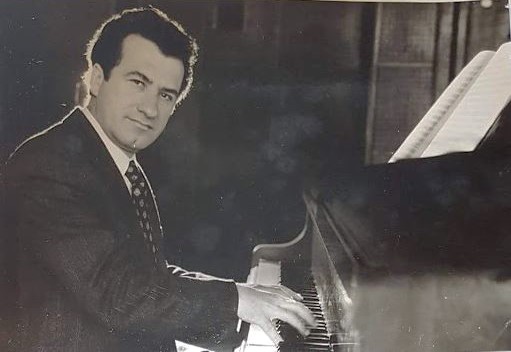
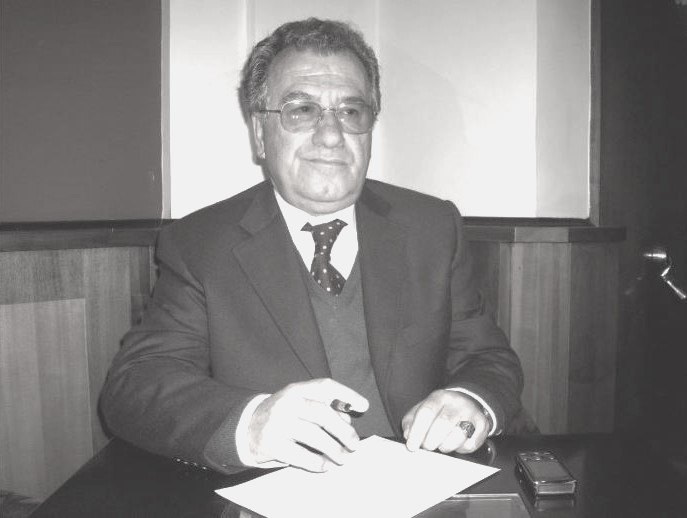
Such a case is that of Hulësi Dizdari, the father of the well-known artist and composer, Limoz Dizdari. Hulësi’s name, on May 5, 2020, after many years of silence in the labyrinths of enigmas, was ranked on the list of “Martyrs of the Nation” (Dëshmorë të Atdheut), although the proposal had been made years earlier by Sulo Gradeci himself, as a former partisan of the Seventh Assault Brigade, his proclamation as “Martyr of the Nation” was still delayed.
But what happened to Hulësi and his son, both partisans?
The verses of the song truly apply to him: “What is this, martyrs, with you/ Years move on, and you stay there”. Because no matter how many years passed, they could neither fade nor hide the truth about Hulësi Dizdari. At the age of 43, he became a partisan along with his son, Bashar, joining the VII Partisan Brigade, leaving behind his 35-year-old wife, Myzejen, with five children. To protect his family from the persecutions of the occupiers and their collaborators, he sheltered them with his friend in Fushë-Bardhë, in the Çarçani family.
Myzejen Dizdari was a seamstress and became active by sewing clothes for the partisans of the First Operational Zone, thus joining the ranks as a LANÇ activist. Hulësi’s unfortunate date arrived on July 15, 1944, during the fighting at Therpel i Skraparit. The documents and witnesses of the time, as well as his own son, Limoz, state and speak harshly that; “his comrades killed him from behind, treacherously.” Therefore, for years afterward, until May 5, 2020, he was covered in silence. Limoz and contemporary friends have brought an example as a fact to argue Hulësi’s treacherous killing.
They say that before Hulësi was killed, the brigade staff transferred his son, Bashar, to the 19th Assault Brigade. Perhaps it was part of the scenario to prevent him from seeing his father’s murder. Bashar refused to leave and stayed hidden from the partisans, in contravention of the order signed by the Deputy Commander of the Brigade Staff. He stayed and saw his father killed under suspicious circumstances, just as time in the following years would confirm these suspicions of treachery and being shot from behind.
But an even worse fate followed Bashar, Hulësi’s son and the artist Limoz Dizdari’s brother, even though he had joined the partisans at the age of 15. The liberation of Albania found him 16 years old. In 1945, the “Pioneers of the War” school opened, for cadets, and was later called the “Skënderbej” school. He wanted to go and study at this school, but they did not send him. Here begins the great calvary and the fate he would be subjected to the same treachery as his father. In 1964, he managed to realize his dream of becoming educated as a military officer.
He entered the military school, where he graduated with excellent marks. He was appointed to Shkodër. But, surprisingly, they left him there for a short time and, ridiculously, appointed him deputy director of the Forestry School. He took it as a mockery but did not give up. What did a high-ranking officer need the Forestry School for? Discrimination. And on January 19, 1970, after returning from Tirana where he had been sent to pick up teaching materials for the school, such as weapons models made of bamboo reeds, the driver made a mistake and changed the route, the car went off the road and overturned into the Buna River. The driver managed to survive, while Bashar disappeared without a trace and was never found again!
The artist Limoz Dizdari tells us that: “for us and logic itself, our brother was killed.” No one even came to offer condolences. “I went myself,” Limoz continues, “to the Ministry of Defense. I met Dilaver Poçi. I asked him why this silence from the Ministry and the command. Why are they neither sending his salary to the family, nor any of his belongings that he left here?” Dilaver Poçi’s answer was dry and full of enigmas. ‘There is a rule,’ he told me, ‘that for military personnel whose body is not found, ceremonies are not allowed.’ We parted with that. But I want to add another fact.
Sometime in 1963-1964, there was a Lieutenant Colonel of the Ministry of Interior, Haxhi Hajdari. He was also a deputy (MP) for Malësia e Madhe. He was cornered in a cave and they couldn’t capture him. They were forced to shoot him with cannon. Bashar was assigned as the skilled artillerist and trusted member of the party, a member since he was 15 years old.”
This is the whole story of Hulusi and Bashar Dizdari amidst enigmas and the dust of silence. Some time ago, he addressed Prime Minister Rama to protect national values, as the “DEA” Cultural Center of Ksamil is one such value, and out of over 140 such centers inherited from the socialist system, only this one exists today with such a function.
The artist Limoz Dizdari received many greetings and appreciations on the occasion of his father’s proclamation as a martyr. In a public letter, he extends his thanks to those who placed the wreath of glory and the flowers of pride upon his father’s name with words of honor.
THE LETTER OF LIMOZ DIZDARI, AFTER THE PROCLAMATION OF HIS FATHER, KILLED BY HIS PARTISAN COMRADES OF THE VII BRIGADE, AS “MARTYR OF THE NATION”
“Yesterday on my wife Adriana’s FB, I read the spiritual goodwill of a large group of people who, with soul-chosen words, on the occasion of May 5th, congratulated me on the appraisal of Hulësi Dizdari, my father, as ‘Martyr of the Nation,’ killed in LANÇ by his own comrades of the 7th Assault Brigade. This spontaneous gesture of Adriana’s, which received a special appreciation from a wide circle of people, was truly very emotional for me. Beyond the anguish that has accompanied us, I try to find the right phrase and word to thank all of you for your noble gesture, which speaks much more than it says…! Accustomed to the order not to speak or comment, you, dear friends and good people, with whom I journey, made this very noisy May 5th, filled with light and emotion.
I have been silent and smiled all my life. My mother was magnified. She was father; she was also mother. She was a gentle mother, but she also had to be strong. What surprised me the most in everything about that woman was the answer to the question of how she endured all that pressure exerted by evil: Out of her family of 6 people, three of whom went to the mountains to be masters in their own country – she herself, her husband, and her eldest son, Bashar – her husband was killed, her son disappeared, and she herself was covered in silence. And as if that were not enough, in the last days of the war, they also killed her uncle’s son, Nebil Çika, where she was raised as an orphan who gave her the name Myzejen and the name is dedicated to ‘Pou-pai,’ and everyone spoke to her like this: ‘Pepe-kukull’ (Doll).
Even when I grew up, I spoke to my mother like that, and I didn’t think how ironic the fate of her life had been with her, but I was happy that her good uncle, Nuredin, treated his pained niece like a doll, without thinking that her life would resemble the fate of an orphan much more, and hardly at all that of the dreamer, who, even though we called her Pou-pai – Pepe – Doll, lived her life as an orphan. Every word of thanks to you, oh good people, is poor to express the respect I have. I am grateful to you…! You certainly expressed honor and respect on this occasion, and I will love you more when I read the spirit of those who appreciated this much-delayed act and occupied a wide space of social representation. Thank you very much and full of anguish to all of you, fellow composers, artists, wherever you come from with your greetings from many and various countries of the world.
I thank you with pleasure, my wise, talented, and virtuous Hebrew friend with abundance. I thank all of you military personnel, whom fate brings very close to one another, and who constantly impose the question upon us: “…And tomorrow…”??? Thank you very much, dear diplomats, politicians, and simple, clear, and bright people who congratulate me with all your soul for this delayed appreciation… much delayed by my state or yours, which, even though it is such – murderous, irresponsible, silent and voiceless, and red-faced – I tried to sing, not without success… I was not alone, there were many other troubled people, but I take comfort that the nightingales who sing in the groves of this country and this people are together.
Surely, all of you to whom I am returning thanks are asking the same question: ‘And tomorrow…?’ You ask who the person will be tomorrow who will respect the date of honoring the fallen of the new generation? Will he be conscious and virtuous, a patriot likes Ismail Qemali, or an oligarch and rich, sold out or imported, dressed in expensive suits and with non-series cars? Anyway, May 5th, this day with light and human pain, is a point of reference for the people, but not for anti-national governments. Martyr’s Day is neither learned nor dictated; it is only part of a great national consciousness.
I know well and want to let you know that the appraisal of Hulësi is only an administrative act that is almost worthless as long as the fact of the truth continues to languish underground, bearing the weight of the heaviest mud of the time and the value of man as never before. Still, nevertheless, May 5th as Martyr’s Day and the closeness of people around this date, regardless of the cause, is a dividing line between good and evil, between those who love the country and willingly go to war to protect the family and the homeland, and those who easily sell the interests of the country in exchange for securing a place somewhere below the instinct of a cow or a horse pampered daily by the perfumes used in that area of their residence…!” / Memorie.al
With respect
Limoz Dizdari
Ksamil