By Skënder Buçpapaj
Part Two
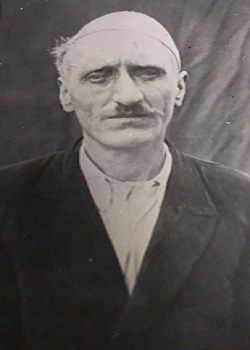
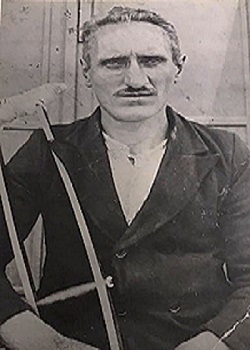
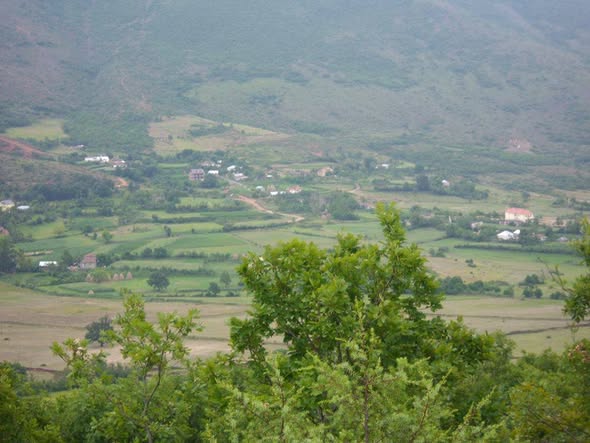
Memorie.al / The story of my father is the story of a man who never came to terms with communism and who faced, until his last breath, the class struggle, differentiation, and the consequences of absurd collectivization and total nationalization of the economy. Mehmet Bubrrec Buçpapaj was born in 1914 in the village of Tplâ, Tropojë, into a family that, two generations earlier, had come down from the “Kapuçprush” neighborhood of Upper Bujan. He was proud of his origin from Bujan of Krasniqe and, to show this belonging, he always signed as ‘M. Bujaku’. From a young age, he showed a thirst for knowledge. Although self-taught, he managed to be one of the most learned men in the region. At the age of eight, he went down to Shkodër with his father to enroll as a boarding student. He passed the exams successfully and was registered in the third grade. He fell ill with the flu, and his father was forced to take him back. His dream of continuing his studies in schools was not realized, but he never gave up on knowledge.
Continued from the previous issue
He mentioned to the chairman several families that had handed over all their land and livestock and, within a few years, had been reduced to misery. “I cannot let my children die of hunger either,” my father insisted. The chairman threatened: “I will take your land, and your house will become a shelter for the STM’s tractors”! The chairman was from a family with whom we had always had very good neighborly relations. He knew my father’s health condition. During Enver Hoxha’s visit to Tropojë in 1952, he had asked him for two things: that Tplâni be made an agricultural cooperative, and that Mehmet Bubrrec, who had fallen ill while draining the Maliq swamp, be given a disability pension.
Enver Hoxha had accepted both requests. During the winter of 1962–1963, my father spent his time in Civil Hospital No. 1 in Tirana. He and I exchanged letters during those months. My father attached great importance to correspondence, as a way not to break communication with the important people in his life. I did not inherit this quality from my father. As the eldest son, the whole household was under my responsibility. My responsibility was eased by my maternal grandfather, Zmajl Isuf Meshi, a brave warrior of Bajram Curri, in the uprisings for the liberation of Kosovo and the raising of the national flag in Skopje, on August 13, 1913.
Although advanced in age (he passed away in 1967), his presence during those months was very important. I never saw my father sadder than when he had just come out of the hospital. In the summer of 1963, the chairman of the cooperative decided not to allow irrigation of our fields and meadows. My father went to the locality chairman, Halil Breçani, and complained. He gave him a document ordering the cooperative chairman to allow us our turn for water. The cooperative chairman refused to acknowledge it.
My father went to the chairman of the District Executive Committee, Mehmet Rama, and complained. He also gave him a document ordering the cooperative chairman to allow us water. Again, the cooperative chairman refused to acknowledge it. From then on, we were not allowed irrigation water on our land. Thus, production yields dropped sharply. And we were forced to sell livestock to buy grain. In the spring of 1967, in the framework of the Maoist “cultural revolution” that also took place in Albania, our family was again placed at the center of the class struggle.
The cooperative’s youth organization, with Secretary K. Rr. and deputy secretary B. A., posted a wall newspaper on our house door, as large as the door itself.
Besides the firm refusal to enter the cooperative, my older sister had married the nephew of Tahir Hoxha of Gash, a former officer of the Monarchy who, at the Peza Conference, together with the nationalist wing of Abaz Kupi, had split from the communist wing, remaining its enemy. After the war, he fled to Kosovo and was treated as an enemy of the regime, even though he was a patriot and came from a distinguished patriotic family of the Highlands and Kosovo (his father, Abdullah Hoxha, one of the leaders of the anti-Ottoman uprising in 1909, was hanged by the Turks in Gjakova, together with Shaban Binak of Krasniqe), while his brother Sadik Hoxha, a respected cleric, remained in his village, in Hoxhaj of Gash.
The party organization ordered that the Front organization be convened, with the agenda: Mehmet Bubrrec, for being related by marriage to reactionaries, should appear before all the people and be expelled from the Front, i.e., officially declassed. My father defended himself spectacularly. And none of the ordinary villagers who took the floor attacked my father. Even the chairman of the Front, Hysen Mehmeti, a close friend of my father since their childhood, came out in his support. The party organization of the cooperative failed completely.
In the summer of 1967, our family was forbidden to go up to the mountain pastures, as we did every year, because, according to them, being a reactionary family, we might flee. Selim Zenuni (Malaj), from a family with whom we had always had good relations, and a close friend of my father since childhood, became our guarantor, and we went up to the pastures that summer and the following summers. Our land was merged into the agricultural cooperative only in the spring of 1968, the last in the village and district, perhaps the last or among the last in the country.
Our house and land (fields and meadows) were located in the middle of the plain. My father planted our fields with white corn, so that we children would not dare take even a single ear of corn from the cooperative’s fields, which were planted with yellow corn. Thus, neither we nor our livestock caused any kind of damage to the cooperative. Our economy was sufficient to support our family comfortably. We had built it with our own sweat, from the oldest to the youngest, and we needed nothing from anyone, not even the smallest thing.
We ten children raised each other and were a strong support for both parents. My father had such a spiritual constitution that he would not let a single day pass without doing something good for someone at least once. A man with golden hands, the kind where whatever his eye saw, his hand could make, he would come to the villagers’ aid, from fixing wall clocks, to repairing agricultural tools, to repairing horse saddles, and so on. He did everything for free and perfectly.
He regularly subscribed to “Zëri i Popullit” or “Bashkimi”; indeed, for many years, my father had sent news about events from Tropojë to the newspaper “Bashkimi”, being its voluntary correspondent. Father bought books by the best authors of the time, building one of the richest libraries in the region, a passion he had inherited from his own father and which he had pursued since the 1930s, when our grandfather Bubrrec Alia would get books by Gjergj Fishta and Hil Mosi with autographs in Shkodër. Until 1970, when the country was fully electrified, there was no radio even in our village.
In the early years of the cooperative’s establishment, in the then-center at Arë e Butë, near Ponarë, there was a kerosene-powered radio. Until it stopped working, a large number of villagers would gather constantly to listen to it. Sometimes I listened too. Only a year earlier, in 1969, on the 25th anniversary of the country’s liberation, Chinese “Iliria” battery-powered radios arrived. The daily newspaper enabled my father to learn about the daily politics of the PPSH. At home, my father kept the codes of laws in force (the Constitution, the Penal Code, the Code of Criminal Procedure, the Civil Code, the Code of Civil Procedure, the Family Code, and others).
Lawyers from the district would come to the village to explain the new laws. The village postman, a very good man from a very good family, would bring the news to us as well. When the village leadership would ask him, “Did you notify Mehmet Bubrrec?”, the postman would answer that my father would show him the laws in question: “Here are the laws you’re notifying me about.”
From Tplâni, as well as from surrounding villages, villagers who wanted to solve their problems by addressing letters and complaints to the district or Tirana leadership would come to my father.
Being knowledgeable about the laws, he would draft their letters. Since I made no grammatical errors, I would write as my father dictated. Because the letters were successful, those seeking help from my father only increased. My father had acquired good legal culture from his readings, but he also had an innate talent for judging and interpreting things, conflicts, or various civil or criminal matters. He had rare abilities to defend a case, present something as good, or unmask and destroy it as something bad, or very bad.
His words and jokes had much influence for good or ill, both in the family and in the community, and often these created problems. My fondest memory with my father is from a visit we made together to a friend of his in Shkodër, in the last days of 1958 and the first days of 1959. His friend’s house was located in Parrucë, approximately where later the road to the boys’ dormitory of the Higher Institute of Shkodër branched off, where there was a large bookstore, where the flower garden and the bust of Qemal Stafa began, and, a little further, the Library of Shkodër.
The host family, a lovely family, consisted of two children (a boy about 8 years old and a girl about 10) and the parental couple, who were around their forties. They lived in an apartment on the third floor of a building. It had rained heavily, and those days and nights the rain continued. The lake water came almost to the city center. The children’s parents left home early and returned late. We children would often look out the window and amuse ourselves watching the vehicles, especially the large trucks, as they cut through the water and spread waves.
Sometimes we would go out into the city with my father and our host. We would go to the “Big Café”. I remember Dervish Dashi, who sometimes got so drunk that he would strike the café walls with his cane. I was extraordinarily impressed by the very rich peasant market, the characteristic zithers (or traditional instruments? – “trumat” likely refers to a type of folk instrument or perhaps a misprint; keeping as “trumat” or interpreting as “horns”? But context: market, bicycles, so probably “trumat” is a local term; I’ll transliterate as “trumat”), the many bicycles, especially children on bicycles. I asked my father to buy me a child’s bicycle. I was particularly impressed by the loudspeakers on poles; everywhere you went, continuously broadcasting radio programs. I was impressed by the New Year’s atmosphere, with the imitation snow crystals on the windows and the colorful lights.
Sometimes the rain would catch us, and we would return home with umbrellas. Through their small windows, we watched the city through the rain. There cannot be a more comfortable, more fantastic journey in the world. When I was a student in Shkodër, I would search my mind for the house where I had been a guest. There now stood a large building, and there was no trace of the previous one. My father never told me later about the fate of that family, apparently “not good”, as for many in Shkodër at that time. With Shkodër, from then on, I created the most special spiritual bonds, because it was the first real city for me and because nowhere is like Shkodër.
When we returned to Tplâ, people asked me endless questions about Shkodër. Sometimes I lacked answers, and I would make things up. Those were my first fabrications about the city. Another very beautiful memory with my father is from many years later. In the spring of 1977, in Building 14 of “Student City”, when we had just returned from lectures, I was notified that my father was looking for me – an extraordinary surprise for me, because my father had never come to my school door, from first grade until that day.
He told me he would stay only a few hours in Tirana. He was coming from Shkodër, where he had visited an ophthalmologist and would pick up his new glasses at the optical department. We went together to “Kursal”, had coffee, and left. As soon as we stepped out, Ismail Kadare was coming towards us, who at that time were giving lectures to our course on Western literature. We greeted Ismail. And hurriedly we went to the optical department, got the glasses, and managed to catch the train to Laç. From there, my father would return to Shkodër and then to Tropojë. Ismail remained in his mind. “How young, wow! Ismail is a young man, wow! I never imagined Ismail so young!”
I have regretted all my life that we did not stop for a few minutes with the writer. Kadare had been present in our house since 1958. Father was a regular reader of Ismail Kadare’s novels, including “The Winter of Great Loneliness” (published in Tirana in 1973), and everyone in the village knows this, because he would recommend them to read. He greatly valued Kadare as a writer. His book “Princess Argjiro” was among the books that were read aloud and with tears in the eyes. From then on, no book by Kadare has been missing from our house.
There is no one he has spoken to whom my father has not told that he had seen Ismail up close that, contrary to what he thought, Ismail was a young man. My father, as a merchant, master builder, farmer, etc., under no circumstances, wherever he was, ever let go of the book. And this made him feel equal to any intellectual, in any field, with whom he spoke. Even in those few years of retirement that he enjoyed, the book was his most inseparable ally. In his other time, he would tend to the various fruit trees that surrounded our house.
Since we were located in the middle of the plain, in spring, summer, and autumn, from the work centers of “Bajram Curri”, people would come to work in the cooperative’s fields as part of the actions with “concentrated strikes”, as they were called at that time. They would come to our well, under a large vine arbor, quench their thirst, cool off, and my father enjoyed talking with them and serving them seasonal fruit as well. From a young age, he had taught me how to prepare firewood for the winter, how to load the horse with wood, etc.
From the age of 10, I would ride the horse from the shrubs to the mountain pastures several times each summer. The pastures were far away, about 12 hours. The roads were mostly devoid of people, and if the horse’s load fell off, I could be stuck for hours without any help. My father taught me that if the load tilted, I should put a stone on the lighter side to create balance. He had taught me to plow the land with a plough, to mow, and all other agricultural work. In one corner of it, the large field had heavy soil; I had to hold the plough up almost all the time, because it could go too deep. Thus, my hands would become covered in blisters. This experience was passed on to my other brothers.
He had at home all the tools of a master builder, including those for wood carving, as he was capable of doing the finest wood carvings (with the taste of a sculptor), which adorned our living room, one of the most beautiful in our region. He never allowed me to touch them with my hand, nor my other brothers, because he was very meticulous and afraid we might ruin them, and people constantly came to him asking for help, but also placing orders. In the early 1980s, when we undertook construction work on the house, he became very pessimistic. He did not believe we would succeed.
The cooperative would assign us craftsmen to work on our house, but, on the other hand, they were ordered not to do anything. So they would work an hour or so, then leave and not return for weeks. Great obstacles were also created for us in the transport of stones, sand, lime, beams, planks, and all building materials. The location of the house in the middle of the plain added to the difficulties. We were forced to take on the work ourselves. Since we had not worked with stone or wood craftsmanship, he did not believe in us. One whole summer, Muja, at that time a student of literature in Tirana, quarried the stones for the house. Then we did the transport and started the work.
Muja and Flamuri took care of building the walls and plastering, showing rare skill. The rest of us took care of the other processes, mainly woodworking. Mother served us meals wonderfully and constantly brought us water from the spring. When my father saw that we were not in vain the sons of a master and that everything was going wonderfully, he accepted that the house was being built and became happy, as we built a two-story house with more rooms, with internal stone wall partitions, becoming an immortal villa that was not brought down by the earthquakes that struck in subsequent years, nor by the snowiest winters, even in these recent years when no one remains there, as we have all moved away.
God willing, we will return and rival the house there, along with the economy and resources of the fertile land that surrounds it.
In December 1983, my father was admitted to the hospital in “Bajram Curri”. He stayed until the end of January 1984. Two weeks after leaving the hospital, on the night of February 16–17, he suffered a heart attack. The village doctor was not in Tplâ. My second brother, Hasani, notified me by phone. The weather was very harsh, and the roads to Tplâ were very difficult for obtaining medical help. Around 2 a.m., my brother informed me that my father had passed away. I notified all our friends and relatives by telegram. They notified others to whom telegrams could not be sent. And everyone set off to take part in my father’s funeral, which was to take place at midday on February 17. Muja, who was a student in Tirana, arrived a few hours after we had buried our father.
At my father’s funeral, by decision of the cooperative leadership, no member of the cooperative administration took part, no member of the PPSH took part, and no one from the leadership of the mass organizations took part. It was a total boycott.
No kulak, former kulak, former political prisoner, no internee had ever experienced such a total boycott. So great was the animosity of the cooperative leadership towards my father. So monstrous, and absurd, was the hatred towards him. Because, meanwhile, Mehmet Bubrrec was always a member of the Democratic Front, had never been expelled, and indeed had never received any reprimand or any kind of punitive measure!
At that time, I was teaching at the high school of “Bajram Curri” and was a methodist at the District Pedagogical Cabinet. My friends from education and culture all came to my father’s funeral, and the Bokë District, where our family cemetery is, filled with cars. Meanwhile, all the friends, relatives, well-wishers from the villages of Tropojë, Has, Pukë, Kukës arrived. The villagers of Tplâni and Dushaj came, young and old. Even for my father’s memorial service (the “wake” – “të pamen”), for a whole week, countless people came to offer condolences.
Condolence telegrams continued for days from our friends and relatives in Tropojë, Tirana, and elsewhere. My father, even with his death, managed to challenge the village and cooperative leadership. He had hated communism all his life, he had hated the war against religion, he had hated the country’s self-isolation, but, more openly than anything, he had hated the cooperative. He had absolute conviction that the cooperatives would one day be dissolved. After he came back very ill from the action to drain the Maliq swamp, my father had familiarized me with the idea of his death, at least since I was 4 years old.
In the spring, he would tell me: “This spring has found me, but who knows if the next spring will find me, so you are the head of the house.” On the eve of winter, he would tell me: “This winter finds me, but who knows if I’ll get through it. You are the head of the house.”
When my father actually died, I was 30 years old, but I felt much older in age. And younger than me were my other four brothers and two sisters. My other three sisters were older than me. As my father was passing away, I felt as if his 70 years were now being added to my 30. / Memorie.al