By Father Zef Pllumi
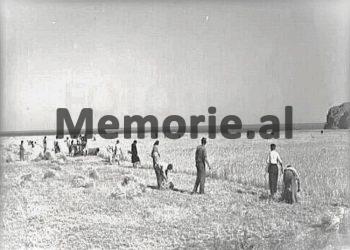
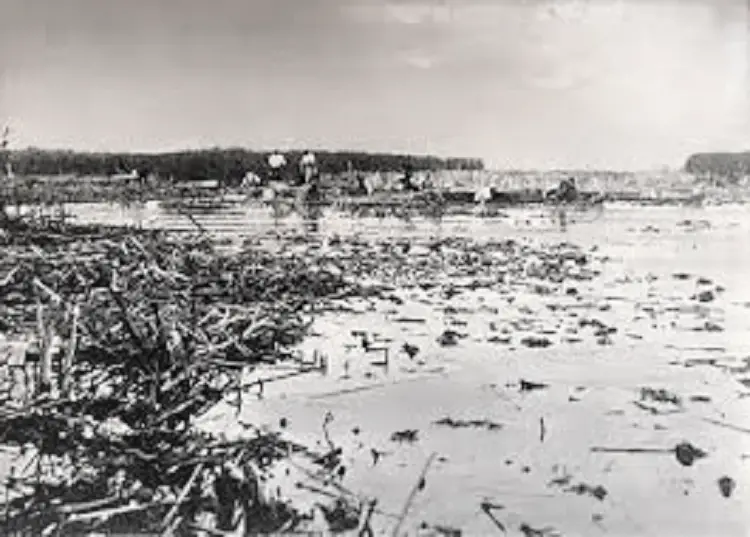
– THE MALIQ SWAMP –
Memorie.al /The next morning, the commander came in. He said that they would stay there until they submitted a request to the command, in which they pledged to fulfill the daily quota. We debated among ourselves for a long time. I was against any declaration, but the majority was tired and exhausted; they could no longer live on 400 grams of dry bread and half a liter of water. As the most educated among them, they tasked me with writing the declaration. I wrote it, but I did not make any pledge about the quota; I only put: “we pledge to work as hard as we can.” When I wrote down the names, each one had to sign; most were illiterate and had to put their fingerprint. I was amazed and asked the eldest:
– “So, all of you are convicted for political reasons?”
– “Yes.”
I was very troubled: I could not understand where the politicians of the Albanian people were. The prayer began. When I wrote down each name, I noticed that there were two other Catholics. Later I approached one of them and asked him:
– “Where are you from?”
– “From Kurbin,” he answered.
– “So, how long have you been in prison?”
– “Now, my son, now I have come. From what I understand, you are a priest?”
– “Yes.”
– “Where have you served, in Mirdita or Dukagjin?”
– “I haven’t served anywhere, because as soon as I finished school, they brought me here inside. But why have they brought you here? Did you shelter some fugitive?”
– “No, no, I myself was a fugitive.”
– “You, a fugitive? But tell me, did you know an uncle of mine, Fran Miri, because around Kurbin he was also on the run?”
– “So you are Fran Miri’s nephew? Not only did I know Fran, but at the beginning I stayed with him for a short time in the mountains; it was difficult to stay with him. Did you hear that he died?”
– “Yes, I found out a short time ago.”
– “He sought death himself, because he could not stay still. He, not only had he broken out of Tirana prison and gone to the mountains, after having been sentenced to death: he sought to kill as many communists as possible, while I, I was a gendarme and went to the mountains only to be able to save myself, so that they wouldn’t kill me in the first wave.
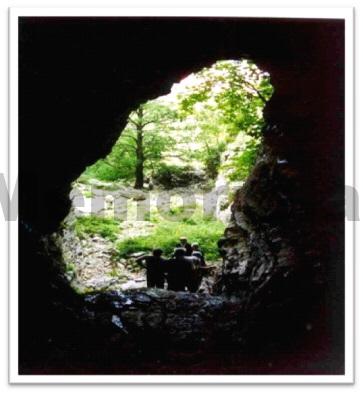
When I parted from Fran, I prepared a cave that only I knew about: I took there some pots, a small hand mill, and plenty of salt, because when we stole a ram or a billy goat, a lot of salt was needed to salt the meat. I settled in that cave and took care that no one would find me: I would go steal corn cobs from the fields and carry them to the cave, hang them in bunches to dry.
That’s how I was provided with everything: plenty of meat, plenty of corn, yes, salt, and I had also gathered plenty of firewood. There was also a little spring of water that never ran dry: it came out and sank back in right there. I lived there. Winter caught me there. You see, these last few years, winters have been very harsh and snowy.
On one such night, I had lit a good fire of oak wood inside the cave, while outside there was a foot of snow. It kept snowing and the north wind was blowing fiercely. By the fire I had put bread to toast and meat to roast. Then I hear footsteps approaching. Ah, I said, these partisans are the devil themselves: they want to follow tracks in the snow.
I grabbed my rifle and took off the safety: my moment of death had come. I had nowhere to flee: I would have to die there like a man, whether I wanted to or not. But the footsteps that entered the cave were not of a man: a wolf appeared. Come on, come on, I had to deal with this too. If I shot the wolf, the partisans would hear. I waited, ready. When the wolf saw the fire, it stopped.
It looked for a long, long time: we stared eye to eye; I felt strong: I had the fire in the middle and the rifle in my hand. The wolf lay down on its belly. It stayed like that for a few minutes, then got up, took a few steps forward, closer to the fire. It lay on its belly and lowered its head, as if to sleep. I kept guard there, with the rifle raised. But the wolf would sometimes open its eyes, and then close them again. When it opened them, I was ready and threw it a piece of warm bread. It got up, approached, sniffed it, and backed away.
Only then did I remember that wolves don’t eat bread. I threw it a piece of cooked meat. It got up, approached, and devoured it like a wolf. I threw it the other piece I had for myself; it devoured that too. It came about three steps from the fire, lay down on the ground, and settled down to sleep. It slept peacefully all through the long night, while I kept guard, rifle in hand, without closing an eye. Can you trust a wolf?! Luckily, at daybreak, the wolf left. I thanked God for saving me from it, and then I fell asleep: I was exhausted for sleep.
I woke up late in the afternoon; something was moving in the cave. I took my rifle and looked. I saw that wolf dragging a kid by the leg. When it reached the middle of the cave, it dropped it and ran away. Then quickly, I took out my sharp knife, skinned it, cut it up, salted it, and hung it to dry in the smoke. I had longed for fresh meat, so I put a good piece on the fire to roast.
But after dark, the wolf returned to the cave. It ate whatever it found on the ground. It came and lay down near the fire like the first night. When I had eaten the roasted meat, most of it, I threw the rest to it: it jumped up quickly, not only ate the meat, but tried to swallow the bones as well, like a dog. It really had an appetite. It was the first time in my life I had stayed so close to a wolf. After eating, it lay down by the fire and truly slept. I stayed awake until late: it was a wolf, could it be trusted? But at some point, sleep overtook me, with the rifle in my hand.
The next evening, the wolf came again and ate the roasted meat with great relish, and as it sank its teeth in, it looked like a dog. On the third day, it brought another fine kid into the cave. The wolf and I became friends and companions. Week after week, often twice a week, it would bring me a kid or a lamb, and sometimes even rams and billy goats.
We spent the winter together, beautifully. When spring and summer came, it was there, but it no longer approached the fire; it stayed at the entrance of the cave. I said to myself: is this a real wolf, or some dog that Saint Martin and Saint Roch have sent me?! We formed a strange friendship, but we never approached each other to pet one another.
Thus we continued for about ten months. The arrival of autumn was being felt, with rough storms. I heard a rifle crack in the mountain. Something also cracked in my heart. I felt a worry. Could it be – I said to myself – they killed my wolf?! The wolf did not return to the cave that night. I slept little, because I was very worried. Nor did the wolf appear the next day.
I decided to go out and look for it. But, leaving the cave, where would I look for a wolf in the mountains?! I could not stay alone any longer, without my wolf. I decided: if they have killed my wolf, I will surrender. I set out to look for a house or a shepherd’s hut. I had been cut off from people for two years and now I was living with a wolf.
I asked him:
– “Have you killed a wolf these past few days?”
– “What do you mean by those words?”
– “I mean: did you or someone close to you, kill a wolf?”
– “What do you call a wolf?”
– “A wolf. The mountain wolf.”
– “A wolf?! That word is suspicious?”
– “Suspicious how?! A wolf is a wolf, the one that attacks the flocks of sheep and goats, scatters them and eats them.”
He looked at the rifle I had on my shoulder, but it wasn’t clear to him who I was: either a fugitive, or a spy of the Sigurimi hunting fugitives. That’s why he doubted the word “wolf,” since both sides used it for their enemy.
– “I want to know,” I said, “whether in these two or three days, a wolf that eats flocks has been killed?”
– “A wolf, a real wolf?”
– “Yes, a wolf, on four legs.”
– “As far as I know, not around these houses, no, because I would have heard. Anyway, over on that slope there are some shepherds in huts; should I call them?”
– “Yes, call them.”
Then he put his hands around his mouth and shouted as loud as he could:
– “Ooo o o you shepherds of Gallata, are you there hey..e..e”! – he shouted three times. From the other slope of the mountain, an echo came:
– “What do you say hey..e..e”?!
– “O..o o o I’ve come, hey…” – then he turned to me and said – “come, let’s go, because these are not things for everyone to hear.”
I said to him:
– “I’m not coming with you: go alone and ask them: did they kill a wolf these two or three days? I’ll wait for you here.”
He said to me:
– “Do you know that going there and coming back takes two or three hours?”
– “I’ll wait, don’t worry.”
He set off. On the slope across the valley, the tinkling of goats’ bells and the clappers of sheep could be heard. The shepherd’s flute and a song over the shoulder could also be heard. I watched the flocks slowly descending into the valley: beautiful life, free life, not like that of the cave wolf.
After a few hours he returned and said:
– “Yes, my friend, indeed, three days ago they killed a wolf. In fact, they told me it was the most dangerous wolf of those mountains that had done great damage. But how do you know about these things?”
– “Me?! Because I was the shepherd of the wolf!”
– “What, the devil’s shepherd?”
– “Come on… you don’t know anything: he was more loyal than any man.
Listen,” I said to that man, “you don’t know me, and I don’t know you. I am a komit (guerrilla). I escaped a few years ago. I have lived with this wolf for almost ten months. Now that he is no more, I must surrender. Take me to the nearest post of the Partisan Pursuit Force; do you know where it is?”
– “But who are you?”
– “Don’t ask me. It’s better for you and for me that we don’t know each other. I went to the mountains only to save my life, not to fight anyone.”
– “I don’t have any connection with the partisans either,” he said. “I’m afraid to surrender you to them, because otherwise they might say to me: ‘How long did you keep him?’ and ‘What connections did you have?’ So don’t get me into those things. You want to surrender? Surrender! But I won’t present you. I can’t.”
– “Why can’t you?! You’ll earn points. They’ll call you a good patriot.”
– “No, I don’t want a reward from anyone: I don’t want my name to come up, either for good or for bad. Please don’t tell anyone that we met. I will accompany you until you see the partisan command in front of you; then it’s your business: surrender if you want, don’t if you don’t; don’t involve me, for good or for ill. Do as you like, we have nothing between us.”
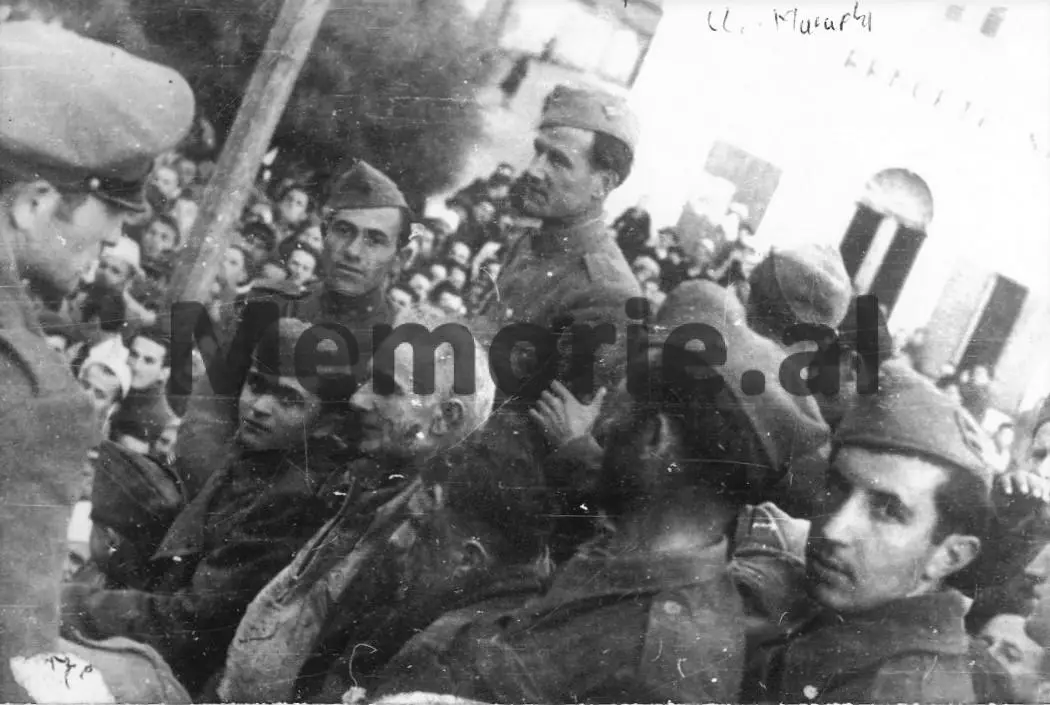
When I surrendered, the interrogation began immediately: Where did you stay? Who did you stay with in the mountains? Who supplied you with food? What organizational and political connections did you have? And a hundred thousand useless questions. I told the truth: that I had not gone to the mountains out of bravery, but out of fear, to save myself; that I had stayed with the wolf for such a long time, etc. They did not believe me and kept saying:
– “Do you think we are children, that you can fool us with fairy tales?”
But since I had no other words and wanted the matter to come to light, I told them that in that cave I had reserve food for another six months, but I had surrendered because they had killed my wolf, my friend. One day, they accompanied me with about six partisans and two officers. I had to lead them to the cave. They were amazed when they saw with their own eyes those hanging ears of corn all that dried and salted meat, and all those skins and tails.
They took me back for interrogation. That interrogator said to me: Comrades have confirmed your words. Nevertheless, I do not believe you, and you should know that you will go to trial and be sentenced to 20 years formally, because for you, the real interrogation begins now, since we have never had your name on our lists anywhere.
After I was sentenced, they brought me here like the others. I was dumbfounded. What was this?! A fairy tale, a miracle, or a story?! Call it what you will. But the life I lived later has proven to me that animals have a sense of love, more than many people of this age that they call “the peak of progress”!
I had only a few months left to complete my sentence, but I was so worried that I doubted whether I would reach that day of release. An idea came to me: to play a trick. I had noticed that those military men in charge of keeping the registers and records were so ignorant that they could not distinguish the months: December from October.
It was the rule that two months before the release date, you had to submit a request to the prison command where you were held. So I wrote a request to the Shkodër Prison, saying that on the 14th of the tenth month (October) I completed my sentence and that I should be released, regardless of the fact that my date was actually December 14th. I read the request to Father Donat and Father Aleks. They both yelled at me. They said: please, don’t play tricks, they’ll kill you. But I went ahead with the trick. I sent the letter. I waited for an answer. Nothing. My anguish increased daily. How could it not?! I could not be worse off. Things had gotten so bad: the Command’s treatment had become even harsher; people were drained of strength; the Tents of Death had multiplied tenfold; the wards were full of sick people. A large part was on crutches, with swollen faces.
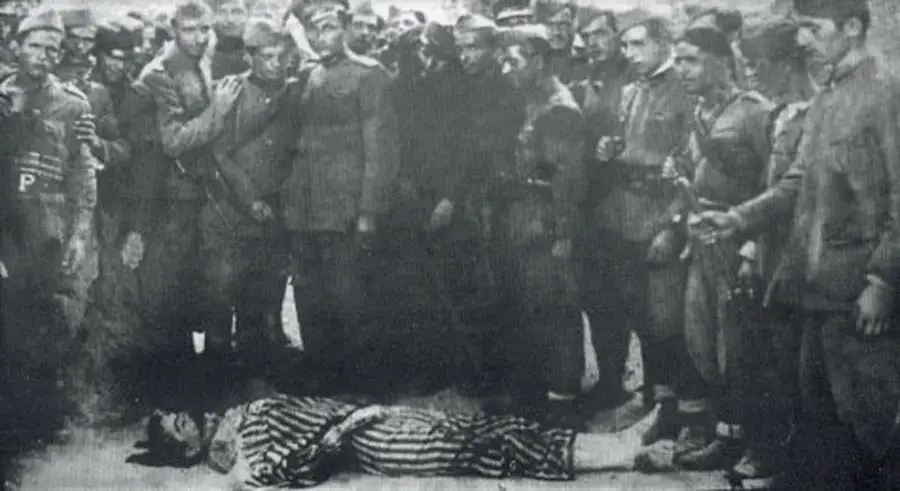
Thus, barely alive, they would drag them out to work. Every morning there was a furious terror. It was true that after the conviction of Koçi Xoxe, the stick and beatings had been forbidden, but if, for the sake of it, some shovel handle had been used excessively, it had to be tested – could it break on a man’s back?
The filth, the misery, the flies, the lice, the stench of the swamp, the brackish and musty water, even with worms; the bread – you couldn’t eat it; from the moment you took it in your hand, there was a risk it would be stolen, day and night. Those group meetings and conversations had ended. You would long to see a friend of yours, and you didn’t know where to find him.
One day, a young man was saying to me:
– “Do you know the Dunavec canal?”
– “Of course I know it. I fell a martyr there.”
– “Ooh, truly, you didn’t hear about working there; we were completely destroyed. As much as we complained: ‘These are the father of lies.’ There, near Dunavec, is Vloçisht. Last year, I worked there. It was the most terrible camp imaginable. So many people died under the tortures of work!
I saw with my own eyes the Catholic priest, Papa Josif Papamihali, when they buried him alive in mud, right in the middle of the canal. Many despaired and could no longer endure death. My comrades, before sleeping, would come to bid farewell, to ask for forgiveness, and would say: ‘See you in the next life!’ and would throw themselves onto the barbed wire to be shot. But this camp too is taking on the same appearance: not much different. I fear that soon, even here, the throwing onto the wires will begin. Life can no longer be endured this way.”
I saw that he was desperate. I tried to give him courage. But what could I give him: I was bad off myself, only hoping for an answer. No answer came. Father Donati had deteriorated so badly that he could barely stand. He wrote a letter to Mehmet Shehu, who had taken over the Ministry of the Interior, asking him to be transferred to Burrel.
– “What,” I said to him, “to Burrel?! Do you know that they say there: Burrel, you go in and don’t come out?”
“They told me that am what they say about that place, while here, nothing is written, but people die daily, more than there.”
After some time, Mehmet Shehu granted his request. But I received no answer from Shkodër. Then I threw my last stone. With a letter, I announced that on the 14th of the tenth month (October) I had my release day! / Memorie.al