By Ali Buzra
Part Fifteen
– LIFE UNDER PRESSURE AND SUFFERING –
(ASSESSMENTS, COMMENTS, NARRATIVES)
Memorie.al / At the request and wish of the author, Ali Buzra, as his first editor and reader, I will briefly share with you what I experienced in this encounter with this book, which is his second (after the book “Gizaveshi në vite”) and which naturally continues his writing style. The sincerity and frankness of the narrative, the simple, unmodified language, the accuracy and precision of the episodes, or the lack of a subsequent, intentional, elaborative imagination or its non-utilization, I believe have served the author positively, who comes to the reader in his original form, inviting us to at least get to know unknown human fates and pains, whether by chance or not, leaving us to reflect as a starting point for raising awareness towards a catharsis so necessary for the Albanian conscience.
Bedri Kaza
Continued from the previous issue
CHAPTER III
THE DOBRA FAMILY IN LETËM, BETWEEN PARTISANS AND NATIONALISTS, EXPERIENCES SUFFERING AND COMMUNIST PERSECUTION
3.1 Who was Islam Selim Dobra?
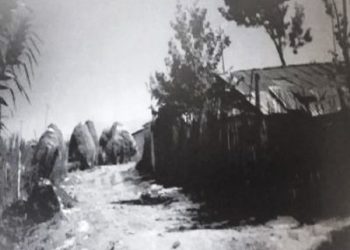
In the “Shpatadoll” neighborhood of the village of Letëm, there were three families of the Dobra clan. They, like the other villagers, were engaged in agriculture and livestock farming. The Dobra clan was known for its patriotic and freedom-loving sentiments. Old Selim Dobra was a voluntary participant in the Battle of Shkodër in 1913. There he was wounded, and under unknown circumstances, he did not return home with the others.
His eldest son, Beqir, 23 years old, together with his cousin, Veli Dobra, set off for Shkodër to find his father. At a time when Shkodër had been handed over to Montenegrin forces by Esad Pasha Toptani, through oral information they managed to obtain, they crossed the border and entered the territory of Montenegro. There, they entered a military barracks where there were many wounded. They checked inside but did not recognize him. When they went out the door, they called him out loudly by name. He answered and stood up.
He was weakened by the wound, extremely fatigued, and with an unshaven beard. They took him, placed him on a horse-drawn cart, and arrived in Elbasan. There they treated him, and later brought him home. Under the family’s care, Selim’s health improved. He lived for another 7-8 years and passed away around his sixties, leaving behind 6 children: 2 daughters and 4 sons: Beqir, Islam, Ibrahim, and Haxhi.
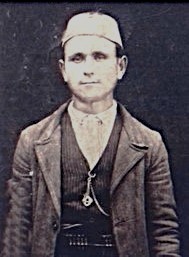
Islam Dobra was Selim’s second son. He was born in 1902. Selim himself, but also his eldest son, Beqir, showed special care for Islam. From childhood, the latter stood out for his intelligence and showed particular interest and attention in learning everything he heard from adults. Around 1910-11, they sent him to the village’s mejtepe (religious primary school) near the mosque, where the imam, originally from Dibra e Vogël, taught religion to the children. He attended the mejtepe for three years, progressing significantly in reading and learning the Quran. There, Islam also learned some Albanian.
Later, in an autodidactic way, he expanded his knowledge of reading and writing the Albanian language. Afterwards, together with his other brothers, he dedicated himself to the family’s agricultural and livestock work. During Zog’s time, he was mobilized as a soldier in Tirana. There, his liveliness and special abilities caught the attention of the command. Because of this, the command of the military unit at the time informed the Ministry of Defense. The latter granted him a scholarship to study in Italy, where Islam studied for two years in the military field, in gendarmerie.
When he returned to Albania, he was appointed as an officer in the Albanian army. During his service in the Army of the Albanian Kingdom, Islam attained the rank of “Major” and served in the gendarmerie forces in Tirana, as head of recruitment in Berat, and as deputy commander of the gendarmerie for the district of Elbasan, while the commander was Beqir Sina from Dibra. The circumstances are not very clear, but the fact is that Islam Dobra participated in the Fier Uprising in 1935. After its failure, he was discharged. It is said that the Queen Mother intervened with her son, Ahmet Zogu, and he was reinstated in his position.
Her intervention is related to the fact that the ancestors of the Dobra clan came from the village of Burgajet in Mat, and had friendly relations with the Zogolli family. After being reinstated, Islam Dobra remained one of the King’s most loyal officers. The fascist occupation of the country found him serving in Tirana. In the conditions of disorientation and temporary demobilization of the Albanian Army, Islam returned home to his family.
Following the call made by the Italian occupation command, like many other military personnel, he returned to duty in the Albanian army, now under the conditions of the fascist occupation. From the narratives of his son, Shefqet, it appears that for some time he kept Qerim Qoshi from Zgosht as his adjutant. During later conversations, the latter testified that Islam, in many cases, released arrested partisans from prison, both from the Italian *questura* (police headquarters) and later also from the German one.
After Italy’s capitulation, he remained an officer in the Albanian gendarmerie even during the German occupation, mainly in the district of Elbasan. Relatives say that for some time in Elbasan, he was with Xhevdet Blloshmi. Islam Dobra maintained connections with the nationalist leaders of Librazhd, such as Azis Biçaku, Nezir Muzhaqi, Haki Blloshmi, Ali Cekani, as well as with many leaders of Dibra. Meanwhile, as a person with nationalist and Zogist views, he maintained connections with the Royal family, being ready, at the appropriate moment, to contribute to the return of King Zog.
Islam Dobra was a staunch anti-communist. This is clearly expressed in the conversation he had, lastly, in the autumn of 1944, with Kadri Hoxha, whom he knew and was friends with, but with whom they shared different stances. Their conversation, which was attended by Islam’s two brothers, has been described in his book titled “Bashkë-udhëtarët” (The Fellow Travelers) by his son Shefqeti. In the autumn of 1944, Kadri Hoxha passes through the village of Letëm with the partisan brigade and stops to have coffee at Islam Dobra’s house. Among other things, their conversation continues:
– “Lam, I’m making a final appeal to you, there’s no more time to lose. We have won the war, come with me before it’s too late,” Kadri tells him.
– “Nevertheless, I haven’t changed my mind. Our thoughts about the future will remain what they were. Your victory saddens me,” Islam replies.
– “Whatever you think, we won. Come on, you have to decide, before it’s too late.”
– “You won, not those boys who follow you!”
– “We and all the people.”
– “You truly dream of the best, but night dreams disappoint you in the morning. Becoming a guarantor is a heavy burden. I believe in you, but I know well that where you belong, no one cares about a given word of honor. Better that the good memories between us remain, and each bears their own fault.”
– “But you have saved our comrades; otherwise they wouldn’t be among us today.”
– “They were our boys, for us it didn’t matter who they were with or what they were, I felt it my duty to save them from the hands of the Germans; you do the same for those who didn’t accept the star on their forehead!”
– “Justice will not be lacking.”
– “You won’t be able to protect me, perhaps… not even yourself! I don’t wish it for you, but I believe that… anything can happen with you people!”
– “How can you think such a thing with the contribution I have given…?”
– “Everything can be forgotten; may God grant that your contribution is valued…!”
– “I made the appeal with all my heart, you’ve spoiled my mood.”
– “I don’t doubt that, but… reasons will be found to charge me with guilt. It’s enough that we didn’t accept the star on our forehead, to be called guilty! Nevertheless, there’s time for good things, let’s wait, maybe it will be as you say.”
– “Well…, what do you intend to do, o Islam, since…?”
– “If you leave me the land, I’ll work it. Better to have my hands with the soil of the field than…, until now I’ve kept them clean. My conscience doesn’t kill me.”
– “I’m sorry, but you are prejudging us…!”
– “But the homeland begins in the yard of the house, if it is touched…, and I have no doubt that it will be touched, and you, then you will fall out among yourselves.”
– “I’m sorry, but I’ll say it again: you haven’t understood us!”
– “We are friends, I have faith in you, but what if I am gnawed by doubt that…!”
– “You doubt me?”
– “Never! I doubt what you believe in, that will be the worst of the worst!”
– “This thing will never happen with us, we fought together, we will all enjoy it together,” said Kadri.
With these words they parted, embracing with a feigned smile.
3.2 Islam Dobra chooses the path of escape. Families under violence and terror.
The winter of 1944-‘45 was harsh. The country had been liberated from foreign occupiers. In Kosovo, Serbian forces began its re-occupation, using disarmament as a pretext. But in Albania, what was happening? It was almost the same ominous scenario. Partisan brigades spread throughout the country, and in cooperation with the National Liberation Councils, the disarmament of the population began.
In fact, in Albania too, in a way, its re-occupation began, no longer by foreign forces, but by the victorious forces of the war, which in terms of methods and brutality they used, were no different from the occupying ones. The only difference was that Albanians fought Albanians, with unprecedented ferocity, which had never occurred on this scale throughout the centuries-long history of our people. They fought not only the “enemy” or collaborators with the occupier, but also the elderly, women, and children in the cradle.
As we emphasized above, nationalist elements, key figures throughout the country, which were not integrated with the National Liberation Front, were pursued relentlessly. Those who surrendered were shot, or sentenced to severe imprisonments. The majority chose the path of escape, to avoid falling into the hands of the communists. Thus did the former officer of the Albanian Kingdom, Islam Biçaku (sic – likely a typo for Dobra).
He was now 43 years old. His wife, Xhemilja, with their three children; 7-year-old Hatixhe, 13-year-old Muhamet, and little 3-year-old Shefqet, lived in the extended family of Beqir Dobra, who was the eldest brother. Their family with four brothers, all married, with nephews and nieces, remained united. Of the seven adult men in the family, three were partisans: Haxhi, and Beqir’s two sons, Azis and Emin.
They were mobilized in the autumn of 1944, with Islam’s knowledge. The latter, thinking about later circumstances, told them to go, so that the families would not suffer the consequences. In the winter of 1944, the houses of Azis Biçaku, who had fled with his son, were burned. Islam Dobra’s house began to be heavily guarded night and day; meanwhile a military unit called the “Battalion of Revenge” was also operating.
From the chilling memories of the survivors, it is recounted that, on a cold winter midnight, when all family members were asleep, they banged on the large gate door with their rifle butts, shouting to open the door. They forcefully brought all family members outside the house, into the snow and cold. The partisans went inside to check for weapons and surplus grain that had to be handed over, while it was suspected that Islam might be in the house. After the search, they took one brother, Ibrahim, with them.
The next day, the drum was beaten, announcing a meeting, while a messenger went from neighborhood to neighborhood notifying the heads of households to gather in the village center, where the mosque and school were located. In one of the school classrooms, the “trial” of the arrested was being held. The eldest brother, Beqir, went to the meeting, looking among the people for his brother Ibrahim, but he didn’t see him anywhere. The battalion commander, known to the villagers, was a person with no intellectual level whatsoever, but who had been given free rein to “judge” as he pleased. They had brought Medi Cani, from Borova, to Letëm, his hands tied with rope, and they executed him by firing squad.
On this same day, they executed Ahmet Hoxha, who had lived together with Azis Biçaku, working as his cheesemaker/dairyman. Ahmet was elderly. He had no children, only his wife, also elderly. The third to be tried was Azis Kushi, sentenced to death by firing squad. He was a simple man, not involved in village affairs or politics, and had a brother and a cousin who were partisans.
After them, Ibrahim Dobra was called for “trial”. The communication of that day between Ibrahim and the partisan commander has been published in the book “Bashkë-udhëtarët”, authored by Ibrahim’s nephew, Islam Dobra’s son, Shefqet. We present it, taken from the original:
– “Ibrahim,” the commander addressed him. “From you I want a machine gun, rifles, pistols, ammunition for all these, and… as an officer’s household, you must also have heavy weapons, the state needs them now. When will you bring them?”
– “Mr. Commander, my brother was an officer, but we don’t have such weapons, we didn’t need them. We had five rifles that are how many you have registered, three were taken by my brother and two nephews when they became partisans, one was taken by the person who had brought it, one I handed over, and we don’t have any others. My house has been searched many times, even last night it was searched, if there were any they would have been found.”
– “And Islam, when will you bring him for the people’s justice to judge him? Huh?”
– “I don’t know where he is, if he were around here, the Pursuit Forces would have caught him.”
– “We want you to bring him, or else…! Do you think we don’t know that you meet him; where does he find food?”
– “I don’t know and I don’t send him food!”
– “Is that so? Death by firing squad,” ordered the commander.
After him, death by firing squad was also given for the other two arrested, Destan Dobra and Jonuz Biçaku.
In these tragic moments for the arrested men, and not only for them but for the whole village, Beg Balla from Orenja arrived. They greeted each other, but the commander received him coldly. When he saw the bound men, who were about to be taken behind the school walls for execution, Beg asked: “And these?” – “The trial has sentenced them to death by firing squad,” the commander replied. When he looked a second time, Beg recognized Ibrahim, Destan, and Jonuz Biçaku.
According to the version of the book’s author, Shefqet Dobra, who heard the explanations of Ibrahim Dobra, the latter, together with two of his fellow villagers, had enabled Beg Balla to be saved from two Germans who were accompanying him on the road to Librazhd. Nevertheless, since there are other versions of how Beg Balla escaped execution, this remains one of them. In this specific case, it was Beg Balla who intervened to cancel the execution of those young men, where Ibrahim was only 36 years old. On that same day, Sali Burufi was also arrested.
During the winter, Islam Dobra’s house was not only guarded, but searches were also conducted at night. On one occasion, at dawn, the family members of the other two Dobra houses in Shpatadoll were also searched and brought outside. Islam’s two brothers, Beqir and Ibrahim, were tied with ropes to a tree, back to back. Likewise, the neighbors Veli and Hasan, and Zeqir and Demir, were also tied.
Finally, they called Abedin, Beqir’s son, and Muhamet, Islam’s son. When they received no answer about where Islam was, they also tied these two young boys, who were 15 and 13 years old. During the day, they kept the men and boys tied up like that, under the snowfall that fell incessantly.
In his notes, Shefqet writes that the men’s white felt caps had fallen off and snow had stuck to their heads, while Abedin and Muhamet’s lips were chapped from the cold, and their heads hung down. The women and children were left free, but were not allowed inside the houses. At midday, they took the children and brought them inside by the fire, treating them kindly to get them to tell if Islam came home, but none of the children opened their mouths. / Memorie.al
To be continued in the next issue