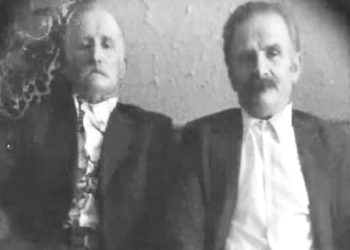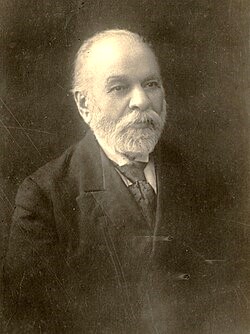
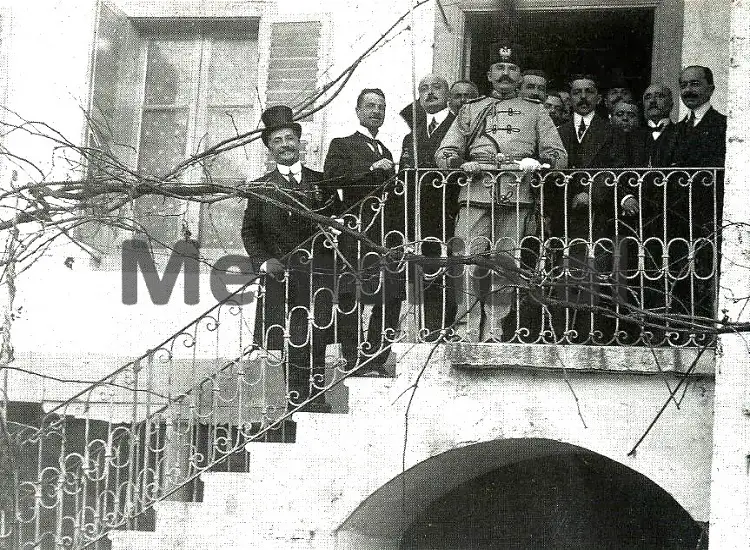
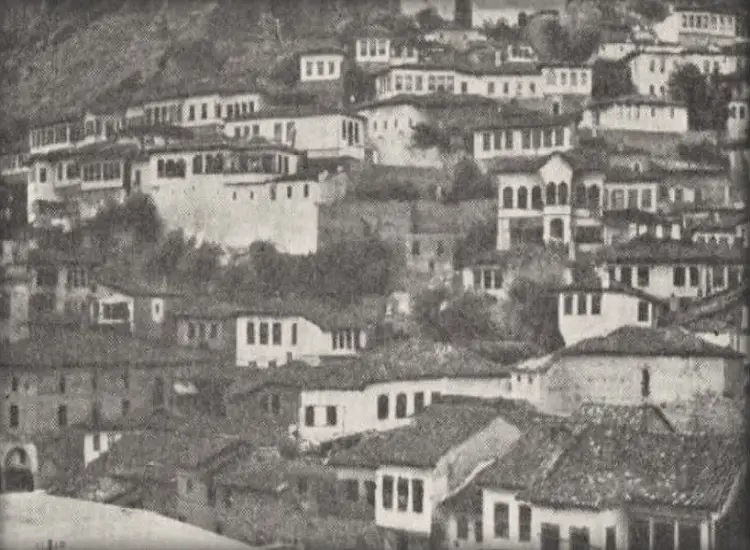
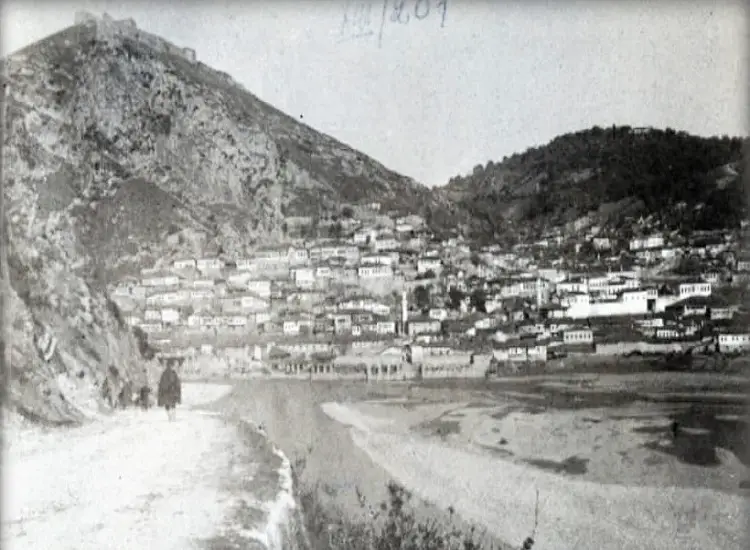
Memorie.al / Aziz Vrioni were born in 1859 in Berat, where he received his first lessons. He completed his further education in Turkey. There, he also attended the Faculty of Economics at the University of Istanbul, graduating from the “finance branch.” Aziz descends from the famous Vrioni family, originally from the village of Vrion near Berat – a family of major landowners in the areas around Berat and in the Myzeqe region, well-known during the Ottoman occupation. While in Turkey, he had connections with many patriots and dedicated himself to the Albanian national cause. Aziz Pasha Vrioni was among the politicians, diplomats, and state ministers among Albanians before the twentieth century.
On August 10, 1898, under the influence of the prominent patriot Mehmet Ali Pasha Vrioni, a member of the “Istanbul Committee,” the “Bashkimi” (Unity) association was established in Berat as a branch of the Istanbul committee, with Aziz Pasha Vrioni as chairman and two other members of the Vrioni family, namely Nyzhet Bey Vrioni and Islam Bey Vrioni, as founding members.
For the values he displayed and the patriotism he showed, the Kaza (district) of Berat entrusted Aziz Pasha Vrioni with the mandate of deputy in the Turkish parliament for the years 1908-1912. In the diary of Babë Dudë Karbunara, it is noted that on Sunday, November 16, 1908: “Aziz Pasha Efendi Vrioni left for Istanbul as a deputy. He also took Dhimitër Llavda with him…”! Aziz Pasha Vrioni was the father-in-law of Hadi Pasha, who viewed the Albanian national movements with special sympathy.
On January 24, 1910, as a supporter of the Albanian language, he was among the deputies of the Turkish parliament who signed the petition for the Albanian alphabet, along with deputies: Ismail Qemal Vlora, Esat Tiranasi, Mehmed Nexhip Mitrovica, Hasan Prishtina, Shahin Kolonja, Mufid Gjirokastra, Gani Frashëri, Ali Hajdari, and Hamid Margëlliçi. According to the memoirs of Kristo Meksi, he is evidenced to have been a participant in the Kosovo uprising in 1911: “I spent most of my time in discussions and assemblies with Mr. Ismail Qemali, Aziz Pasha Vrioni, and Gani Bey Frashëri, as I happened to stay in the same hotel where they stayed…”!
After consultations held between Ismail Qemali and Hasan Prishtina on January 12, 1912, it was decided to hold a meeting of a group of personalities from Albanian political life. The meeting took place in mid-January, under the chairmanship of Ismail Qemali, at the house of Syrja Vlora in the “Taksim” district of Istanbul. In addition to Ismail Qemali, Hasan Prishtina, and Syrja Vlora, participants included Myfid Libohova, Esat Toptani, Aziz Vrioni, Bedri Pejani, Mustafa Kruja, and others. The “Taksim” meeting reaffirmed the conclusion that Albanians, in order to secure their national and political rights, had no other way left except for the organization of a general uprising.
Organizational aspects of the armed movement in Albania were also discussed there. A special role, especially at the beginning of the military actions to be undertaken the following spring, was assigned to Kosovo. The uprising would extend to other parts of the country; however, it would be Kosovo that would bear the main weight in the military sense. Hasan Prishtina took upon himself the organization of the insurgent forces in northeastern Albania. Esat Toptani promised to deal with the organization of the uprising in Central Albania and Mirdita. Myfit Libohova, Aziz Vrioni, and Syrja Vlora pledged to raise the insurgent bands (çetat) of the South.
Aziz Vrioni was in the group of patriots who pledged to revolt together at the Assembly of “Taksim” in Istanbul, Turkey, for a general Albanian uprising (Ismail Qemali Bey Vlora, Mufit Libohova, Syrja Bey Vlora, Hasan Prishtina, etc., who according to researcher Nexhmedin Spahiu, did not keep their word and did not start the uprising). Aziz Vrioni had extensive correspondence with Aqif Pasha Biçaku and Shefqet Vërlaci of Elbasan on the eve of the declaration of independence regarding the appointment of delegates and rapid military developments.
According to relatives of the Vrioni genealogical tree, on November 20, 1912, upon receiving the telegram from Elmaz Kanina regarding the arrival of Ismail Bey, the elite of Berat gathered under the leadership of Aziz Pasha, awaiting reports on the fate of Albania, and appointed Qemal Bey Karaosmani as delegate. It was Karaosmani himself who specified that: “After a few days, with the notification that Bektash Cakrani sent to Aziz Pasha, which simultaneously included a request for help in escorting him to Vlora, we gathered at the house of the late Aziz Pasha and discussed the matter of who should go to meet Ismail Qemal Bey and escort him to Vlora.”
According to the memoirs of Qemal Karaosmani, a delegate of the assembly in Vlora, Ismail Qemali slept one night in Aziz Pasha Vrioni’s hotel, which was located by the sea in Durrës. While Ismail Qemali continued his journey toward Vlora, again according to Qemal Karaosmani’s memoirs, Aziz Pasha sent him notice of an order from the General Commander of the Army of Janina, stating: “Capture Ismail Bey along with his companions, either alive or dead,” while simultaneously suggesting he enter the Austrian consulate to escape – news that was life-saving for Ismail Bey and the fate of Albania’s independence.
As soon as independence was declared, Aziz Vrioni congratulated Ismail Qemali: “Praying to God for the good fortune and salvation of our nationality, we express joy at the success and take the courage to present congratulations, praying for the continuation of Your Excellency’s successes.” In the fourth meeting of the Vlora assembly, on 20/3-11.1912 (December 3, 1912), he was on the list of ministers proposed by Ismail Qemali, alongside Mr. Mehmet Pasha Tetova, Mufid Bey Gjirokastra, Vehbi Efendi, Abdi Bey Toptani, and Mit’hat Bey Frashëri – a practice that was not liked and even opposed by some delegates. In the fifth meeting on December 4, he did not emerge as a winner among the names that competed.
Aziz Pasha Vrioni was appointed by Ismail Qemal Bey Vlora’s government in Vlora to the position of “Prefect” of Berat; it was during this period that he would prove himself as one of the supporting pillars of the provisional government. Implementing the instructions of the Vlora government, he took measures along with Shefqet Daiu (the latter a member of the senate) “for the protection of the country from the attacks of the invading Greek army.”
On Wednesday, September 10, 1913, Aziz Pasha of Berat appears as Minister of Finance, to whom Ismail Qemali telegraphed to appear before him regarding the problem of money that Esad Toptani had in his use in Durrës, supposedly to organize the administration, gendarmerie, and police. On Thursday, September 11, 1913, he met with Aubrey Herbert (an English MP, friend of Edith Durham, and one of the friends of Albania), who told him that if they feared Esad would take all the Vlora government’s money planned for Durrës, “send a telegram signed by Ismail Qemali and Aziz Vrioni, asking me to take charge of giving the money to Burnery to give to the poor.”
In the second half of September 1913, Ismail Qemali sent him to Durrës at the head of a commission selected as his loyalists for talks with Esad Pasha, but the meeting did not prove useful. The press of the time wrote: “We understand that Aziz Pasha Vrioni, Mufid Bey Libohova, and Petro Poga have left for Durrës, where they will come to an agreement with the leader of the movement (Esad Pasha) on the issue of changing the cabinet; we wish that this mission proves useful for the future of Albania.”
According to the memoirs of Sejfi Vllamasi, Aziz Pasha Vrioni, like many others, was tempted by the end of 1913, abandoned Ismail Qemali, and joined Esad Pasha Toptani. Sejfi wrote that: “Esad formed the government of Central Albania on October 14, 1913, with Ali Bey Zajmi (from Dibra), Isuf Bey Dibra, and Aziz Vrioni, and stabilized a regular administration.” Aziz Pasha was appointed by the International Boundary Commission as General Director of the administration of the Durrës government after Esad’s resignation, also holding the post of Director (Minister) of Finance in that cabinet for the period January 22, 1914 – March 17, 1914.
When the press announced the arrival of Prince Wied, it wrote: “From people close to Esad Toptani, he received the following evaluation: Aziz Pasha Vrioni is the successor of Esad Toptani, he is well known among Albanians as a gentleman from the greatest houses of Albania, with noble Albanian feelings…! Appreciating the good qualities of Aziz Pasha, they chose him as a representative to the Gathering of Nations in Istanbul. The Current Government of Vlora called Aziz Pasha as a minister, but when Aziz Pasha saw the evils that Ismail Qemali was doing, in his custom, he withdrew as the honorable gentleman he is, for he did not want to take upon himself the faults of others. There is no doubt that Aziz Pasha Vrioni will fulfill this time too the duties entrusted to him by the fatherland, as the tireless worker he is.”
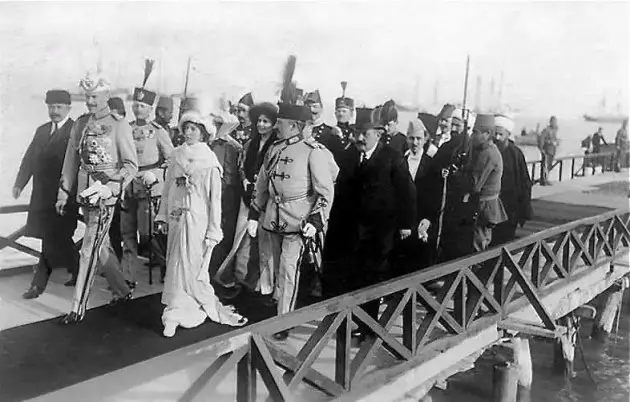
In Durrës, Prince Wied was received by the General Director of Durrës, Aziz Pasha Vrioni, and the General Director of Vlora, Fejzi Bey Alizoti. From March 17, 1914, to May 20, 1914, he was in the cabinet of Prime Minister Turhan Pasha Përmeti, which consisted of: Esat Pasha Toptani – Minister of War and Internal Affairs; Aziz Pasha Vrioni – Minister of Agriculture and Trade; Mufid Bey Libohova – Minister of Justice and Cult; Mehdi Bey Frashëri – Minister of Finance; Hasan Bey Prishtina – Minister of Post-Telegraphs; Dr. Mihal Turtulli – Minister of Education; Prenk Bib Doda – Minister of Public Works (without exercising the duty).
According to press reports, Aziz Pasha Vrioni was appointed Minister of Agriculture, Forestry, and Metals, unlike what the government announced, where trade is also mentioned. Meanwhile, this newspaper criticized the government for including in the cabinet “only pashas and beys, as well as two Orthodox members” and not appointing prominent persons, former ministers, such as Abdi Bey Toptani.
After May 20, 1914, the cabinet underwent changes due to the resignations of several ministers and was able to continue its work until September 3, 1914, when Wied left Albania. Turhan Pasha’s second cabinet included: Preng Bibë Doda – Minister of Foreign Affairs; Aqif Pasha Elbasani – Minister of Interior and War; Filip Noga – Minister of Finance; Mihal Turtulli – Minister of Education; Mit’hat Frashëri – Minister of Public Works and Post-Telegraph; Abdi Toptani – Minister of Agriculture, where it does not appear that Aziz Vrioni was appointed. Criticizing the work of previous ministers, the newspaper “Populli” wrote: “The Minister of Agriculture Aziz Pasha Vrioni sends for horses to be bought in Hungary, without considering the interests of the state.”
In June 1914, after the uprising in Central Albania had broken out, Aziz Vrioni is evidenced to have been at the head of the government forces of volunteers from Berat, Lushnja, Vlora, and Mallakastra, who mobilized to go to Durrës to liberate it from the siege of the “Ehli-Kijam” (the insurgent people). However, according to later developments, it seems this force could not pass Kavaja and returned toward Berat. According to Elsie, at that time, the political situation was grave even for the Dutch gendarmerie officers in other parts of Albania; Verhulst tried to reach Tirana from Elbasan but was captured; Reimers was also taken prisoner in Elbasan; De Iongh in Fier hoped to utilize the troops of the Vlora family and the Vrioni family in Berat, but Aziz Pasha Vrioni preferred to keep his men to protect the area from the Greeks.
Consequently, on June 11, Lushnja was easily occupied, and the rebels expanded their territories to the Devoll River. Earlier, on June 2, Elbasan, Mokra, Qukës, and Çermenika had also fallen under the occupation of the insurgent rebels, whose population, without firing a single shot, joined the rebel force, now turning against Wied’s government. Aziz Vrioni’s government force, stopped on June 17 in occupied Lushnja, assessing the situation as dangerous because Marka Gjoni and Preng Pasha suffered total defeat in the Ishëm-Shijak region and Zogu was waiting “for the meat to be cooked before joining the wedding,” deserted, leaving Lushnja to be fully occupied by rebel troops.
It is worth noting that in this instance, Aziz Vrioni was not supported by Major Besim Koka, commander of the other part of the volunteer force from Mallakastra and Vlora. Although the leader of the rebels, Arif Karbunara, promised to leave the road open for them to enter Lushnja, this force failed; Bektash Cakrani did not move from his position at the Monastery of Ardenica to make a “charge” toward Lushnja, with the exception of the force commanded by Hysni Toska, who fought heroically, even leaving dead among them Riza and Godo Hekali, both grandsons of Rrapo Hekali.
Regarding this event, Fejzi Alizoti stated: “…Aziz Pasha Vrioni, Bektash Cakrani, and Dervish Elbasani were sent to collect an army…! Bektash Cakrani with Aziz Pasha formed a force to go to Peqin and Kavaja…! Because of panic and some other things I cannot say, the army dispersed, and thus Lushnja fell into the hands of the insurgents without any opposition, as not a single rifle was fired.” In this case, Aziz Bey Vrioni was arrested, accused by Turhan Pasha Përmeti’s government of conspiring with the rebels in Lushnja. It is worth mentioning that when the rebellion was risking everything, Aziz Pasha Vrioni “requested international intervention, otherwise he said it cannot be managed,” whereas Monsignor Kaçorri opposed the intervention.
Referring to reports from the “Dielli” newspaper, Aziz Pasha was honored by Queen Sophie with a courtesy visit.
It should be clarified that foreign powers – Montenegro, Serbia, the Young Turks, France, Italy, and Greece – were interested in having turmoil in Albania to assist “Esadism” and realize the partition of Albania. The insurgent masses of Central Albania, a fanaticized pro-Islamic and pro-Esadist crowd, unfamiliar with the barbarities committed against Albanians by the Greeks and Serbo-Montenegrins, blindly obeyed ambitious people with a low political level and not very devoted to the national interest; they had thrown themselves into a fanatical war against their own country, unknowingly serving the foreigner who had left them and would continue to leave them in misery.
In reality, this piece of Albania not yet stepped upon by occupiers was divided into many small pieces of “governance.” Thus, according to Kristo Frashëri, we have ruling fragmentations: “in Orosh of Mirdita, Prenk Bib Doda governed quite independently; in Fier and Myzeqe, the ‘government’ of Aziz Pasha Vrioni ruled; in Elbasan, Aqif Pasha operated; in Lezhë and Shëngjin, Dedë Coku and Vat Marashi; in Shkodër, a detachment of international armies governed under the leadership of the English Colonel Phillips; in Himara, the Greek agent Spiro Milo governed; in Gjirokastra, the government of Georgios Zografos; in Mat, Ahmet Matja and many groups of mercenaries acting along the northeastern borders, such as Arif Hiqmeti, Jusuf Bey, etc. And this was the peak of misery and national misfortune.”
In August 1914, the rebels, under the leadership of Haxhi Demiri and the Shehu of Çorush, burned Aziz Vrioni’s palace in Berat, after evicting the women from the houses and plundering everything of value. Aziz Pasha Vrioni served as Minister of Public Works after Esad’s return to power in the period (1914-1916). In the government cabinet of 6 posts, headed by Esad Toptani and created on October 5, 1914, there were: Esad Pasha Toptani – Prime Minister; Sali Toro – Minister of Justice; Shahin Bey Dino – Minister of Internal Affairs; Nexhati Libohova (killed by Esad’s agents, replaced by Haxhi Jusuf Banka on May 27, 1915) – Minister of Finance; Aziz Vrioni – Minister of Public Works; Jusuf Dibra – Minister of War. This government lived until January 27, 1916.
Aziz Pasha Vrioni was as much of a jokester as he was strict and ironic. Eqrem Vlora recalls that one day, at a gathering, he said to his cousin, the good Abdi Bey Toptani, prompted by his enigmatic silence: “Say something, speak some words to us, O Diko, for you are driving me mad. I know you have nothing in your head, but at least take off that cloak of a sphinx, so that others too may see who you are!” Naturally, this was only one of those usual crudenesses of Aziz Pasha – extremely intelligent, though irritable – but it remains true, nevertheless, that in Albania (as in the entire East), a man of the upper classes must know how to behave and speak if he wishes to have any value in the eyes of others. He died in Berat in 1920 and was buried there. / Memorie.al