By Prof. As. Dr. Thanas L. Gjika
Part II
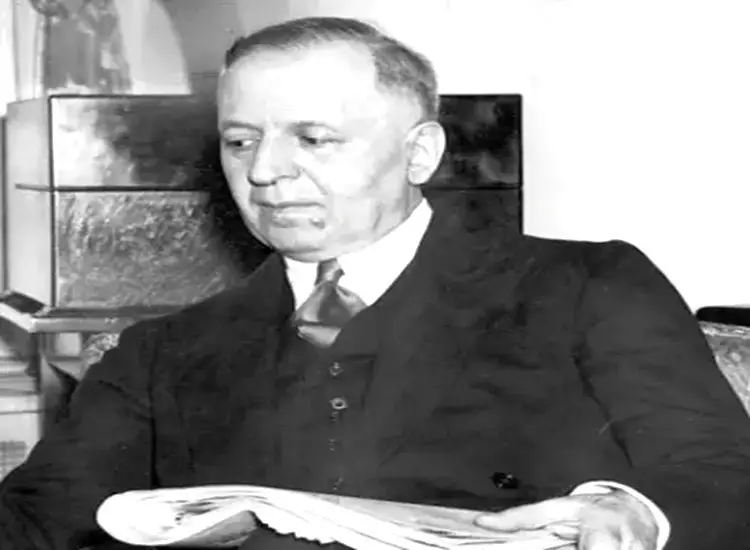
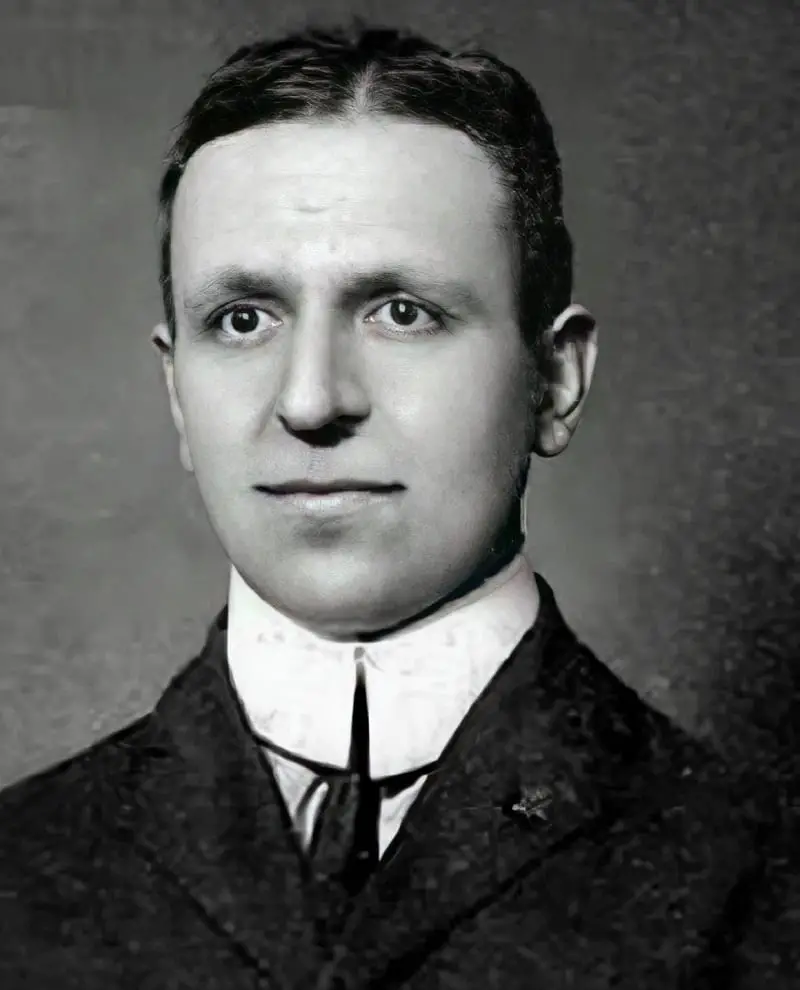
Memorie.al / In the history of the Albanian people, the act of baptism of the young Faik Bey Konica – who converted to the Roman Catholic faith under the name Faik Domenik Konica – has been neither fully understood nor properly valued. This event took place in the summer of 1895, just as he had completed his higher studies in Dijon, France, in Romance Linguistics and Philosophy. This young man received his early education in his father’s palaces in Konica, where he became acquainted with Persian and Arabian civilizations while learning Arabic, Persian, and Turkish from an educated cleric, while starting Italian with a private tutor. Seeing his exceptional intelligence, his parents were encouraged to send him to the Jesuit Saverian College in Shkodra, where he lived for two years.
Continuing from the previous issue
After 1992, the common people embarked on a path of spiritual cleansing; a process of returning to religious faith began. Churches, mosques, and tekkes were reopened, and people began to frequent them to demonstrate that they had never desired the closures and destruction of 1967.
A campaign of baptisms and re-baptisms began. Alongside the baptism of former Christians and their children, there were many conversions of former Muslim Albanians to Christianity – especially to Protestantism – but virtually no former Christian converted to Islam.
After 1992, the publication of works by Pjetër Pepa, Father Zef Pëllumbi, Lek Pervizi, etc., which described the persecution, torture, and suffering of the clergy – especially the Catholic ones during the communist regime – further strengthened the respect and love toward the Christian faith.
The talented Albanian writer, Ismail Kadare, though an atheist by religious conviction, issued a call to Albanians in 1993–‘94 from France – the same place from which Faik Konica had issued a similar call nearly a hundred years prior – to return to the faith of their ancestors by being baptized as Catholic Christians. In these new conditions, many intellectuals and ordinary people in Albania, Kosovo, and Macedonia responded to this call.
The intellectual and distinguished leader of the Albanian people in Kosovo, Dr. Ibrahim Rugova, found one of his primary inspirations for Kosovo’s independence in the life and work of the Catholic priest Pjetër Bogdani and the benevolent deeds of Mother Teresa.
Today, many young men and women who go to work or study in the Christian countries of Europe or America are being baptized as Christians, perhaps forced by specific circumstances, but also perhaps due to new religious convictions they acquire there. This phenomenon is particularly extending to children born in those countries. Apparently, parents wish for their children in these places not to be different in terms of cultural and religious formation compared to the local children.
Truthfully, this process influences the rapid assimilation of the modern Albanian diaspora; therefore, parents and the Albanian state must help the children of our new diaspora learn the Albanian language (both spoken and written) and study Albanian history and culture.
The more Albanians become cultured; the more the states where they live (Albania, Kosovo, and Macedonia) approach Europe and America; the more Albanian girls prefer to dress in miniskirts and low-cut tops; the more they participate in social, cultural, and political life – the more they, and society as a whole, distance themselves from the Muslim mindset…
In short, we can say that during the Ottoman rule, the majority of the Albanian people, influenced by the dominant Muslim mindset and the assimilatory pressures of the Greek and Serbian churches, were forced to change their faith from Christian to Muslim. At that time, a mindset was created that being Christian was not something to boast about, but rather it was better to be Muslim – to be of the same religion as the ruler.
Meanwhile, during the years of the independent Albanian state, during the dictatorship, and especially today – when the primary goal remains joining European states where Christianity prevails – willingly or unwillingly, Albanians are experiencing the process of returning to the faith of their ancestors: their re-Christianization. This is the process opened 115 years ago by the visionary twenty-year-old, Faik Konica.
By looking at the progression of the religious mindset of Albanians over these past 115 years, we can understand the direction of the next 100 years. Naturally, we do not think that the Muslim faith among Albanians will disappear, but rather that the ratio between the Muslim and Christian faiths will change.
There will always be Muslim Albanians, regardless of how many the ranks of Christians and atheists grow, due to the force of habit, various ties and interests, and the continuous interest and investment shown by certain global Muslim circles – which we hope have no ill intentions behind their investments.
For the sake of truth, it must be said that Muslim Albanians, constituting the majority of the nation, feel it is their duty to strengthen the national character of the Christian church, especially the Orthodox one. This fact was demonstrated by the energetic intervention of Uran Butka and others in 1992 during the ceremony for the appointment of the Greek Bishop Anastas Janullatos as the Archbishop of the Autocephalous Orthodox Church of Albania.
Knowing that the main part of the church is not the walls of the building but the members who live their religious life within it, we believe that if every Orthodox church in Albania has a majority of patriotic Albanian members, this majority will compel the cleric and the high-cleric to hold special masses for problems that strengthen the spiritual ties of our nation. Such masses could be held for the victims of the Albanians of Chameria, as well as for every Albanian killed unjustly today in emigration, etc. Strengthening the national and autocephalous character of our Orthodox church requires increasing the ranks of believers with patriotic Albanians. For this reason, the conversion of Muslim Albanians to Orthodoxy is an act where their patriotism can and should be manifested.
In Kosovo and Western Macedonia, if it is achieved that Orthodox churches are filled with a majority of patriotic Albanian believers, they will produce their own clergy from their ranks and begin to hold mass in the Albanian language. In this way, gradually, the Orthodox churches in these places can be re-Albanianized and return to their origins as they were before the Serbo-Bulgarian and Ottoman conquests.
Key Lessons from this Overview:
- If Albanians had valued and listened to Faik Konica and begun the process of re-Christianization during the National Awakening (Rilindja), they and their territories might have faced a better fate in 1913, the year of the border divisions.
- The progression toward Europeanization led by King Zog would have been more powerful and effective.
- The Albanian dictatorship might have been more tolerant, and the collapse of the dictatorship would have been accompanied by repentance and catharsis, perhaps as in Poland.
- Many young people today who nurture no positive feelings toward religious education and boast that they go to neither mosque nor church would have received a good religious education. They would have helped strengthen the national character of the Albanian Orthodox Church (which is taking on Greek colors) and the Albanian Mosque (which is taking on Arabic colors) – colors they did not have before.
- Transition leaders from both sides would have had a more civic education and would not have fought so fiercely among themselves for power, but would have fought for the democratization of life and the welfare of the people.
- Distinguished intellectuals like Ismail Kadare and Ibrahim Rugova would not have just made declarations about our re-Christianization but would have been baptized themselves along with their children.
- Albanians, who have been and are tolerant toward religious faith, would have embraced the process of changing religious faith faster and more massively for a better European national future had they listened to Faik Konica.
- A sincere embrace of Christianity would have helped the Albanian people free themselves from certain exaggerated feelings of egoism and “kapadaillëk” (bravado) and would have made them more tolerant and kind toward one another.
In conclusion, the change of religion has not alienated Albanians from one another, nor does it today. Religious enmity among Albanians is incited only by certain foreign chauvinistic or fundamentalist circles that do not wish our nation well, but try to turn it into “cannon fodder.”
Today, Albanians can take a second citizenship – American, Greek, Italian, German, Canadian, etc. – according to the country where they live, but they should not change their national identity, as this change has very heavy consequences that sooner or later lead to enmity with their own compatriots./ Memorie.al