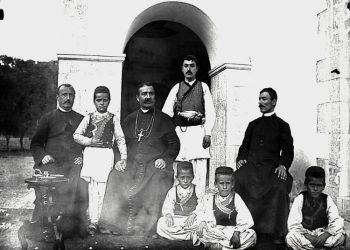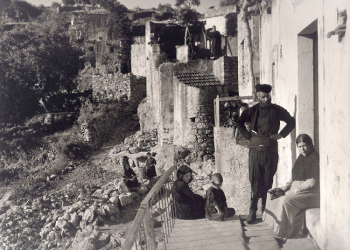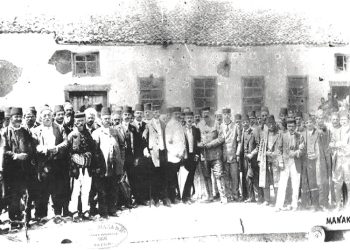


Memorie.al / In the life of the city of Shkodër, the Çoba family is among the most important names. Today, the family is almost entirely dispersed, with descendants living in Shkodër, Tirana, and abroad. This family has left its mark on the life of the ancient city, as it has produced honored figures who, through their social, economic, commercial, and political activities, have inscribed their esteemed names in the history of this country. Economists and lawyers graduated with scientific titles from Western universities, powerful merchants, ministers, deputies, mayors, art and sport enthusiasts, honored clerics, persecuted, executed, imprisoned, and interned by communism, as well as descendants who continue to be intensely involved in politics, are all part of this distinguished family.
The History of the Çoba Family
According to the most complete work published so far on the history of the city of Shkodër, “Shkodra dhe Motet” (Shkodër and the Times) by Hamdi Bushati, as well as the testimonies of one of the Çoba family members currently living in Shkodër, specifically Ndoc Karlo Çoba, the family settled in Shkodër before 1736. There is even data suggesting this family has been here since before the 17th century, ranking them among the few privileged families in the city allowed to keep altars (ltere) in separate rooms or corners of their homes.
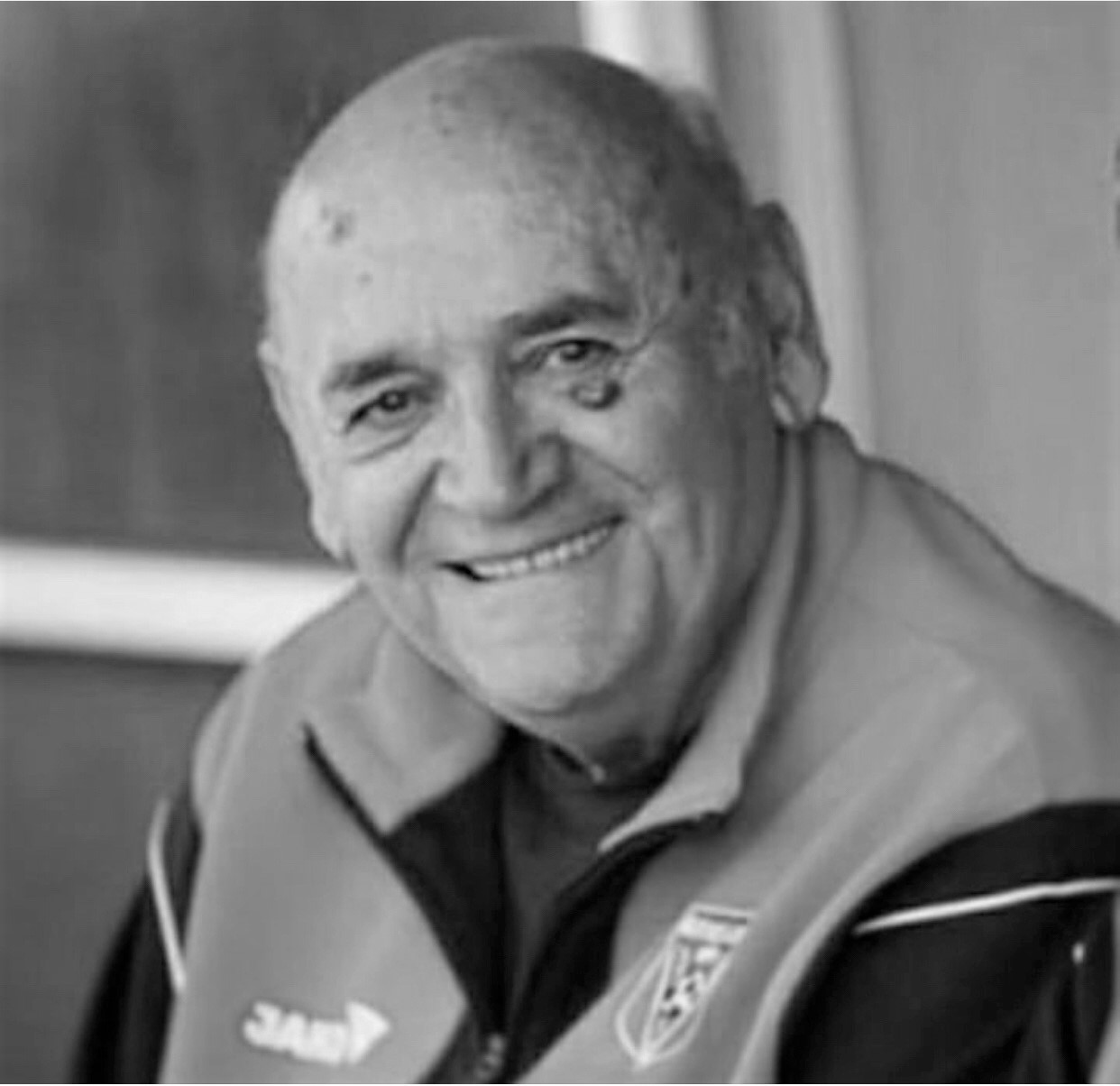
The clan originated from the village of Çobë, in Laç of Kurbin, where it is said one branch of the family still remains. The Çobaj exist in baptism records from before 1730. The first recorded head of the family in the documents and registers of the time, according to the genealogical tree currently held by the family, was Gjon (whose name is borne by one of the current heirs, a former “Vllaznia” team athlete who resides in Modena).
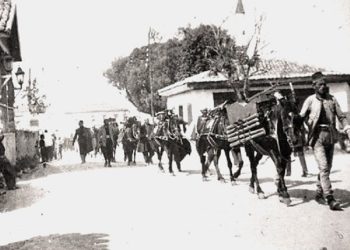
Initially, they settled in one of the main streets of the city, but they also owned properties and houses scattered throughout the city. Around the 1880s, Kolë Çoba, one of Gjon’s sons, who was a great merchant, owned a fleet of 4 ships with which he traded not only in the Mediterranean but also further afield. Indeed, during the Russo-Turkish war, two of these ships sank. He traded goods such as wool, shqemja (a plant whose skin is taken), unslaked lime, timber, etc. He was known as an art lover, and he educated his sons in the West.
The antiquity of this family extends even before the 17th century. In the diary of M. Boriçi, this family is listed as one of the most famous merchant families in the city in 1844. From the “Letters of the Çoba Brothers” (1878-1880), according to Volume III of Historical Studies, published in 1968, it appears that this family had extensive commercial activity. The branches of the family spread over the years with other heirs, most of whom inherited the names of their fathers or grandfathers, according to the custom of Catholic families in Shkodër.
The Çoba Merchants
In the chronicles of the time, the Çobaj were among the most recognized trading families in the city, who engaged in large-scale trade. With a particular type of trade, they managed to make a name and fortune. Through agents located in the main Adriatic ports, such as Venice, Trieste, Ragusa (Dubrovnik), Kotorr, Brindisi, as well as in the areas of Kosovo and Macedonia, with centers in Gjakovë, Pejë, Prizren, and Skopje, they were informed about market prices and gave instructions on buying and selling.
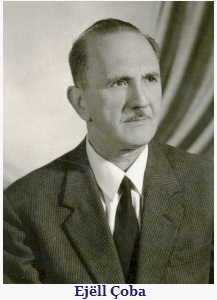
The brothers Ejll and Gaspër managed to create a trading firm. According to the researcher and historian Hamdi Bushati, the most famous was Ejll, who was not only a skilled merchant and good administrator but also engaged in other work, such as a translator for the Austro-Hungarian Consulate in Shkodër. Ejll had the fortune to be one of the few individuals decorated by the Emperor of Austro-Hungary, Franz Joseph, after 25 years of work as a translator at the consulate.
Over the years, the Çobaj created their own physiognomy, wealth, and fame, so much so that they quickly became among the foremost families in Shkodër. For a time, their firm was mainly involved in the collection, processing, and export of wool, leather, tobacco, grains, and timber, and imported essential goods and merchandise, such as salt, kerosene, industrial and food items, and haberdashery.
At the end of the 18th century and throughout the 19th century, the Bianku family, another well-known family in Shkodër as merchants and large landowners of meadows, olive groves, and vineyards, formed a joint firm with the Çoba brothers that lasted for nearly 15 years. The firm gained great fame in the production of soaps, as well as in other areas, such as the collection and production of tobacco and the export of wool. According to the data of the time, within a single year, the “Çoba-Bianku” firm produced 180 tons of soap.
Later, the firm split, and the Çobaj continued to engage in trade again. In addition, the Çobaj also took great care to expand their immovable property, as well as agricultural holdings, such as land, olive groves, and vineyards, from which they extracted grapes, rakija, and wine that they exported, but also consumed during the famous evening gatherings in Shkodër.
On the other hand, their attention also extended to residences, shops, and warehouses. Their commercial activity did not cease even at the beginning of the 20th century, although some members of the family devoted themselves to politics and official civil service in the Albanian state. Trade was continued by Pashko Çoba and his son Pjetri, a branch of this family.
The Çobaj in History
Over the years, and even centuries, this house produced many great men whose names appear prominently in the historical annals of Shkodër. From the name of Ejll Çoba (senior), Ndoc Çoba, Gjon Çoba, to the current day with one of the most engaged women in the country’s current politics, Jozefina Topalli (Çoba). The name of Ejll Çoba (senior) figures in the list of members of the Chamber of Commerce, and he was among the leaders of the Trade Chamber, while he is among the few Albanians decorated by the Emperor of Austro-Hungary, Franz Joseph.
Loro Çoba and Gaspër Çoba were part of the Cathedral Company of 1891. They were also members of the “National League” Club, created in Shkodër in 1913, to administer the city and cope with difficult situations. Gjon F. Çoba was elected a Member of Parliament in the 1922 elections and a member of the High Council of State in the years 1922-1924. A prominent personality of this family is also Ndoc Kolë Çoba.
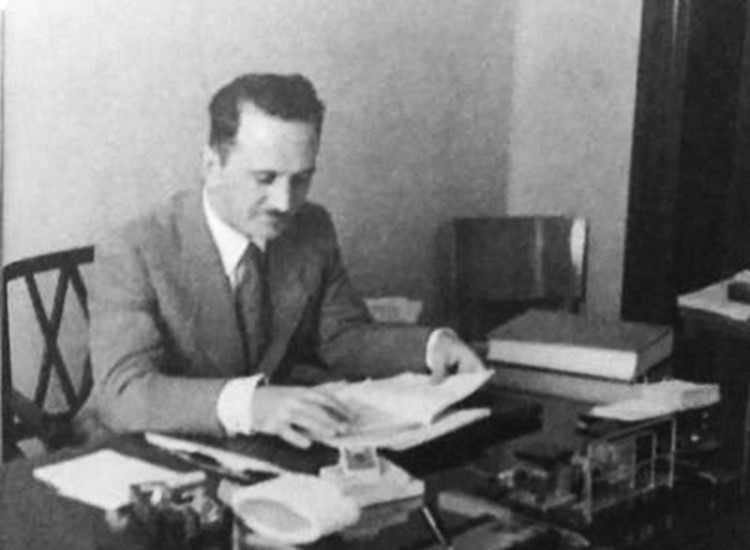
The figure of Ndoc Çoba occupies an honored place in the political and social activity of the first half of the 20th century. After completing his higher studies in economics in Venice, he became involved in the national movement. He had rich correspondence with patriots living and working in Albania and abroad and wrote many articles in the European press. In 1908, he was the Chairman of the “Albanian Language” Club, where Father Gjergj Fishta was the secretary.
In the years 1909-1910, he was the General Director of Albanian Customs, holding the degree of Doctor of Economic Sciences. In 1918, he participated in the Congress of Durrës, fighting for the protection of Albania’s political borders of 1913. He was the representative of Shkodër at the Congress of Lushnjë in 1920, and in the government that emerged from this congress, he took on the duty of Minister of Finance. At this time, he undertook financial reforms previously unknown in Albania, such as strengthening the state treasury through state loans to the public.
According to Ndoc Çoba’s grandson, who inherited his grandfather’s name and currently lives in Shkodër, a financial register notebook from this period, when Albanian finance was led by Ndoc Çoba, was preserved in their house until recently. He published the newspaper “Ora e Maleve” (The Mountain Hour). In the years 1928-1936, he was the chairman of the Shkodër Municipal Assembly. He was the Mayor of Shkodër, from 27.08.1937 until 24.06.1939. He never reconciled with the fascist occupation of Albania. Along with well-known figures of the time, such as Ymer Dishnica, Mustafa Gjinishi, etc., he organized the Conference of Pezë on September 16, 1942.
For its organization, his son Karlo Çoba, who were a Western-educated lawyer and economist working in the state administration at the time, also assisted. Ndoc Çoba was the leader of the Pezë Conference, aiming for the unification of all anti-fascist forces. Immediately after the Pezë Conference, Ndoc Çoba was interned by the Italian fascists in Ventotene, in Bergamo, Italy.
He escaped thanks to the capitulation of Italy and returned to the homeland, where he continued to work as a nationalist. Thus, he went to Zall-Herr and led the Congress of the Legality Movement. After the liberation of the country, he was arrested by the communists, despite his old age. He died from torture in the investigator’s cells in March 1945.
DOCUMENT
Minutes of the Pezë Conference
The meeting begins on Wednesday, 17. IX. 1942, at 20:00. The meeting is opened by Council member Ndoc Çoba, discussing the importance of this significant conference and our responsibilities before the Albanian people. The Flag Anthem and a moment of silence in memory of the martyrs who fell in the anti-fascist war. The agenda is set:
- Political Situation (external, internal)
- National Liberation Councils
- Youth Report
- The Council (Commission) that will draft the resolution of this conference.
The nationalist delegate R.J. (Ramazan Jarani. Our note) speaks: The Albanian people face a strong enemy. The Albanian nation is and has been poor, oppressed, without means. The weapon against the enemy is the unity of the Albanian people. We hope that this conference will be decisive for the Albanian people, like the Congress of Lushnjë. This is our thesis, so there is no contradiction with communist activity. The need for the unification of the youth and the formation of a Committee called “National Defense.” There is no beginning of revolution – we are living the revolution.
Delegate Çoba (Ndoc Çoba) speaks about national unity. The political report of the Communist Party delegate is read. The Communist Party delegate K.T. (Koço Tashko) speaks: To achieve the goal of unity, we must be clear, which is completely necessary here where there are different elements, from different political currents. For this, clarification is needed so that we can go directly into the fight against the common enemy without distinction: we are comrades in arms. Talk about the Congress of Lushnjë and the analogy of this conference with that Congress, a congress that united the brave forces. The Congress forced the Durrës Government to resign and prepared the issue of Vlora. (Taken with abbreviations from the book “When the Foundations of New Albania Were Laid” by Enver Hoxha. Tirana 1984).
Ndoc Çoba’s wife, Shaqe (Marie Çoba), was one of the women distinguished for her patriotism, the fight for the protection of territories from fragmentation, and the emancipation of the Albanian woman. Educated in Zagreb, Croatia, and in Italy, in 1920, strongly supported by her husband Ndoc, she created the committee “Gruaja Shqiptare” (Albanian Woman), where, together with other intellectual Shkodran women, they collected aid from the populace for the National Army fighting to preserve Albanian territories from fragmentation, such as the War of Koplik. Her help also extended to hospitals.
From November 1920 until July 1921, she published the magazine “Gruaja Shqiptare,” in whose nine issues the aid of Shkodran families for the freedom fighters was published, as well as other pressing issues of women’s lives were addressed, such as her role in the development and progress of society, the respect for her rights and freedoms, the education of children, especially girls, and education with national ideals and virtues of kindness, etc.
The magazine spread to Tirana and other cities in the country. Shaqe (Marije) Çoba, on 10.11.1937, reorganized women’s associations at the national level with the participation of 150 women, with the objective of fighting against old customs, illiteracy, improving women’s clothing, and protecting the health of mothers and children, etc. The Çoba family possesses documents of her activity, which were carefully preserved, even in diary form by her, until 1954, when she died, and then by her descendants.
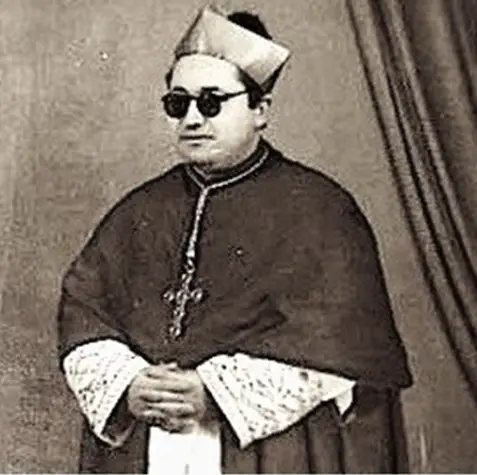
Other well-known figures of this family are Lec Çoba and Ejll Çoba (junior), Deputy Minister in the years 1933-1934. A special place in the illustrious dynasty of this family is held by Dom Ernest Çoba, known for his contribution to the priesthood. In 1951, Dom Ernest was elected parish priest of Shkodër, while in 1952, he was consecrated Bishop and continued as Ordinary of the Archdiocese of Shkodër until the suppression of the church in 1967. Precisely at the time when it was dangerous to be connected with religion in Albania, Dom Ernest carried the burden of being a cleric and the main leader of the Catholic Clergy in Shkodër.
For many years he was an intermediary and liaison between the Holy See and Albania, which would be the pretext that would lead Dom Ernest to the iron bars; he was arrested on March 18, 1967. He died in the investigator’s cells after numerous sufferings and tortures. In the book “Çinarët” (The Plane Trees), written by one of the Albanian clerics persecuted by the communist regime, Father Konrrad Gjonaj, the author states about Dom Ernest Çoba: “Bishop Ernesto Çoba took over the leadership of the Church during the darkest and most difficult time. He lived life survived, pursued, despised, as he was in a troubled environment that would never end. He maintained correct official relations with the government.
He was simple, honest, and reserved. He was arrested and tortured in prison cells until he died in the hands of his persecutors. According to the story of a radiologist at the hospital, one day two officers came to the radiology department with a sack. They opened the sack and took out a man who looked like a child with an aged face. They asked for an X-ray to be taken. The radiologist requested the name to be written at the beginning of the X-ray, and after hesitation, convinced that it was a rule that excluded no one, they revealed the name of the sick person, Ernest Çoba.”
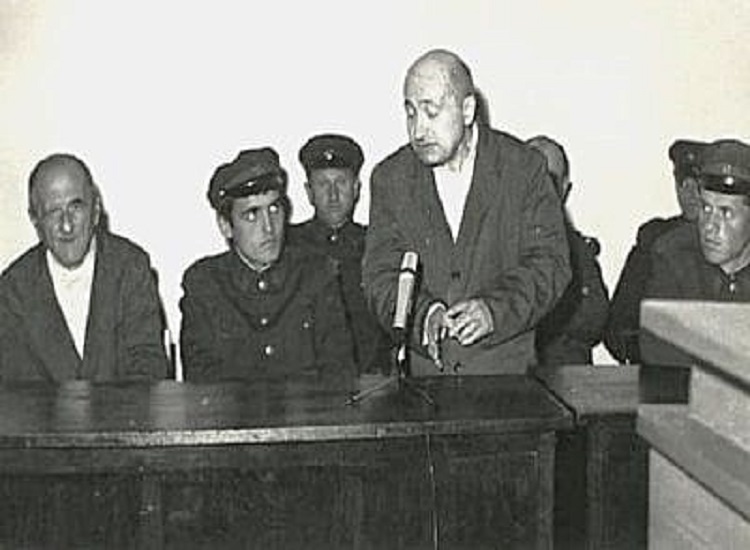
Persecution followed other members of this family after 1944. The lawyer Ejll Çoba was initially sentenced to death and then to long imprisonment. Karlo Ndoc Çoba was arrested several times and sentenced to imprisonment and five years of political internment. Extensive damage was also suffered by the Çoba properties after the communists came to power. Ndoc Çoba alone, according to his grandson with the same name, had four houses taken from him, three on “Tre Heronjt” street and one near the former “Shkodra” restaurant.
Similarly, the state took many agricultural lands, houses, and warehouses in Shkodër and Tirana, which were the property of this family. The Çobaj in Shkodër are also known for their intellectual contribution. Thus, in 1878, there was a piano in Kolë Çoba’s house in Shkodër, while his children attended higher studies in music in the conservatories of Italy. A worthy heir of the artists of this family is the well-known Shkodran conductor and composer, Zef Çoba.
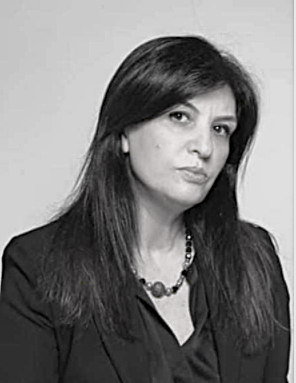
He has composed various musical genres, notably vocal compositions, as well as those for film and theater, and has created new Shkodran urban songs. Another known political figure of this family is the former Speaker of Parliament and Deputy Chairwoman of the Democratic Party, Jozefina Çoba Topalli, now a Member of the Albanian Parliament and one of the most prominent voices in it and in Albanian politics as well. / Memorie.al