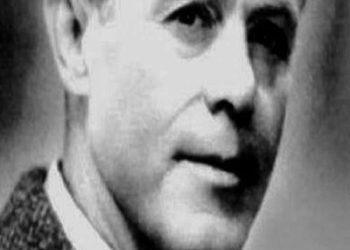
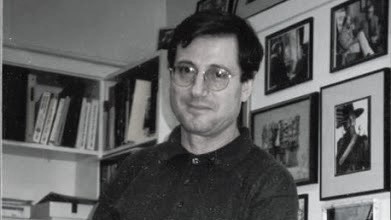
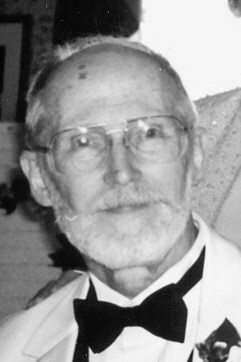
Memorie.al / Prof. Dr. Robert Baird Shuman (1929–2013), who passed away a short time ago, was an extraordinarily prolific scholar. The distinguished American writer Richard Powers, author of the novel *The Echo Maker*, who was also a student of his, writes: “R. Baird Shuman published as much as ten or twenty people combined.” He published over 60 works: scholarly books, encyclopedias of literature, not to mention thousands of scholarly articles. Many of his books were frequently reprinted. For example, his scholarly book *William Inge*, dedicated to the Pulitzer Prize–winning playwright W. Inge, was reprinted 23 times. Likewise, the book with the same title on another playwright, Robert E. Sherwood, a four-time Pulitzer Prize winner, was reprinted 10 times.
The list would go on and on: the book on another playwright, Clifford Odets, 14 reprints; the volume Nine Black Poets, 3 reprints; *Georgia O’Keeffe*; and up to his more recent publications, such as the 13‑volume encyclopedia *Great American Writers*, published in 2002 and reprinted 14 times. R. Baird Shuman was not only the editor‑in‑chief of the encyclopedia but also wrote dozens of entries for the work himself.
Likewise, the Encyclopedia of Literary Dreams, in three volumes, published in 2003, has been reprinted three times. I should also mention that while writing and publishing so much, he worked full‑time as a professor at the prestigious Duke University and the University of Chicago, and at the same time served as editor‑in‑chief of the journal Clearing House.
The speed at which he read was almost unbelievable. I recall an episode shortly after I had met Bob, as he “obliged” everyone to call him. The phone rang and I heard his voice. – “Pirro, I want to ask you a favor. Tomorrow morning I’m taking the car in for repairs. Is it possible for you to pick me up at the garage, go to your office, then I’ll take the car and come get you after work?” The next day, I headed to the garage.
There were a number of cars waiting in line. I parked and went over to Bob’s car. He was sitting behind the wheel, reading a thick book. He held a pencil in his hand. I sat in the passenger seat and asked, “Interesting?” He turned his head and replied: “I need to have the review for this book faxed to the publisher by five o’clock.” I stared at the book—nearly 500 pages—and my eyes lingered on the page Bob was reading.
He was almost at the beginning of the book. I knew that the average person reads 30–40 pages an hour, so it would take him at least 12–14 hours to finish it. Add another 2–3 hours to write the review. Not only did I think it, but I also voiced my opinion, and with that Albanian tone of mine, as if to say, “Don’t think I’m ignorant!” Bob calmly told me: it absolutely must be sent to the editorial office before 5 p.m. His turn came to drop off the car, and we set off toward the university.
As I was getting out, he told me he would come at five to pick me up. When the time came, I closed my office, entered the elevator, and when I stepped outside the building, he was waiting there. I opened the passenger door and, before sitting down, I noticed several typewritten pages on the seat.
I picked them up so as not to sit on them, and as I was placing them in the back seat, I heard him say: “Don’t move them, they’re for you.” It was the review he had written for the book. He had just faxed it to the publisher. When he retired, Bob Shuman published an average of about 200 articles each year in scholarly and bibliographic journals and publications.
A Storyteller Like Few Others
“One of the rare masters of storytelling I have ever encountered in my life. His memories and tales often made me cry with laughter at the follies of humanity that Bob was so fond of. His stories are present in all my novels, and I think he was pleased that I stole so much from him,” Richard Powers write about him. My family and I were fortunate that Bob Shuman was not just a friend to us, but almost a member of the family for nearly two decades.
And not only ours, but also of several other Albanian families, such as the family of former radio journalist Vladimir Cicani and his wife Shanka, the family of the poet Avni Mulaj and his wife Teuta, the veterinarian Aleksandër Gogo, and others. In short, he was a great friend of Albanians. During lunches and dinners, the best moment was when Bob began his stories.
He was an excellent performer, and the endings of his tales were always surprising. A year after we had met, he went to London to give a lecture. He entered a shop selling cassettes and CDs and asked if they had any Albanian music tapes. When the clerk handed him a CD with the requested music—it was a CD of old “majë‑krahu” songs collected by musicologists for research purposes—he paid and hurried back to the hotel.
“I entered the room and didn’t even take off my coat; I went straight to the stereo. I put the CD on, and after a pause, a piercing cry ‘Oh hey’ was heard, followed by another cry. I couldn’t understand what was happening. I listened for a few moments and then turned it off. It was impossible to listen to it. I didn’t understand what was going on,” he wrote to me in an email from London.
When he returned to Las Vegas, he invited us to dinner together with two other Albanian families, and during the evening he retold the story of the CD with that strange music and ended the conversation with a sharp tone and seriousness that made the joke all the more amusing: “Heh, I said to myself while listening to those cries; this must be the reason Pirro left Albania!”
He Had an Almost Aversion to Titles and Ranks
In the last month before he finally passed away, I went to the hospital every day to be with him. He was quite silent. He never uttered a moan of complaint or pain. He had only one wish: to leave this world as soon as possible. The only thing that made him lose his patience was the phrase: “You’ll get better!”
On a couple of occasions, when I saw the nurses, because they saw him so afflicted and in that depersonalizing hospital uniform, addressing him as if he were nobody, I told them, outraged: “It would be better if you addressed him with more respect, because you are not dealing with just anyone. He is not just Bob; he is Professor Emeritus at the University of Chicago. Dr. Shuman has published as many books as the two of you together have years to live.”
While both nurses stared wide‑eyed in surprise, he turned his head toward me and said in a frail voice: “No, my name is Bob…! It would have been better if some of those books had never been published at all.” When I was pursuing my studies in English literature at the University of Las Vegas, I often discussed with our mutual friend (Bob’s and mine), Dr. Casey Diana, another former student of his, the lectures, professors, and various authors we were studying. And whenever I praised some professor, she would immediately interject: “You don’t know what a real English professor is like until you have had the good fortune to be taught by Bob Shuman.”
Among the corpus of his works, a significant place is occupied by publications related to the pedagogy of teaching. Dr. Joseph Trahern recounts: “My main achievement in the years when I was Head of the English Department at the University of Illinois was that I managed to persuade Bob to come to our university as Director of the English Program.”
He was not only an outstanding literary scholar but also a teacher like few others. And no matter what heights he reached in life, he was as simple as he was a challenger of any human hierarchy. That is why he would not allow anyone to address him as Dr. or Prof. Shuman.
Where Morning and Evening Will No Longer Trouble Me
His house was filled with works of art, especially paintings. But what drew my attention was a small frame containing an unpublished five‑verse poem titled “Request” by Langston Hughes. At the top of the title, in excellent calligraphy, the author had written: “For Robert E. Shuman, sincerely.” (Even though Langston Hughes was nearly 30 years older, their friendship had begun when Bob Shuman was still in high school. In their correspondence, Langston Hughes several times dedicated poems to him, and Bob Shuman preserved them with zeal; to this day they remain “unknown.”) Every time I entered his house, I would stop in front of the poem and try to imagine the friendly and creative relationship between them. Here is the poem in a free translation:
Request
“Send me twenty dollars
and a few cents.
I will go where
morning and evening
will no longer trouble me.”
In the days, weeks, months that R. Baird Shuman was ill, these verses would not leave my mind. Unconsciously, his desire to leave this world perhaps was connected to the semantics of those lines. On August 12, 2013, he finally departed to where mornings and evenings would trouble him no more. He left! He passed away! There will never be another Bob Shuman! He was so humane and perfect that he seemed to have come not from his mother’s womb, but from the pages of books… and there he returned.
It is precisely through his books that he will continue to serve as a model for future generations. Prof. Dr. Donald E. Hall, a former student of his and now Dean of the College of Arts and Sciences at Lehigh University, writes: “He taught me never to tire of working, to write every day and to publish as if I were a generator.” And it is no wonder that Dr. Donald E. Hall himself is a very prolific author. And not only him. Many, many of Prof. Shuman’s students have had this fortune. Surely, without Bob Shuman, they would hardly have risen so high. / Memorie.al