
By Msc. Xhorxhina Seferi
Part Three
The PLA’s Policy Against Religious Beliefs: Legal Measures and the Propaganda Campaign of 1967
Memorie.al / immediately after the liberation from fascist occupiers, a communist regime was established in Albania, based on the dictatorship of the proletariat and class struggle. In the early post-liberation years, the government led by Enver Hoxha presented itself as a visionary administration, having drafted projects for the educational, cultural, economic, and social development of the country. In its beginnings, the communist state did not affirm itself publicly as an atheist state, but as a secular one. However, this would not prevent the state from initiating a struggle for the eradication of religions as opposing ideologies. Developed in a closed society with a low cultural level, communist propaganda managed to denigrate the clergy and compromise the integrity of religious services.
Continued from the previous issue...
The Press
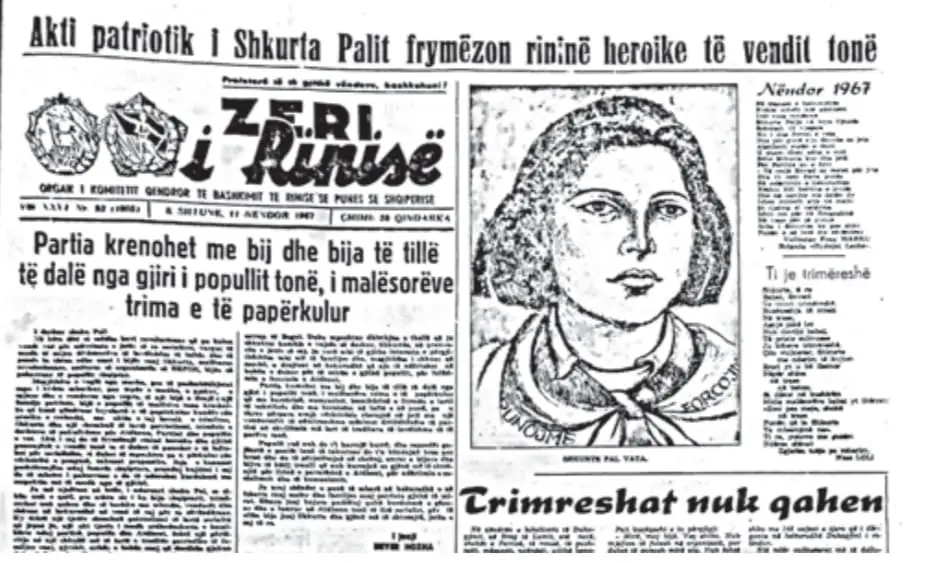
To successfully uproot religious beliefs, the Party of Labour of Albania (PLA) ordered that special attention and care be devoted to the press. “Central and local press had to continue addressing the fight against religion, as it was one of the primary tools for the advancement of propaganda. In particular, more attention should be paid to generalizing positive experiences, supporting new initiatives from the masses, and promoting the affirmation of new norms and customs.”
Various issues raised by the press regarding the anti-religious struggle were to become topics of discussion for the masses. This method was considered an important tool for spreading materialist ideas and combating “mystical idealist” ideas.
Although anti-religious literature was already in circulation, the PLA requested the expansion of themes and the increase of circulation for popular science books, artistic works with anti-religious themes, and publications explaining the merging of religion with daily life customs. Key themes in the communist press included: Religion as the opium of the people; Religion as an anti-scientific, reactionary, and anti-patriotic ideology; Atheist education and literature; and the role of atheist art in the fight against religion. Radio also played a significant role; Radio Tirana was tasked with improving the ideo-political and atheist-scientific content of programs related to daily culture.
The School
The school played a major role in forming a scientific materialist worldview. According to the PLA, despite positive results, much remained to be done. “Students graduating from school still had gaps; even those finishing pedagogical faculties found it difficult to conduct argued and convincing anti-religious propaganda with students and the masses.” Consequently, the Ministry of Education and Culture requested guidelines for improvement. Party committees were also tasked with better preparing teachers of specific subjects through seminars to ensure they could deliver persuasive anti-religious propaganda.
Cultural Institutes
Institutes of folklore, history, and linguistics were required to conduct scientific studies explaining the reactionary role of religion in all fields. Theaters, variety shows (estrada), and amateur and professional groups from local cultural houses were tasked with exposing religious rites and promoting new socialist norms.
The “New Albania” (Shqipëria e Re) Film Studio was instructed to address the struggle against “backward customs” while promoting socialist ones. The intelligentsia was also urged to actively engage in studies regarding religious problems in various districts, its entanglement with folk traditions, and the collection of concrete facts to be used for the public exposure (demaskim) of religion.
Methods Used in the Struggle Against Religion
The fight against religion was a struggle conducted within the people and the party, requiring careful methods. In a letter from the PLA leader, it was advised that work with people of any faith should be “a continuous effort of persuasion and great patience, which we must not allow to become offensive. With these people, the party must act, so to speak, like a good doctor who makes every effort to cure the patient.”
“Superstitious religious beliefs are not found only among the clergy… they also exist among the people. Therefore, without slowing down the propaganda for a moment, we must always remember we are dealing with the people. Reckless, ‘exalted’ actions must be avoided. Every action must have its political ground carefully prepared.”
The Method of Persuading the Masses
Since the closure of religious institutions happened quickly, there were cases where administrative force was used rather than persuasion. The Party emphasized: “First of all, we must fight the narrow understanding… the erroneous concept that religion is just the church, the mosque, the priest, the hoxha, or the icon, and that if these disappear, religion as a worldview disappears as well.”
Some clergy and believers attempted to conform outwardly while maintaining their faith inwardly, preaching that one could pray at home. The Party noted attempts to equate communist moral norms with religious teachings. Believers often asked: “Is it not possible to have the Party on the right and religion on the left?” or “Does the constitution not allow freedom of belief?” The Party concluded that if the struggle weakened, religion would not vanish; thus, scientific atheist propaganda remained intensive.
Differentiated Work by Social Strata
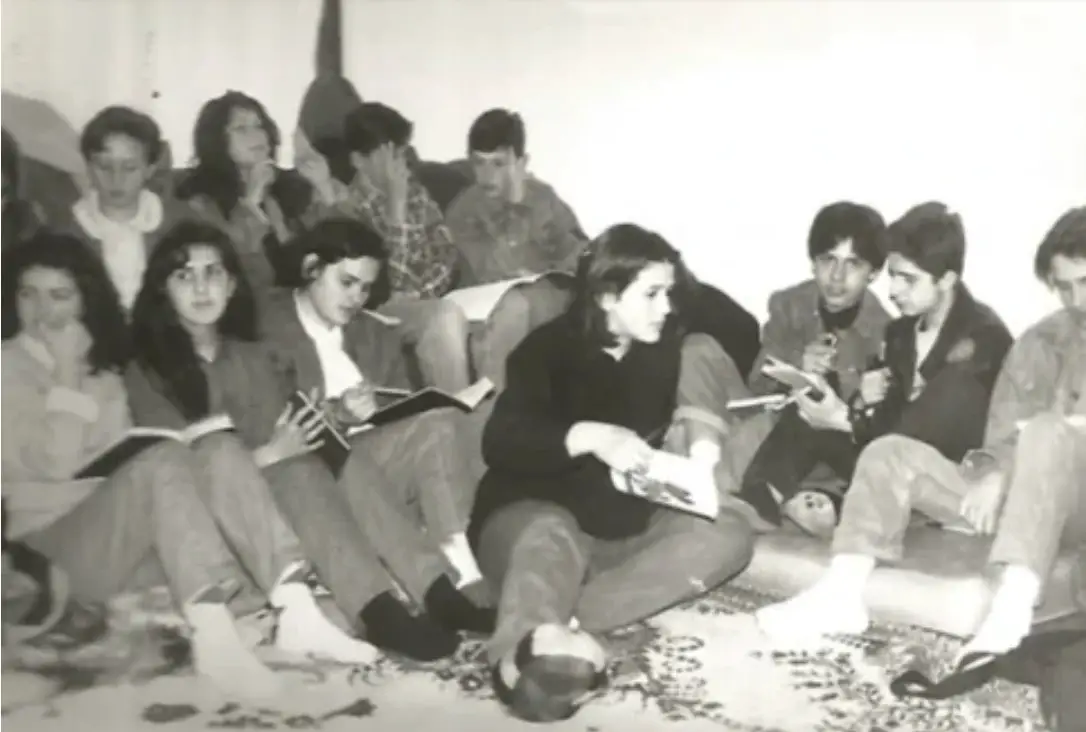
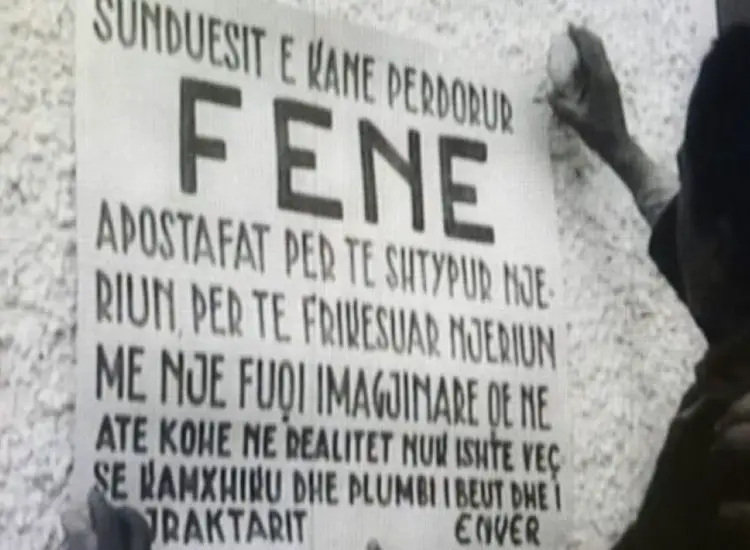
- Youth: As the group most “uncontaminated” by faith, youth played a vital role in implementing the decisions of the 5th Party Congress. Through “lightning sheets” (fletë-rrufe) in schools and enterprises, religious students and the faith itself were criticized.
- Women: The Party viewed women as the stratum that preserved religious beliefs the most. The work for the “emancipation of women” was crucial, as the Party argued that religion had historically oppressed women and denied those rights.
- The Elderly: While many were patriotic supporters of the regime, the elderly were also seen as “fanatics.” The Democratic Front was tasked with working with them carefully to avoid conflict while not making damaging concessions.
Differentiated Work by Region and Religion
The Party recognized that different religions held influence in different areas:
- Catholicism: Strongest in the North (Shkodër, Lezhë, Mirditë). Shkodër alone had 67 churches.
- Orthodoxy: Influential in the South (Korçë, Gjirokastër, Sarandë, etc.). Korçë had 132 churches and chapels.
- Islam: More widespread in Central and North-East Albania (Elbasan, Dibër, Kukës, etc.). Dibër had 122 mosques.
- Bektashism/Sects: Influence in Tepelena, Përmet, Skrapar, and Krujë.
Special attention was paid to the Greek minority in Sarandë, where many had received systematic religious education in Greece. The Party worked to distance these individuals from their faith to prepare an atheist generation.
Characteristics of the Anti-Religious Struggle
This struggle was a deep class war between two ideologies, aiming to replace a religious worldview with a Marxist-Leninist materialist one. Its main characteristics included:
- A broad front across cities, villages, and all social strata.
- Direct “striking actions” against the foundations of faith.
- Mass participation and public discussion on the “futility” of religion.
- The result of 23 years of systematic Party work, including the separation of church and state, the banning of religious literature, and the promotion of scientific knowledge to “eliminate ignorance.”/ Memorie.al