By Dr. Qazim Namani
Part One
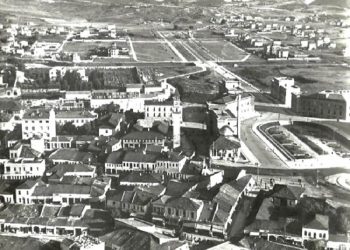
Memorie.al / Prishtina are situated between the small streams of Prishtina, Vellusha, and Matiçan, which flow from the mining hills on the western side of the Gallap highlands. On the southern and western side, Prishtina borders the fertile lands of the Kosovo Field. The altitude ranges from 585 m, 640 m, 670 m, and approximately 700 m in some neighborhoods of the city. Scientific studies on the etymology of the name Prishtina have not yet provided a stable conclusion, but many scholars explain the name of Prishtina (Pristina castra) from ancient Indo-European languages, meaning ancient, initial phase, something old.
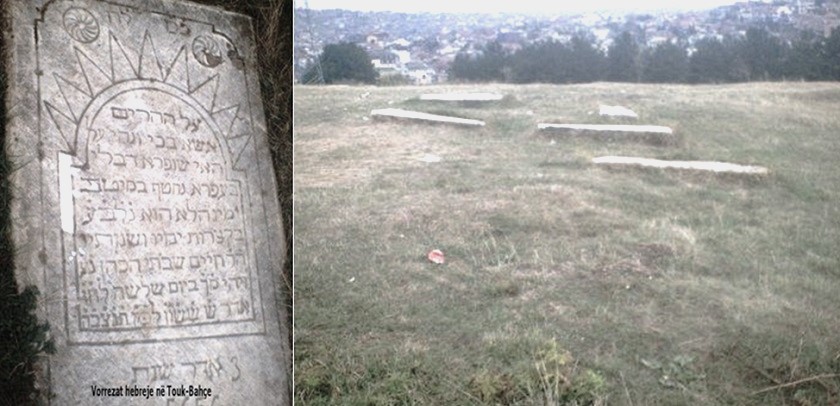
The territory of the city of Prishtina has been inhabited for 7,000 years. During random construction works in the city, traces of civilization have been encountered, dating from the culture of the old Neolithic: the Prishtina hospital complex, Glladnica near Graçanica. The culture of the new Neolithic: near the spinning factory, Bërrnica, Matiçani. Bronze Age material culture: Fusha e Badocit (Badoc Field), Lower Bërrnica, Kolovica, Grashtica, Keqekolla. Iron Age: Badoc, Matiçan, Tauk-Bahçe, Normal School. Roman period: Ulpiana, Grashtica, Siçeva, Keqekolla. Byzantine-Early Middle Ages period: Matiçani.
Many important roads passed through the city of Prishtina, including roads coming from Bosnia, the Naissus-Lissus road, from Scupi, etc. According to the Tabula Peutingeriana, the road station Viciano of the Naissus-Lissus road was between the villages of Uglar and Çakllavicë, near Prishtina. Approximately 7 km southeast of Prishtina, lays the great ancient city of Ulpiana. It seems that the ruined and plundered Ulpiana in the Early Middle Ages ceded its importance to Prishtina as a nearby locality. The fertile lands in the Kosovo Field and the mining territories in the Gallap highlands influenced the progress and development of this settlement.
The first published writings to date about Prishtina as a toponym come from a document by the Croatian Chinese Mutimir from the year 892, where it is stated that Prishtina, as a sword-bearer, also had a palace. From other literature and archival documents, Prishtina is mentioned from the first Ragusan contacts with Prishtina, which we find recorded at the end of the 1270s. At this time, the Ragusan nobleman of Albanian origin, Gregorius Marini de Petrana (1253-1280), was appointed consul in Brskovo. To reach Brskovo, Gregorius M. De Petrana passed through Prishtina, among other places.
In a document issued from Prishtina in 1325, the St. Demetrius marker (targa e Shën Mitrit) is requested from the Dubrovnik people. The Byzantine Emperor John Kantakouzenos also wrote about Prishtina in 1342, providing some important data about the locality at that time. According to the writings of John Kantakouzenos, it is stated that Prishtina had a palace with large halls for state meetings, judicial processes, solemnities, and feasts. Prishtina also had a castle, which Sultan Murad I had demolished during the siege of the city in 1389. Evliya Çelebi confirms this in 1662, writing that the castle of Prishtina, built by King Milutin, was demolished by Sultan Murad I after entering Prishtina. According to Serbian sources, the palace was built by King Milutin between the current Clock Tower and the Çarshia (Bazaar) Mosque.
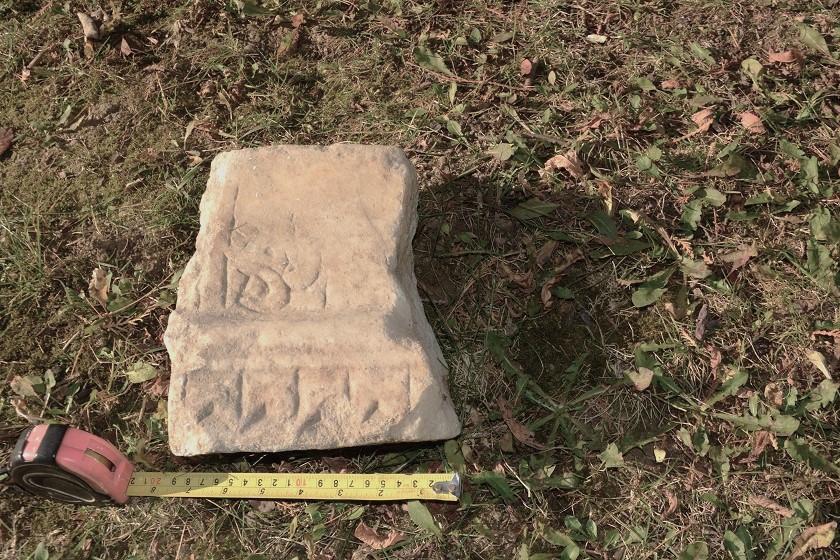
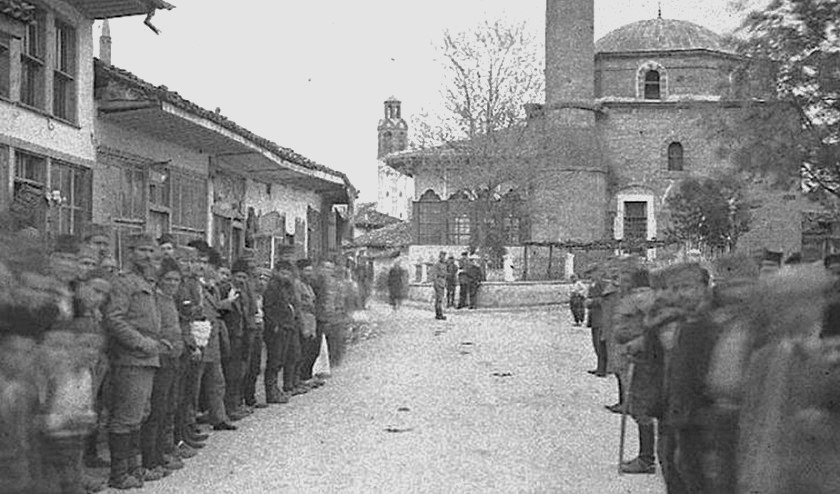
A citizen, while removing soil after opening a foundation near the statistics office and the Stone Mosque (Çarshisë), had also transported some marble stones from this place. The stones have rock sculpture and are surrounded by fluting, and according to experts, they were crafted in the antique period. Whether they were transported from Ulpiana or another locality can only be verified after observing excavations for construction in that area. Based on the data mentioned above regarding the location of the castle between the Clock Tower and the Çarshia Mosque, we can affirm that this data is late, following the construction of the mosque and the Clock Tower. When speaking of the Çarshia Mosque here, one should keep in mind the Llukaq Mosque that was built near the theater, close to the covered bazaar of Prishtina.
In any case, these discovered stones also testify to the place where the city’s fortress is said to have existed, suggesting that Prishtina had its fortress since the Roman or Early Byzantine period. This remains to be confirmed only after archaeological excavations in this locality. Also, during the removal of soil from constructions in Prishtina in 1997, a column base was found on which the symbol of the sun cult and the cross are carved next to each other. It is noticeable that this stone, worked with lime mortar and mixed with ground ceramics, also has signs of burning, which suggests that we are dealing with a column of a cult object that, in addition to the cross, also has astral symbols of the pagan period and which was also burned.
The finding place of this stone is unknown, but it was found dumped in the ravine opened by the tile factory in Prishtina. The finding of this stone is yet another testament to the belief that Prishtina was a pre-medieval settlement. Prishtina became an important seat during the middle Ages. Before the Battle of Kosovo, Prishtina had become the capital of the province and remained so for a long time after this battle. Besides the constructions in Prishtina, the Graçanica monastery, a cultural monument of special importance, was built nearby upon the foundations of an earlier church. It is evident that Prishtina and its surroundings at that time had many monuments, and the presence of these cultural monuments, such as the Graçanica monastery, by virtue of its artistic values, ranks among the most perfect creations of Europe and the World.
The development of Prishtina is also evidenced by the facts of the settlement of foreign merchants, including those from Dubrovnik in 1387. In the same year, the citizen from Dubrovnik, Marko Zvizdic, who lived in Artana, willingly gave 5 ducats on November 9, 1387, for the maintenance of the Church of St. Mary in Prishtina. This shows that Prishtina was a developed commercial center even before the Battle of Kosovo. In addition to the Church of Our Lady (Zojës Mëri), another unnamed church is mentioned in the registers of the Ragusan small council in 1421.
Prishtina also had the Dubrovnik consulate in 1426. In Prishtina, during the 14th and 15th centuries, a large number of Dubrovnik merchants operated, trading with the most developed cities in the region. Dubrovnik, Genoese, Jewish merchants, etc., mainly dealt with noble metals such as gold, silver, and glamë (a type of metal or mineral). After the Ottoman conquest, several sacral and profane buildings of Oriental style were built in Prishtina, such as mosques, hammams (Turkish baths), tekkes (Dervish lodges), türbes (tombs), townhouses, etc. According to the registration of the Sanjak of Vushtrri from 1477, Prishtina at this time had 9 neighborhoods, which, according to their names, indicate that it had only a Christian population.
During the 15th century, the kaza (district) of Prishtina included several known mines of the time. During this time, distinguished scholars also emerged from Prishtina, such as Mesihi Prishtina, whose work Mesihi-Divani, although written in Turkish verse, has great literary and historical value. Mesihi Prishtina died in Bosnia in 1512. In the 15th century, Prishtina had a total of 20 neighborhoods. According to Shtjëfën Gaspri (1671), an Albanian relator, Prishtina was one of the main cities of Kosovo. Prishtina was the administrative center for the mining of Kosovo and the mining region of Artana (Novobërdë).
During the late Middle Ages, many well-known personalities of the time stayed and wrote in Prishtina, such as: John Kantakouzenos, the Hungarian King Vladislaus II, Pjetër Bogdani, Haxhi Kallfa, Evliya Çelebi, etc. Pjetër Bogdani, of Albanian origin, the Archbishop of Skopje and Sofia, reports to the Vatican that Prishtina had 3,000 houses. Evliya Çelebi wrote at that time about 2,600 large and beautiful houses, highlighting the saray (palace) of Allaj Beg and the Palace of Justice, two large hammams, the hospitality, and the urban culture. Prishtina had 11 hanes (inns), among which the most famous at that time was the han of Haxhi Beu.
Based on the data provided by Coronelli in Iliricum and in Corso delli fiumi Drino e Boiana nella Dalmatia in 1689, Prishtina had 4,000 houses in 1689. At this time, Prishtina had 360 villages, and a number of them had been burned. The city has two baths, one is Fatih’s bath in the market, and the other is the old bath. A sign exists in a corner of Fatih’s bath; for this reason, this bath is called sacred and is frequently visited. Prishtina has 3,000 shops, which is few for this city. Travelers who visited Prishtina in the 17th century wrote that there are very good grapes and pears here.
In 1690, with the arrival of the Ottomans and Tatars, the entire country suffered greatly, especially the Prishtina district. Many villages were left desolate there, most of them burned and destroyed by the Turks and Tatars. Prishtina was weakened during the Austro-Turkish War, when Prishtina had become the headquarters of the Austrian General Piccolomini. At the end of the Austro-Turkish War 1689-1690, Ottoman and Tatar troops entered Prishtina and carried out a great revenge against the Albanians. As Gjergj Bogdani, the nephew of Archbishop Pjetër Bogdani, later wrote, even though Pjetër Bogdani had died and been buried, he was exhumed by the Ottomans and thrown as dog food in the middle of Prishtina’s square. Prishtina was ruled by the Gjinolli family during the 18th and 19th centuries.
After the assassination of Maliq Pashë Gjinolli in 1809, one of his chambers was turned into a museum. The museum of the feudal Gjinolli family of Albanian origin was a rather interesting cultural institution, similar to those of feudal courts in European states, which was destroyed during the Balkan Wars in 1912. The museum collection of the Gjinolli family had a considerable number of exhibits of historical and ethnographic importance, among which was Jashar Pasha’s guillotine. Felix de Beaujour also mentions Prishtina, according to whom in 1812; Prishtina had two fairs, an autumn and a spring fair, where many merchants from the East and West participated. In 1822, about 3,000 Albanians from Kosovo attempted to go to Istanbul to demand the resignation of Maliq Pashë Gjinolli, who was known as a tyrant at that time and governed Prishtina.
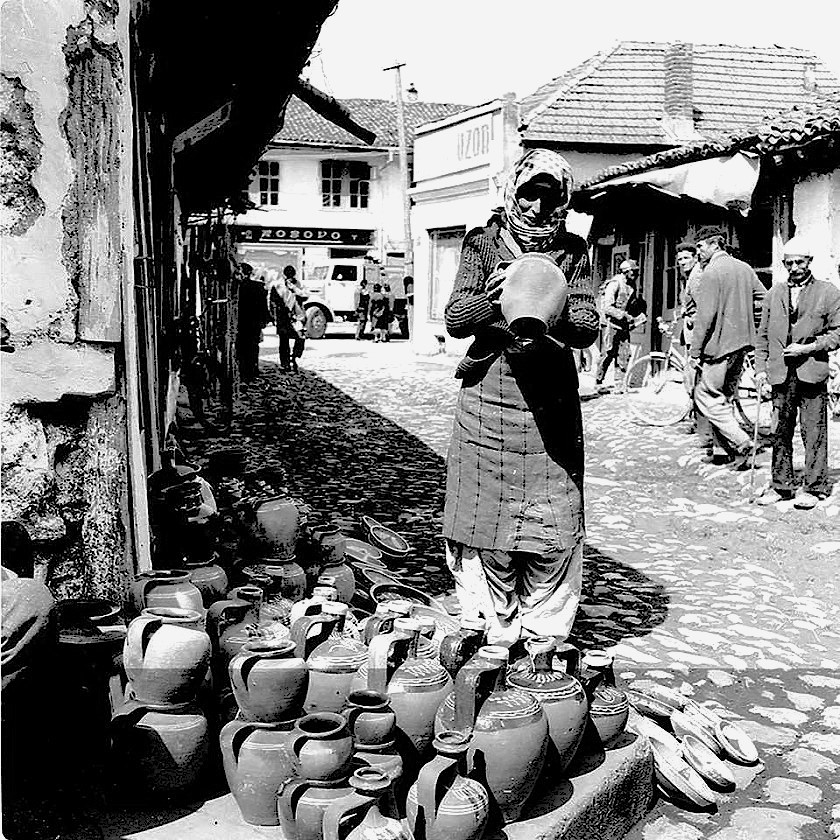
Many ancient crafts were developed in Prishtina, and among them was the craft of mat-making (hasrave). In addition to these crafts, the trades of leatherworkers, coppersmiths (kazangjijëve), the working of household utensils from clay and metals, watch repairers, basket makers, umbrella makers (qadragji), blacksmiths, shoemakers, jograngji (fabric weavers/dyers), and the working of traditional clothing were known. Prishtina lacks a city museum today; during construction in the city, excavations for opening foundations were not monitored by competent institutions, and as a result, many movable exhibits were thrown into ravines and covered with soil and debris. In 1997, in the ravine of the tile factory where soil from excavations in the city was dumped, enameled vessels with argentius-glamë were also found.
Reforms in the Ottoman Empire began in 1892, and the new reform commission was composed of well-known and respected individuals of Albanian background. From Prishtina was Danish Bey, who later became the Minister of Internal Affairs of the Empire. In the first half of July 1844, the Turkish army, led by the Serasker (Commander-in-Chief), the Vali (Governor) of Rumelia, and Omer Pasha, entered Prishtina to suppress the Albanian revolt. The Serasker’s headquarters became Prishtina. The insurgents withdrew to the mountains of Prishtina. Omer Pasha had declared to the English consul that 7,000 Albanian insurgents had withdrawn to the mountains near Prishtina. The Ottomans registered the Muslims of Prishtina who refused to provide recruits for the Nizam (regular army).
On March 8, 1845, the English consul in Thessaloniki reported that the Albanians of the Prishtina district would not provide recruits without force. The Ottoman soldiers enriched themselves greatly from the plunder they carried out during the suppression of this revolt. The Austrian consul wrote that the Albanian insurgents conquered Prishtina in the spring of 1844. Prishtina fell into the hands of the insurgents in March 1844, when Abdyrrahman Pasha of Prishtina left for Prizren to his friend Izet Mehmet Pasha. Izet Pasha had given 6,000 men to return Andyrrahman Pasha to Prishtina, but the insurgents stopped this attack and maintained control of Prishtina.
In Prishtina, in June and August 1837, 80-140 people died daily from the plague. In 1846, Maliq Bey decided to send all heads of Catholic Albanian families to a surrounded place in Prishtina. All the prisoners were put in heavy handcuffs on their hands and feet, with a heavy chain around the waist, and tied to one leg. This was a weight of 40 Turkish okkas, approximately 50 kg. Jashar Pasha of Prishtina imprisoned these prisoners in an even heavier prison and ordered water to be released into the prison. These prisoners were transferred from Prishtina to Skopje and sent through Thessaloniki to Asia Minor.
Noble games were cultivated in Prishtina in the field called Poteçishtë. These competitions were organized annually, similar to the Sinj Alka (hallkën e Sinjit) – only with one difference, instead of a ring (hallkës), a glove (dorëza) was used, which the knights had the task of hitting with a sword, arrow, or mace. Various duels (bejlege) were also held in Prishtina. Prishtina was engulfed by two major fires in 1859 and 1863. According to the inhabitant Gamer, Prishtina is the largest city located between Thessaloniki and Sarajevo. In 1874, the seat of the Vilayet of Kosovo moved to Prishtina, and three years later, the magazine Kosova began to be published in Turkish.
In Prishtina, the Serbian consulate opened in 1887, and in 1890, the Serbian consul Lluka Marinkoviq was killed. According to Cvijiq, Prishtina had 4,000 houses at the beginning of the 20th century. Throughout the 19th century, several epidemics spread in the city of Prishtina, and written sources documented epidemics of Smallpox (Lia), Measles (Lula), Typhus, and many others, as the most dangerous epidemics of the time, which claimed the lives of many citizens. In 1890, due to the epidemic, a ward of the Prishtina prison was converted into a hospital, where the infected were treated. In 1896, vaccines against Smallpox infection were requested from Prishtina. In 1903, at the request of the Deputy General Prosecutor, a steam apparatus for the treatment of Smallpox was sent to the Prishtina hospital.
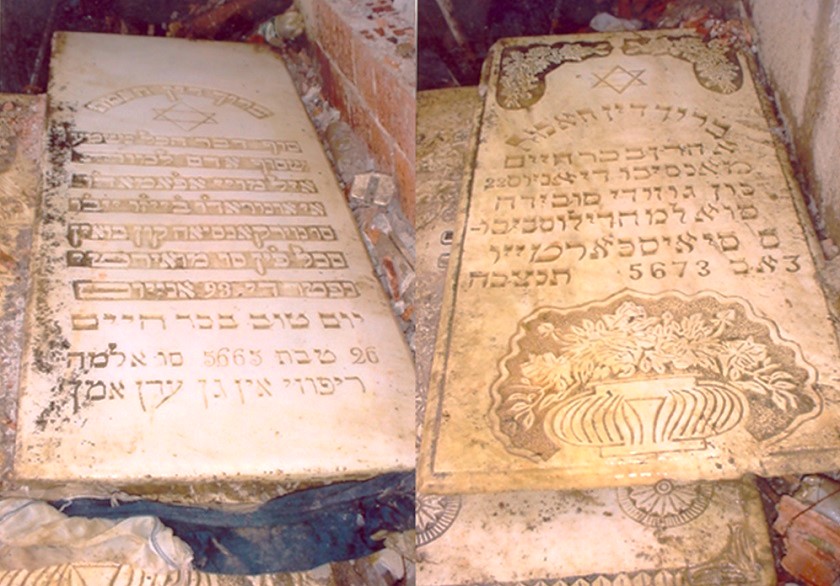
Branislav Nušić, who was the Serbian consul in Prishtina at the end of the 19th century, also wrote about the epidemics in Prishtina. Among other things, he writes that after the expulsion of the Jews from Russia, 50 houses of whom came to Prishtina, and surprisingly, all died from epidemics within two years. At that time, 305 Jews lived in Prishtina. The 20th century found Prishtina poor and without a stable economy, and the situation became especially difficult when the Serbian army forces entered Prishtina during the Balkan Wars. The Serbian army left about 5,000 killed Albanians from the border up to Prishtina. Prishtina underwent many changes even after the Second World War, and the most important buildings in the core of the old city were demolished. / Memorie.al