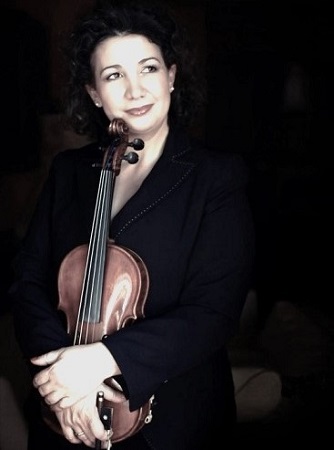
Memorie.al / A few years ago, Ervis Gega (Dodi) was appointed director of the important German musical institution, the Bonn Classical Philharmonic (Klassische Philharmonie Bonn). The news flooded both Albanian and foreign media. But at age 16, as she was leaving her birthplace in July 1990, Ervis could have known little about the existence of this institution, much less imagine that she would one day lead it.
Today marks 35 years since the “storming” of the German Embassy in Tirana. The 5,200 refugees who entered the embassies set off by bus toward the Port of Durrës to continue on to Italy, France, Germany, or elsewhere. Today, they are established citizens, and in many cases, successful professionals in their host countries.
On this anniversary of the exodus, the well-known German magazine Der Spiegel recalled Ervis’s story – a story both identical to and different from those of thousands of Albanians – serving as a symbol of the long global journey of those who, 35 years ago, were forced to leave their country without knowing what fate awaited them on the world’s roads, but fueled by the dream of reaching a place where everything was possible.
Escape with a Violin
Ervis Gega and her family managed to enter the German embassy in July 1990 by bribing the policemen. Today, at home in Germany, Ervis Gega is the director of the Bonn Classical Philharmonic. She was only 16 years old when, in early July 1990, thousands of desperate Albanians stormed foreign embassies in the capital. Gega and her relatives lived in Fier, a city about a hundred kilometers south of Tirana. They learned of the events from Italian television – and did not think twice. As musicians, they had suffered under communist rule for many years.
In Albania, the Party of Labor continued to rule with a firm hand eight months after the fall of the Berlin Wall. In the summer of 1990, statues of Stalin and long-time dictator Enver Hoxha, who died in 1985, still stood firmly on their pedestals in the fully isolated Balkan state.
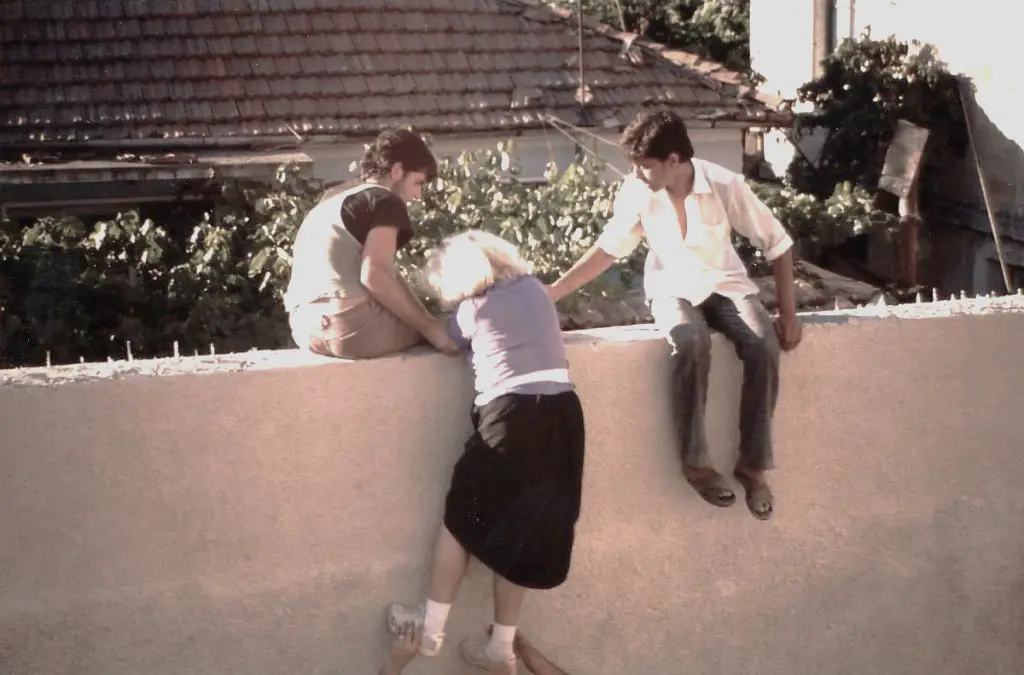
The girl took her violin and boarded the train to Tirana with her parents, aunt, and uncle. When they arrived, the diplomatic quarter was already surrounded by security forces. The family managed to corrupt the police – allowing them to climb over the wall of the German embassy.
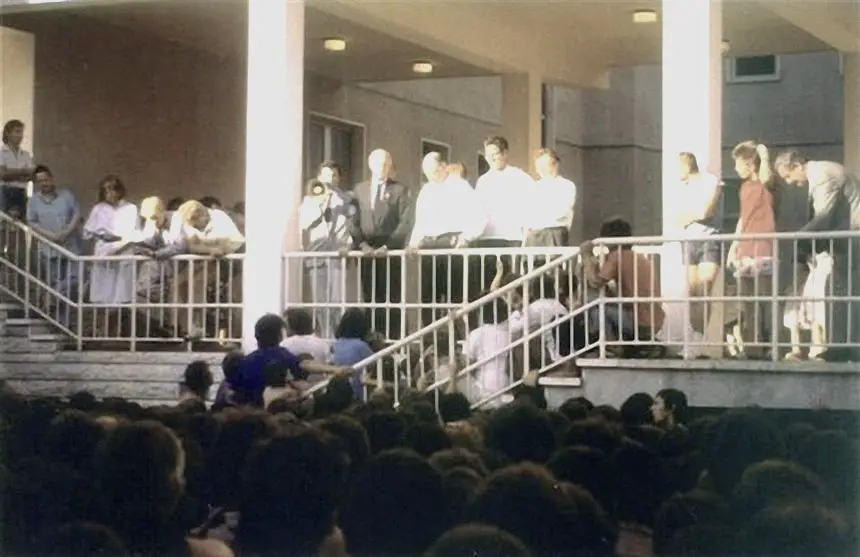
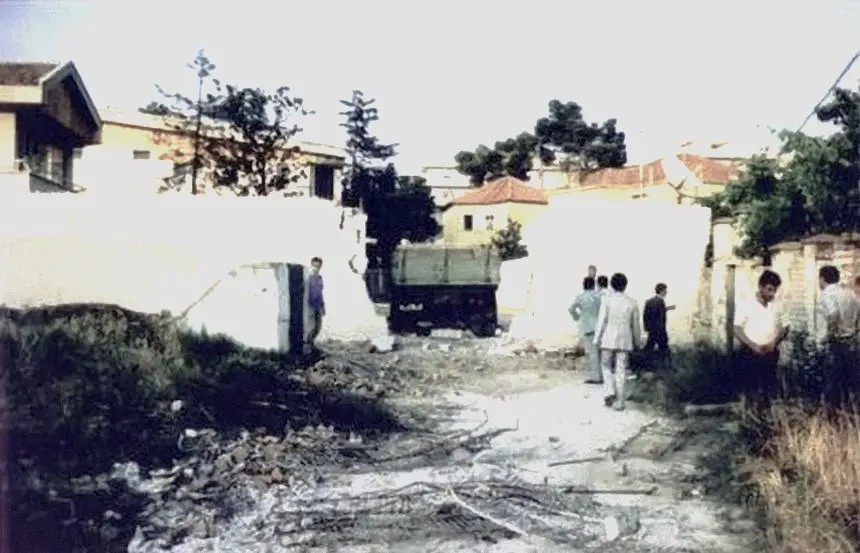
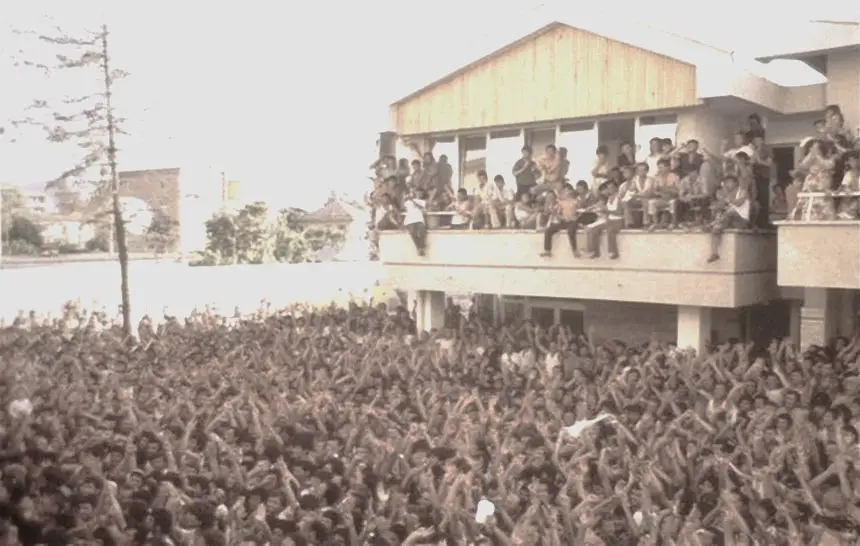
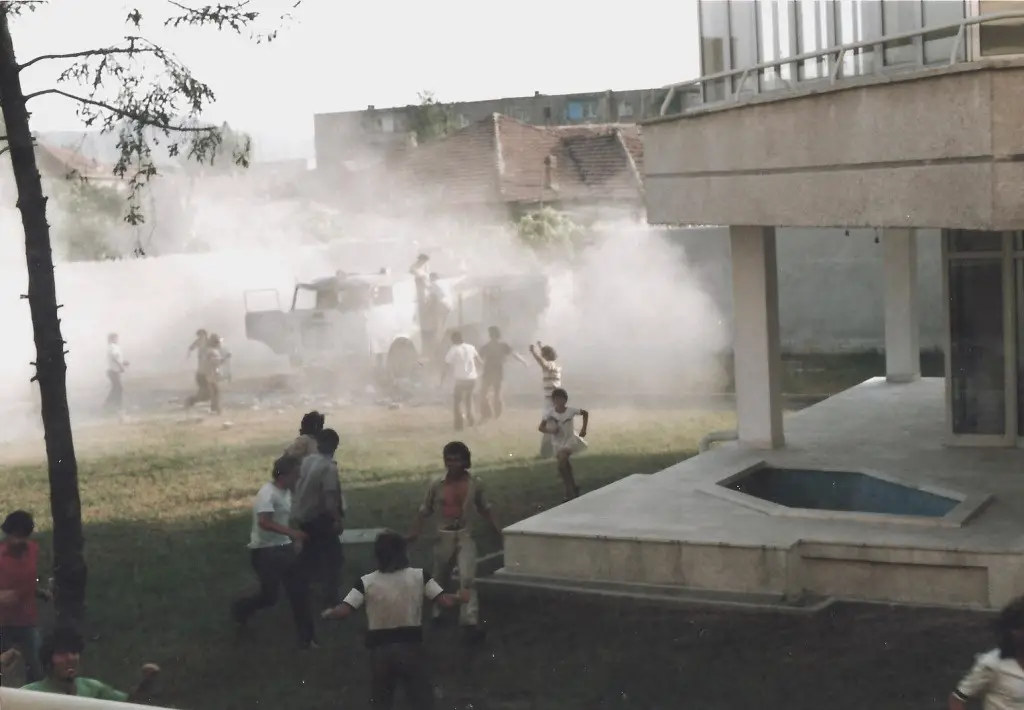
Within a few days, more than 3,000 people breached the embassy. Many came through a hole in the wall smashed on July 3 by a truck carrying four people. Hundreds of Albanians also occupied the diplomatic missions of Greece, Italy, and France. Three refugees even gained access to the embassy of the German Democratic Republic (East Germany), nearly four months before German reunification.
Police Spared the Refugees
The morale of the security forces at the time was low. Even with a “shoot-to-kill” order, the police likely would not have opened fire. Like everyone else, they too wished to leave the country as soon as possible. Western diplomats encouraged Albanians to break through the walls of their embassies. “It was clear to me that a mass exodus would lead to the collapse of the regime,” said Werner Daum, the head of the German embassy at the time, who quickly turned on the lights and opened the gates.
Former members of the Albanian Politburo and secret agents later claimed they had gathered information regarding foreign support for a planned government overthrow. The government suspected that Germany, Italy, France, Yugoslavia, and Greece were behind the plot. “Everything seemed quite spontaneous, but other people definitely had their hands in it,” said Ramiz Alia, the last communist head of state in Albania.
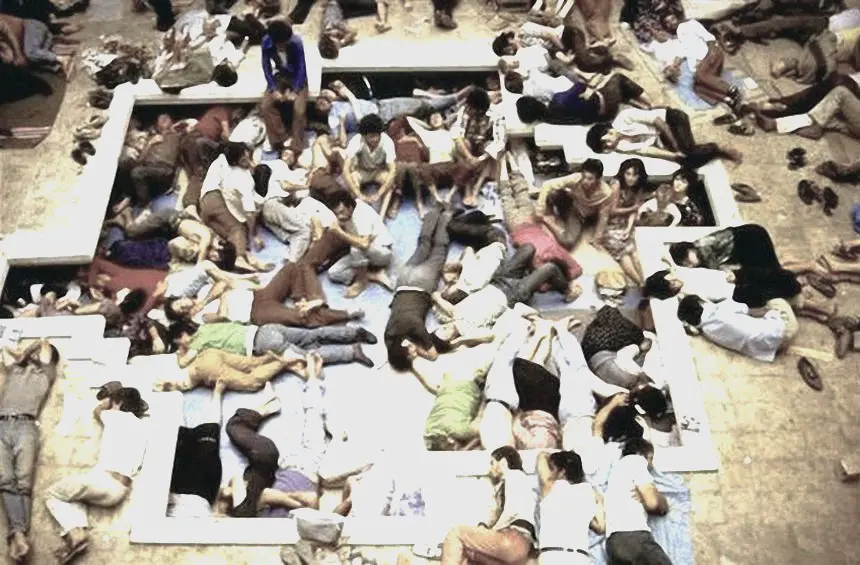
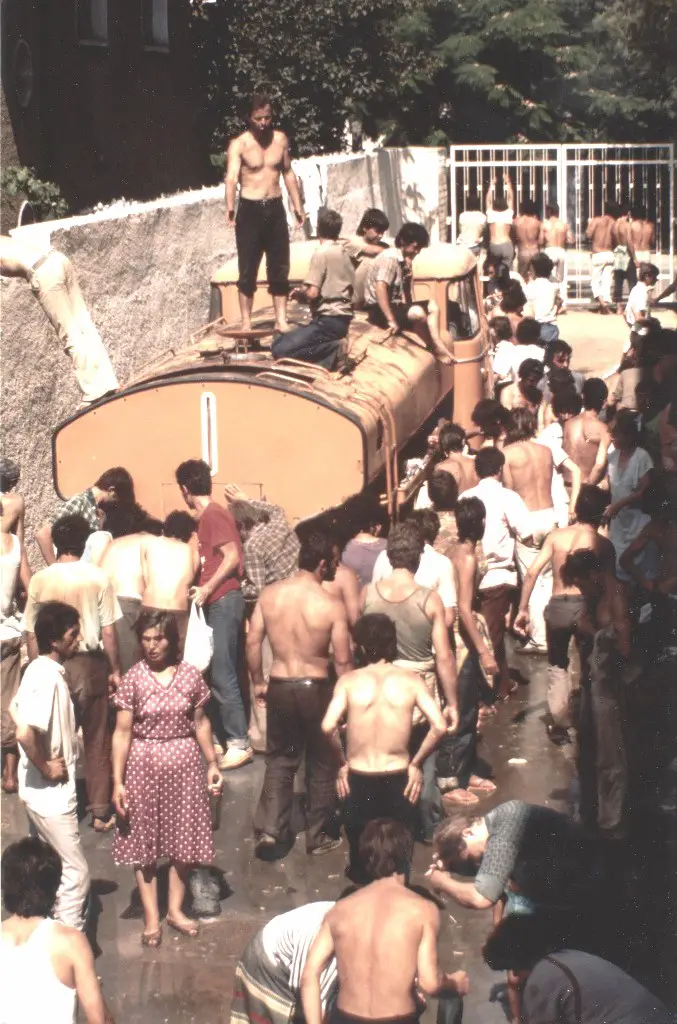
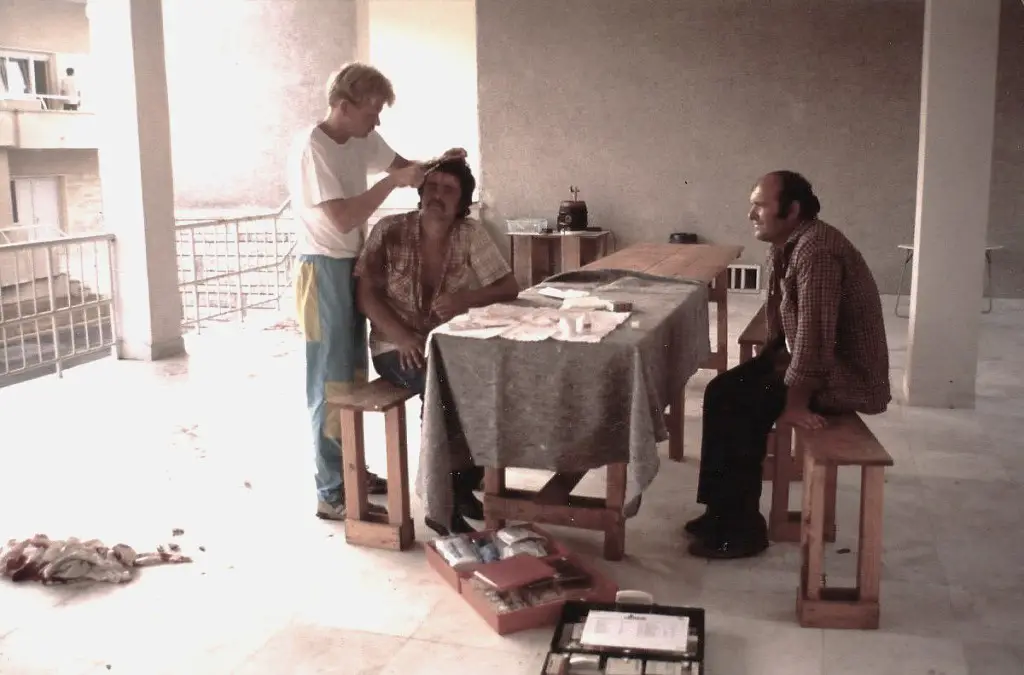
By July 7, there were 3,199 people on the premises of the German embassy. They slept in the garden and relieved themselves in a newly dug trench. In those days, a woman gave birth to a girl, whom she named Germana out of gratitude. 870 Albanians were accommodated in the Italian embassy, and about 500 remained in the French representation.
“It was very crowded, but people were happy,” Gega recalled more than a quarter-century later at her home in Bonn. “Every evening we watched the World Cup football matches on television. When Germany won the title, we had a celebration.”
The Albanian government refused to provide the embassies with food or tents for the refugees. “Either take them out of the country or hand them over to the police,” they said. Authorities cut off the diplomats’ water and smuggled in spies to discover why so many Albanians suddenly wanted to leave.
Finally Jeans and a Motorcycle!
“The reason was that no one believed in the applicable rules anymore,” an agent learned from a refugee at the German embassy, as recorded in an Albanian secret service report. “I finally want to wear jeans and modern clothes that people my age wear abroad,” admitted another Albanian. “I also want a motorcycle.”
Gega’s family had fallen out of favor with the regime. Relatives had been arrested and sentenced to death. Although the girl was talented, she was not allowed to study music or sing in a choir. On July 8, a United Nations envoy arrived in Tirana for talks. The government then announced that those seeking asylum abroad would be allowed to leave.
The communist leader Alia was aware that all these people would not return home voluntarily, even under the promise of immunity. Two days later, Václav Havel, the president of the Czech and Slovak Federal Republic, who had been elected just days prior, took 51 Albanians from his country’s embassy in Tirana. “Long live Havel!” they cheered upon arriving in Prague.
Watches and Money Thrown from the Buses
At four o’clock in the morning on July 12, authorities had everyone ready to leave the country brought by bus to the port city of Durrës. They then continued to Italy by ship. Residents of surrounding villages stood by the road and waved to them. People in the buses threw watches and money out the windows to leave their past behind them.
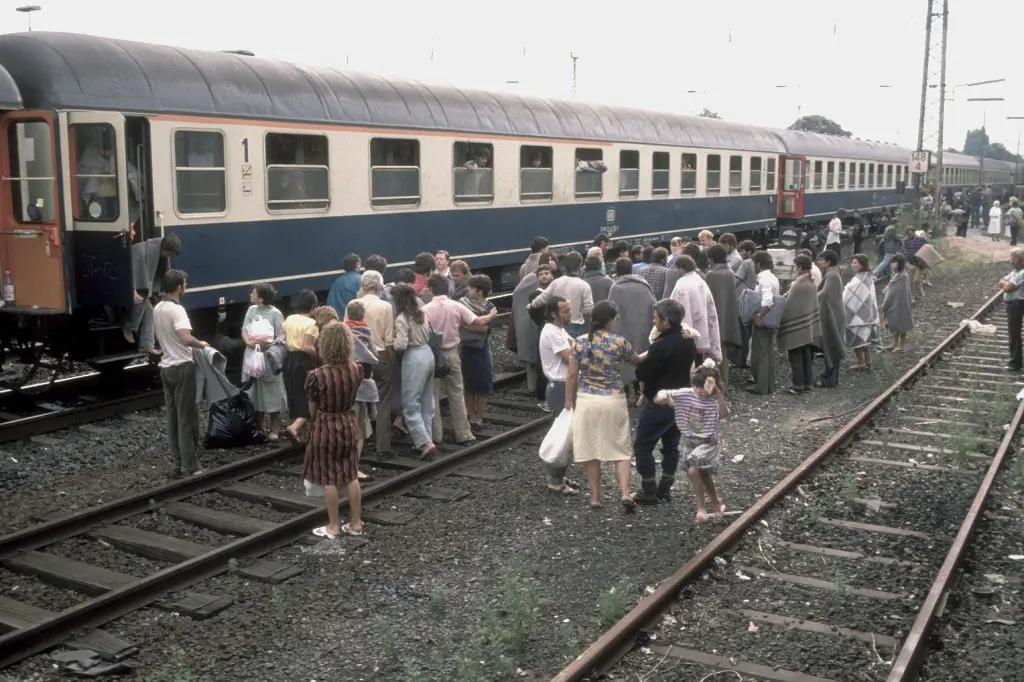
Accompanied by the German Red Cross, Gega and her relatives arrived with many other Albanians on three trains from Italy to Germany. Once the embassy refugees left the country, the end of communist rule in Albania was only a matter of time.
Following violent student protests, the Central Committee approved a pluralist state order in December 1990. Two months later, the bronze statue of Hoxha was toppled in “Skënderbej Square” in Tirana. After the Party of Labor won the first multi-party elections on March 31, 1991, Alia was elected president but held the post for only about a year.
Gega now leads the Bonn Classical Philharmonic and performs as a soloist all over the world. “I am Albanian, my home is Albania,” she says. “But my home is also Germany.” Memorie.al