By Raina Kovaçi
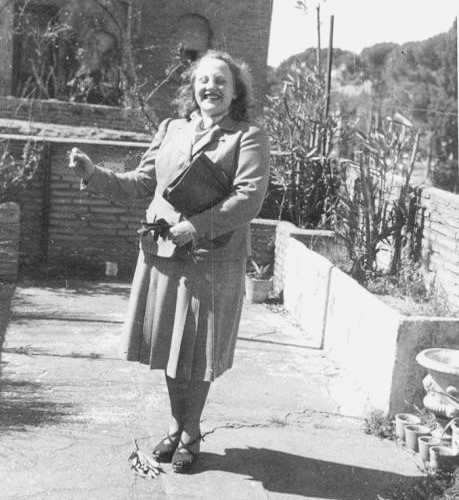
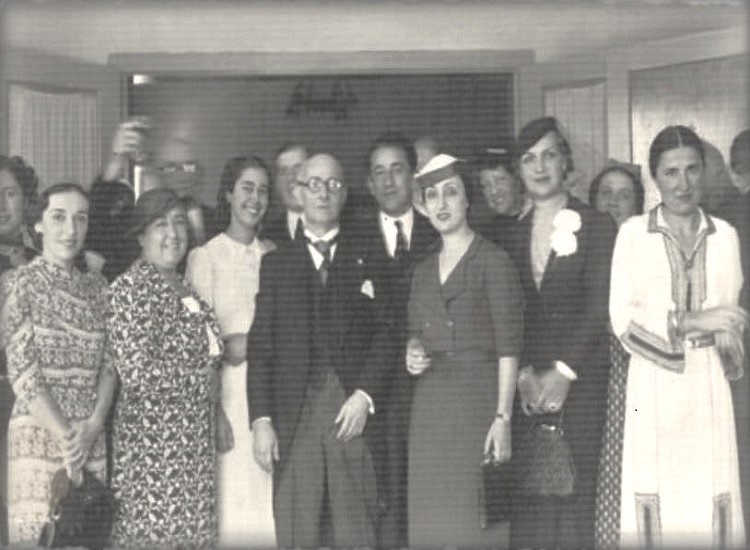
Memorie.al / The strengthening of the Albanian state, and specifically the adoption of contemporary legislation – where the new Civil Code stood out – paved the way for the initial involvement of women in all fields of life, such as: culture, education, sports, and even entrepreneurship. They fought an open battle against old customs and superstitions that isolated and persecuted the Albanian woman. After the formation of the Albanian state, Ikbal Çika, along with several other ladies, urgently demanded the necessity of regulating and improving the position of the Albanian woman in society. Ikbal made a significant contribution to raising the educational and cultural level and especially the emancipatory level for women and girls.
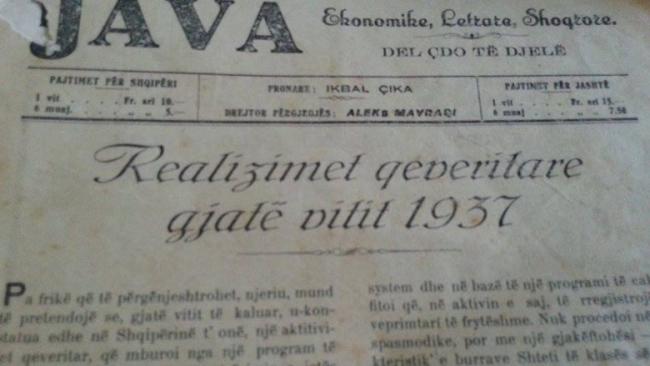
A prominent intellectual and a journalist with a sharp pen, the publicist Ikbal Çika occupies a very important place in the history of Albanian journalism. She was the first editor-in-chief and administrator of the newspaper “Arbëria.” Out of her great passion for the press, she took on even greater responsibilities, becoming the owner of several magazines, such as: “Java” (The Week), “Shpresa Kombëtare” (National Hope), “Ylli i Mëngjesit” (The Morning Star), and “Gruaja Shqiptare” (The Albanian Woman). She was an active journalist with leadership functions at the magazine “Minerva,” as well as in several other periodicals like “Arbenia,” “Rilindja e Arbërisë,” “Vullneti i Arbërisë,” etc.
The newspapers and magazines she directed paid special attention to the women’s issue. Sports and physical education were part of the policies for the emancipation of women. In the magazine “Shqiptarja,” an item is noted informing that these ladies had organized several swimming competitions, and they had even dared to organize a “grand automobile race” in Korça.
“Shqiptarja” was another weekly magazine, the organ of the “Gruaja Shqiptare” society, where Emine Toptani was the vice-president of the association and Parashqevi Qirjazi was the secretary. After having made a long journey through all the cities of Albania to talk and propagate the emergence of the Albanian woman from the darkness, they were full of optimism for the successful start of one of their many tasks.
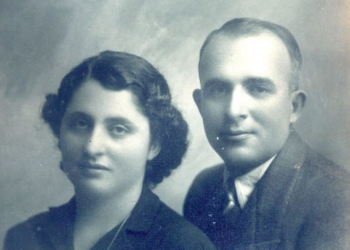
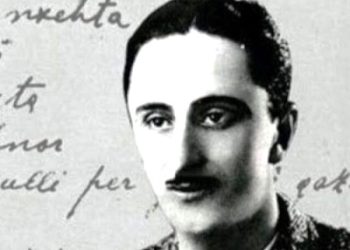
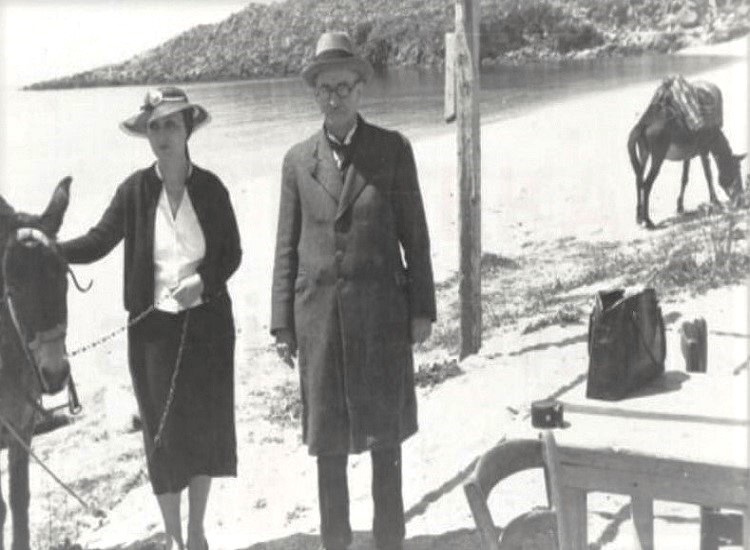
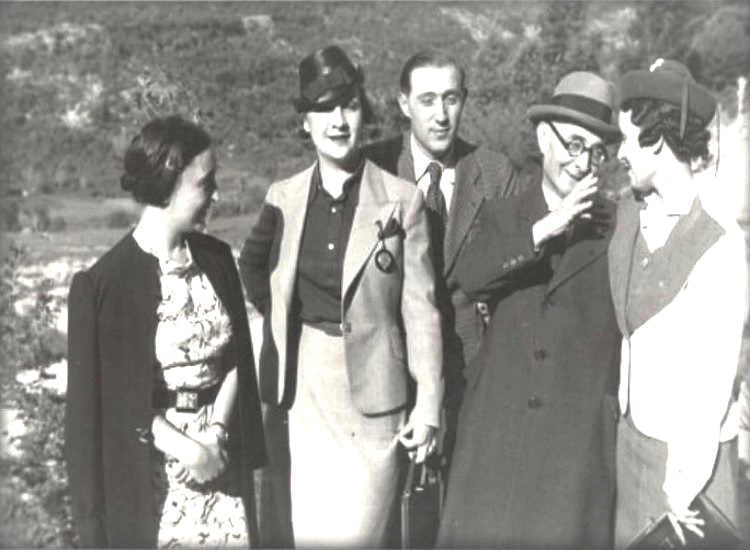
Together with her husband, Nebil Çika, they made a very valuable contribution to the eradication of illiteracy. The years 1925-1926 found Ikbal as a primary school teacher. In 1926, she was an active journalist in the newspaper “Demokracia.” There, she had opened a special column where in every issue she wrote articles related to the problems of women and girls. According to her, girls should be not only good housewives but also cultured women who would create a new generation integrated with the life that awaited them. She used to say that; “The woman is the sweetness of the home,” the foundation for creating the new generation.
“The woman today,” Ikbal wrote, “does not have the same rights as the man, has no right to interfere in the matters of society, has no right to be elected or to vote in parliament, is not given the necessary trust and responsibility…”!
With her great work in the struggle against the old, she made an extraordinary contribution to Albanian society. The new concept of the necessity of women’s participation in building a new democratic society began to take shape. All these social phenomena were observed across all religious communities. Despite the flaws and weaknesses, the movement for the emancipation of women achieved several results. Courses against illiteracy were organized, and artistic life was revitalized, especially in works performed by women or those addressing the issues of the time related to them. For the first time, roles in theatrical plays began to be performed by women, as they had previously been interpreted by men.
A very important issue addressed at that time by these rare intellectuals was also the debate over the removal of the veil (perçja), concerning the damage its use brought to a woman’s life, as well as the damage it brought to the family and society in general. In the magazine “Java,” efforts began at that time for the drafting of a law that obliged women and girls to remove the facial veil. This issue became so public that it took the form of a reformist movement, which was crowned with the approval of the law in 1937.
Ikbal and Nebil Çika published a large number of writings on this problem through editorial policies, problematic articles, foreign and domestic news, sociological and philosophical writings, translations, and opinions. She personally made a very valuable contribution and led a major propaganda activity through conferences and rallies in many cities and villages. The reform was especially supported by Muslim clerics. They were the first to take their wives and daughters out into the streets without veils. The two head-religious figures of the Elbasan district, Chief Mufti Musa Aliu and Hafëz Ymer Dile, brought women without veils out into the city. Their example was followed that day by 60 other women. The muftis of the cities of Kruja, Berat, Korça, etc., did the same.
Browsing through various articles, we see that the reform was also supported by the Albanian youth. In “Java,” Ikbal Çika wrote: “You did well to remove the Arabic face covering…! We, your sisters who are praising this step forward you took today, want you not to have a broken heart at all for this thing…”!
Browsing with curiosity the press of the time, in “Shqiptarja,” Ikbal wrote: “The Albanian woman cannot perform her high and noble mission if she does not learn all those things that can help her to perform and complete her delicate duty. Therefore, the school and the press must act with all energies in this field…! The happiness of the home, the nation, and the motherland is in the hands of intellectual women…”!
These were some of the efforts and the great struggle made by the intellectuals of that time. Ikbal Çika was the embodiment of the true response against all those who opposed this movement. But she also had a husband who understood her very well. He was her closest companion as well as her best collaborator. He remained the most important supporter of her work and activity.
Nebil Çika was a very well-known personality of the academic world, an intellectual of the 1930s, a cultured man and author of many studies and books in the fields of journalism, publicism, and pedagogy. But he had a tragic end. He was a victim of the massacre carried out in Tirana at the end of 1944, where 100 intellectuals, the cream of Albanian society, were executed without any trial. This same ill fate also befell Ikbal./Memorie.al