Memorie.al / According to the memories of Tafil Boletini, Bajram Curri and Isa Boletini came from Shkodra after the official ceremonies had ended. They were received in a special audience by Prince Wied and Sofia with great honors. When they disembarked at the pier in Durrës, Mihal Grameno with a group, mostly southerners, greeted them with loud cheers. For four nights they stayed in Durrës as guests of Wied, but did not go to visit any minister. Meanwhile, the hotel where Isa Boletini and Bajram Curri were staying became a center of visits and the great commotion that was happening those days in Durrës, and people came to visit them. On July 29, 1913, the Conference of Ambassadors in London decided to establish the Principality of Albania, paving the way for the arrival of Wilhelm Wied as the first King of the Albanian Kingdom in modern times.
The role of Bajram Curri during the six months of King Wied’s government
(According to the memories of Tafil Boletini, nephew of Isa Boletini)
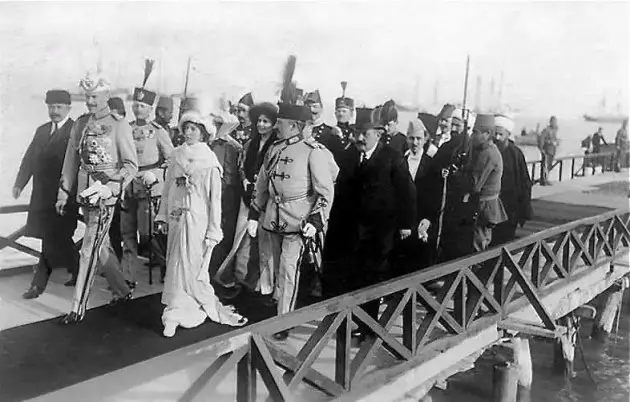
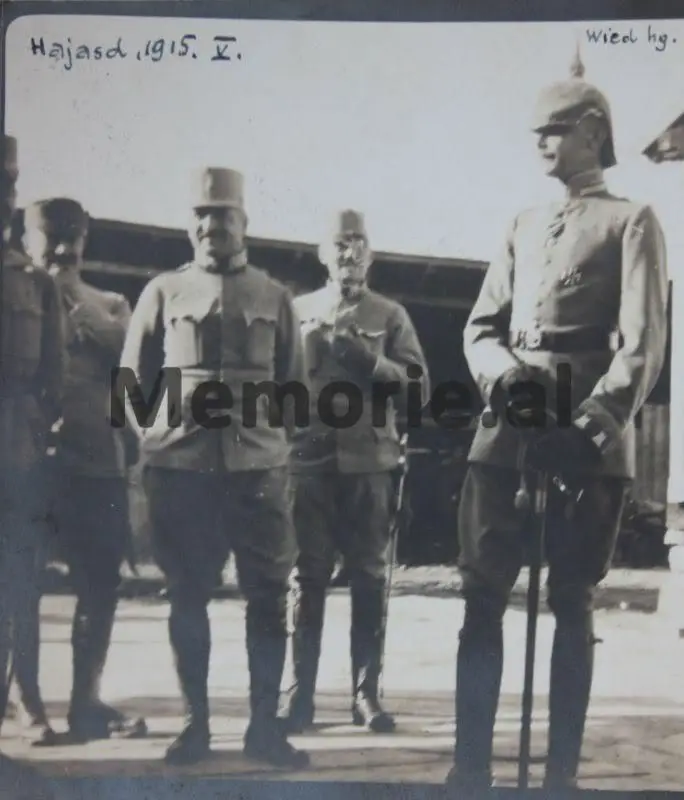
Prince Wied arrived in Durrës on March 7, 1914, welcomed by all the delegates from the regions of Albania, except for Bajram Curri and Isa Boletini, who did not participate – not because they had any objection to him, but because wherever Esad Pasha was, they would not go. According to the memories of Tafil Boletini, Bajram Curri and Isa Boletini came from Shkodra after the official ceremonies had ended. They were received in a special audience by Wied and Sofia with great honors.
When they disembarked at the pier in Durrës, Mihal Grameno with a group, mostly southerners, greeted them with loud cheers. For four nights they stayed in Durrës as guests of Wied, but did not go to visit any minister. Meanwhile, the hotel where Isa Boletini and Bajram Curri were staying became a center of visits and the great commotion that was happening those days in Durrës, and people came to visit them.
The Kosovars who were in Durrës hosted a ceremonial lunch at the “Kosova” hotel for the Albanian delegates of the colonies, led by Fan Noli. When they were seated at the table, all at once, with loud voices, they began to say: “We want Bajram Curri, we want Isa Boletini!” and when these two came out of the room, applause and cheers burst out. The noise could be heard as far as the house of Esad Toptani, which was nearby.
In May 1914, Prime Minister Turhan Pasha made an appeal to Isa Boletini and Bajram Curri, in the name of patriotism, to go to the aid of their brothers in Korçë and Gjirokastër, which had been occupied by the Greeks, where terrorist bands with the most barbaric and inhuman tortures burned, roasted, and massacred women and children, in order to exterminate the Muslim Albanian population. In a word, parts of Korçë and Gjirokastër had become slaughterhouses of people, who were chopped up with knives following the so-called Greek custom.
Even though they did not associate with Esad Pasha, for this purely patriotic cause – to save that part of the homeland – the appeal was accepted with great pleasure, and they immediately began gathering people in Shkodra. Likewise, Bajram Curri notified the Highlands of Gjakova. In those days in Shkodra, word had spread about certain movements in Central Albania.
The Esadists and Turkophiles called it “Ehlikijam” (Hareket-i Halk, “People’s Movement”), but not in the bad sense given to rebellion, rather as a name given to patriotic-religious movements. And they told us: “The ‘Ehlikijam’ does not clear the way for you to go to Epirus”…
Right in the midst of their best mood, as they were getting ready for Epirus, two urgent telegrams arrived from Durrës: “To Bajram Curri and Isa Boletini. Esad has fled to Italy. The rebels are attacking Durrës. With the forces you have ready, please set off immediately for Durrës via Shëngjin, by sea.” Even though the forces from the Highlands had not yet arrived, Bajram Curri and Isa Boletini, with about 100 or so Kosovars they had ready, set off for Lezhë. There they found Preng Pasha gathering forces.
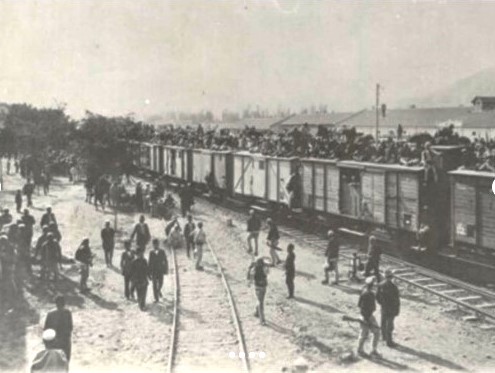
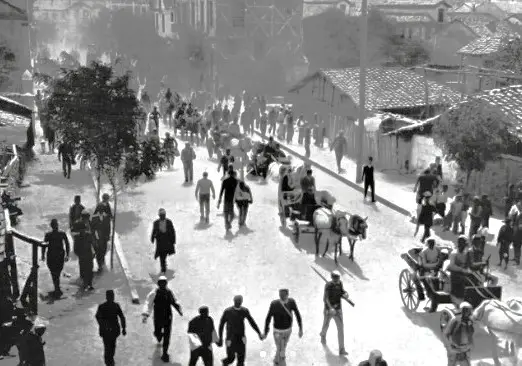
On the evening of June 1, Marka Gjoni with some 700 Mirditors, Tafil Boletini with about 100 Kosovars, and Hysni Curri with several men from Gjakova, set sail from Shëngjin by steamer. They arrived in Durrës at 3 o’clock in the morning. Meanwhile, Preng Pasha, Bajram Curri, and Isa Boletini remained in Lezhë, waiting for the forces from the Highlands…! On June 15, 1914, the rebels attack Durrës…! During the battles of June 15 and 17, Bajram Curri and Preng Pasha were still in Lezhë gathering forces, intending to go from Lezhë overland towards Shijak.
After preparing with a considerable force, they cross Milot…! In Shlinza of Ishëm, the rebels came out to meet them, and with a counterattack routed them so badly that Bajram Curri and Preng Pasha barely saved themselves and managed to return to Lezhë. From Shëngjin, they came by sea to Durrës.
Bajram Curri brought the highland force with him, whereas Preng Pasha not only did not bring any force with him, but, following the advice of the Italian minister in Durrës, Baron Aliotti, he also took those Mirditors who had come earlier and left Durrës for Lezhë…!
The Kosovar emigrants with Isa Boletini, and Bajram Curri with the highlanders of Gjakova – that is, only Kosovar forces, for one purpose and in complete harmony in everything – stayed in Durrës until King Wied left on September 4, 1914.
King Wied does not give up his commitment to work for Albania
At the moment of his departure from Albania, Wied issued a proclamation in which, after affirming his commitment and his belief in his patriotic work, he reminded Albanians that the outbreak of war in Europe had changed the geopolitical circumstances, and this event forced him to leave for a time for the West, without giving up his commitment to work for Albania.
Never abdicating, he continued to consider his rights to the Albanian throne. This fact is also proven by the letter that Wied, on August 21, 1920, from Tyrol (Austria), sent to Bajram Curri – a letter kept in the Central State Archive, Fund 418 – Bajram Curri, File 8/2.
At the time this letter was written, the armed forces of the Albanian institutions emerging from the Congress of Lushnja had set out with energetic actions to suppress the Esadist movement in Central Albania (March-June 1920), to unite Shkodra with the rest of the country (March 13, 1920), to unite Korçë with Albania (May 28, 1920), and to establish order and peace in Kastrat (July 1920).
These events resonated and were followed with special attention by international circles interested in the fate of Albania, and certainly also by Wilhelm Wied, who at that time lived in Austria but considered Albania his homeland.
Letter from King Wilhelm Wied to Bajram Curri
Achensee in Tyrol, August 21, 1920
My dear Bajram Bey!
I am very sorry that I could not speak with you before leaving Vienna for Albania. Unfortunate circumstances prevented me.
With great joy I learned of the excellent actions of our Albanian troops and of your loyal leadership. You have managed to organize, within a short time, an army and a gendarmerie that have performed outstanding deeds.
I congratulate you on these brilliant successes and I am proud of our brave soldiers, who are liberating the country from all foreign interference. You have attacked our enemies like the true lion of Kosovo.
We must absolutely adhere to the borders of 1913; they must be secured and supported by all means. That is your duty, and you, as a loyal force, will surely achieve it.
When this point is reached – the securing of the country’s 1913 borders – then we will endeavor to make friends with our neighbors, so that Albania may develop peacefully from within.
To achieve this goal, you must, in cooperation with the Minister of the Interior, as you have done excellently up to now, annihilate the party that is so harmful to Albania, and oversee all the bad elements and keep them in check.
We need only good patriots who work diligently for the development and well-being of our country. Whoever has sided with the enemy is not suitable for cooperation. The prosperity and full independence of Albania are our goal. For this cause we will work with all our strength.
I thank you, the glorious leader, and all the officers, non-commissioned officers, and soldiers for their brave stance, which has achieved such beautiful successes for our beloved country. Greet them all on my behalf, for I am proud to belong to you.
As I have learned, you have received the refugees from Kosovo magnificently. I am very worried about their fate; I wish to have a report on this matter, as well as on the organization of the army and the gendarmerie.
I consider it very important to have perfected and disciplined troops, even if for now they cannot be very numerous. Only you are capable of maintaining order and peace in the country, and, if necessary, taking even very severe (merciless) measures.
Only the existence of an excellent and brave army will force our neighbors to respect Albania’s borders. I wish that you attach the greatest importance to the preparation of such an army, so that they are always ready to carry out actions, as they have done recently under your leadership.
With enthusiasm and youthful fire you have acted for the good of our homeland and have performed such an important duty. The successes show that you have acted correctly.
I thank you especially for your work and for the good of Albania.
With warm regards, I am
You’re affectionate Prince
Wilhelm
Biographical profile of King Wied
Wilhelm von Wied (1876-1945), German prince, was appointed by the Great European Powers in October 1913 to head the Albanian state. He was born on March 26, 1876, in Neuwied, Germany. He was the second son of a German noble family living in the castle of Neuwied on the Rhine River. His mother was a princess of the Netherlands. Wied was a captain in the German cavalry and one of the most well-known officers in Potsdam, where his regiment was stationed.
On November 30, 1906, he married Princess Sophia von Schönburg-Waldenburg, who would be the main factor influencing his final acceptance as King of Albania. He came to Albania on March 7, 1914, and left on September 3, 1914, without ever abdicating the throne. He died on April 18, 1945, in Sinaia, Romania, having retired from politics years before.
Biographical profile of Bajram Curri
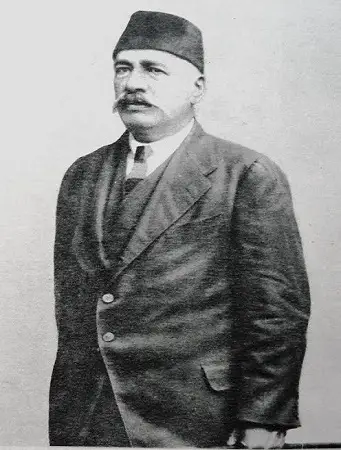
Bajram Curri (1862-1925), was born in Gjakova, distinguished himself as an activist of the national movement during the Renaissance period, as one of the political and military leaders of the popular uprisings against the Ottomans and of the struggle for the liberation and national unification of the country.
He was one of the organizers of the Albanian League of Peja (1899-1900) and an activist for Albania’s autonomy and the defense of the country’s territorial integrity; a main leader of the anti-Ottoman uprisings in the period 1908-1912, which culminated in the declaration of independence.
After 1912, he fought in Kosovo to defend it from Serbian occupiers. He did not accept the decisions of the London Conference of 1913, which detached Kosovo and other eastern and southern Albanian territories from the independent Albanian state. In 1918, he was elected a member of the “National Defense of Kosovo” committee and was one of its main leaders.
At the Congress of Lushnja, he was elected a member of the National Council, which appointed him minister without portfolio in the government of Sulejman Delvina. After Ahmet Zogu took power, he settled in Krasniqe. From this moment, he chose the path of armed action against state institutions. After the suppression of the “June Revolution” (1924), he was surrounded in a cave in Dragobi and was killed/killed himself on March 29, 1925. / Memorie.al