
Part Two
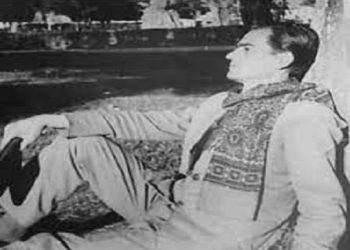
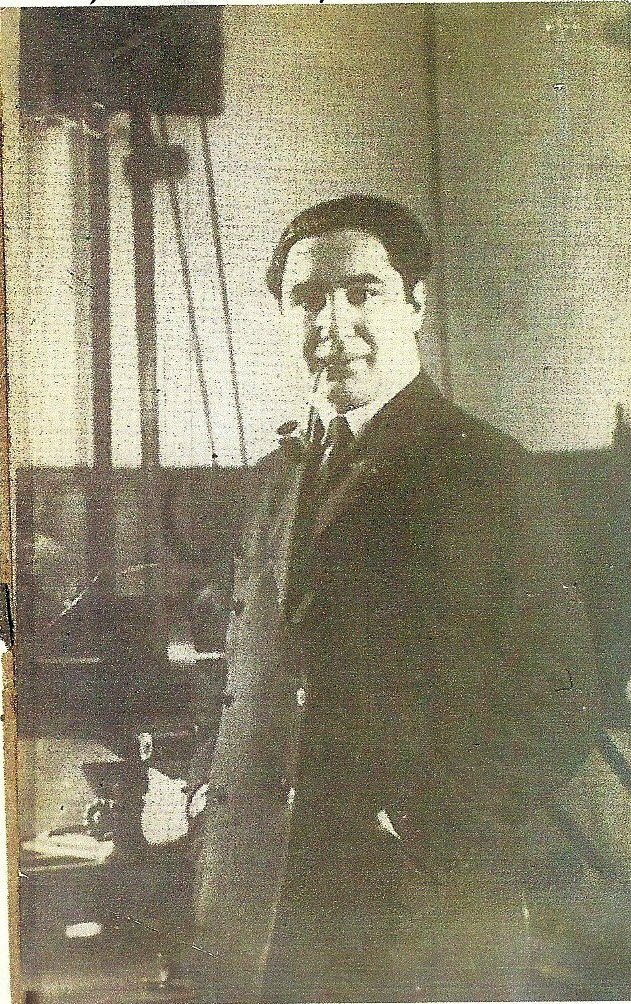
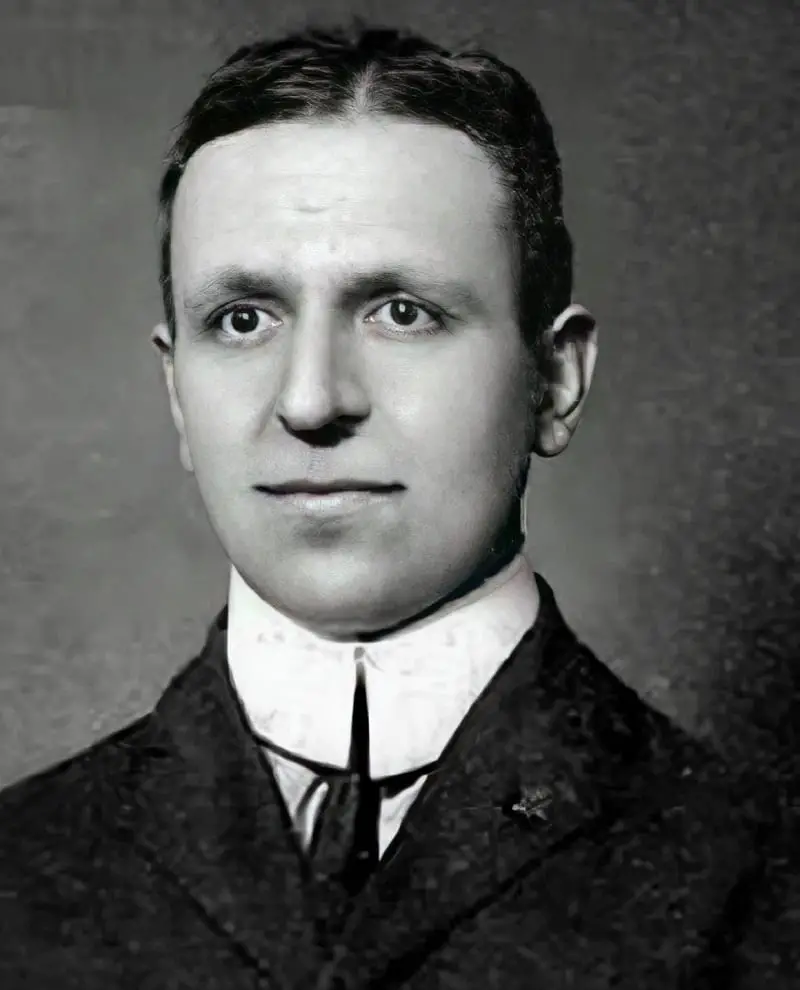
Memorie.al / In his dialogue with the great French poet Alain Bosquet, Jashar Qemali remembered in Paris his youth and his friendship with the two Albanian-Turkish brothers, Arif and Abedin Dino, grandsons of Abedin Pasha Dino, one of the prominent figures of the national movement at the time of the League of Prizren, and sons of Rasih Dino, one of the signatories of the Albanian Declaration of Independence, and also a loyal emissary whom Qemal bej Vlora sent to European chancelleries for the recognition of the new Albanian state…! Jashar Qemali described Arif as his spiritual inspiration, who, as he wrote; “through him I discovered the paths that lead to man. Even before the Dinos came to Adana, I knew their name and had heard about them. I had read Arif’s poems and seen Abedin’s drawings. I first met Arif and listened carefully to his advice. Arif was an admirer of Rimbaud, he even knew him by heart.”
Continued from the previous issue
In Greece, the Greeks knew him as a great master of drawing, as they noticed in the paintings exhibited in Athens or even in the poster of the Delphi Festival painted by him, in May 1930. Arif also liked Apollinaire very much, the friend of the great Albanian Faik Konica. Even in Faik’s magazine *Albania*, he had published writings in defense of Albania. He wrote verses inspired by Apollinaire:
In the blue hour,
The sap rises from the branch
Towards the apple,
Eve bites it,
The sap leaps
enters and wets
*the lips of the fire,*
that are always thirsty”!
Here is another love poem, dedicated to “princess F.S.,” as he writes in French, titled *Lettre d’amour* (Love Letter):
“Your white hand
can save me
from the madness[3] of insanity.
If you are
the one I adore
Come.
Otherwise
wipe this letter,
bury this letter,
in the crypt
of your dead
loves”.
Often, his poetry is also enigmatic, as in the poem The Broken Glass, written in French with the title Verre brisé.
On the terrace with marble tiles,
twelve glasses were broken,
a cascade of crystalline laughter
into small… fine… shards…,
Evening of bloodied marble,
cemetery night
in the morning the broken glass,
regains its laughter of light”.
His poetry always inspired Jashar Qemali, as did the poetic line of his drawing. “On days I didn’t go to work, I stayed with Arif, from morning till evening. We talked about ancient theater, Homer, the Hittite epic of Kumarbi, Gilgamesh, and as always about painting. Arif Dino was a great painter. He did not exhibit and only showed his paintings to friends. He wrote poetry in Turkish and French.”
Undoubtedly, Dino was one of the most imaginative poets of Turkey at that time and one of the most modern, but who remained unknown, as he wrote little, unlike the long literary itinerary of Nazim Hikmet, an equally modern poet for the time. Arif wrote:
“Double vision.
What do you see
in my heart?
– I see
ruined stairs.
No actor.
No spectator.
And on the stage
of shadow,
silence that
moves to tears,
*eternal drama*
in an eternal heart!”
Through his poetry, Arif thus leads us to other worlds:
“Tired, the sun sets on a roof.
Desperate, the moon seized the lightning rod
and the beauty sang:
You love me because I leave
but I hide from myself
And the reawakened echo, recoiling, will murmur
Silence”.
Most of Arif’s poems, written directly in French, have been lost or torn up by him. The poem “Jewish Triptych” can be described as a high-level poem, of the same level as the great modern poets of that time, in the metropolises of Europe:
“From the most beautiful of the Shulamites
the flowers of the sacred tree of Judah,
from your perfume springs and is reborn
the temple, the spring, and the laurel
and from you to me awakens
the rhythm of the dance and your voluptuousness,
since your lip is a reflection
of the golden and
bloodied plate of Salome…”!
… Thus wrote the poet. In this poem is not only the power of word and image, but also his knowledge of biblical history and Judaism. The story of the severed head of Jean-Baptiste returns and settles in his poetry, between amorous exaltation and the bloodying of a golden plate.
When his mother dies, on November 27, 1930, Arif writes the poem, *De Profundis*:
“Laughter, joy
weeping, pain
and death that comes after
my mother is dead”.
Cinema was also one of his passions: the American Griffith, the Soviet Eisenstein, as well as the revolutionary German Piscator. As written by scholar Nikos Stillos, who has referred to the memoirs of Ilia Vasilas, a friend of Arif’s in Greece, “Arif moved to Athens, where he was a collaborator and shareholder of DAG Film A.E., which was the first cinematographic company in Greece, founded in 1920 by the Gaziadhi brothers, originally from Istanbul.
In Athens he worked as a painter, but also as an actor, and one of the best-known silent films to me, in which he acted, is: *Port of Tears*, by DAG Film, shot in 1928, starring Athanasia Mustaka and Emilio Veakis. After the first screening of this film, which took place in January 1929, he returned to Istanbul and began writing art criticism in the magazine Yeni Adam.
Upon his return to Istanbul in 1929, according to the writings of Osman Kurrizi, which are still unpublished in a book, he brought with him the musician from Preveza, the famous clarinetist Niko Xharas, to continue his studies further, which he arranged for him, also giving him a Turkish clarinet, which today is in the collection of Niko Xharas’s son, Dhimitri.
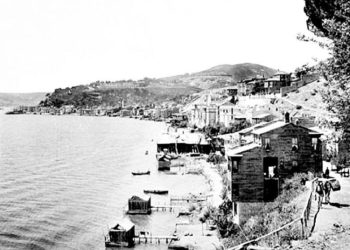
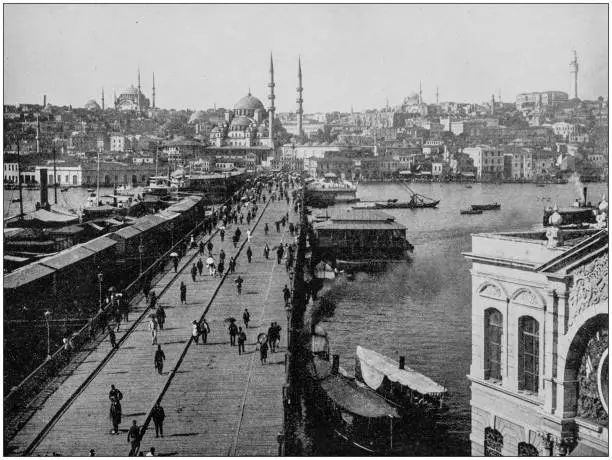
In the years 1939-1942, publishing poems in the progressive magazine *Yeniler*, he joined the movement against the fascist occupation and consequently was interned in the small town of Mecitozu in the Çorum region of Turkey, and later in Adana, together with his brother, Abedin. In 1951 he returned to Istanbul, to the small house he took in the “Kuzguncuk” neighborhood, in the Asian part of Uskudar of that city, where he lived alone in the last years of his life, as he was not married, and where he also died on March 30, 1957″.
Thus, in Arif, all three types of art converged: painting, poetry, and film. And each of his creations was an expression of his humanistic philosophy, a desire for the spiritual perfection of man.
“I would be God himself
if I were completely Human
free.
But God (if He exists)
is He truly
free?”
And in another poem he added:
“I don’t want to be zero
to add after one
its values.
I don’t want to be zero
before one to undo
its values.
I am equal to one”.
Entretiens avec Bosquet, “Gallimard” publications. / Memorie.al