By Dashnor Kaloçi
Part Eight
Memorie.al / The history of parliamentary elections in our country, or more accurately, the attempts at elections, have its origins in the era of Ottoman rule when Albania was part of the Turkish Empire. One of the first Albanian deputies elected to the first Turkish Parliament, which opened its proceedings in December 1877, was Abdyl Frashëri. However, that parliament did not last long, as it was dissolved by the Sultan himself due to the outbreak of the Russo-Turkish War. Following the dissolution of Turkey’s first parliament, there were several other attempts at elections, but they all failed for various reasons. The first regular elections in Albania were held only in 1908, when the Young Turks came to power in Turkey. Those elections were not direct but were held through representation, otherwise known as the two-tier voting system (secondary electors).
The first Turkish Parliament opened on December 10, 1908, and out of 266 deputies, 27 were Albanians elected from the four vilayets of Albania. At that time, members of the “Committee of Union and Progress” in Turkey, which included many Albanians, split and grouped into three political factions. The first group was “Union and Progress” (the Turkish-Macedonian party) with 164 deputies, consisting of 130 Turks, 5 Arabs, 1 Greek, and 15 Albanians, led by Hasan Prishtina, a deputy from Kosovo.
The second group, called “Liberal Union” (the Greek-Albanian party), consisted of 45 deputies and included 12 Albanians led by Ismail Qemali. Among the other Albanian deputies in the Turkish Parliament at the time were Esad Pashë Toptani, Nexhip Draga, Rexhep Pashë Mati, etc. After 1908, there were several other elections where Albanians continued to vote for their representatives in the Turkish Parliament, a process that lasted until November 1912, when Independence was proclaimed and Ismail Qemali was elected head of the Government.
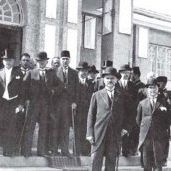
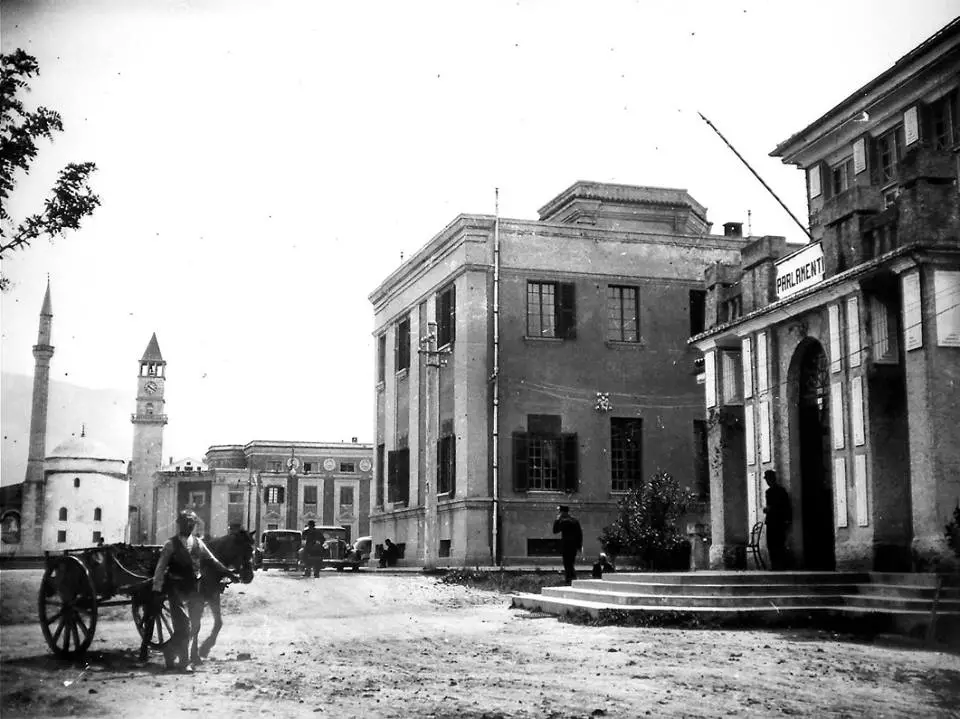
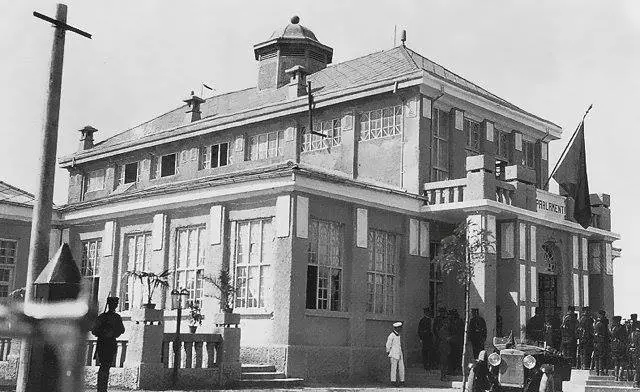
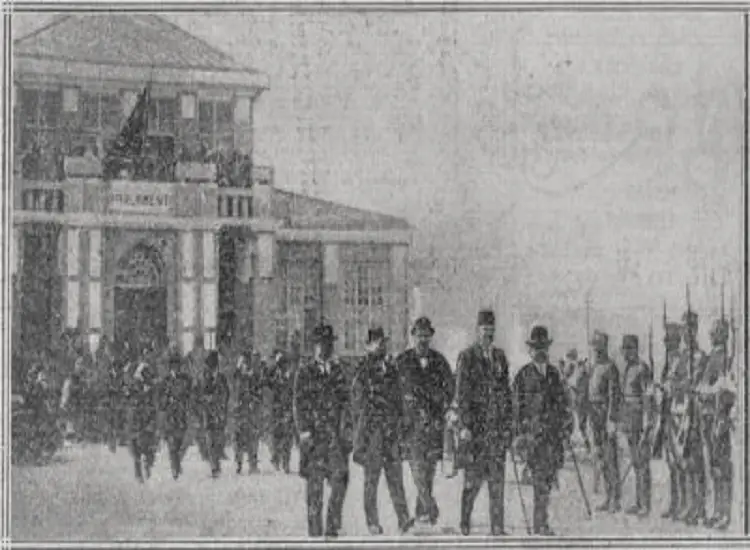
Meanwhile, the first parliamentary elections in Albania took place in the spring of 1921, as they had not been held until then due to World War I, in which Albania was also involved. The first Albanian Parliament opened on April 21 of that year; the first building of the Albanian Parliament was located where the Academy of Sciences stands today. In that parliament, 76 deputies participated, elected following a relatively regular process from the nine prefectures of the country: Berat, Durrës, Elbasan, Gjirokastra, Korça, Kosovo, Shkodra, Vlora, and the Albanian colony in the USA.
As in the past, those elections were conducted through a system of representation, or secondary electors, where based on territorial division, representatives of each province had the right to elect their deputy. The aforementioned, along with a brief history of parliamentary elections in Albania from that period until 1991, has been published by Memorie.al in previous issues. Here, we are publishing the complete Basic Statute of the Albanian Republic (the Constitution) of 1925, where a special place is held by the parliamentary election legislation of that time, as well as the Parliament’s regulations regarding the rights and duties of deputies, published by the “NIKAJ” Printing House in 1925.
Continued from the previous issue
Criminal Code of 1928
Book One
TITLE X
Extinction of Criminal Actions and Penal Sentences
ARTICLE 91. – The death of the defendant extinguishes the criminal action.
The death of the convict extinguishes the sentence, including unpaid fines and all penal effects of said sentence; however, it does not prevent the execution of confiscations or court costs related to a judgment that became final before the defendant’s death.
ARTICLE 92. – Amnesty extinguishes the criminal action and ceases the execution of the sentence, as well as all its penal effects.
ARTICLE 93. – A pardon (grace) which entirely remits, reduces, or commutes the punishment, also ceases the legal interdiction of the convict and the incapacities specified in point II of Article 34, provided that these are not legally attached to the punishment into which the pardon decree has commuted the original court sentence; however, a pardon does not lift the disqualification from public office, nor the suspension from exercising a profession or a trade, nor the special supervision by the Public Security Authority, unless expressly noted in the pardon decree.
ARTICLE 94. – In those offenses where prosecution depends on the request of the injured party, the withdrawal [of the complaint] by said party extinguishes the criminal action; however, it does not cease the execution of the sentence, except where the law specifies.
The withdrawal of the personal plaintiff from the action in favor of one of the defendants has the same effect for the other defendants of that offense, in cases where the law does not order otherwise.
The withdrawal has no effect on a defendant who refuses to accept it.
ARTICLE 95. – Amnesty, pardon, and the withdrawal of the personal plaintiff do not grant the right to the return of confiscated items, nor of the sums paid into the State Treasury as fines.
ARTICLE 96. – When a sentence of death, life imprisonment, or heavy imprisonment for more than ten years is entirely pardoned or commuted to a lighter punishment, and the pardon decree does not order otherwise, the convict is placed under special supervision of the Public Security Authority for a period of three years.
ARTICLE 97. – Statute of limitations (Prescription), except in cases where the law orders otherwise, extinguishes the criminal action:
After twenty years, if the defendant’s offense was punishable by death or life imprisonment;
After fifteen years, if the defendant’s offense was punishable by heavy imprisonment for a term of no less than twenty years;
After ten years, if the defendant’s offense was punishable by heavy imprisonment for a term between five and twenty years, or imprisonment for more than five years, or permanent disqualification from public office;
After five years, if the defendant’s offense was punishable by heavy imprisonment or imprisonment for no more than five years, or internment, or temporary disqualification from public office, or a heavy fine;
After two years, if the defendant’s offense was punishable by light imprisonment for more than one month, or a light fine exceeding three hundred gold francs ($300$ Fr. ari);
After six months, if the defendant’s offense was punishable by light imprisonment or a light fine in an amount less than that indicated in the preceding number, or suspension from the exercise of a profession or a trade.
ARTICLE 98. – The statute of limitations begins to run: for completed offenses, from the day they are completed; for attempted or incomplete offenses, from the day the last act of execution was performed; for continuous or permanent offenses, from the day the continuation or permanence ceased.
If the criminal action cannot be initiated or prosecuted without a special authorization or before a matter referred to another court is resolved, the statute of limitations remains suspended and only resumes from the day the authorization is granted or the matter is definitively resolved.
ARTICLE 99. – The continuation of the statute of limitations for a criminal action is interrupted by the declaration of a sentencing decision rendered either in person or in absentia.
Likewise, the statute of limitations is interrupted by a warrant of arrest, even if it remains unexecuted because the defendant is hidden or has absconded, as well as by any court measure directed against him for the alleged offense which has been legally communicated to him; however, the interruptive effect of the warrant or court measure shall not extend the criminal action for a period exceeding, in total, half of the terms specified in Article 97.
If the law specifies a statute of limitations shorter than one year, its continuation is interrupted by any act of prosecution; however, if within one year from the day the statute of limitations began (pursuant to Article 98) a sentencing decision has not been rendered, the criminal action is barred by limitation.
An interrupted statute of limitations begins to run anew from the day of interruption, rendering void the portion of time that elapsed until that day.
The interruption of the statute of limitations has effect for all those who participated in the offense, even if the interruptive acts were directed against only one of them.
ARTICLE 100. – When a convict is retried for any type of legal reassessment, the statute of limitations is calculated based on the punishment that would be assigned by the new judgment, in the event that this punishment results in a lesser sentence than the one assigned in the previous decision.
ARTICLE 101. – Except in cases where the law orders otherwise, the sentence is barred by limitation:
After thirty years, if the convict was sentenced to heavy imprisonment for thirty years;
After twenty years, if sentenced to heavy imprisonment or imprisonment for a term exceeding five years; however, if the assigned sentence exceeds twenty years, the limitation period is equal to the duration of the sentence.
After ten years, if sentenced to heavy imprisonment or imprisonment for no more than five years, or if the punishment is internment, temporary disqualification from public office, or a heavy fine;
After four years, if the punishment is light imprisonment or suspension from a profession or trade for more than one month, or a light fine exceeding three hundred gold francs ($300$ Fr. ari).
After eighteen months, if the convict was sentenced to light imprisonment, suspension from a profession or trade, or a light fine less than that indicated in No. 4.
A sentence involving multiple types of punishment is barred by limitation upon the expiration of the term assigned for the most severe punishment.
Special supervision by the Public Security Authority ceases to have effect once the sentence is barred by limitation.
ARTICLE 102. – The statute of limitations for a sentence begins to run from the day the judgment becomes final, or from the day the execution of a sentence that had already begun is interrupted in any manner.
Any act by the Authority competent for the execution of the judgment, which has been legally notified to the convict, interrupts the statute of limitations; likewise, for punishments against personal liberty, the limitation is interrupted by the arrest of the convict when such arrest is made for the execution of that judgment.
Similarly, the statute of limitations for a sentence is interrupted if, during its duration, the convict commits another offense of the same kind.
ARTICLE 103. – When temporary disqualification from public office, other temporary incapacities, or the suspension from a profession or trade is attached to another punishment or is the effect of a sentence, the limitation period for said disqualification, incapacity, or suspension is not completed until a period equal to double the respective time has passed; this period begins to run from the day the other punishment has been served, or the sentence for that punishment is barred by limitation, or is extinguished for any other reason.
ARTICLE 104. – The time specified for the statute of limitations of criminal actions and sentences is calculated according to the rule in Article 31.
ARTICLE 105. – The statute of limitations for criminal actions and sentences is applied ex-officio (by the court itself), and neither the defendant nor the convict may waive it.
ARTICLE 106. – Permanent disqualification from public office and any other permanent incapacity resulting from a sentence cease with the restoration of rights (rehabilitation) by court decision, except when the law orders otherwise.
If the disqualification from public office or incapacities are attached to another punishment, the restoration of rights cannot be requested except by a convict whose conduct presumes their improvement and after five years have passed since the day the punishment was completed, or from the day the sentence was extinguished by pardon, or after ten years have passed since the day the sentence was barred by limitation.
If the disqualification from public office or incapacities were not attached to another punishment, the restoration of rights cannot be requested until five years have passed since the day the judgment became final.
The time specified for requesting the restoration of rights is doubled for recidivist convicts.
The restoration of prohibited rights is carried out in the manners prescribed by law and brings about effects according to the rules indicated therein.
ARTICLE 107. – When the law does not order otherwise, in contraventions (misdemeanors) for which only a fine of no more than three hundred gold francs ($300$ Fr. ari) is assigned, the defendant may terminate the continuation of the criminal action by paying, before the trial begins, a sum corresponding to the average (la moyenne) of the fine assigned for that contravention, as well as the costs of the action.
ARTICLE 108. – The extinction of a criminal action does not prejudice a civil action for the return of items and for damages, except when the extinction has occurred because the personal plaintiff has withdrawn [the complaint] and has not expressly reserved [their rights].
ARTICLE 109. – The extinction of a sentence does not prejudice a civil action for the return of items, for compensation of damages, and for court costs, except when the extinction has occurred due to amnesty; in such a case, the right of the Finance [Ministry] to collect court costs ceases.
ARTICLE 110. – There is no statute of limitations for offenses committed outside Albanian territory against State security, for which this law assigns a punishment of heavy imprisonment or imprisonment for more than five years. Memorie.al
To be continued in the next issue