By Arjan Puto
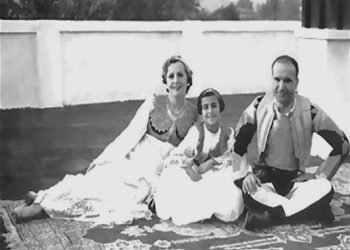
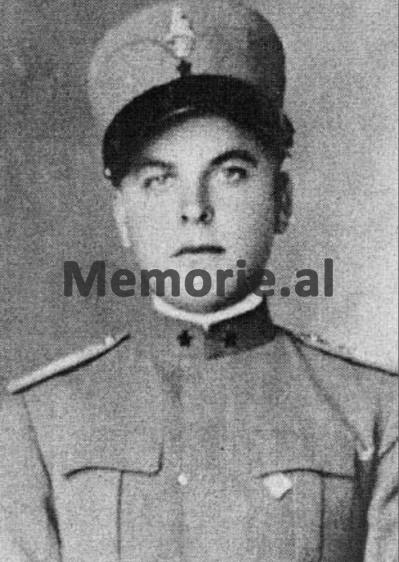
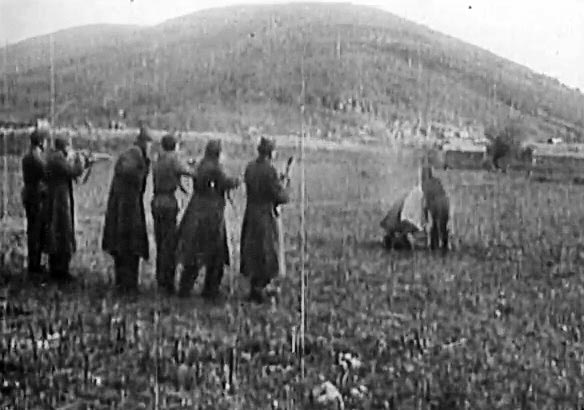
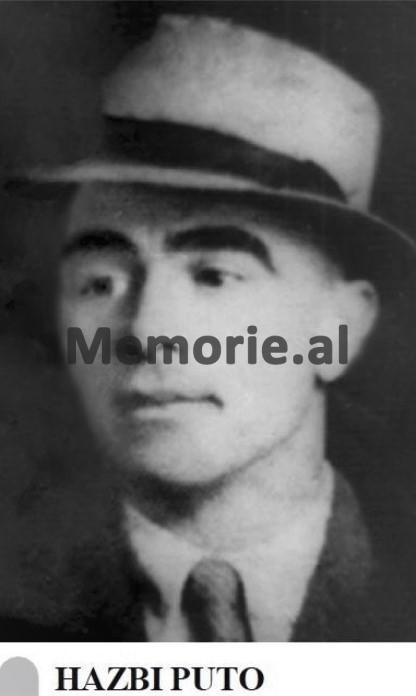
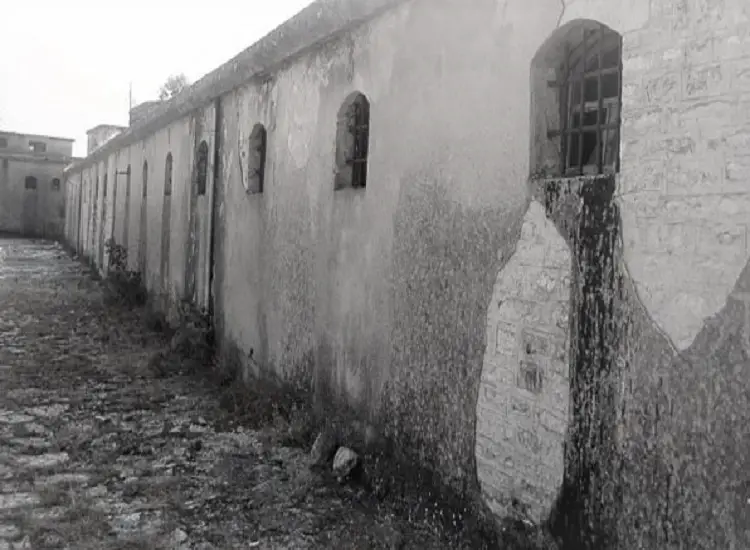
Memorie.al / Arjan Puto were born in the city of Gjirokastra, on July 5, 1935. He attended elementary school in his hometown, while he attended high school in Korça, where his family moved after the shooting of his father, Hazbi Puto, in in 1947, by the communist regime of Enver Hoxha, accused of being an “agent of the Anglo-Americans”, after being held for several months under torture in the Castle Prison of Gjirokastra. As the son of a gunman, he was denied the right to continue his higher studies and only in 1960, he continued the Faculty of Natural Sciences (Biology department) without a break from work. After that, for nearly 30 years he worked as a literary proofreader of school textbooks at the “Mihal Duri” Establishment in Tirana. After the overthrow of communism in the early 1990s, he published many articles and stories in the press of the time. The writing we have selected for publication talks about the arrest and shooting of his father, Hazbi Puto, in the Gjirokastra Castle Prison in 1947.
MEETING BEFORE THE SHOOTING
Wednesday 11th June 1947. A Home Branch officer approached the front door. We were horrified, but we also hoped: maybe the answer came, for the father’s life?! No, he asked one of the family members to go with him. It was up to me, (then 12 years old), to follow him.
The father lived the hours of terrible agony, in the cell of death. He was waiting for the implementation of the decision, given a month ago.
We climbed the stone steps and finally, we reached a compartment like room where the officer of the guard was staying. After a while, from a narrow, very dark corridor, a disfigured being pushed towards me. Barbell! This was my father, Hazbi Puto, sentenced to death by a “people’s court”, accused of being an agent of the Anglo-Americans.
A year of torture had changed his shape and color. On the visible parts of the body, I saw traces and marks of wounds. Before my eyes appeared again the bloody change that they received every Saturday. On his feet, instead of shoes, he wore a pair of clogs.
In that creepy, very scary environment, he took the time to ask me about everything. Not daring to look straight at his tearful face and lipstick, with my head resting on his chest, I answered the questions in half words.
For a moment I overcame myself and said: “You will come home, between us, you have no fault, we have prayed…”! The answer was shocking to me: “No, I will not see you again…” and the tears of the hurt soul quickly wet my head.
After 5-7 minutes, our meeting was suddenly interrupted by the officer present, with few words and many tears, painful and longing. His arms wrenched me from my father’s emaciated body.
Time forgets and blurs many disasters, but not those that kill the soul and mind of a child.
Descending the stone steps of the castle, I was confronted by the head of the Interior Branch (the head of torture). I avoided that hateful face, but I couldn’t. He followed my exit with his eyes. I walked on the street as much as I could and reached home in tears. Shocked and homesick, I still lived with the hugs, with his body odor and above all, with that soul-killing scene I lived through.
I waited for the next morning at the window. Somewhere, from the roof of the house, I heard the wailing voice of the cuckoo. From what I had heard about this ominous bird, all sorts of thoughts crossed my mind. As the day went well, together with my sister, we took the road to the Castle Prison. She was holding a small container of milk in her hands, while I was holding packs of cigarettes.
As we arrived, the guard officer with a cynical smile, said to us: “What are you looking for? Your father is no longer here.” We started to cry and turned back confused. Our feet took us home again. I locked myself in a room and fell upside down on the bed. I cried silently until I felt that the pillow was made to be squeezed by tears.
Around lunch, a relative of the family, broken in age, came to our house. He hugged our grandmother, our still young mother, and then in turns all the members of our big patriarchal family. He, taking his mouth, uttered that ghastly news; father was no longer alive, he was shot last night…!
The sobs and cries began. Our roof gathered that day the pains of the mother, who was left without a son, of the woman without a husband and of the children, who were still immature, without a father. Fear had entered the core of people and they were reluctant to come for comfort at once.
In such cases of death, Enveri (horror name) also broke the traditional customs of the people. The class war, which resembled a fierce racial persecution, penetrated like a plague from personal life, to family life and then beyond to the kinship circle.
The executioner Enver responded to the family’s request for a reduced sentence by implementing it: five or six hours after that tragic meeting, the father was shot. The morning dew that dawned was mixed with the blood of an innocent man.
Now the question arises: did the meeting with the father have a human purpose? No. The goal was clear: along with the physical disappearance of the parent, the child was also killed morally and spiritually, for life.
People remember the days of childhood, as the days of greatest happiness, as the most fascinating days… but I, like hundreds and thousands of other children, who lived in the Enverian communist hell, were denied this natural right.
I grew up as I grew up, I also created a family, but I did not enjoy the joys of life. I carry with me in my mind and soul, that very painful memory, the meeting with my father before the shooting. Even the cigarette packs were kept for a long time, as evidence of his last request.
Today I wrote down this painful event.
Now I ask: why did they torture and then shoot our father, completely innocent? His only “guilt” was American citizenship and employment at UNRRA, the UN organization that helped countries destroyed after World War II. Memorie.al