

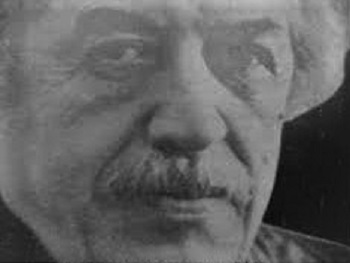
By Prof. Dr. Nebi Dervish
– The writer Kalosh Çelilku called Mehmedali Hoxha: a complex figure, a visionary and a man of faith, words and a golden pen –
Memorie.al / At the beginning of 2012, 20 years have passed since the death of Mehmedali Q. Hoxha (1924-1991) – torch teacher, poet, journalist, editor, visionary, man of faith, word and golden pen. About his complex figure, so far they have written: Kalosh Çeliku, prof. Dr. Selajdin Mehmeti and others. The number of Strugans, who throughout their lives spared neither effort nor sacrifice for the good and the bright future of the Albanian nation in the eastern regions, really remains large. One of these bright constellations of figures, undoubtedly the smallest, is Mehmedali Q. Hoxha or Mustafa (surname in ‘Normalen’ “Sami Frashëri” in Pristina).
Visionary, emblematic figure of Albanian letters, beloved figure and author of the fates of the pioneers after 1945, figure anathematized by the communist monist system, drafter of primers and reading books for primary schools, author of dozens of poetry books and finally a man of his word, faith and pen.
High national awareness, broad cultural formation and courage to pose and solve more complicated problems in the culture of our people in the eastern and northeastern regions of Albania. Immediately after the Second World War, i.e. after 1945, there was no room for dilemmas or reluctance in the work of Mehmedali Mustafa – Hoxha.
The multitude of problems he dealt with, faced with the time when he worked and lived, make him a bright and complex figure of the time and allow new values to be extracted.
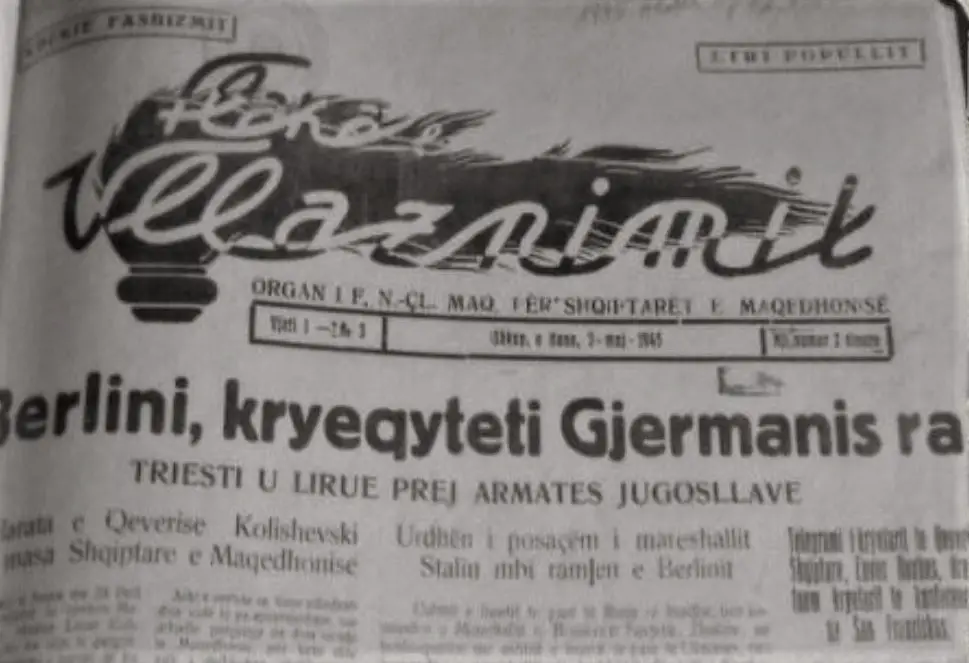
The awakening of national consciousness, dictated to Mehmedali Mustafa – Hoxha, a dense and diverse activity; as a torch teacher, pedagogue, poet, journalist, editor of “Flaka e Vëllazerim”, editor of children’s magazines, designer and editor of school textbooks and primers, author of many articles, etc., which served as a basis and starting point for the further development of of our education and science, in the eastern and northeastern Albanian territories, after 1945.
With this formation, even a spark was enough to set his creative mill in motion, always smart and sensitive.
Mehmedali Mustafa – Hoxha, was born on January 5, 1924, in Ladorisht of Struga and he comes from an honorable family with educational and national traditions.
He completed primary school in the Serbo-Croatian language in his hometown, while secondary school, Madrasa in Skopje, on the eve of the Second World War. Meanwhile, the three-month pedagogic course, at the “Normal” “Sami Frashëri” in Prishtina, in 1942. He started the bright work of the torch of education in the villages of Struga, first in Kalisht, then in his hometown, until 1947, and then moved to Skopje.
In his hometown Struga and, in Skopje, he is known as one of the most diligent and tireless teachers in not only educational, but also national education of entire generations, who then successfully returned to his homeland as a cadre with high professional training. This greatly pleased the torch teacher and exemplary pedagogue.
Friends, colleagues and all those who knew him say that Mehmedaliu was passionate about reading various works, especially those of the national tradition. After settling in Skopje, in 1947, he first worked in the editorial office of the newspaper “Flaka e Vellazerimit”, as a journalist and editor. From 1953, when the children’s magazine “Fatosi” was published for the first time, Mehmedali Hoxha was its editor-in-chief, until he retired.
He is also among the first authors who appeared before the readers in Macedonia, with books and poems for children. And, the writer and publicist, Kalosh Çeliku, is right when he says in the stands and literary meetings, that: after the Second World War, Kosovo had Esat Mekuli, while the Albanians in Macedonia had Mehmedali Hoxha, the visionary, the man of faith, word and pen.
His literary activity is as follows: The first book for children “Vjersha” (1952) together with Lutfi Rusin, editor-in-chief of “Detska Radost”, founder and father of “Gezimi” and “Fatos” (magazine for children in Macedonia) ) and author of several children’s books:
“Te croni” (1960), “When the wind blows” (1962), “Over there on the hill” (1974), “Our days” (1979), “School song” (1984), “When I was born” (1971), “In the eyes of May” (1973), “Schoolgirls” (1976), “Eyes of summer” (1985), “Tell me the name” (1989 – selection in Pristina), “Një brzez vadh” (1990 – selection in Tirana etc. ).
Mehmedali Hoxha was born and grew up in a family with educational and patriotic traditions, which from early childhood was filled with feelings of patriotism and thirst for knowledge. The legendary village where the poet Mehmedaliu was born, Ladorisht, was burned three times during recent history by foreign invaders.
Many young people from this village were victimized and sacrificed “for the one word – freedom”. “And the word freedom will almost permeate all of his children’s poetry,” said Prof. Dr. Selajdin Mehmeti, in his manuscript book.
So, Mehmedali Hoxha is one of the first owners of Albanian children’s literature in Macedonia. He was the teacher of many young creators who today are proven names in Albanian literature: Abdulaziz Islami, Kalosh Çeliku, Fadil Bekteshi, Vahit Nasufi, Fejzi Bojku, Halil Zendeli, Ramadan Zeneli, Puntorie Ziba – Muça, Adem Abdullahu, Nuhi Vinca, etc.
Mehmedali Hoxha stands out for his physiognomy and his poetic individuality, which he expressed in his first collections of poems, such as “Te kroni” (1960), etc.
At the center of the poet’s interests will be humanistic fate, the fate of the common man, whose fate was “in his hands – the executioner himself”. Despite all the great suffering, he will overcome all the atrocities caused by the agallars and beys. The author remembers the life of this man full of troubles and worries and conveys it with the care of a pedagogue and a literal torch teacher.
Artistically concretizing the themes and motifs of his poems, the poet Mehmedali presents the pride of his people’s past and when “the liberation war broke out, big and small took up arms – to fight for freedom”. In this war, many brave men stood out who fell on the altar of freedom.
In his verses, he immortalized the figures of many of our heroes, such as Emin Durak, Ibe Palekuqi – the brave girl from Dibrana, who fought as an “Albanian sorkade for freedom” sang to Liman Kaba – who fought and was killed bravely – who future generations to live in freedom, because “Freedom is the most expensive” – says the author, sang to Xheladin Zeqir – a rare brave, Bajram Shabani – who fell bravely “for the motherland”.
In the characters of these heroes, the author will embody the best features that adorn them, such as humanity, bravery and courage. He sympathizes with these figures because they are brave and brave, and triumph over the evils of war, defeating crime and criminals. Their physical and tragic death made them spiritually immortal. It is from the bitter past and the bloody war that the poet gets the material for his poems. And, in his poems, he treats children as equals to himself, telling them about his bitter experiences.
His presence in the poems is sometimes seen in the role of the describer and sometimes in the role of the observer, thus creating the belief that what he tells the children, he experienced in his childhood and that he remembers now in his old age. All this creates the atmosphere of closeness of the leading poet to the little readers, who imagine him as a very close friend to them.
And this is true. In his poems, he expresses his great love and loyalty for them. With his verses, he reveals to them a whole fascinating world, a world where everything comes to life, a world where there is not only misery and suffering, but also play, jokes, but also sincerity, a world where they face each other for first time with life problems, which they have to solve.
He constantly observes them, follows them step by step, rejoices with them, when he sees them with books in hand, eager to gain as much knowledge as possible and to become skilled in life. And Prof. is right. Selajdin Mehmeti, when he says that the poems of Mehmedali Hoxha, stand out for the lyrical intonations that are permeated by different emotions and which, together with the technique elaborated in them, form a special unity.
The abundance of motifs, the variety, breadth and artistic values of Mehmedali Hoxha’s poems rank him among the well-known poets not only in Macedonia, but also beyond. Mehmedali Hoxha was also noted for drafting the Primer in the Albanian language, with which dozens of generations and hundreds of thousands of students in Kosovo and Macedonia learned, from 1967 onwards.
He designed and edited several reading books for primary classes, where the author of this portrait also studied with one of them in 1964, in cl. fourth grade. Mehmedali Hoxha, like many prominent progressive Albanian teachers and intellectuals in the eastern regions, was not seen favorably by the Slavic-communist rulers, who eavesdropped and followed every move of this intellectual of complex proportions, waiting for the opportunity to smear them as anti-state and anti-Slavic.
Terrible, how far that bureaucratic and police apparatus reached. It was the end of 1969. At a casual party, with a group of “friends” and poets, among whom: Slavko Janevski and Branko Gapo, who also became witnesses in the courtroom, Mehmedali Hoxha, as a visionary and with intelligence extraordinary, he would say: “The time will come when you too (he alluded to Sllavko Janesvki – poet and others) sweep the streets of Tirana”.
The next day, large police forces, after surrounding his apartment, will arrest Mehmedal. The arrest and conviction of Mehmedali Hoxha, a rare worker in these Albanian spaces, caused great reactions among the intellectuals of Kosovo, who as a single body, stood up in defense of his figure. In the infamous prison of Idrizova, Mehmedaliu stayed for 18 months (end of 1968 to 1971).
Albanian fellow sufferers in this prison evoke memories of this emblematic figure, especially for his manly attitude and those we, the younger prisoners, are given courage and hope (Irfan Vlashi).
So, finally, especially remembering many years of his life and activity, knowing him in recent years and valuing him closely, but fully agreeing with prof. Dr. Selajdin Mehmet and the writer Kalosh Çelik, I finally chose the title: “Mehmedali Hoxha – complex figure, visionary and man of faith, word and golden pen”.
And, at the very end, I conclude this article dedicated to Mehmedali Hoxha, an emblematic figure and patriarch of the highness for children, a man who was endowed with human and national virtues, so that this figure should be given attention with a special monograph and let’s raise them, why not a bust or a statue in the village of his birth or, why not in Skopje, where his remains rest.
Although I tried several times to contact the members of the Hoxha family, I don’t know why they didn’t find time to meet; maybe the reasons are objective or subjective. I wrote a modest article to honor this personality, who deserves more than that.
However, from a tombstone I say that Mehmedali Hoxha is raised in our hearts, which for almost 40 years, melted himself so that we could grow and rise, melting life for Albanians in Macedonia and Kosovo. Memorie.al