By Shkelqim Abazi
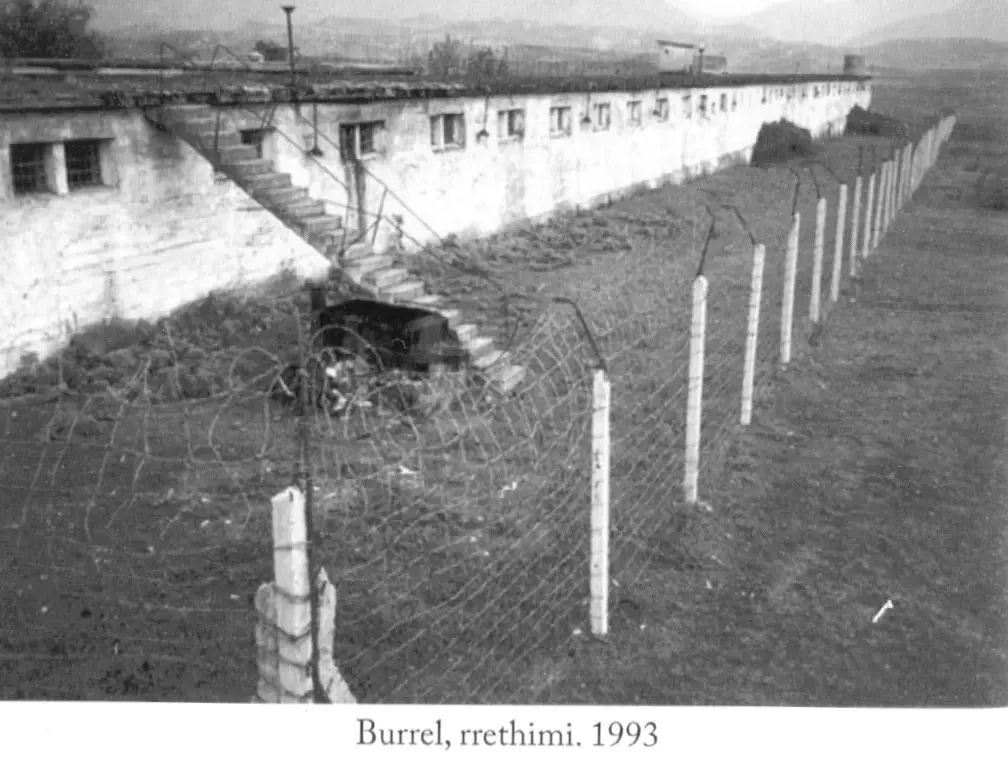
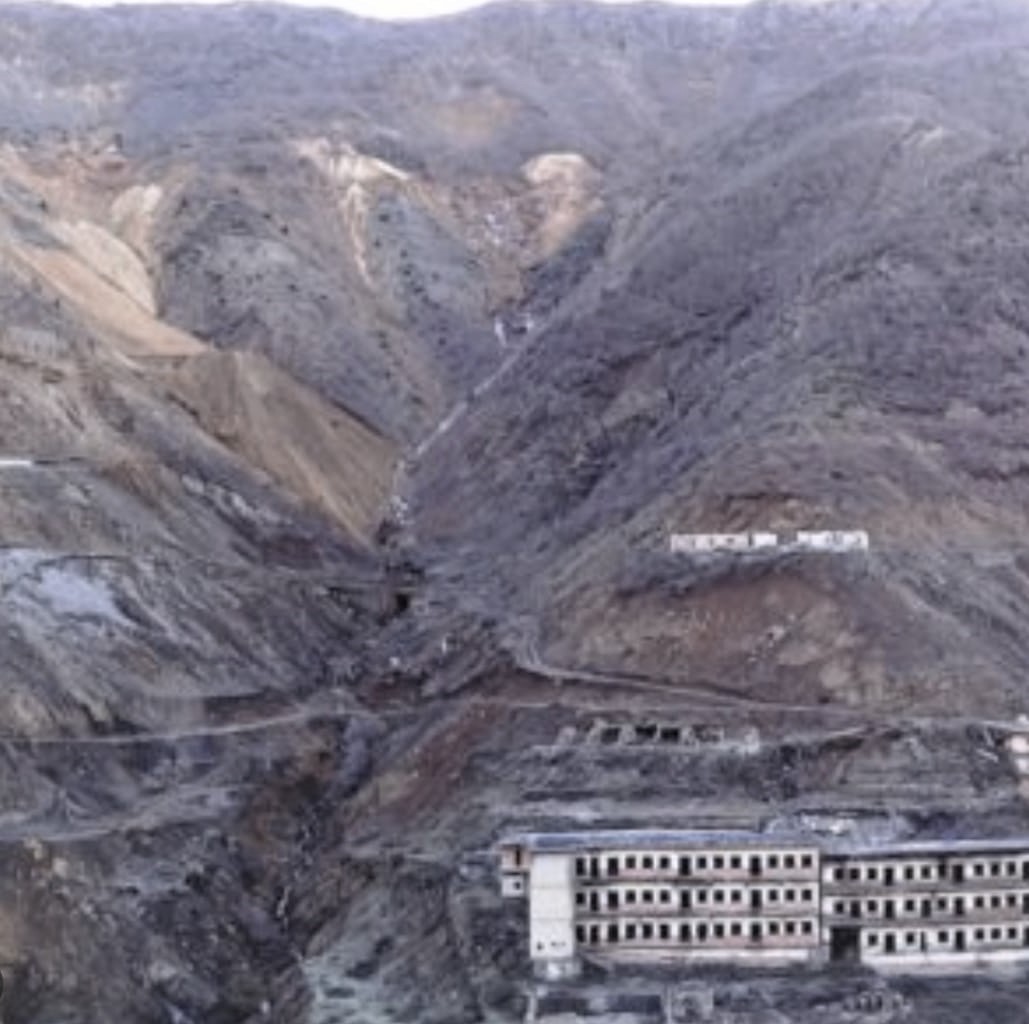
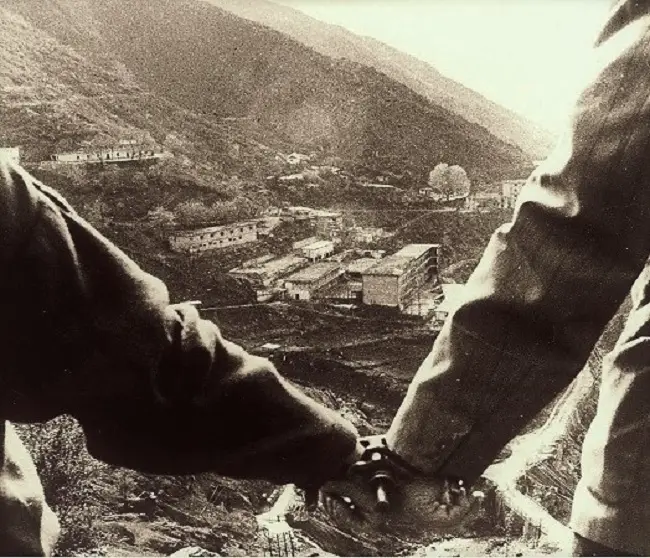
Memorie.al / Kampin-burg of Repsi, they had installed it to the right of the Fan valley, on a not very steep hillside. In the journey of thousands of centuries, Fani had divided that lump into two parts, almost equal, had created a giant bed between them, for the small amount of water it transported towards Mati. In this segment, he walked parallel to two side directions, and then as far as the eye could see, he was lost behind a sudden elbow. Just after that bend, there was the bridge that joined the two side parallels, one winding towards Spaç and climbing into the depths of Oroshi and the other at its end.
The entire area of the hill, on the eastern side, was surrounded by a barbed wire fence, about three meters high, with a double fence. Every fifty meters, a checkpoint was erected, where soldiers armed with machine guns stood guard and in each eye, they had installed a light machine gun.
At the foot of the hill, across the river bed, a few meters below the fence, the road to the deep areas was yellow. This road was all potholes, not maintained. During the rainy season, the swollen streams that came down from the surrounding hills turned it into mud and turned the whole segment into a “road of suffering”.
Amidst the sticky and annoying muck, the wheels of the cars wobbled, like a curse for the drivers and the poor villagers of these areas.
There, the winter was bitter. The wind was cold and windy, creating some whirlwinds that managed to change the direction of even the raindrops. When you realized that the rain was falling down, from the ground to the sky, because of the slope that gave it a dizzying whirlwind, you could say that you entered another orbit, where other gravitation laws were operating.
Still not touching the ground, the liquid crumbs changed direction and turned into goblets that embedded themselves in the flesh. On the sloping sole, the frosts formed a polished ice shoe, so that when you stepped on it you thought you were sliding on a skating rink. Many convicts paid dearly for it in those ravines, they were badly maimed, especially the elderly who could barely stand.
The opposite happened in summer, the prolonged drought was accompanied by high temperatures and turned into a nightmare. An inseparable haze of yellow smoke hung in the air. Driven by the directionless currents, this dusty mass turned into a dense cloud that tired the eyes, and gave the panorama a color of disgusting ocher, so much so that you could not distinguish other colors!
When you happen to pass their first and see yourself covered by this verdhan tissu, you will feel like you are walking through the dunes of the Sahara.
The camp cowered under this veil of pallor, like a corpse under a shroud. The atmosphere was saturated with unhealthy air, always polluted with all slime, and if you add to this the insufficient amount of drinking water, that even the little that came had a bitter taste, the environment turned into a dump and the camp itself, into an environment unfit for normal life.
These factors had a negative impact on the health of the vast majority of convicts, who suffered from ulcers, respiratory tract diseases and especially tuberculosis. From the first day I got there, I was faced with the worst, the whipping fever. It was early winter 1968, November 24 to be exact.
When they opened the iron, narrow door that led us there, we found ourselves trapped in a type of earring, with a triple enclosure. The policemen who accompanied us from Shkodra urged us to get off. The strangers who met us screamed and shouted.
Confused by the screams and the bright lights, we couldn’t get our bearings. We were completely dumbfounded, the mishmash of orders, which the dog in the area did not understand, shocked us.
The attendants ordered: “Hurry up, hurry up, you’ll catch us in the evening!”, the waiters replied: “Yes, slow down”! In the middle of the commotion, the sticks started rattling, one was throwing, the other was cutting, and you didn’t know where to look before. I took some good hits too.
Finally, the accompanying policemen, annoyed by our clumsiness, got on top of us and threw us out of the car, threw the few rags we had with us on top of us, then took our German jackets, which they put in a crate.
We found ourselves between the wires, surrounded by camp policemen, under the fierce gaze of a dog with bared teeth. Those who brought us quickly closed the handover report, boarded the car and greeted us in the most ghastly way: “Zi e ma zi!
Don’t bite my head and throw that skin, stick to it”! Oh God! I had never heard a more shocking curse until then. Already without the irons in our hands, we were pushing our frozen limbs from the cold, but rather from the pain caused by standing for a long time. We remained between the barbed wire, squeezed like a sandwich.
Just when we thought we were out of trouble, suddenly a shrill voice, with a metallic sound, whispered in my ear: “On appeal! On appeal”! This cry took me by surprise. My whole body shuddered; I felt the wool, left on my shaved head, turn into hedgehog spines.
Icy chills ran up and down my spine. At that moment, I remembered that a powerful megaphone rang in my ear; but later I would learn that, even though there really was one, it wasn’t the one that gave me the chills, but the bombshell tuna camp.
The timbre of that slow voice would not leave me for a full five years. After that, it would follow me for the rest of my life, in scary dreams with prisons, with police and wire…! They pushed us to the entrance of the inner gate, in a type of alcove, about two square meters that the police called an office, but it didn’t look like an office.
There, under the watch of a policeman and the two guard soldiers, armed with machine guns, who were patrolling a little further, they left us waiting.
About ten meters away, in the sentry towering above the main gate of the camp, another soldier was threatening us with a light machine gun aimed at our heads. No one spoke.
In silence, everyone mourned their fate, thought about the misery that was reserved for us by this gate, with a triple weave of thorns. Would we make it, come out alive…?!
A God knew! We remained stuck for a few more minutes, which seemed like a century to me, then two policemen and an officer, apparently the guard officer, suddenly entered. – Our clothes on the ground! – ordered one of the eyes.
I was confused at first. I didn’t understand what the clothes were about because the layers were falling on the floor. But the policeman signaled to us about the height issues.
I saw others take them off, I got undressed too. Just like that, they checked us strictly, as if we didn’t come from the dungeons where their brothers had checked and over-checked us several times.
Then, on a large pad, the size of the table top, they recorded our generalities. When they finished this formality, they came back and asked us one by one if we had ever been convicted before.
-Who has the second prison?
No one answered.
– To him?
-No!
-Yes, have you seen me?
-No!
-Yes?, yes?, yes?- when they made sure that none of them had previous experience, they raised their voices and threatened us with isolation in the dungeons of the camp.
-If you will violate the internal regulation or even if you will be dictated that you will approach, like many, the old prisoners, (who according to them were dangerous, irreparable enemies and with their unworthy behavior, could become an obstacle to our fast rehabilitation), you will pay dearly!
…The cuckoos forgot that we too were political convicts, just like those who vegetated for years behind these barbed wires, as they would force us to postpone for years and long years. Memorie.al