



By Eugen Shehu\*
Memorie.al / 28 November 1912 will remain for us Albanians an immortal capital date. It will always serve us as a temple on whose threshold, before entering, we will surely hear the centuries-old rumblings of history. After our knocking at this temple, there will appear before us that magnificent epic which we still today call “The Independence of Albania.” 28 November 1912 showed at last that our people, even though enslaved through the centuries, had not reconciled themselves to this slavery; in our hands freedom was awakening, in our soul courage and the great boldness for sublime sacrifices.
How great its dimension truly is was proven on the occasion of its 100th anniversary – an unprecedented hegemony of our nation, as if it were confessing to our conquerors and enemies, from that time until today and into the future, that the patriotic and national dimension of Albanians is unextinguished, that of a body whose limbs have been unjustly and cunningly cut off; such were the messages conveyed from Vlora, Prizren and Skopje, that our nation will not cast away the bloodstained caps for the lands that God has granted us.
THE PATH FROM 28 NOVEMBER
I believe that on this path the first steps were taken by the men of the Albanian League of Prizren. Iljaz Pashë Dibra, Abdyl Frashëri, Jakup Ferri, Sulejman Vokshi, Ymer Prizreni envisioned the independence of the Albanian lands. Their unparalleled courage would in essence be the unextinguished fire of Albanianism, would be the cry of freedom in the long dusk. Their first steps would invite onto this long and difficult road all those Albanians in whose hearts the sacred ideal of independence was being reborn. They were the first. After their steps thousands rushed, from Plava to Preveza, from Vlora to Mitrovica, from Shkodra to Skopje.
Blood bound Albanians not only through the thunderings of history, but especially in the name of the future that was knocking. In June 1911, in Gërçe, the leaders of the Highlands of Shkodra and Kosovo signed the memorandum which would later take the name of Gërçe itself. There Ded Gjo Luli and the brave men around him joined chests and rifles, showing at last that great changes would come through ideas, hopes, but also great sacrifices. The demands of the Memorandum of Gërçe were ultimative and entirely expressed for “the Independence of Albania.” Those demands brought great confusion in the political currents of the Sublime Porte, which held hostage the freedom of our people, through the manipulations and true aims of the Great Powers, as well as their interests in the Balkans.
But the awakening with gunfire had by now seized all of Kosovo. Isa Boletini, at the head of his brave men, was taking palm by palm the sacred land of Mitrovica. His fortress, there in distant Boletin, had turned into an unshakable bastion. Upon the shoulders of those towers fell the storms of the cannons and shells of Xhavit Pasha. The walls were demolished but the foundations remained. Within the image of those foundations, within that fire and remaining ash, the tree of freedom lived on always. The eyes of this pen carry in their seed the surges of Albanian life. Meanwhile in Skopje, Hasan Prishtina, Nexhip Draga, Sali Gjuka and Bajram Curri had signed a petition addressed to Europe, [stating] that the Albanians’ war is not waged for anyone’s account, but for the independence of the Albanian lands. By now even Europe had to remember that the new wind of changes that had begun to blow in the troubled Balkans could have no other epilogue than the long-dreamed-of freedom, as an oppressed and ruled Nation.
Dervish Hima and Faik Konica, with their pens, addressed the progressive forces of the time to support Albania morally, since Russia, Serbia, Greece and France were constantly casting fog over the Albanian past and future. Fehmi Zavalani and Gjergj Qiriazi did not fail to raise in the Albanian lands of Macedonia the Salvation Committees, propagating among the people the great ideas of our national renaissance. While Luigj Gurakuqi would undertake campaigns in Romania, Italy and Istanbul, calling upon the conscience of the Albanians there, that they should gather money and collect weapons for the uprising that was knocking.
It was precisely this broad patriotic activity that sensitized patriots inside and outside Albania: thus, in a letter that Françesko De Rada (the nephew of Jeronim De Rada) sent to Luigj, it was said: “The eyes of the world have been turned by you and, if you manage to make a connection, Turkey will certainly depart.” (Central State Archive, fund L. Gurakuqi, file 36, doc. 74, letter of 14 June 1911). In Shkodra and in Vlora, in Manastir and Ferizaj, all the way to distant Corfu, the revolted people rose to their feet. They sensed the storm that was about to begin. They sought weapons, they told their brave sons: Forward, lead the way; wherever your step falls, there is our besa, there is our honor and our life! History was calling these men.
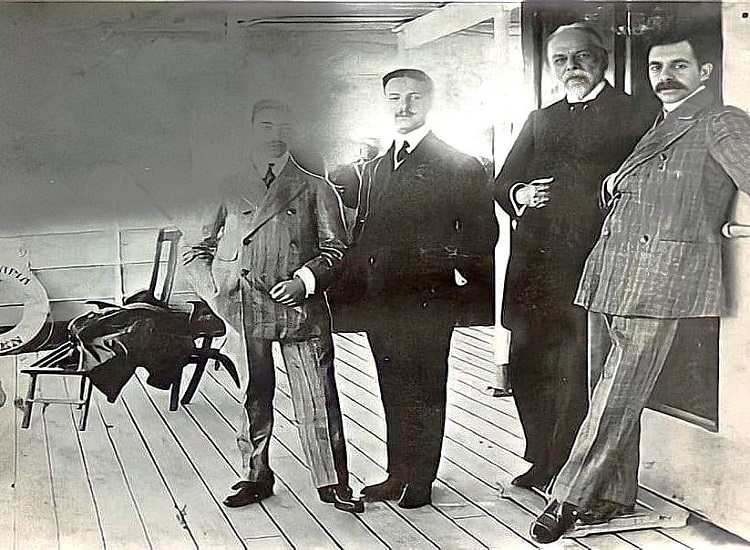
Many of them answered. In September 1912, the Sublime Porte summoned Ismail Qemali, proposing to him the post of Minister of Foreign Affairs of the Empire. However, the man of Albania answered: “Thank you. I cannot accept, because the hour has come for Albania to shake off the yoke.” And the man of Albania left the chair, all that honor of the Empire, and took the roads of Europe. He wanted to convince this Europe that Albanians deserve to win their freedom, since they never awaited this freedom as a gift from anyone, but always rushed toward it, leaving behind whole rivers of blood.
But while Europe spoke to the Albanian man in diplomatic language, his compatriots raised his morale, uniting with ideas and deeds. It cannot be by chance that on 5 November 1912, Ismail Qemali from Bucharest telegraphed to Durrës: “The future of Albania is secured. Telegraph everywhere; let them have full confidence in the fate of the homeland” (Central State Archive, Tirana, fund 245/1, file 1, page 14).
The sons of Albania came from every distant region to their nest. Deep in their souls they felt the thrills that the great moment granted them. They came through valleys; they came through mountains, sometimes on foot, sometimes on horses and in carts, sometimes through raised ambushes. For the dark ambushes could not endure the light that would spring after that blessed day. They came tired from sorrows, from troubles, but with great faith in their soul, that these personal sorrows of theirs would one day turn into the great joy of their homeland. They came even though they knew that lead might take their life. But from their first stammerings, from the first lullabies of the cradle, they had given their life to Albania.
On this occasion, the magazine “Ylli i Mëngjesit” would quote: “What Ismail Qemali has done today for Albania, what honor will be done to him and where his name should be raised, only that man who saw his deeds can judge…! When they set out from Durrës they were 40–50 souls, all armed with rifles. On the way they then encountered other delegates from distant regions and became hundreds. Going through the fields of Myzeqeja, in which, besides waters and mud, we also have beautiful regions that are not found in the world, we arrived on the 13th of the third autumn, at 11 at night, allafranga in Vlora.” (Magazine “Ylli i Mëngjezit,” page 198 – 30 November 1913)
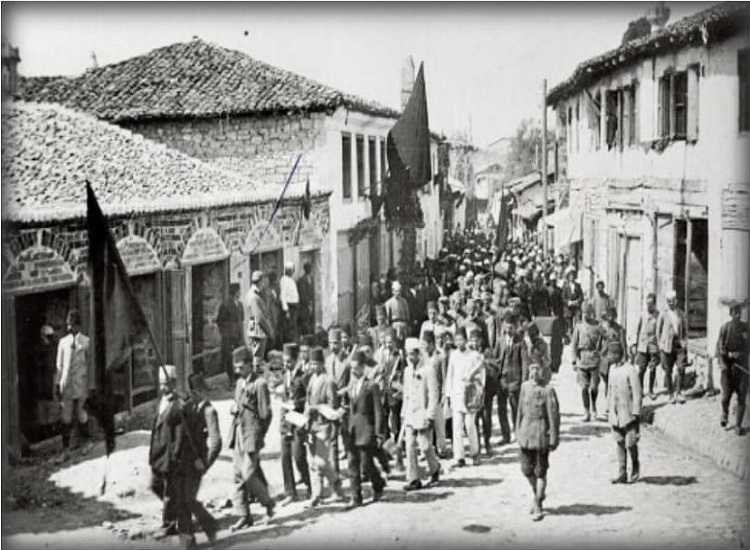
The end of November of Vlora in 1912 would at the same time serve as a white omen at the crossing of two epochs. All Albanians sensed this, and not only those who were in Vlora. Everywhere in every region of our homeland, while the news of the final fall of Ottoman despotism was running, the squares rumbled with calls for the flag. My compatriots could barely wait for this day, since with the red and black flag was linked not only their present, but also the distant past, bitter, black as night. The symbolism of our flag had long since crossed the dry frames of ceremonies; this symbolism was linked in a strange symbiosis with the physical existence of Albanians in their lands.
But, seen on a broader plane, the date of 28 November 1912, among other things, also revealed a dormant and violated myth of the Albanians, such as that of unity among themselves. And this dormancy has its reasons. When the old and new Turks, when the old and new tsars, when the old and new knjazs could not confront us with rifles and cannons, they used a thousand and one tricks, infiltrating among us religious, tribal and regional divisions. However, we must admit that not a little blood was spilled from blind and imposed revenge, on the roads that led to our towers. Their high and cold rooms still preserve in memory the cry of blood, the cry of life cut short in the middle of the brother by the brother.
The Vlora of 1912 gathered the Albanian men, cheered them and shed tears of love for them, since it saw that the red and black flag came into their united hands and souls at the dawn of the new century; Albanians cast away their grudges, the macabre histories of blood, proving the spiritual rebirth of their nation. Their clasped hands cast away a trampled past in the name of a dignified future.
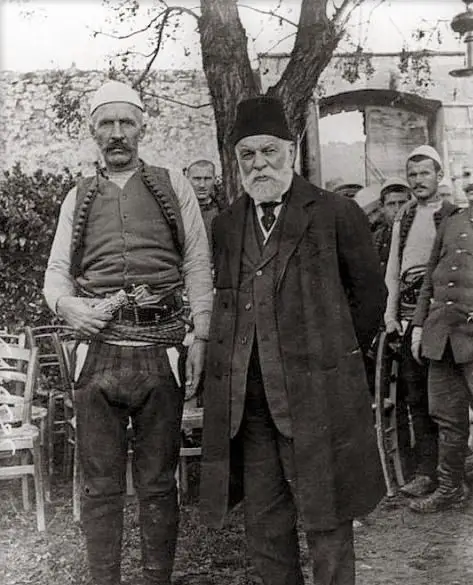
“It seemed to us as if the door of God broke the chain of slavery, as if we came out of darkness into the blessed light of the sun, our hearts filled with joy and hope. How could you not feel this emotion, seeing the tangible scene of brotherhood: the Mufti of Dibra, Vehbiu, who embraced the Bishop of Durrës, Don Nikoll Kacorri; the Orthodox priest of Berat, Bab Dud Karbunara, long-bearded, who kissed on the forehead the Catholic Shkodran Luigj Gurakuqi; Isa Boletini who kissed the hand of Ismail Qemal Bey of Vlora…! Was it not enough to shed tears of joy?!” (“Skënderbeu” 1468–1968 – Boston, page 156).
A JOURNEY FOR THE GREAT ACT
While the men of Albania were going to Vlora, other brave men had begun clashes with the Serbo-Montenegrins. Bajram Curri and Elez Isufi were writing new pages of heroism on the banks of the Drin, and Hasan Ferri, at the head of the volunteers of Plava and Gucia, was counterattacking the several-thousand-strong forces of Knjaz Nikolla, and Idriz Seferi was terrorizing the shkije of the krajs, while Isa Boletini was advancing toward Vlora.
The Sublime Porte, divided in its decisions on the independence of Albania, kept imprisoned in the Kalemegdan prison in Belgrade Hasan Prishtina, Nexhip Draga, Ded Gjo Luli and dozens of fighters and leaders of Kosovo. On the plain of Dukagjin and in Peja, in Drenica and Tetova, the detachments of the Albanian committees, in their heartfelt calls, demanded an hour earlier that the Red and Black flag wave in the Albanian skies.
“Dreamed by poets and desired by the burned hearts of a few patriots, who suffered and burned in dark prisons and who wept and moaned in distant deserts, persecuted and exiled from the beloved Homeland, the independence of Albania seemed to all of us like an unreachable desire, like a gift too precious for our poverty, like a sweet and delicious tree” (L. Gurakuqi, The Independence of Albania, “Përlindja e Shqipërisë,” no. 26, third autumn 1913).
Thus the great hour was approaching. Some Dibran horsemen announce that Albanian flags are needed for Dibra, since the Serbs are launching an attack under the pretext of Turkey. Some dozens of Serbian soldiers arrive also in Kruja, but here the Albanian patriots come out before them with the red and black flag, showing their predatory neighbors that they themselves are at war with the Empire. The Serbs understand from this moment that their lives no longer have value…! At noon on 28 November, the town crier, with a voice different from other days, announced through the streets of Vlora that Albania would be declared independent. People could barely wait for his phrase to end, they grabbed him by the shoulders and embraced him, and some did not fail to throw him a few lekë for the good news they were receiving.
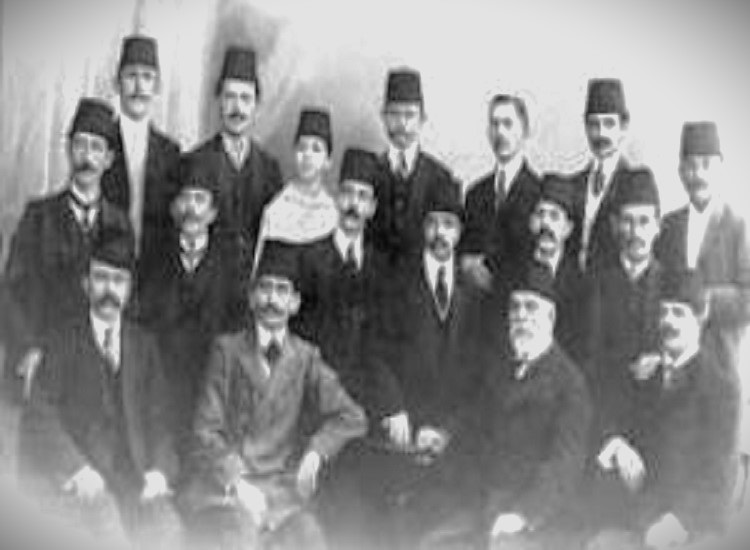
“The National Assembly, gathered from the delegates of all the regions of Albania here in Vlora, opened today at 4 in the afternoon at the house of Mr. Xhemil Bey. Mr. Ismail Qemal Bey, as the first initiator of the meeting, took the floor and told the delegates the purpose of the Assembly, namely that they should strive together and take the necessary measures to save Albania from the great danger in which it finds it today. As the way and custom require, the verification of the delegates’ cards then began, whose names are these:
From Berat: Mr. Iljaz Bey Vrioni, Hajredin Bey Cakrani, Xhelal Bey Skrapari, Dud Karbunara, Taq Tutulani, and Sami Bey Vrioni, the latter expected to come.
From Dibra: Mr. Myfit Vehbi Efendiu.
From Durrës: Mr. Abaz Efendiu, Mustafa Aga and Jahja Efendiu, who awaits the arrival of Mr. Don Nikollë Kacerri on behalf of the Archbishop of Durrës, for the Catholic Albanians who are under his order.
From Elbasan: Mr. Shefqet Bey Daiu, Lef Nosi, Qemal Bey and Mid’hat Bey Frashëri.
From Gjirokastra by telegram: Mr. Azis Efendiu, Veli Efendiu, Elmaz Efendiu.
From Ipek (Peja, my note): Mr. Rexhep Bey, Bedri Bey, Sali Gjuka, and Mid’hat Bey Frashëri. These gentlemen are also the delegates of Gjakova, Plava and Gusinja.
From Kruja: Mr. Abdi Bey Totani and Mustafa Asim Efendiu.
From Lushnja: Mr. Qemal Bey, Ferid Bey Vokopola, Nebi Efendi Sefa.
From Ohri and Struga: Mr. Xhemal Bey, Ymer Bey and Ibrahim Efendiu.
From Tirana: Mr. Abdi Bey Totani and Murat Bey Totani.
From Vlora: Mr. Ismail Qemal Bey, Zyhdi Efendiu, Aristidh Ruci, Qazim Kokoshi, Jan Minga, Eqrem Bey…!
When these matters were finished, Mr. Rexhep Bey took the floor and said that Mr. Ismail Qemal Bey should be elected as Chairman of the Assembly, Mr. Luigj Gurakuqi as first secretary, and Mr. Shefqet Bey Daiu as second secretary. The delegates approved this request and appointed the proposed by clapping their hands.” (Newspaper “Përlindja e Shqypnisë,” second year, dated 31 January 1914).
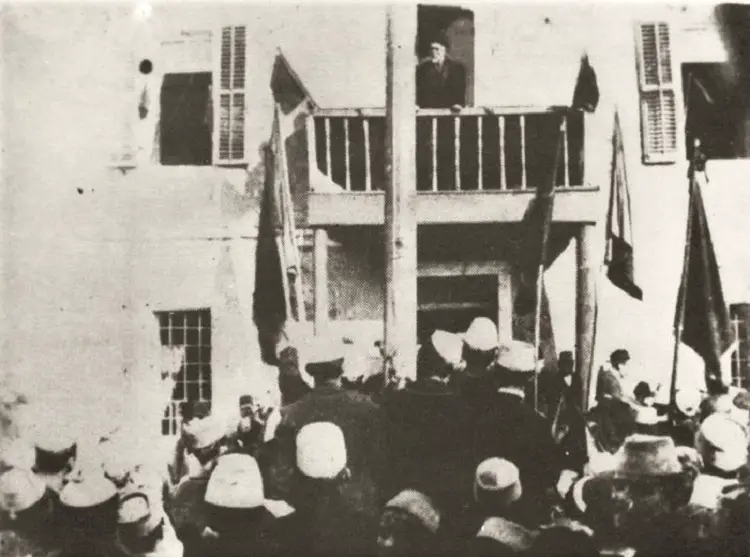
After this, the representatives of all Albanian regions in this great assembly would come out onto the balcony of the house, cheered by the several-thousand-strong crowd of the people of Vlora. The white caps of Vlora swayed in the air and the calls for the flag clashed with the rustle of the sea waves. Deep as the sea, the joy of this dusk would remain in the historical memory of the people of Vlora. However much the storms tried to uproot it, its waving was felt in the chest of Albanians like the cry of the seagull in the chest of the sea. On the balcony of the two-story house, the men placed in the middle the newly elected chairman of the Assembly. With hands trembling from emotion, with an almost tender voice, the old man Ismail Qemali would make people weep as he announced: “Albanian brothers!
Oh how happy I feel today, seeing here in Vlora so many Albanian men gathered together, awaiting with curiosity and impatience the conclusions of this historic meeting for the fate of our beloved Homeland. Full of joy and with tears in my eyes from emotion, I am coming out here before you to rejoice with you in the great tidings, that today, even this minute, the congress has proclaimed the Independence of Albania, announcing to the whole world this matter and entrusting me with the Presidency of the Provisional Government of Free Albania…!
In concluding, nothing remains for me but to address a prayer to the Great God, that together with His blessings, which I ask Him to give us, so that we may be worthy of this day, He may accept that from here on I be the first martyr of the Homeland, just as I had the honor and fortune to be the first to kiss and make our Flag wave free in our Free Homeland. Long live the Flag, Long live Albania!” (Ismail Qemali, Memoirs, published in Toronto, page 254).
No one after these words could contain themselves. The flag began to beat its folds under the winds of the third autumn, and the eagle on it seemed from moment to moment ready to begin its flight into the free sky of Albania. While the delegates had rested their hands on one another, on the flag’s rope, from the square the calls increased:
“Long live the Flag of Albania, may it wave for all time, as long as the world lives!” An hour later, in the small port of Vlora, another Red and Black Flag was raised. Even though it was fired upon by some ships of the Empire from the sea, the Flag beat its folds, greatly increasing the enthusiasm of the people. A week later, starting from the number of votes won by the delegates, by secret ballot, the Government was formed, consisting of:
Ismail Qemali – Prime Minister and Foreign Affairs, Mehmet Pashë Kallkandelleli – Minister of War. P. Poga Gjirokastra – Minister of Justice. Myfit Bey Libohova – Internal Affairs. L. Gurakuqi – Minister of Education. Abdi Bey Totani – Finance. Pandeli Cale – Agriculture. Mit’hat Frashëri – World Affairs. Lef Nosi – Posts.” (Central State Archive, Fund 71, file 1, document no. 2-4043).
AFTER VLORA
The birth of the first Albanian state would first of all rejoice the nation itself. This act resembled the birth of a beautiful child in a large house, where everyone wants to see it, touch it, rejoice in it. Dozens of congratulatory telegrams arrived from all Albanian regions, dozens of words of heart were sent even from Albanian colonies in emigration. In their greeting, the students and teachers of the college of St. Mitër Korona expressed: “You have adorned your soul with patriotic and civilized virtues, and we beg you to show our Government praises for the energetic deed.” (Archive of the Institute of History, Tirana, Historical Documents, 1924, no. 11, page 339).
However, this enthusiasm was very short-lived. The Great Powers, finding themselves before this fact, thought to re-discuss the borders of Albania. In this strategic reparation of theirs and those of the day. On the other hand, the Balkan Christian alliance did not cease its military invasions, wanting to drown in the cradle the newly born child. The Greek war fleet, which patrolled some miles from the Bay of Vlora, did not allow any foreign ship to anchor in the port of Vlora, and then in some cases (understood by order of Athens), it struck without any cause the beautiful city of Vlora, which had no means with which to respond to this aggression.
Even the Serbian forces began fierce attacks, especially on the banks of the Drin, sparing not even the infants in the cradle. The Government, just emerged from the historic assembly, began to organize the army, the gendarmerie, to open schools and to take power into its hands. But the treasury was empty, no one helped, old Europe swayed in dark thoughts that Albanians do not know how to govern. The wise old man Ismail Qemali, together with Isa Boletini and Luigj Gurakuqi, took the roads of Europe driven by beautiful illusions, but the Franco-Russian cunning had done its work. “We thought we should hope that a people who presented special values because of their antiquity, courage and the services they had rendered to Europe… would finally be allowed to become master in their own house and would preserve national independence.” (Ismail Bey Vlora, Memoirs, page 271).
Even though it was attacked, the day of 28 November 1912, that rekindled [flame] will remain burning also in the future of our nation. This emblematic date resonates not only as a symbol, but as a call that never falls silent for the unity and prosperity of our nation. Therefore national memory can only be offended by such conjunctural political indifferences. But nevertheless it does not forget to condemn; 28 November, today and tomorrow, awaits its realization. For the communists, more important is 29 November, a day that unites them with our centuries-old Serbo-Slavic enemies, who call it a “white day,” than 28 November of national glory. Communist dates are dates of national mourning, which must be cast away an hour earlier. Happy 28 November, for life of lives until the realization of our aspirations; One Nation. One Flag. One State. / Memorie.al
Bern-Zvicër\*