

Part Twenty-Three
Memorie.al / The CIA (American Secret Service) continues to extract information and many details from the harsh communist regime in Albania. As early as 1949, the CIA began moves to overthrow the regime, and great importance has been devoted to the year 1985, the period when Enver Hoxha was very ill and subsequently pass away. CIA agents have gathered considerable information about this period, on how the power operated and the moves that had begun for Enver Hoxha’s successor. In a declassified document, the case of Mehmet Shehu is mentioned, where according to the CIA, although officially it is said that he killed himself, there is information that he was killed. On the other hand, Ramiz Alia’s moves are mentioned. According to the document, he had begun to gather people around him to take power upon Enver Hoxha’s death, but there were clashes with Nexhmije Hoxha.
Continued from the previous issue
23 May 1949
Memorandum
Albania (Agents’ report on the leaders).
I agree with your surprise both as to the speed with which the British plan was produced, and as to the influence of the English position and its ambitions for Greece. I also believe that the British will consider this as a test to determine the extent of the size of our OPC operations, as well as their ability to influence the partnerships that may develop with us.
I think it would be futile to claim control of the British operations as designed, therefore we should take the position of acknowledging their desires to do something in Albania, and that we wish them luck in their endeavor. We should suggest to them a sufficient measure of liaison with our agencies, enough to avoid stepping on each other’s path. We should emphasize that our project is of a larger scale than theirs, and at the same time, open to external political influences, therefore its exact outcome cannot currently be predicted.
We should add that during the unfolding of other elements, we will inform them, and also will inform the American political and military establishment in Greece about the British plans. Mr. … has prepared the following operational draft for Albania, with the aim of presenting it later to the British, on the 24th. I take this opportunity to bring it to your attention.
Draft operational plan for Albania
Formation of the Exile Committee. The planned day for announcing the formation of the Committee is 1 July 1949. Its three main members will be “Balli Kombëtar,” the Zogists and the “Independent Bloc,” under the chairmanship of Verlac. The leader will be Mit’hat Frashëri and its main headquarters will be in Paris. The gathering of information for the operation’s criteria will continue. Its propaganda phase will be softening and will begin immediately after the announcement of the Committee’s creation.
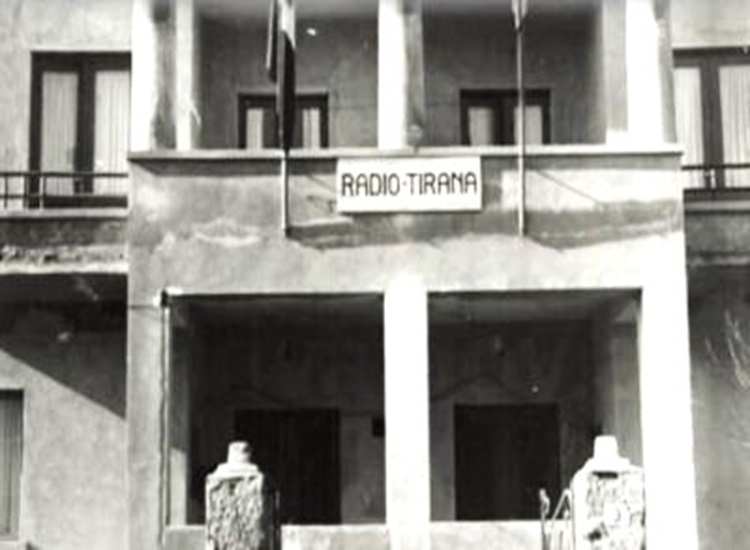
It will include our activity in the name of the Committee, such as programs in the Albanian language, and we hope to be helped by Radio Ankara, as well as by the Committee’s own publications in newspapers and brochures. Covert operations will include jammers of Radio Tirana and the installation of a transmitter of the National Committee of “Free Albania,” which will operate from within Albania.
Training
The designated day for the start of training is 15 July. Several possible bases are currently being considered, among which are former American military bases in Corsica, Sardinia, as well as a location in Egypt, which Farouk says could be made available for Zog. This activity will be done in two phases; the first will be the training of ten Albanians selected by the Americans, and the second will be the training of a force of forty Albanians, with representatives of the first group. In this way, the Americans’ participation in the mission will not be immediately passed on to every Albanian who will take part in the S.O. force.
The selection of the first ten agents will be made in the near future by Frashëri or his deputy, in consultation with our operational chief. Recruitment of the second group should be done by rules of selection by the sub-commissions of the National Committee, which will act in coordination with our operational chief.
The internal organization will include the cadre of the forty, who will be infiltrated by various means, including air drops, beach landings and border crossings, with the aim of establishing communications, supply lines and liaison with existing resistance groups in Albania, with a target date of 15 August to 1 September.
Requirements for launching the final phase of attacks
Success of the preceding phase; Greek ready groups in southern Albania; Clear guarantee of non-intervention by Greece in southern Albania in case of unrest. Tito and not the Soviets, to be in control of Albania, or at least of the border areas where we will intervene.
Agreement with the NSC, JCS and the State Department, that such developments do not conflict with other general policies. The concept presented is that of an integral uprising, directed and with Albanian participants from the country, with the exception of the scenarios mentioned above.
If during the phases of the operation the training and equipping of an Albanian brigade outside the country proves desirable, plans should be created for this purpose. Throughout the development of the operation, the Greek mentality toward Albania should be followed closely, and whenever necessary efforts should be made to influence it. Yugoslav activities within Albania should be a primary intelligence objective.
Shipments of Soviet or satellite weapons should be subject to strict monitoring and possible cases should use obstruction methods. The Macedonian issue should be used to the maximum, for the neutralization of Greek and Yugoslav expansionist territorial claims.
The strongest pressure should be exerted on the Greek government, to renounce claims to Albanian territory, and to issue a public statement where it publicly renounces claims to Northern Epirus, in case of the election of a free and independent government in Albania, under the protection of the UN.
July 1953 – July 1954
Broadcast report
The demonstrations, riots and purges in Czechoslovakia, Berlin, Romania, Hungary, etc., as well as the recent arrest of Beria, have given our programs rich sources of news to interpret in Albania.
In addition to the usual propaganda lines such as corruption and weakness of the Soviets, or the unity and perseverance of oppressed peoples, our programs have been given another opportunity for attack from the continued repetition by Radio Tirana, that all the riots are caused by the Americans, even though some agencies and communist officials have admitted that the riots came as a result of poor administration and judgment by the communists.
Regarding Beria’s arrest, we have emphasized in our programs that since Stalin’s death, the struggle for power within the administration and possible purges had been anticipated. No specific predictions have been made for purges in Albania, but we have said that they will certainly happen; therefore the free world was open to granting asylum to all repentant officials and communists.
Radio broadcasts
There has not been much material from within Albania, except for the announcement of Radio Tirana that all old agricultural debts had been erased, to which we responded quickly that it was a lie, since the communists had fulfilled the 1953 plan, but the peasants were in debt and trembled for their lives. Fortunately, an educated and informed refugee, Dervish Bejleri, has been questioned and has promised us considerable information, which will be used in our future broadcasts.
We believe he will be the best source of information in a long time. In our programs an appeal is made to various Albanian social groups, mainly the military. Our broadcasts have been carried out daily on two frequencies, while the new more powerful transmitters will begin use. Further in the broadcasts we have reflected world news, emphasizing the achievements of the West and the weakening of the Soviet Union in the economic, social and political field; the solidarity of the free world and the anniversary of the Balkan Pact.
Regarding Albanian issues, attention has been given to the March elections for people’s councils, the mistreatment of employees, and communist education in Albania, with comments on the appointment of Bedri Spahiu to the Ministry of Education, the appointment of Edip Çuci to the embassy in Rome, and Women’s Day in Albania. Radio Tirana’s attention during this period has been focused on local elections, Women’s Day celebrations, agricultural processes and the realization of state plans, the anniversary of Stalin’s death and the declaration of March 5 as a national day of mourning.
In our propaganda points since 15 February 1954, we have used the bomb at the Russian embassy, the communist purges and the elections of people’s councils. Since 1 March 1954, we have spoken about the Albanian writer Thimi Mitko and about the current conditions of Albania. In the period 9-15 March, we have broadcast a false message. As for the leaflets, we have prepared three texts and plans for drop flights have been approved. The prepared texts are “The Desertion Appeal” and the text of the Nikolla brothers.
23 February 1985
Enver Hoxha’s successor
Source: Albanian refugee who escaped in July 1984, after completing a 10-year prison sentence, which he finished in 1984. His information is based on conversations with former Albanian leaders he met in prison, and from his personal knowledge. Before his arrest in Albania in 1974, for a failed escape attempt, he completed technical school, worked in a factory and served in the army in a tank unit.
Text
Since the killing of Prime Minister Shehu and the elimination of hundreds of his supporters in various branches of the government and the Albanian party, the struggle for power has continued with severity (comment: Shehu officially committed suicide in 1981, but much rumor circulates that he was killed).
It is known throughout Albania that Enver Hoxha is ill, and that he has chosen the party secretary, the chairman of the Presidium of the Assembly, Ramiz Alia, as successor. Be that as it may, Alia is the strongest candidate. Hoxha’s sons Sokoli and Iliri do not have his courage and ability to command.
Alia is getting ready to replace Hoxha when the right time comes. So far, he is placing his people from Northern Albania in the main posts, such as the party secretaries in Durrës, Berat, Vlora and Gjirokastër. Nexhmije Hoxha is active both in government and in the party, and the country is controlled by her clan. Enver Hoxha spends most of his time in Himara, in Southern Albania.
In 1984, Enver’s eldest son Iliri headed two ministries, the Foreign Ministry and the Interior Ministry. His other son Sokol Hoxha, about 33 years old, was appointed in 1984 as adviser of Foreign Trade, which means he has control of the country’s economy. (Comment: We cannot confirm the extent of his sons’ influence in the government, but neither has been publicly identified in public posts).
Economic situation
Albania’s agriculture and industry are in bad condition, due to the lack of machinery and spare parts; people must wait in long queues for frozen meat, pork or chicken. Products such as olive oil and fish are rationed and are not always found. Twice a year people can get two liters of wine, while medicines, especially antibiotics, are given only to party members and their families.
Prisons
As a result of the political purges after Shehu’s killing, a new prison “Number 302” was built in Pllanë of Lezha. The new prison mainly holds high-ranking military members, among them also an air force general, Edi Ohri, about 58 years old, as well as a former Minister of Foreign Trade from 1964 to 1975, which was transferred from Burrel prison to that of Lezha.
Until 1984, Burrel prison housed 400 prisoners, of who about 150 party members, including a former minister of agriculture and member of the party’s central committee. Until 1981, in Tirana prison (Department 303) have been the following members of the Central Committee and the Army: Todi Lubonja, former journalist, secretary of the Communist Youth and member of the Party’s Central Committee, sentenced to 20 years in prison in 1977, for political deviation.
Fadil Pacrami, former director of Party Propaganda and member of the Central Committee, sentenced to 20 years for political deviation. General … (Rrahman Parllaku, deputy minister of Defense from 1970 until at least 1972. Major General Muhamet Prodani, former Director of Operational Preparation in the General Staff, Major General Halim Ramohito, deputy director of the Political Directorate in the Ministry of People’s Defense from 1973-1974.
The above generals had all studied in the Soviet Union and are imprisoned for possible Soviet affiliation. The source comments that there is always a risk of Soviet involvement in Albania, since they have not renounced their goals in Albania, and according to what is said in the prisons, there are many pro-Soviet elements throughout Albania. / Memorie.al
Continued next issue