
Part Thirty
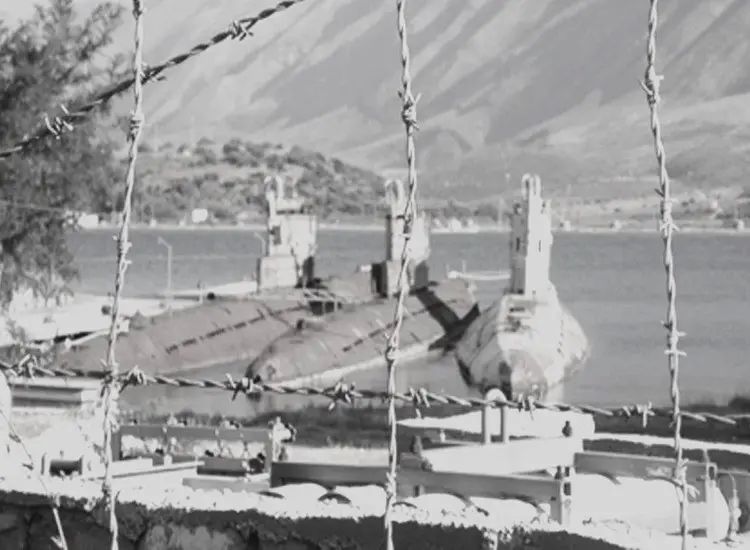
Memorie.al / The CIA have shown the great role that the Soviet Union played in communist Albania. In several “Top Secret” documents, declassified years ago, it is shown that the USSR built several important military bases, especially in the South of the country. There, the submarines that Moscow had on the island of Sazan and in the Bay of Vlora are shown in detail, as well as the air bases, such as that of Rinas, Kuçova, etc. Afterwards, a panorama of political developments is given, where the dismissal of Defense Minister Beqir Balluku in the summer of 1974 from all functions in the army and party is mentioned. Likewise, a special place in the documents that the CIA has declassified are also those that speak of Albanian political emigrants in Yugoslavia, who are included in the Committee of Prizren, initially headed by Apostol Tanefi and under the pressures of the UDB, which recruits them with coercive measures, such as return to Albania, etc.
The United States of America has had no kind of preference for Mehmet Shehu or Enver Hoxha. Through a declassified document, the CIA shows that both were in the service of the Kremlin in the 1950s. According to the CIA, they did everything based on the orders they received from the Soviet Union. In another document, the plans of operations for the overthrow of the regime are also shown.
October 1946
Military information south of Yugoslavia
Large shipments of weapons and military equipment have been transported by trucks from Mitrovica and Prishtina in the direction of Albania, in the last days of August and the first weeks of September. Most of the weapons were German production. Also, the textile factory of Gerdelica has received large orders for military goods, which have already been sent to the border with Albania and Greece. Large shipments of clothes and shoes have arrived in Mitrovica from a factory in Pančevo on the outskirts of Belgrade. The goods, which bore the symbol of the red star, were taken delivery of by Greek and Albanian officials.
During the first half of September, a number of military troops (about two or three small divisions) have been moved to the south of Prishtina, Skopje and Tetovo. According to some officers, these units will replace the border guards, but the soldiers themselves did not believe this. The troops were poorly equipped and did not bear symbols on their clothing. Russian-Yugoslav military commissions have inspected Raska and Mitrovica. Since the terrain is suitable for flights, it is assumed that the installations will hold aircraft-launched weapons.
Currently, work is concentrated on the opening of tunnels. Anti-aircraft installations have been built in the vicinity of Skopje, which are supposed to be for training. The Skopje airfield is ready to receive two or three new groups of aircraft. Troop movements have been spotted in Kicevo, Debar and Prilep, which are believed to be labor battalions with political prisoners. According to reports, they may be Greek units stationed for some time in the south of Serbia.
20 June 1951
The importance of Albania for the Russians
Politically, Albania is important for the Soviets as a temple of communism in the Balkans and in the Mediterranean. The USSR would consider its loss as a loss of prestige, especially after the defection of Yugoslavia. But although it has a strategic position at the entrance of the Adriatic Sea, the modern conditions for the development of its military capacities are small. The island of Sazan has been a small Italian submarine base and according to some rumors the Soviets are also trying to rebuild these bases after the war.
There are unconfirmed reports of reconstruction of airfields by the Soviets. Albania has a good position for air defense warning installations, but so far there is no evidence of the installation of Soviet radars. Since its distancing from Yugoslavia, Albania has lost its strategic importance due to the lack of communication with the Soviet orbit. But it may be important for a land campaign in the Balkans, since possible operations in cooperation with Bulgaria, if successful, could separate Greece from Yugoslavia.
Stability of the regime and the extent of Soviet control
Before the split between Yugoslavia and the Cominform in 1948, Albania was closely linked politically and economically with Yugoslavia. But instead of following Marshal Tito’s deviation, Hoxha chose the Moscow camp and launched a fierce campaign against Albanian nationalists. He not only excluded the country from ties with Yugoslavia, but on this occasion eliminated all competition for power within Albania. A rivalry between Hoxha and Interior Minister Mehmet Shehu appears to be insignificant since both are controlled by the Kremlin. Albania is totally dependent on Soviet aid. Without it, the country’s economy would be shaken within a few months.
Soviet control in the country is reinforced by about 1,000 to 1,500 “experts” in important positions, such as the army, police, and civil administration and in the ranks of the party. With Soviet support, Hoxha and Shehu have governed the country so far with the police methods of terror and with harsh economic control. Although there is evidence of a lack of loyalty and opportunism in the ranks of the security forces and the army, they have proven effective in suppressing the opposition. Soviet support in Albania has not been accompanied by a mutual assistance pact, perhaps because the Soviets want to leave a situation open without commitments that could later embarrass them.
Albania has such a pact only with Bulgaria (16 December 1947). But nevertheless, any change in the Albanian situation that could threaten the Kremlin’s control would immediately affect Soviet prestige, at a moment when another satellite also avoided its order. Therefore, such a development would bring about a worsening of the international situation. Soviet action in the event of such a development would depend on the priorities of their world strategy.
21 May 1951
Turkish newspaper “Hurriyet”
According to reports in Turkey, harsh security measures have been taken in Tirana, after rumors that a guerrilla unit with about 5,000 people has surrounded the capital. During the day, armed police patrol the streets, while during the night they are supported by army units. Reports say that every civilian on the streets of Tirana is stopped and must show their identity card. Meanwhile, peasants in southern Albania have refused to hand over their production to the communists, who, in order to force them to hand over the production, have announced that those who resist will be executed immediately.
For this, the Soviet colonel of the liaison of the Soviet military mission and the Albanian Ministry of Internal Affairs is said to be responsible. According to another unconfirmed report, the increase of resistance in Albania and the insecure position of leader Enver Hoxha have led to the dismissal of the general who leads the Soviet mission in Tirana. Another general who will replace him has been sent to Tirana.
September 1953
Operational developments report
General developments
Radio “Free Greece” on 14 September called on Greeks to establish diplomatic relations with Albania. There have been no indications from other sources whether the Greeks or Albanians were considering such an action. On 28 September, the Yugoslav government officially reported that its negotiations with Albania for the settlement of border incidents had been interrupted in a frosty atmosphere of disagreement. The first meeting of the Albanian and Yugoslav commissions was held on 17 August. In New York, the agreements for allowing the former Albanian King Zog in the USA were completed.
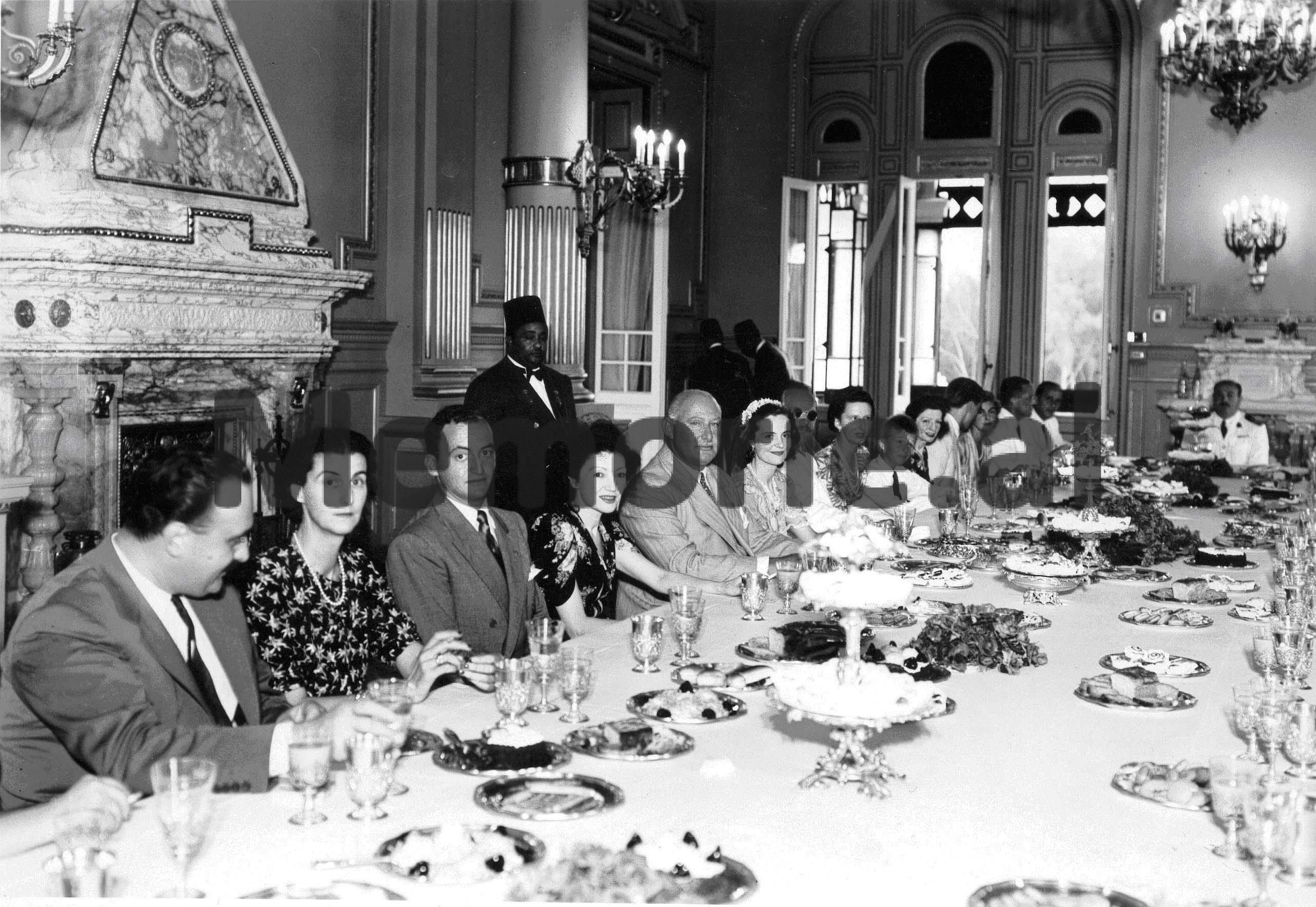
But one of the difficulties that has arisen is the raid on Zog’s residence in Alexandria, while the family was at home, by order of the Egyptian Ministry of the Interior, who carried out a three-hour search. They confiscated a quantity of financial documents, but had not touched his documents on Albania. A body search on Zog himself and family members was requested, but was not carried out after his threat of violent resistance. It is believed that the purpose of the action was the discovery of evidence for smuggling or political activity with anti-Naguib elements, which would bring action by the authorities, up to the exclusion of Zog from Egypt, without money or property.
Through his contacts, Zog has sought measures to be taken for his and his family’s protection. He is believed to have been assured by the Egyptian Foreign Minister that the agreements on the issuance of visas and the transport of money will not be affected, even though this was outside his jurisdiction since the actions were undertaken by the Ministry of the Interior.
During the month of September, the National Committee for “Free Europe” has notified the members of the NCFA that due to budget cuts, the NCFA will cease activities on 1 October 1953. At the same time, the programs in Albanian of Radio “Free Europe” will also be interrupted. Although financial aid for the NCFA will continue through other channels, salaries and finances will be reduced. This change comes at an appropriate time also in the form of a disciplinary measure for the undisciplined members of the NCFA committee and the strengthening of control in the future.
Border military unit 1958
An unknown infantry unit has been stationed in Delvina for years. In May 1956 its force was estimated at about 500 people, 20 trucks and about 70 mules. The unit depends on a larger military unit based in Gjirokastra. An unknown military unit has been discovered in the Erseka district with truck-towed cannons.
It has about 60 artillery soldiers and 400 infantry, as well as about 30 mules loaded with equipment. In each truck there are about 5 artillery soldiers. The truck spaces are occupied with equipment necessary for training shootings. A previously unknown unit has been seen in the barracks of Leskovik with about 300 people, 2-3 trucks and about 50 mules.
Military troops of Përmet
The headquarters of the army forces of Shkodra, together with the infantry of Shkodra and the units of Burrel and Milot, were transferred to Përmet in January 1956. Before this month, in Përmet there had been an unknown military unit with a force of about 600 people. With the placement of the new troops, the barracks were filled and all troops were sheltered in tents of about 20 people each. Near the barracks there were about 50 vehicles in the vicinity of the Vjosa River.
The tent area and the vehicle parking area is covered with camouflage of tree branches. A two-story building is also under construction. About 180 soldiers and 30 civilians were sent to cut wood in Gjermen in the summer of 1956, to provide enough wood for the new constructions of the military base. During July and August 1956, 16 trucks transported wood and planks every day towards Përmet.
Construction of new barracks
For the new constructions of the Përmet barracks, 30 local workers were also hired for the cutting of the wood used in the construction. Wood is abundant in the area and also drinking water comes from the nearby spring.
Ammunition depots
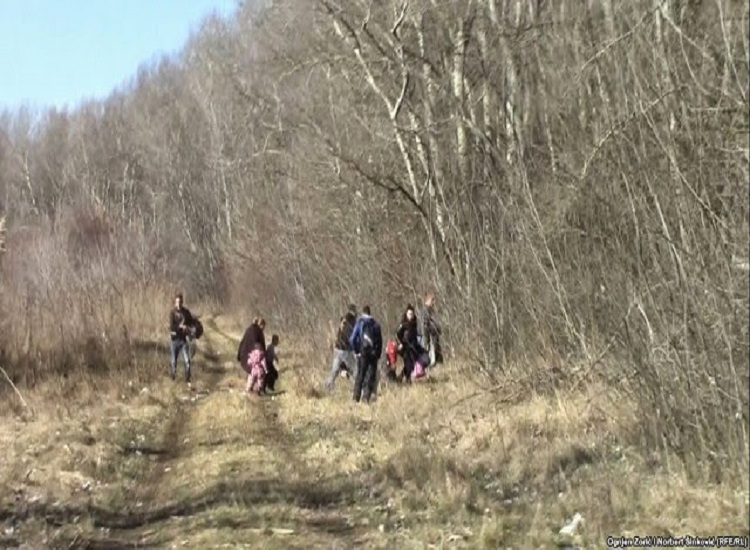
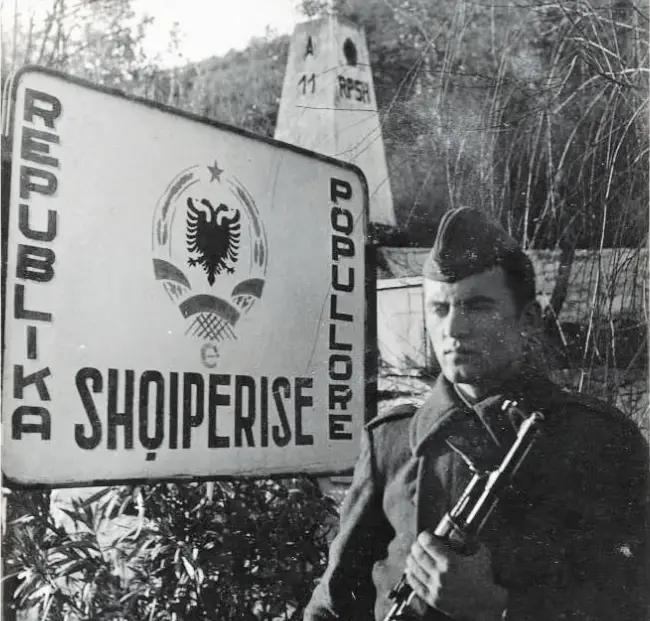
An ammunition depot has been located about 200 meters northwest of the Leskovik barracks since 1954. The building is made of concrete, almost entirely above the surface. It is guarded by one soldier and is surrounded by the same wire fence that also protects the barracks. The border battalion of Leskovik depends on the main unit of Korça. Its troops are distributed at the various border points. One of them is that of Rakova with about 25-30 soldiers, commanded by a lieutenant. Three soldiers of this unit are sent every day to an observation point. Another post is located in Mavre, with the same military force as that of Rakova. Further on are the posts of Peles, Gjonç, Arreza, Gjermen.
Two soldiers from the latter are sent every day to the secret observation post on Mount Kamenik. The posts of Shelegur and Vrepçka have about 25 people each. The post of Kakome has 20 soldiers. The post of the monastery of Saint Vasil has about 20 soldiers and also the post of Lukova. A fence about 2 meters high with wooden posts and dry tree branches extends from the post of Gjonç to that of Arreza, at a distance of about 300 meters. During the summer of 1956 this fence was being extended by the army to include the northern side of Mount Kamenik. The fence passes through a forested area and is also supported by cut tree wood.
Mines
Between these positions, the army or Greek communist guerrillas have placed anti-personnel mines. The minefield is about 30 meters long and was created in 1949. Its boundaries are shown by special signals. In August 1956, the Albanian army called up the personnel of the military lists of 1937 of the border guards.
Security forces, special units
At the beginning of 1956, the Internal Affairs section of the Saranda district was transferred to Delvina. As for the coastal defense forces, the command of Saranda responds to the main unit of Durrës. There are several sub-units of the coastal artillery group of Saranda, distributed along the coast: a unit with 4 cannons is placed in Kefali, which until the summer of 1954 had Italian artillery. But later new Soviet weapons were placed in several coastal artillery posts. The cannons came by sea route, since there was no road connecting the posts with the interior areas.
Internal policy, party activities
After the last Congress of the Communist Party in May 1956, the number of members of the Political Bureau increased from 7 to 12, where the old members retained their posts and only five new members were added. The Central Committee of the Communist Party of Albania now has 40 members. The lower organizations of the party (the district committee, and the base organization), remain as they have been. The district committee has the first secretary, the second secretary, the secret documents office and the agitation-propaganda office. The latter has a number of agitators who go out into the villages with the aim of indoctrinating the peasants.
The agitators also have their own order, while officials with less experience are used for less important agitation matters (a peasant with education is used for the indoctrination of an average of 5 other peasants). The agriculture office includes several production sectors and also receives people every day, to listen to their complaints about injustices by the authorities, such as the imposition of heavy taxes or the criticisms of a superior for serious reasons. Whenever the complaints have evidence, then the office has the right to act according to the procedure. The base organization of the village of Nivica has the following members: Risto Papadhima, Leko Vjerri, Thoma Strati, Leo Dami, Ilo Boçi.
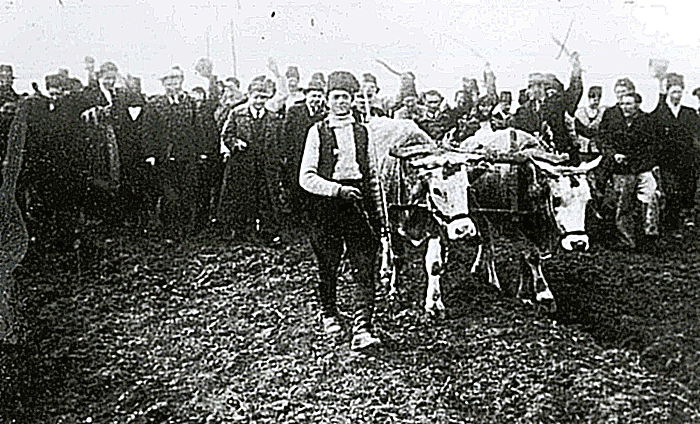
The above-mentioned were charged by the party to persuade their fellow villagers to enter the cooperative, but the residents of Nivica have fiercely opposed participation in the cooperative and the collectivization of agriculture. So the party members explained that they did not think the cooperative would work. But in March 1956, after the increase of pressure, the authorities managed to organize the agricultural cooperative of 35 peasant families, including the members of the Communist Party.
About a month later, the cooperative was almost dissolved after the departure of the members. The communist organization considered this a serious ideological violation and sabotage against the party’s agricultural policy; therefore some members were expelled from the party. At the beginning of April 1956, the members expelled from the party gathered in Gjirokastra, where Mehmet Shehu gave them a strong criticism but re-accepted them into the party, after they pledged that they would re-enter the cooperative. / Memorie.al
Continues in the next issue