
From Visar Zhiti
Part Five
Memory Plates and Sacks…!
Continued from the previous issue
IN WAR AND POST-WAR
Journalist Nebil Çika’s ID Card
(1983-1944) [sic – should likely be 1883-1944]
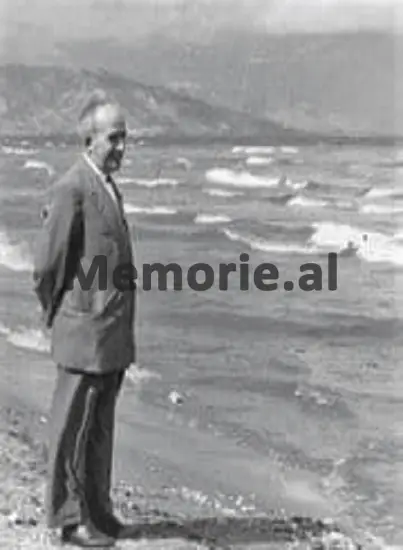
Memorie.al / The well-known publicist and thinker Nebil Çika comes from a patriotic and culture-loving family from Borsh, Sarandë. On the island opposite, Corfu, he completed the French College and then the American one in Istanbul, Robert College. He began publishing articles in the most renowned Turkish newspapers and magazines, and was among the first there to translate the distinguished German philosopher Friedrich Nietzsche into Turkish.
He returns to his homeland with independence, in 1912. The Greek forces imprison him as an opponent of their chauvinist plans to carve up the Albanian Epirote south…! As soon as Tirana is declared the capital, in 1920, he settles there. He becomes one of the founders of modern Albanian journalism. He creates the magazine “Minerva,” the first colour magazine in Albania. With the colours of the times and desires, they used to say. He will also be a correspondent for the “New York Times” and “Reuters” from Tirana, a duty he performed until the end of his life. Together with Branko Merxhan, Ismet Toto, Vangjel Koça, etc., they are founders of the “Neoshqipatrizma” (Neo-Albanianism) movement, which aimed at the cultural, political, and above all spiritual elevation of the Albanian nation…!
His articles from autumn 1942 to March 1943 published under two governments, that of Mustafa Kruja and that of Maliq Bushati, are brought together in the book “Albanian Authenticity” with the subtitle “Political and Psychological Study,” which had resonance and debates among intellectuals. Nebil Çika “did not build palaces under fascism, did not become a Minister, nor profited from import permits. He lived as a journalist, the bitter life of a clerk” – writes the writer Mitrush Kuteli. And the communist victors seize him in his own home… red terror…. There in the “Bristol” hotel. In its basements… Corpses one on top of another, black suits with bullet holes from which streams of blood flowed… continues in memory…! The massacre was carried out on November 16, 1944. The next day the capital was ‘liberated’. And what kind of liberation was that?!
The Arbëresh woman Elsa Çika, Nebil Çika’s wife, just shot, would be declared a war criminal and enemy of the people and would flee to Italy in 1946, just as her ancestors had fled to the other shore to escape Ottoman occupation, that horde of oppression and fire…!
IN THE PRISON OF THE HOMELAND
With the creation of the firing squads, the first institution established was the prison. In the memoirs of a fellow sufferer, Petrit Velaj, who spent his life in prisons and internments, it is told about the arrests made by the partisans before they had taken power. They created the first mobile cell on a cart. I imagine the slow, dragging progress of that cart, ever enlarging, becoming the machine of dictatorship, which would be perfected as a monstrous guillotine. It was a Triumphal Arch, the Party would say, and its poets would rush, each one, to dedicate the most beautiful poem to it, comparing the press of the guillotine, falling “without mercy” on people’s heads, with the glimmers of lightning of freedom.
Ideological necromania manifested itself as massacre. But first, At Gjergj Fishta had to be killed, according to the victors, an opponent of the communists, never mind that he was the National Poet, called Homeric, the last lahuta (lute) of the world, as well as the greatest satirist in the Balkans, according to critics, an academic in Italy (thus among the fascists), proposed for the “Nobel” prize by whom? By the USA, a capitalist country. Fishta was also a scholar, polemicist, critic, architect, painter, politician, etc., etc. Was he against the Slavs? No, against Slavic invasions and the communism coming from there; he was, for the victors, the National Poet after Naim, he had set obstacles, obstacles to the enemies of our nation who wanted to further carve up its lands…!
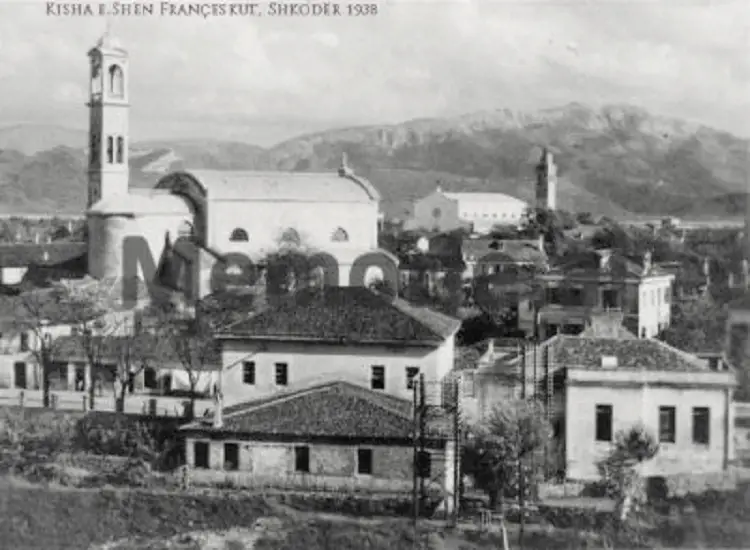
Ah, Fishta had died during the war. So then, to kill the dead man, his immortality. The victors broke his tomb in the Franciscan Church in Shkodra, which they would later turn into a cinema, and the Great Church into a sports palace, and the bones – the order was given – were to be thrown into the Drin River. And so it was done. But there are now voices saying that that terrible order was not carried out. And beside the execution ditches were placed other writers of the Northern School of the Catholic Clergy; their academy of culture and patriotism was razed. Ministers of previous governments, dozens of them, would be executed. And, when they were finished, they would move on to the later ministers, to their own. But we will remember them later.
One had to start from scratch, denying millennia. To lock up in prisons the bearers of the past, of nationalism, of anyone “who is not with us,” of that culture that would turn into resistance, hindering. Our goal is to show that, by extension, that culture and that literature up to that time would suffer, and their producers would be condemned.
Artists would be condemned, first and foremost masters of the pen. They would even reach the writer of the first Albanian novel, and the first woman writer, and the author of the first book of criticism, and … and … all the firsts were threatened.
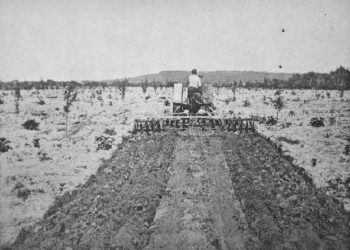
The foundations of constructions in the country, of the most important works, almost all of them: draining swamps, factories and plants, residential buildings, airports, stadiums, mines, generation after generation, everywhere and anywhere, were opened with prisoners, even the prisons themselves, using their unpaid labour, thus remaining a deception of a fundamental principle of socialism: payment according to work. In fact, punishment according to work occurred, that work which served the future.
A line of writers and artists, year after year, would go, in handcuffs, to prisons, to death mines. And they would execute from time to time, and also hang. To the dictatorship’s aid, as its allies, came also epidemics, earthquakes, floods, cyclones, etc.
The year 1945, along with the victors, brought two epidemics to Albania. Meanwhile, war planes had landed across Europe, and as a mockery of them, a slanderous caricature, locusts appeared, endless, everywhere, a kind of biological bombing, albeit lacking, that hit the country seriously. How could you fight them when disinfectants and proper equipment were lacking? Locusts everywhere, attacking your very eyes…
My father, the author of the elegiac poem “The Embrace of Two Opponents,” told me that they used sheets, the more sheets the better, they would spread them in the fields, and the locusts would remain under them or swarm onto the sheets, stuck as if by magic to the white cloth; as many sheets as possible, the state collected sheets, controls, confiscations, sheets, and thus full of locusts, they would set them on fire. My father also wrote a satirical poem about the locusts, remembered long after by friends. Those white sheets full of locusts, burning, also gave the image of book leaves in the flames. The pandemic of communism had struck the country.
The First Post‑War Execution
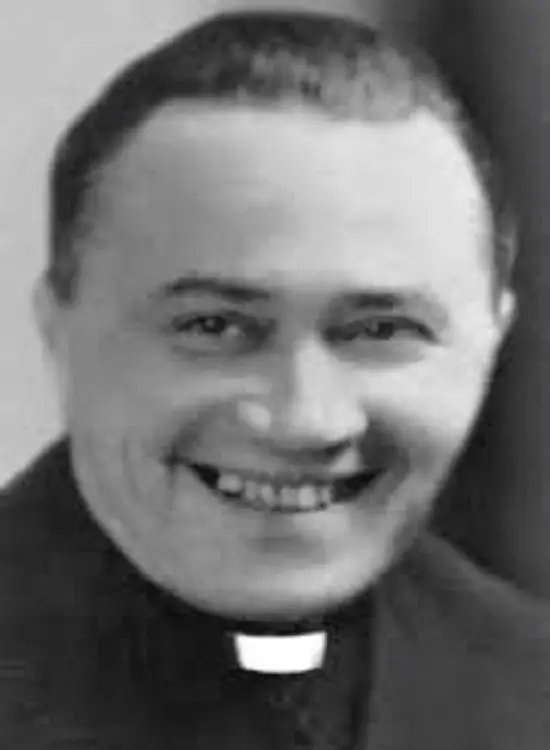
Don Lazër Shantoja (1892 – 1945)
Here, his ID card. It resembles a handprint, placed on the cross he carried on his back, to help him even a little… not even three months had passed since the day of the country’s ‘liberation’, on a night after midnight in February 1945, somewhere near Tirana, beside a wild pit, guns fired quietly at a man’s head… he fell… there they covered him with earth and left to celebrate…!
He was born in Shkodra in 1892 and was educated at the Saverian College and at the Papal Seminary in Shkodra with pedagogue Ndre Mjeda and other Jesuit fathers. He mastered Latin, ancient Greek, and Italian, and would be the first Albanian to know Esperanto brilliantly. He completed his theological studies at the University of Innsbruck, served as a parish priest in the North of the homeland. His first publications were in “Lajmtari i zemrës s’Jezu Krishtit” (The Messenger of the Heart of Jesus Christ), “Kalendari i veprës pijore” (Calendar of the Pious Work), etc. He published “Për natë kazanash” (For a Night of Cauldrons), a collection of plays, riddles and proverbs. He would shine as an orator.
He was imprisoned as an organiser of the June 1924 Revolution. After several months, he was pardoned by Zog’s government and left for Yugoslavia and Austria, from where he continued to send writings. In his work are found the literary tendencies of the early 20th century, such as the French and German, while in poetry he is Leopardian. He thirsted for the Albanian word, and at the same time translated “Wilhelm Tell” and “Faust” and published excerpts of them in the Albanian press.
After Albania was occupied by Italy, like many other emigrants, Lazër Shantoja returned to his homeland. In his birthplace, he received an extremely warm welcome.
He became director of the “Dante Alighieri” Literary Society. In 1941, together with Ernest Koliqi, Mustafa Kruja, Zef Valentini, Karl Gurakuqi, Xhevat Korça (all of whom would later be condemned by the regime that was to come), they founded the Institute of Albanian Studies in Tirana. Shaken by the fratricidal war that had started, Don Lazer fled to the mountains of Sheldia, better there with the wild beasts…! In January 1945, the partisan forces arrested him, brought him down in chains. The tortures began. He knew Esperanto too, the language that would create a linguistic union of the world – no, we will never unite with capitalism, we are against it… he deserves the bullet! Amidst his groans, in a weak voice he said: …I knew well in advance that communists are nothing but traitors!… The most cruel tortures continued, they tore off his skin, broke his legs and arms, so much so that when his mother saw him like that, she could not bear it and cried out: …mercy, don’t leave him like this, finish him…!
Maimed, in pieces, they took him to be shot. But there was no need for him to fall; he had already fallen. For his murder, the devil himself, the dictator Enver Hoxha, took a direct interest “as a matter of special importance.” On February 2, the Military Supreme Court issued the execution verdict. General Spiro Moisiu informs by telegram that the murder was carried out on March 5. The crime’s earth covered everything, but the soul of Don Lazër Shantoja took the road to Heaven, to sanctification…!
The miracle would happen after three quarters of a century, after great upheavals and changes. The Holy See of the Vatican would declare 39 martyrs of the Albanian Catholic Church “blessed,” with the signature of Pope Francis. Among them, Dom Lazër Shantoja. The holy mass was held in his birthplace, in the great Cathedral of Shkodra. I was there too. I fell to my knees and crossed myself…!
Handcuffs for another Founder
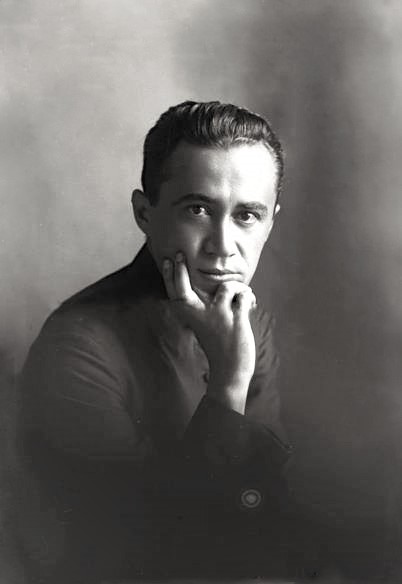
Mitrush Kuteli (1907 – 1967)
“Love your homeland even when it kills you,” would say Dhimitër Pasko, economist and economic expert, translator, literary critic, poet, storyteller, and even founder of modern Albanian prose under the literary name Mitrush Kuteli. Not only a transmitter of the word, but also of the voice of the South, full of spirit. He has a deep love for the eternal, earthly man, the Albanian, for his steps, for the soil he treads – which in fact he does not tread, but becomes the connection, the agreement – in his spirit he has a homeland, and in his homeland he has spirit.
He completed primary school in his birthplace, Pogradec, where his father had also opened the first bookstore in 1908, persecuted by the Young Turks. He continued his studies in Thessaloniki and his higher studies in Bucharest, at the Academy of Economic Sciences, where he also became chairman of the association of Albanian students in Romania.
He followed literary life and began his first publications, as well as those of his friends, also becoming the author of the first book of criticism.
While working at the National Bank of Romania, World War II caught him there; he was sent to the front, towards Stalingrad, but he avoided it. Along the way, he collected local folk songs.
He returns to occupied Albania, continues publishing. He knows how to tell stories like no one else, in Albanian: “Vjeshta e Xheladin beut” (The Autumn of Xheladin Bey), “Hanet e karvaneve” (The Inns and Caravans), “Si u takua Ndoni me Zallorët” (How Ndon Met the Zallorët), “Gjonomadhë e Gjatollinj” (Big‑Boned and Tall‑Limbed), “Kujtimet e kujtimeve” (Memories of Memories), “Natë muaji Shembiteri” (Night of the Month of November), “Qetësi para fërtyne” (Calm Before the Storm), etc., which truly are literary wonders.
He works at the Bank, conflicts with the Germans because he refused the issuance of a new war currency to finance their army, is persecuted by the Gestapo, moves into areas controlled by the partisans.
After liberation, he is among the founders of the League of Writers and a director at the Central Bank. Again problems with currency. Kuteli opposes the exchange rate between the lek and the Yugoslav dinar, detrimental to the country’s economy, as with the German occupiers, and resigns. In 1947, he is arrested as an “enemy of the people” and sent to a heavy labour camp, draining the Vloçisht swamp with other prisoners.
It is testified that the camp commander ordered him, “the writer,” to be buried alive in a pit of mud, but his fellow sufferers pulled him out and revived him…! He is released after two years. Internments, persecutions; finally they appoint him a translator; he moves to the publishing house; from time to time the right to publish is restored to him, according to the softening or hardening of the class struggle. Kuteli becomes the renewer of Illyrian myths. Deities, demi‑gods, just as in other great literatures of the world, also enter his work, “Në një cep të Ilirisë së poshtme” (In a Corner of Lower Illyria), “Nga Dyrrakiona në Bardhonë” (From Dyrrachium to Bardhona).
He passes away in 1967, due to heart failure…! “E madhe është gjëma e mëkatit” (Great is the Curse of Sin) is his posthumous work, a Balkan magical realism. Which sin, Master? They wanted to stifle his voice… with prison politics, swamp sludge, envy and betrayal of other writers, with deliberate silence, then with theft of works… with premature death, with all of it together – no, they did not let him grow even greater for us.
He left at 60, at the peak of his manhood as a writer; he wanted neither funeral nor obituary. With him died the literature of his time – or did it not die? Together with Ernest Koliqi and Lasgush Poradeci, their celestial friend, whom Kuteli published first, they form the initiating trinity of modern Albanian literature; delayed, they were the first to bring the 20th century artistically onto our soil. Memorie.al