
By Indro Montanelli
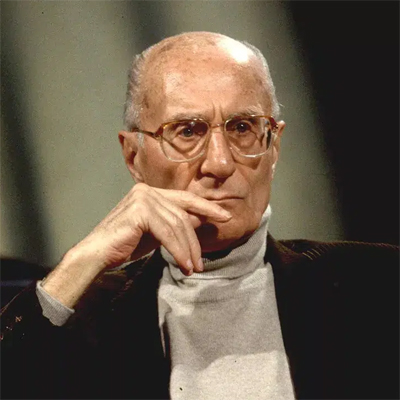
Memorie.al/ The famous Italian journalist, who left an undeniable mark with his work not only in Italy but extended his influence to other fields, standing out first and foremost in that of history, where he was both an eyewitness and a chronicler of the most important events of the time. A series often republished by the most prominent publishing houses in Italy are the volumes of the “Storia d’Italia” (History of Italy), which later also saw the collaboration and professional editing of Mario Cervi. Divided into many sections and chapters, it would certainly be of value for the Albanian reader to know the assessment that Montanelli gives for a very controversial period of our history, such as the Italian occupation, but also the monarchy period. How did Indro Montanelli (1909-2001) view and what did he write about the former Albanian monarch and his origin and that of his ancestors, the path he followed to make a career, his relations with the Italians, neighbors, and his own people, and finally, his stance and movements in the last days and hours before the invasion began?
The answers to these questions, intertwined with more information and other details, are found on pages 204-215 of Volume 8, Chapter XII, published by “Rizzoli Editore,” Milan, 1982.
The opponent that Mussolini had invented to counter the success Hitler was having was, in fact, his own man. King Ahmet Zog, as it was said, “was not born.” He belonged to a dynasty of Mafia bosses from Mati, which would be like the Calabria of Albania, and his real name was Ahmet Zogolli. The Zogolli, who after the Turkish conquest were the first to convert to the religion of Islam, asserted their power over the state thanks to the protection of the pashas who gradually governed the country in the name of the Sultan.
They owned some sheep, some pastures, and a group of killers, whom they used to support their small feudal rule and to adapt according to their wishes the blood feuds and guerilla warfare endemic among those mountain shepherds, but it does not appear that any of the Zogolli had asserted the desire to extend their influence over that insignificant canton, inhabited by a few tens of thousands of men, almost all illiterate, bound with considerable fanaticism to their autonomy, which the Turks respected. Usually, they were born, lived, and died there, among the sheep and minarets, hunting, intriguing, and administering archaic justice under the fig tree.
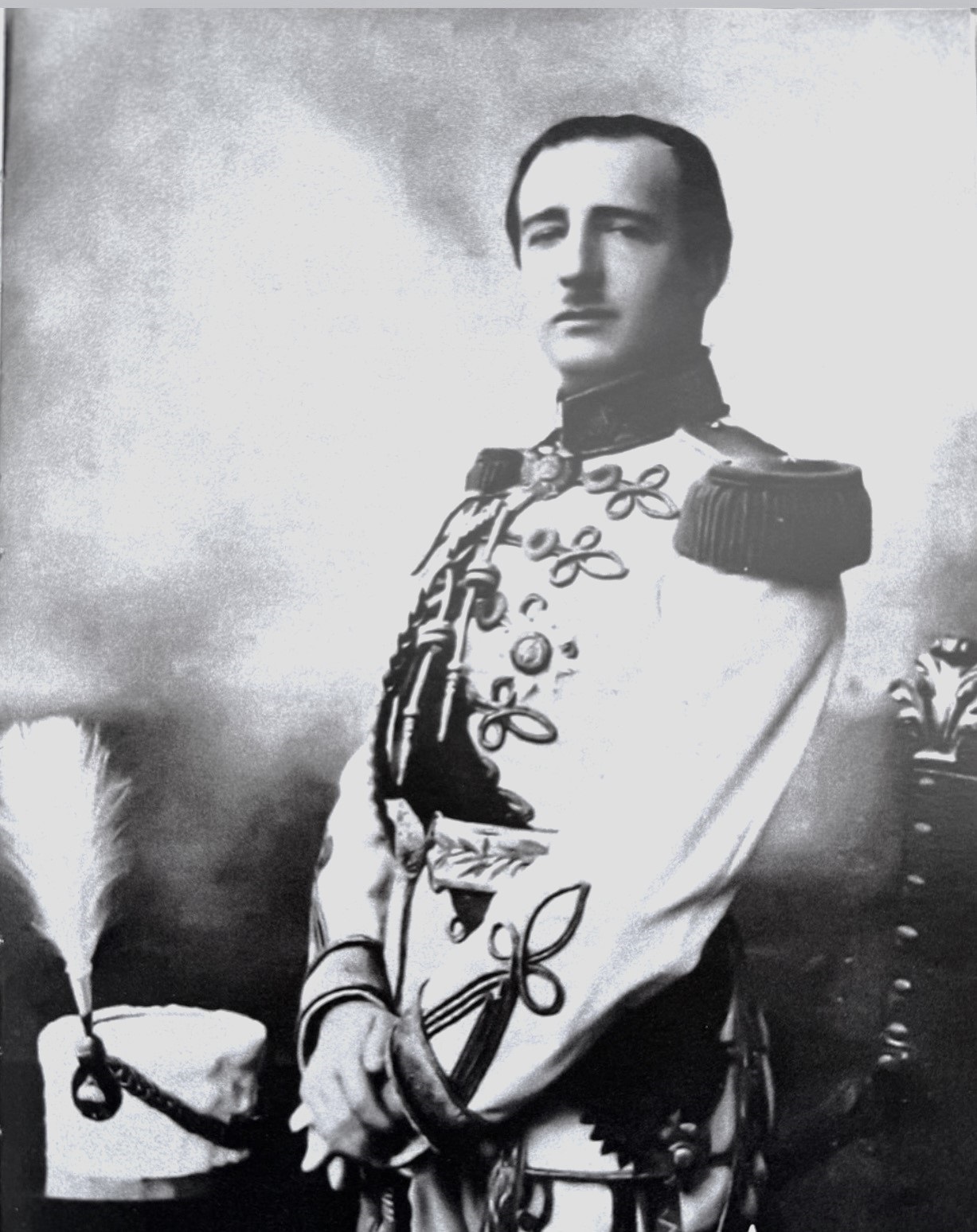
Ahmet was perhaps the first of his dynasty to broaden the horizon of his ambitions. Born in 1895, he studied at the Military Academy in Constantinople, but when Albania passed, after the Balkan Wars, under the rule of Vienna, he transferred to the Austrian army – the vehicle the Habsburg Empire used to integrate the various national elements of which it was composed – and there he became a colonel. Discharged at the end of the First World War and left without rank, without money, and without a flag, he returned to Mat, but did not get used to vegetating like his ancestors.
The democratic regime that the peace treaties had established in the country was, certainly, a sham, but it allowed anyone to get ahead. For Ahmet, his name was enough to become deputy of his district and thus enter the game of power. His ambition was well served by the cunning inheritance of the Zogolli, with remarkable courage and a total lack of scruples.
Before he was thirty, he was Minister of the Interior, a position he used to multiply his friends, to attack his enemies, and immediately afterwards to install himself as President of the Council. When, in the subsequent elections, he was defeated by the liberal Fan Noli, he refused to give him his place and tried to establish a dictatorship.
He was unsuccessful due to a lack of domestic forces and support from abroad, and forced to save himself, he left for Belgrade. By now, he knew that no one could rule in Albania except as a proconsul of a foreign power, and among those vying for dominance – Italy, Greece, and Yugoslavia – perhaps he thought the latter was more reliable. So he must have appeared to the Yugoslavs, who hesitated for a long time to make him “their man.”
When they finally placed him, Nikola Pašić – a kind of Serbian Giolitti (Italian prime minister) and a good judge of people – placing on the table a number of bags full of gold sterling, pushing them towards him, asked him: “And now Zog, how long will it take you to take money from the Italians and switch to their side?” – Perhaps Zogu did not do what Pašić had predicted, solely for the sterling.
As protectors, the Italians had more points than the Yugoslavs in their favor: First, they had no territorial continuity with Albania, which gave the latter more independence; then, they were more able to help it economically; and finally, after Mussolini came to power, they gave evidence of a much more aggressive and determined diplomatic activism. However, having pocketed Pašić’s sterling, Zogu also pocketed Mussolini’s, who cared little about that, as long as he gave some guarantees of success, and from this point of view he was not wrong.
With double feeding, Zogu quickly regained power and was crowned President of the Republic, but that was not enough for him. Three years later, he obtained a real crown, that of King, which Mussolini gave him in exchange for a declaration of undying loyalty to Italy, which, uttered by a man like Zogu, was worth as much as it was worth. Mussolini proved naïve, and that was seen immediately.
After becoming King, Zogu took his reign seriously, adopting stances of independence and often showing arrogance, which at one time risked provoking a crisis in relations between the two countries and in 1934, Zogu refused to renew trade treaties with Italy and signed one with Yugoslavia. These actions were partly justified by Rome’s policy, which performed its duty as a “protector” very poorly. The major aid ended up increasing the private accounts of Zog and his favorites, but it was also intrusive and paternalistic.
This policy seemed designed to offend the feelings of a King like Zog, who, without dynastic traditions, tried to compensate with gestures of national pride and the brilliance of an operetta court. Secretive and suspicious, Zog conceived politics as a palace intrigue, in which, however, he was a master. He rarely appeared in public, demanded from everyone, even Italian diplomats, starting with the head of the mission, Minister Jacomoni, that they respect a precise ceremonial, where he spoke little and did not open up to anyone.
The only influence he exerted was over his family, and particularly over his sisters, who had received the rank of generals from him and, dressed in uniform, played the role of fair-weather or foul in the Royal Palace. They were anti-Italian and feared that Rome would give the king an Italian wife who would dispossess them.
In fact, this was the project that Rome had, and to realize it, someone had even suggested “sacrificing” for Zog a princess of the royal bloodline of Savoy, but none were found willing enough, and then they turned to a baroness who, although Italian, had direct descent and bore the name of the most prestigious champion of Albanian nationality: Skanderbeg, but for Zog this was a temporary measure; he proudly refused it, and to reaffirm his independence, he wanted to make his own choice.
He made it based on a photograph of a Hungarian girl, proposed to him by his secretary. Zog refused the girl but kept the photograph and invited the original to Tirana: She was Geraldine Apponyi, heiress of a great Hungarian family that had fallen on hard times; she had nothing but a name and a sweet face, the same in character.
The wedding took place on November 28, 1937, on the twenty-fifth anniversary of Albania’s Independence (Translator’s note: here, most likely, we have a lapsus by the author himself, which may have come from his lack of depth or negligence regarding this historical detail, as it is now known that the wedding in question took place in April 1938) and it was another source of friction, this time deeper with Italy.
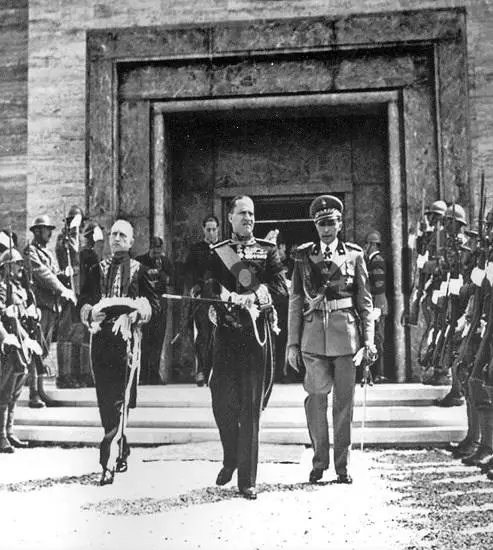
Not only because Zog had refused an Italian bride, but also because of the harsh opposition shown, especially by his general sisters, to both Italian representatives, who were Ciano for the government and the Duke of Bergamo for the House of Savoy. It was more than understandable that: The crisis, for trivial reasons, was already in the air, but it is very likely that Ciano’s irritation also gave it an impulse towards acceleration. But Zog, either due to a lack of ideas or out of pride, did nothing to prevent it.
Perhaps he thought that Italy could not do without him and, certainly, he relied on his sisters for this conviction. Geraldine could offer no help, not even through advice. Very young in age (she was twenty years younger than him) and inexperienced, she found herself completely unprepared to play the difficult role of Queen. Moreover, she became pregnant immediately, and her husband, although seemingly very much in love with her, still acted like a Muslim who does not value a woman’s word.
But, according to another hypothesis, he never had any illusions about the stability of his throne; on the contrary, Zog wanted to end his adventure in the most elegant way, pushing his independence to the point of challenging fate. Perhaps he was preparing his return for when the rules of the European game changed. However, although he lacked ethics, he did not lack character.
In fact, this became clearer than ever when the German blow in Czechoslovakia gave Ciano an opportunity to carry out the plan for annexing Albania, a plan that had been “simmering” for a long time. The Foreign Minister had received orders that the Yugoslavs should have “free hands” to act in Albania, according to the secret clauses of the 1937 treaty: Mussolini had gotten hold of reports that depicted Albania as a “rich country, really rich” and foresaw possible German interference in that area, as long as this interference was overseen by the Italians.
In these “social” descriptions by Ciano, anti-Zog ideas were also present. “This people, whose miserable living conditions remind us of distant Chinese villages along the Yangtze…,! The paltry 120,000,000 lire, which made up the state budget, were used to buy diamonds, clothes, cars that the King’s sisters advertised with constant recklessness.” Thanks to this tactic, Ciano, in May of ’38, managed to convince the Duce to give his approval for a general preparation.
Meanwhile, the Duce’s dauphin, who was extraordinarily reckless in choosing the tactics of his policy, also foresaw the assassination of Zog. On October 27, 1938, he noted in his diary: “The action begins with the killing of the King (it seems it will be the task of Councilor Koçi, for a fee of ten million), movements along the square, instructing the bands loyal to us (almost all the commanders, except those of the KMIA), a plea to Italy for political and military intervention if necessary, offering the King’s crown and subsequent annexation. Jacomoni assures that everything can be done according to the rules, with one month’s notice.”
“A maneuver of the ‘Anschluss’ type, in short, likes the annexation of the Sudetenland.” Until that moment, Ciano had reacted on his own initiative. There was already a duel between Ciano and Zog, so Mussolini would base his approval or obstruction of the annexation on the state of international events. The fall of Stojadinović, a great friend of Ciano’s, in Yugoslavia, had complicated the situation even more. “Free hands” could no longer act as before, and Zog knew this well. The idea of killing the King had faded. / Memorie.al