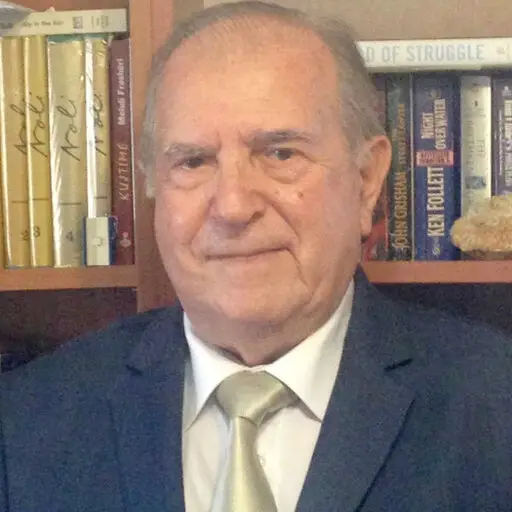

By Prof. Dr. Alfred Frashëri
Part Three
– Without bread and without oil, there is no independence and progress for the Homeland! –
Memorie.al / Life, activity and the events within it are preserved in our memory and reawaken over the years, to remind us how we lived and worked, how we behaved in society and family, our achievements, our mistakes, but above all, the people, comrades and friends with whom we shared joys and sorrows on our life’s journey. In my life, work in the oil fields began in September 1953, when I received my appointment as “Electrical Technician at the Drilling Enterprise, Patos”, signed by minister Shefqet Peçi, and continued in various institutions and roles related to oil exploration until the end of the 1980s. Now that we are on the threshold of the 100th anniversary of the discovery of oil in Albania, I remember with respect the people who with devotion, enthusiasm and sacrifice worked in the 1950s at the Patos oil field, among whom I also worked. I felt a spiritual need to tell about them and the great work they did. This anniversary stirred my memory and gave me the desire to take up my pen and write my memories, to express the feelings I had and have for those years.
Continued from the previous issue
In the Logging Group, the team for perforation and torpedoing of well casings also worked, to establish communication between the oil-bearing layer and the wellbore and ensure the flow of oil from the layer into the well. In 1955, the first bullet samplers also arrived, allowing rock samples to be taken from the drilled layer even after drilling had finished. In the early 1950s, this group had its centre near the Transport Park. In 1957, the Logging Base was created and a special building was constructed. In the years 1951-1953, the Logging Group was directed by technician Hamdi Bejtja (1951-1954) and Soviet technician David A. Bronshtein (1951-1952), who started carrying out logging in wells. Alfred Frashëri (1953-1956) worked as an operator and also continued leading the group after Hamdi went to do his military service. Later, this work was continued by engineer Agim Luari (1956-1961) and other technician operators. The logging methods for studying the wellbore were new in those years.
David Bronshtein taught Hamdi the technology of semi-automatic recording. Hamdi taught me. In the years (1955 – 14 December 1956), the Soviet engineer Vladimir Mihajloviç Pigrov came from Baku, who taught me the construction of the automatic logging station, and together we put into operation the new automatic station that had just arrived, achieving the transition of logging diagram recording from semi-automatic technique to automatic stations. And thus it remained a tradition that new operators were taught by older ones, through individual study, in courses, and directly in the wells during work. Alongside them, other technician operators worked over the years, such as: Vasil Nasi (1954-1957), Pertef Nishani (1955-1959), Vangjel Ndrio (1956–). In the second half of the decade, engineer Kadri Zalla (interpretation engineer), Hidai Haxhiu (1959–) also began working at the logging base, together with the Soviet specialists Juri Sabçendko and Leotjev Gallkin. Other technicians and masters also came, replacing the older ones who went for studies or to perform military service.
Among them came the technician operators Luftulla Peza, Kozma Liço, Leonidha Teta, Asim Zeqja, Jani Çati, Kaso Hitaj, and designer Eshref Vrioni. Well perforation over the years was also carried out by technicians Perlat Hoxha (1954–), Vangjel Ndrio (1956-1959), logging master Zylal Mahmuti (1952–), perforation master Nasi Prifti (1952–), Miti Xhavara, Halit Varfi, Nysret Mane and Elmaz Rama. For equipment repair, Master Harilla Marini (1953–) and perforation and torpedoing Master Roko Abazi (1954–) also worked. Members of the teams were also winchman Josif Prifti (1951–), assistant winchman Vlashi (1953), Nasi Stefa, driver of the logging station winch (1951–), Hetemi – driver of the logging laboratory (1953–), Sotir Stefa, driver of the perforation station (1952–), drivers Koli Shtërmbari, Ceno Meçe, Hasan Hasa and Vangjel Lici. In the 1960s and later, the complex of logging methods was supplemented with sonic logging and radioactive logging of natural gamma radiation and neutron logging.
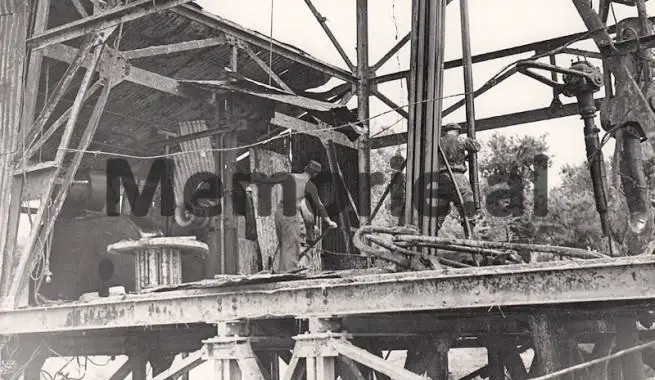
Recording of logging diagrams was done at several depths during wellbore drilling, determined in the project and called preliminary logging, to follow the geological progress of the well. Upon completion of drilling, final logging was performed. To carry out logging, the well stopped drilling, the borehole was cleaned so that the instruments could be lowered freely to the bottom by circulating the clay solution for a certain time, and then the drilling instrument was raised. We had to be at the well before the instrument was raised and be prepared to start recording the diagrams immediately after the instrument was pulled out of the well. And this time could be day or night, in good weather or rain, as it happened. Naturally, drilling was interrupted for this very necessary process for the geological study of the well. The time taken for logging could last up to two uninterrupted shifts in deep wells. For us in logging, the planning officials, who measured their work by the metres of drilling, achieved per day, called this interruption “sabotage” and for the logging team, they would say humorously in Russian “karotazhniki sabotazhniki” – they reached the well.
Putting production wells into operation and extracting oil was carried out by the oil workers of the Patos Production Enterprise. The Enterprise was led by Kiço Kasapi, chief engineer Rexhep Reka (1952-1962). The first chief geologist was Veronika Todri (Meko) (1951 – February 1953), who later became head of the laboratory. Ziver Meko (1952-1962), after returning from higher studies abroad, was appointed chief geologist of the enterprise in February 1953; deputy director was Nasti Qafzezi. The work processes at the wells were directed by petroleum engineers: Thoma Gjikondi (1952–), Pavllo Panajoti, Dilaver Shkurti, Meleq Velaj; technicians Abedin Xhomo and Hysen Uzuni; technician Niko Goxhobashi (1951-1981) worked on production well mechanics in the workshop, while in the planning and finance branches worked Eleni Laçka, Merxhane Karafili and Margarita Xhepa’s sister.
The geological branch organised the geological service in all four sectors of the enterprise, placing collectors near them; it created files of the wells with their technical biographies; the dynamics of well oil output were evaluated; systematic analysis of oil and gas began; the processes of well progress according to the project and its preparation for exploitation were controlled and monitored. The organisation of the geological service in this enterprise was achieved through the tireless work of the personnel and the technical and organisational direction and assistance of the advisor and chief geologist of the Combine, A.G. Burdzhanadze, who held weekly qualification courses with them in Kuçovë. Technician Petraq Xhaçka was appointed to the Production Enterprise in Kuçovë. Piro Tasellari was appointed technician at the “Sera” (Bitumen) Enterprise in Selenicë.
The entire technical-scientific and organisational activity of these two enterprises was directed by the General Directorate of the Oil Combine in Kuçovë. The Directorate was headed by Zenel Hamiti in the first years of the 1950s. From 1955, Xhaferr Spahiu came as General Director. The chief engineer was Ramiz Xhabia (1952–), with Soviet advisors Tumilloviç for oil extraction (with technical assistant Hasan Hamza), Pyotr Andreyevich Ivanov and Gavril Yosifov Bobrishov for well drilling. Geological problems were directed by the Geological Section with Chief Geologist Servet Pasho (1952–) with advisors A.G. Burdzhanadze (1951-1952) and Ganifa Askeroviç Mamedbegov (1953-1955); geological engineer Beqir Alia; technicians Kozma Lino (1951–) and Fatri Kadilli (1954–); while petroleum engineer Ender Nexhipi (Arëza) was Production Director (1952). In the Combine Directorate, according to their professions, also worked engineer Stilian Pili, Llazar Poreçi – head of the planning branch, Pali Birçe – design technician, geodetic technician Nasuf Dizdari, petroleum technicians Abedin Xhomo, Dhimitër Paparisto (for the norms system after transferring from Patos), Hasan Hamza and Hysen Uzuni, Muharrem Seseri, Iljaz Gogaj, as well as designers Gjenovefa Kasapi (head) and Palushi.
I knew all these oil workers personally; we met with them to work and solve various tasks at the wells. I learned a lot from them, not only about oil technology but also about devotion and persistence in work. Therefore even today, at this advanced age, I am grateful to them and thank them; I remember them with respect. The technical-engineering personnel, even the administrative staff, were not office communities, but closely tied to the wells and their problems. Technical processes at the wells were carried out according to the technical schedule, day and night, at the appropriate time. For technical-engineering personnel, there were no shifts, no fixed start and end times, day or night. Work began when the well operation was needed and finished after the given operation was completed, at whatever hour. In this way, logging diagram records were also carried out. Perforation and torpedoing in the well were done only during the day, as they were explosive work. One incident remains imprinted in my memory. While recording diagrams at night at a well, after midnight the door of the laboratory vehicle opened and the General Director of the Combine, Xhaferr Spahiu, entered. He greeted us, listened to a short report on the work we were doing, and wished us well. He wanted personally to make contact with the oil workers, directly at the well, and also to familiarise himself with field work.
I cannot fail to recall another “fashion” of behaviour in Patos of those years, where criticisms were made and orders given by shouting to the skies. Apparently, this was conditioned by the great responsibility for the complicated processes and tasks at the wells, which had to be completed on time and with quality, otherwise there would be serious technical consequences for the well. I remember how a technician, hearing the shouting: “Why haven’t you done it yet?”, said to his boss with cynicism: “Why are you yelling? The head of the work day, his wife yells at him at home”. In the Patos oil field, there were also the Mechanical Workshop, the Transport Park, the Electric Station, where electrical engineers Hektor Çaçi (1953–) and Besnik Zeraliu (1954–) worked. The great work at the wells could not be understood without the transport base, whose drivers worked day and night, in summer and, pulling their vehicles through mud up to their knees with tractors in winter, to go and supply the wells. There are many, many distinguished drivers, but to this day I remember Rrapi Tiku, who with his “Tatra” was everywhere at the right time.
Alongside the oil workers, in Patos of the 1950s, the doctors Hysni Rusi (– … – 1955), Petraq Papadhopulli (1955–), pharmacist Kolë Lisna, dentists Elsa from Shkodra and Berta from Tirana, and Zenel Kokomiri also worked with great devotion; they are remembered with the greatest respect for their care for our health, ready day and night to perform their duty as best they could. And in the community of intellectuals of those years in Patos were also the teachers Pilo Mici, Areti Mici, Lavdie Bejtja (1952–), teacher Mjatla from Kavaja (1952–), Gjinovefa Nito (1952–), who taught and educated the oil workers’ children with dedication.
The objectives that had to be achieved for the country’s independence and progress, to transform it from a backward agricultural country into an industrial country with advanced agriculture, the economic, technical-scientific and social possibilities that the state had placed at the disposal of the oil industry, created the conditions for organising the army of oil workers who, with their devoted and tireless work, with dedication and persistence, qualified and disciplined, and with great sacrifices, created the possibilities that, after the Kuçovë and Patos fields – destroyed by the Second World War – were put into operation, an intensive field exploration work could begin for their expansion.
From the 1950s to the 1980s, 12 new oil fields were discovered in sandstones and limestones: Marinëz, Visoka, Ballsh, Gorisht-Kocul, Cakran, Kolonjë-Bubullimë, Finiq-Krane, Amonicë, Hekal-Karbunarë, Mollaj, Delvinë, as well as gas fields: Divjakë, Kryevidh, Ballaj, Frakull, Povelçë, Panaja, Currilat in the Adriatic Sea, etc. This development was also achieved through the drilling of hundreds of deep wells, reaching depths of up to 6,700 m. The extraction from underground and processing of 2,250,000 tons of oil was achieved in 1974, as well as 940 million m³ of gas in 1982. Unfortunately, like all Albanian industry, the oil and gas industry was also ruined during the transition years. There are no longer Albanian scientific institutions for oil and gas exploration, no more exploration drilling enterprises, geophysical enterprises, etc. The joint-stock company ALBPETROL produced only 45,384 tons of oil in 1994, while foreign concessionary companies produced 1,322,000 tons from existing fields. If during a quarter of a century Albanian oil workers discovered 16 new oil fields and 7 gas fields, during the 25 years of transition the concessionary companies have discovered none, although their blocks where they work are spread over prospective zones and regions.
These companies have not even realised the discovery of a few years ago of a field in the Shpirag area, even though this area had already been evaluated by Albanian geologists in the 1980s. Moreover, as has been said, even to reach the oil-bearing limestone structure, for one well five boreholes were drilled – something that had never happened in Albania with wells drilled by Albanian oil workers. But what is most painful is the discarding of oil specialists, from the workers at the top of the derrick to technicians, engineers and scientists. The strongest, the most knowledgeable, the best prepared were forced to abandon the country and today work in their professions in various parts of the world; we no longer have them. Albanian values and investment are exploited by others. Those who have remained here are no longer asked about oil problems, although they were trained and worked for decades, the Albanian state invested much in their professional formation. They are precious assets of the homeland’s economy and culture. No country that wants to progress does this. Neither this great army of oil workers, nor the scientific institutions that were established over decades with effort, sacrifice and great expense, can be raised in a day or by a single order or decision.
This situation brought about a decline in oil production, so that in 2005 only 448,000 tons of oil was extracted. After that year, within the activities of foreign concessionary companies, a gradual increase in oil extraction began, reaching 1,368,000 tons in 2014. But unfortunately, there is no data on how much the Albanian state benefited from this increase – where did the lifeblood of the Albanian economy go? The current state of the oil industry worries and causes spiritual suffering to the oil workers, who are still here, even in their old age, because there is no question of a new younger generation. Therefore, we find it appropriate to address the Albanian state institutions and the oil workers: Let us remember the 100th anniversary of the discovery of oil in our homeland, let us honour the selfless work, with great sacrifices, of the oil workers day and night, in the July heat and the winter frost. This celebration does not only have the importance of honouring. It has an extraordinarily great value, to raise awareness and to programme what must be done in the future, so that the priceless wealth that nature has given us is sought, extracted and put to the benefit of the country’s economy, as it should be, at the technical and social levels of our times.
This activity will be an inspiring and mobilising promise for state institutions and for the new generation. For this national activity, a programme project was presented to the central and local state institutions of Albania, the academic community, and all oil workers, wherever they are, for discussion and approval. “It’s too early,” some might say. No, it’s not too early; a major activity takes a great deal of time and effort to prepare properly. Can we remain silent about oil, about black gold? It is in the morality of our people and the army of Albanian oil workers, especially its older and younger elite, to organise and celebrate this jubilee as well as possible, to let the whole world know that Albania is an oil-bearing country, that oil has been the “oil” of our economic kitchen, that Albanian oil was discovered mainly by Albanian specialists and scientists. At the Congress of the European Association of Geoscientists and Engineers (EAGE) in Florence, Italy, in 1991, after my presentation, a journalist asked me: “Now that Albania is becoming an open country and expeditions from advanced countries will go there, surely you will find more oil and gas fields, copper, chrome, etc.”? With full conviction, I replied: “No, they will not find anything more or faster than we have found. Their expeditions will be led by distinguished specialists and professors, they will be equipped with the latest technology, but you are confusing one thing:
Geology is not, let’s say, building a building or a road. Geology is like a mother tongue. To discover a field, you must know the land well, the soil of the country, have walked on and studied the geological structures for a long time, and evaluate their mineral-bearing perspective. But to know the subsoil well, you must love more than yourself the land where you were born and where you lay your head; technology is not enough. The fields so far have been discovered mainly by Albanians.”
I repeated this also at the Congress of the Balkan Geophysical Society in 2013. The twenty-five years of transition have completely proven this opinion. The foreign concessionary companies to this day have not discovered a single oil field, gas field, copper, chrome, etc. They have only exploited Albania’s wealth – wealth that Albanian oil workers, geologists and miners found and put into operation. Let us hope that this situation will change, by understanding the essence of the matter and what must be done. The great Renaissance figure Sami Frashëri teaches us that for the state to progress and be rich, it must exploit and preserve natural mineral wealth; we must also work and develop agriculture and animal husbandry, as well as “craftsmanship in which the locals have learned: wool, flax, cotton, silk, iron, wood – to be achieved that they work as much as possible, so that the Albanian does not need to bring these from abroad”.
With these teachings, we must understand well that it is production that enriches the people and the state, and also creates conditions for the development of trade, raising the necessity of developing national and local automobile roads, as well as railways, within the country and with neighbouring states. In his book “Shqipëria – ç’ka qenë, ç’është e ç’do të bëhet” (Albania: What it was, what it is and what it will become) (1899), Sami Frashëri wrote: “Metals shall be sought throughout all parts of Albania and extracted wherever they are found…! In the capital of Albania, besides secondary and tertiary schools, there shall be a university… a council of learning (academy) must be in the capital… to advance letters, history, geology, metals and other works of Albania…”! Thus, to achieve the development of Albania, Sami Frashëri teaches us to “…create a university, inspired by applied sciences… The engineering faculty must include all specialities… This higher institute will create Albanian culture and the intellectual greatness of our nation.”
One hundred and sixteen years ago, while evaluating the exploitation of natural resource wealth, Sami Frashëri also raises the problem and gives the alarm: “…Today they are lost and wasted, like forests, metals and many other things, which if looked at properly, can bring great prosperity,” as if he had foreseen what has happened to Albanians in this last quarter of a century. In concretising these teachings of the Renaissance figures, in his work “Probleme Shqiptare” (Albanian Problems) (1943, reprint 2001), Mehdi Frashëri (amnestied on the occasion of the 15th anniversary of Liberation in 1959 by decree No. 3005 of the People’s Assembly, and today Honorary Citizen of Përmet) wrote: “…In the near future, Albania’s kerosene, both in Kuçovë and in Patos, … forms a source of national wealth and an important object for state revenues” and that “…in Albania there have appeared several ores which, if exploited with reasonable methods and ways, can serve for the development of the country’s economy and industry, and can also bring a good income to the state. The ores in question are: The bitumen of Selenicë in the district of Vlorë; The kerosene of Kuçovë and Patos in the districts of Berat and Mallakastër; Copper in Pukë and Rubik in the districts of Shkodër and Mirditë; Iron in the upper Shkumbin valley, between Librazhd and Pogradec; Chrome in the aforementioned district; Chrome and bauxite in the district of Kukës (Prefecture of Kosovo); Lignite coal in the villages of Mbroje – Drenovë, Krrabë of Tirana.”
Further he appeals: “…The finding of fuels, both in peacetime and in wartime, has taken on such great importance that it plays a major role even in the foreign policy of states. For these reasons, fuels in the majority of states have been monopoly goods. On the one hand, to give sufficient income to the state treasury, on the other hand, to keep them under control; in any case, the monopolisation of fuels in foreign hands is suicide, because in case of need the state lacks the main factor of any movement” (page 110). The economic programme of the Renaissance figures, which was fully implemented after the liberation of the country on 29 November 1944, when the exploration and extraction of oil and other useful minerals were a priority, the cornerstone of the sustainable development of the Albanian economy. This development brought about that the many minerals discovered and extracted in Albania not only confirmed the greatness of the Renaissance figures but also placed important tasks on us. In light of the current world economic and social developments at the beginning of the 21st century, we must solve the problem of how to cooperate with the European Union states and beyond, but always without leaving the natural wealth of the homeland in foreign hands as we have done these 25 years; they must remain the wealth of the Albanian people and a source for the country’s economy.
I want to conclude these memories by writing about a phenomenon which in itself is an indicator of social and personal conscience. The oil workers, from the simplest worker to the masters, technicians, engineers, and even administrators, in general became tied to oil for life. They went, performed military service, studied in higher engineering schools at home and abroad, were transferred to various institutions, but still remained and called themselves members of the army of oil workers. In the face of the need, importance and value of oil – which people feel even in their homes, in their families – the difficulties of the work did not bother the oil workers; nor were those difficulties only for those who worked at the wells, but their families, wives and children also felt them. My life and work in oil began in September 1953 and continues to this day. In September 1956 I went for higher studies at the University of Tirana. I graduated in 1961 and in February of that year I returned again to oil, to the seismic teams, which that year was carrying out the first seismic profiles in Divjakë for gas discovery.
I was transferred for geophysical exploration of copper in Tuç of Pukë and in Gjegjan of Kukës, then to the Faculty of Geology and Mining, but even there I began to teach the subjects of geophysical well logging, as well as geophysical exploration of oil and gas fields and of solid minerals, etc. Alongside this, like other colleagues from the Faculty, I collaborated with the Geological Institute of Oil Research in Fier for various syntheses and projects, I was a member of the Institute’s Scientific Council (1975-1987), and conducted field observations, mainly in Adriatic Sea exploration. Therefore I found it reasonable to append to these memories two annexes with the number of publications by oil workers on Albanian oil, as well as my bibliography of publications, studies, projects and communications during these 60 years on oil. Just as with other geologist and geophysicist colleagues, this burden of silicon is carried also by our families; alongside it, as for everyone, one feels the need for oil. There remains in our minds a request from our ten-year-old son, Ermal, who one winter day in the 1980s, when there was no kerosene in the shop and we did not light the kerosene stove, called out from his soul: “Don’t just sit there, get up and go find oil.” A call that in their minds and hearts, all oil workers felt./Memorie.al