From Sefedin Krasniqi
Part One
-Communist crimes in Kosovo, just like in Albania-
Memorie.al / The beatings, terror, persecutions, imprisonments, and killings suffered by the village of Zhilivodë (now Trimor), especially the family, friends, and loved ones of Aziz Zhilivoda, I have often heard recounted in the men’s chambers of this village. Despite the freer and longstanding breathing space resulting from the changes that came to post-World War II Yugoslavia, we never dared to express or write freely about them in newspapers or books. This time, Faik Krasniqi, the second son of Aziz Zhilivoda, speaks exclusively.
BROWSING THROUGH HISTORY
– After the assassination attempt against the Minister of Defence of the Republic of Kosovo, my cousin Ahmet Krasniqi, and the barbaric offensive of the Chetnik-Serbian forces against the village of Zhilivodë (now Trimor) on September 22, 1998, not knowing what would happen to the future fate of my family, the village of Zhilivodë, and beyond, on September 27, 1998, I began to write a part of my family’s past, called Muja. I did this also to fulfill the legacy of my grandfather, Mustafa, father of Aziz Zhilivoda, and my uncle Qerkini, who sacrificed so much for us.
On this occasion, I also want to mention the sacrifices of my maternal uncles, the Avdijajs from Hadja, and my father’s uncles, the Abdullahajs from Vranidoll i Llapit. Some of these memories are events that I and my family directly experienced. I also want to speak about all those men and women who carried the entire horror of the time during the Turkish and Serbian occupation in these parts, who remained fearless and stoic throughout their lives and taught us how to live as humans, unafraid of high national and human ideals. Based on generational instructions, I was fortunate to learn from my grandfather, Mustafa Latifi, about our ancestors, who had lived in the village of Gllavotin, not far from the village of Zhilivodë, where we now live.
Once, around 1890, during the Turkish occupation, the head of this family was named Mikel Lekë Gjoni, meaning we were Christians then. In that same year, after being forced to convert to Islam, they also had to change their names. At that time, in the village lived Muja, Mikel’s eldest son, who, due to not tolerating the Turkish authorities, was forced to leave his home and ancestral land to take refuge in the mountains of Qyqavica. I will first describe the origin of the Mujajs, according to what my grandfather told me.
The Mujajs
My grandfather was wise and passed on the memories and legacies of his parents. At that time, when they were still in the village of Gllavotin, one day, Muja went to fetch wood from Mount Qyqavica. While he was in the mountain, a King’s sergeant (çaush) arrived with seven tax collectors (tasildar) and four guards (zapti). They entered Muja’s yard and asked where the master of the house was. Muja’s mother told them that Muja and his sons had gone to fetch wood in the mountain. The sergeant killed the house’s rooster and told Muja’s mother to prepare it for them to eat. The sergeant with the guards and tax collectors went up to the tower and lay down to sleep. Not long after, Muja returned from the mountain. His mother came out to meet him and asked:
– Are you tired, son?
– No, mother, but are you tired? – asked Muja.
Muja saw some drops of blood in the yard and asked: – Dear mother, what are these blood drops? His mother, not wanting to tell her son, knowing that trouble would befall him with the Turks, said: – Son, I slaughtered a rooster! At that moment, one of Muja’s sons came and said: – Father Muja! – Speak, son!? – The sergeant killed our rooster! – said the son. – What sergeant, man? – The sergeant with several guards and tax collectors are in the tower, father Muja, – answered the son. – Euu, – shouted Muja, leave the wood, man! – he shouted to his brothers! – grab the martinis! And they entered the tower. – Get up, you dogs, Muja had shouted. – Who gave you permission to shoot guns in my yard and kill my chickens?
After a few words, shots were heard in the tower, where the sergeant himself, eleven in total, was killed. Then, Muja took his family members and left the house, to escape the Turkish military expeditions. After burning the houses and property with all the Turks inside, they headed for the mountains of Qyqavica and found shelter there. From this act of Muja, the saying remains: “Come, let’s make Zhilivodë.”
Here where we live now, the village of Zhilivodë was founded by our ancestors. Then Muja began to clear the forest to make land for the family’s bread. My grandfather said that Muja was surrounded seven times by Turkish armies and guards, but helped by his brothers and sons, he broke these expeditions. Some of Muja’s men always kept guard, so that the Turks would not attack them treacherously, as they were accustomed to do. Muja continued to work the land at the edge of the mountain. The land between the Llap and Sitnica rivers, where the village of Prelluzhë now lies, remained barren. One day, a beg from Vushtrri came and said to Muja: – If you want to be saved from the Turkish expeditions, we can make an agreement.
Give me the land and the meadows, and I will get the Turks off your back. At that time, Muja lived in a family community of 63 members. After Muja thought it over and consulted with his brothers, they decided to leave the land, in exchange for putting an end to the Turkish expeditions. They had left over 80 hectares of land. After the beg took the lands, he colonized them with Circassians (Chechens) expelled from Russia. For the sake of truth, it must be said that our great-grandfather could not remember the years when these events happened. To this day, the Circassians of Lower Stanofc have a part of our land. The rest is held by the Serbs of Prelluzha. After liberation from the Turks, and especially after 1912, Kosovo was occupied by Serbia, and now new masters came to us, who began to move the boundaries, each according to their own need and personal desire.
The massacre between Krasmirovc and Gradica
With the passage of time and years, the weight of bondage on the shoulders of our ancestors grew heavier. Thus, in September 1919, a scouting expedition headed for Qyqavica and the village of Zhilivodë. The crackle of gunfire spread from the village of Zhilivodë to the village of Kollë in the municipality of Vushtrri. After the Serbian forces were broken by the Albanians, the Serbs brought new military reinforcements. In the areas of Qyqavica, a great battle for life or death began. After many battles, the Albanians were no longer able to confront the Serbian forces. Our fighter units withdrew deep into the heart of Qyqavica. In the same year, 87 men were captured by Serbian forces, from Kollë to Zhilivodë. Unarmed, old and young, all were executed and massacred between the villages of Krasmirovc and Gradica. Among the killed, from Muja’s house, was Uncle Shaban, the brother of our great-grandfather Mustafa. The Serbs had massacred them in the most barbaric manner. In this massacre, Fazli and Sejdi, 17 years old, were executed.
Our great-grandfather said: – When we went to retrieve the bodies, all our men were naked. The clothes from their bodies had been taken by the surrounding villages where the massacre had taken place. The bodies were so badly mutilated that we barely recognized them through body marks. They took 12 males, and among them, also a girl, likewise massacred. The girl was named Zylfie, daughter of Avdulli, from Zhilivodë. Since Avdulli had no sons, he decided to raise his daughter as a son. The villagers of Zhilivodë did not know she was a girl and that her name was Zylfie; they called him Syla of Avdulli. Only after this massacre was it determined that Syla had been Zylfia, the 22-year-old daughter of Avdulli.
My great-grandfather’s brother, Shaban, killed, left two orphans: Qerkini and Qerimi. Qerkini, Qerimi, and Azizi saw their father, respectively their uncle, massacred and swore at his grave that they would avenge Uncle Shaban and all the others. According to the stories of our great-grandfather Mustafa, the house of the Mujajs remained a target of the then Serbian authorities. Thus began the life, and also our family’s resistance, in the Serbo-Slavic prisons. Even after many persecutions, mistreatments, killings, we remained steadfast regarding the national cause, but also human causes. Thus, the fate of our ancestors was experienced also during and after World War II.
Aziz Zhilivoda and his participation in the NDSH (National Democratic Movement of Albania)
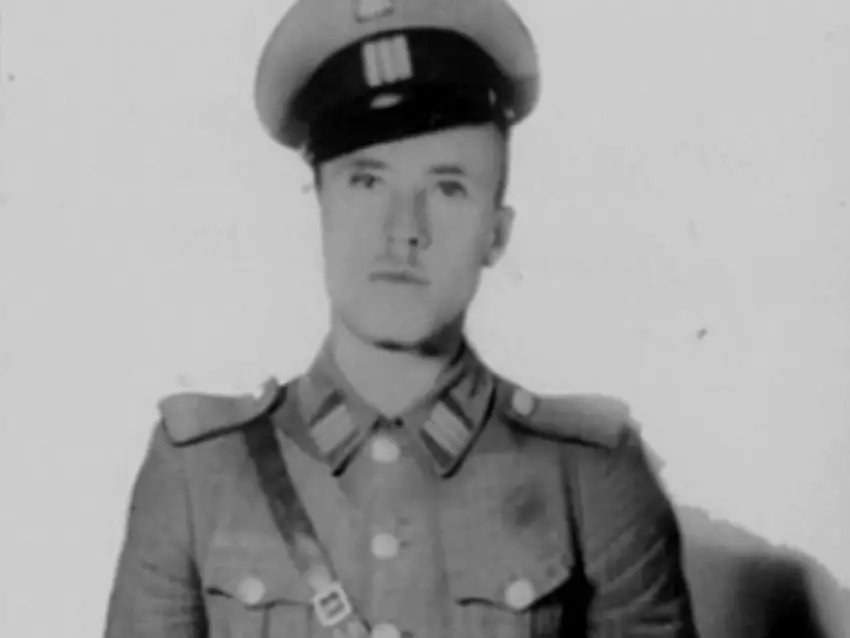
Our father Azizi grew up, as did Qerkini and Qerimi. All three got married, and our great-grandfather left the care of the house to Qerkini. My father, Azizi, entered the Albanian gendarmerie of that time. In the following years, as is known, Kosovo was divided between the Germans and Italians. Azizi was on duty in Orllan of Podujeva, then in Lluzhan, and finally in Besi. A few years later, he joined the Guard of Xhafer Deva. After the Germans and Italians left Kosovo, these Albanian military formations were completely disbanded. Kosovo was preoccupied by the Slavo-communist forces. These Albanian military formations split into smaller groups and some took refuge in Drenica, and some in Qyqavica. Without delay, military formations were organized and reorganized by Xhafer Deva, Marie Shllaku, and Gjon Serreqi. Frontal warfare and ambushes against the Serbo-Slavs began.
We will limit ourselves to speaking only about the area of Qyqavica, Shala, and Llapi, as told and written by our father, Aziz Zhilivoda, not forgetting to mention the connections of these areas with other parts of Kosovo. These military formations in the area of Qyqavica, called Artakoll, were commanded by Aziz Zhilivoda, Hashim Gjaka, and Ferat Hashim Strofci. In Shala of Bajgora, the uprising was led by Ahmet Selaci and Adem Voca of Shala. They maintained continuous contacts, consultations, and agreements with Drenica, with Marie Shllaku, Gjon Serreqi, Ajet Gërguri, Hilmi Zariqi, Miftar Bajraktari of Llausha, Bajram Dërguti, the Bajraktar of Gllogovc, Ymer Berisha, and many others.
Their food, clothing, and shelter were provided by Bajram Zuka of Likoshan and Xhemail Lahu-Dervisholli of Gradica. From the re-organization, efforts, and wars under the care of Gjon Serreqi, Marie Shllaku, and Ymer Berisha, columns were formed for Drenica. Commanders of these military formations were Shaban Polluzha and Mehmet Gradica. In Artakoll, military formations were formed, including Shala of Bajgora, and commanders were appointed: Adem Voca, Ahmet Selaci, Aziz Zhilivoda, Osman Bunjaku, Ferat Hashim Strofci, Fazlli Saraçi, Hashim Gjaka, etc.
After many efforts and wars for liberation, Kosovo was definitively reoccupied by the Slavo-communists. In the Hade area, which includes Shipitulla and Bellaçevci, the military formations were led by Ajet Mjekiqi, Hakif Mjekiqi, Jakup Avdi Graiçevci of Hade with his brothers (Ibrahim and Qazim), Rrustem Salihi, and Sylë Shaban Morina (Haxhi Syla), who had exceptionally great merits. In these formations were also Sadik Shala and Zenel Mani. In all the assemblies held, from the Assembly of Dobërdol to the Congress of Lipovica, Aziz Zhilivoda was always present, in all the agreements. According to Aziz Zhilivoda’s words, he said that if anyone could free Kosovo from bondage, the only conscious Albanians of the time were Xhafer Deva, Gjon Serreqi, Marie Shllaku, Ymer Berisha, etc.
After many efforts and wars for liberation, Kosovo was definitively reoccupied by the Slavo-communists. Some of these military formations, according to Aziz Zhilivoda’s words, went underground and continued the wars, and some of them later crossed the border and went to Albania. This Azizi also did, who, after a few years spent in freedom, was imprisoned and sentenced to ten years by the dictatorial communist regime of Enver Hoxha. According to the testimony of Mërgime, Aziz’s daughter, who lives in Elbasan, one night before Azizi was to be released from prison; he was poisoned by a man from the State Security of Enver Hoxha, originally from Kosovo, whose name and surname we know.
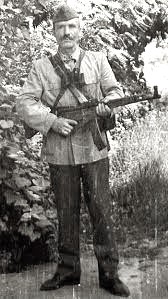
A few years before the liberation war of Kosovo, Azizi, through an interview in the magazine “Zëri”, had advised: – “Do not go to war if you cannot win it; we have lost enough! But if war starts, even though I am old, you will see me with a machine gun in my arms, in the mountains of Qyqavica.” He died without his wish being fulfilled, but his machine gun did its job during the Kosovo liberation war of 1998-1999. Azizi’s weapon, preserved with devotion since World War II, was used with bravery by a KLA fighter from Drenica, and it is now kept in the Kosovo Museum.
The imprisonment of Aziz Zhilivoda’s family
After Aziz Zhilivoda had actively participated in the wars against the Serbs for the liberation of Kosovo, his family was subjected to mistreatment and imprisonments. In 1946, all members of his family were imprisoned, from the 81-year-old great-grandfather to the youngest child, six months old. Thus continues his account, Faik Aziz Krasniqi, from Zhilivoda. – The chamber of Hajrë Isufi of Zhilivodë was forcibly turned by OZNA into a private prison. In this chamber-prison, we stayed for six consecutive months. Bread was secretly brought to us by Hajrë’s mother, Aunt Mehreme. One day, an inspection came to Hajrë’s chamber and saw some breadcrumbs.
The inspection included a certain Sejdi Hasani. Sejdi went to the OZNA Headquarters and reported to the chief of staff that Aunt Mehreme was feeding the family of the Ballist Aziz Zhilivoda. The chief of staff, a certain Kërsto Kërstiqi, called Tushi, came himself to the prison. He spoke Albanian fluently. He was with Sima and Çiça, who had killed Albanians with a club (a stick with a head). They questioned Aunt Mehreme and said to her:
– “Why are you feeding the family of the Ballist”? In the presence of our entire family, of Januz Rexhë Zhilivoda, a wise old man, and Sejdi Hasani, Aunt Mehreme addressed the Serbs with these words: “What kind of power are you that imprison old people, women, and children? As long as I live, I will feed them even if you shoot me.” Then they began to question our mother, Hida: – “Since we cannot catch Aziz, by now, tell us, with who do you have this child in your lap”? The child was six months old.
– “With Aziz Zhilivoda”, mother replied.
– “Then who cooked and sent bread to Aziz and his bands?”
– “I cooked it, and Aziz’s mother sent it to him as far as the field (the Church’s field). From there, my husband took it with his comrades.” At that moment, Januz Rexhë Zhilivoda rose to his knees and shouted, – “Long live you, daughter of Avdi Hoxha of Hade. You are a heroic and noble woman.” After Januz’s words, Sejdi intervened with these words: – “If she were a heroic and noble woman, she would have poured boiling lard into Aziz’s ears and liquidated him.”
Then our mother spoke: – “Oh, Sejdi Hasani, I see you for the first time even though you are from this village, but had Azizi been a man like you, truly I would have poured boiling lard into his ears.” Sejdi wanted to say something else, but the OZNA chief intervened with dirty words. The chief addressed Aunt Mehreme that from now on, she could bring us bread and feed us, because the children, he said, are not to blame.
Autumn of 1947 came. The whole family was sent to the Vushtrri prison. After two or three days, they brought to the prison the mother of Sherif Tërstena, his wife, and a younger brother of Sherif. That day, they were registering us in the prison. During registration, Ali Shukriu and Rasim Qerkezi entered. Ali Shukriu was the public prosecutor for Kosovo, and Rasimi was the head of OZNA for Mitrovica. Ali Shukriu addressed our mother: – “You are the mother of Aziz Zhilivoda, aren’t you”? Lokja replied: – “Yes, I am”! Ali Shukriu approached and grabbed Lokja by the hair and said: – “You are the old witch who gave birth to Aziz, who killed 96 communists, the best sons of Tito’s Yugoslavia”?! Memorie.al